La-rivoluzione-silenziosa-del-LED-La-crisi-del-vedere-nell’era-dell’illuminazione-a-stato-solido_Slide

The Silent Revolution of LEDs: The Crisis of Seeing in the Age of Solid-State Lighting

From Daylight to Electrical Simulation, Digital Lighting Redefines Perception, Dissolving the Link Between Visual Experience and Real Understanding

In our imagination, lighting is often a banal, automatic gesture, devoid of complexity: a switch, a light that turns on, a room that reveals itself. But this apparently simple gesture conceals one of the most profound and least perceived transformations of modernity: the progressive digitization of the visible. Electric light, today dominated by the logic of semiconductors, is no longer a simple luminous emanation, but a real cultural interface. It does not limit itself to showing the world: it constructs it, filters it, interprets it. Every source, every lighting scenario, every adjustment algorithm contributes to transforming the perception of space, subtly but incisively changing our experience of the built environment. It is in this context that lighting design can no longer be understood as mere technical management of the lumen, but as a critical and cultural act on how and what we are allowed to see.

This process has its roots in a long evolution of light sources, which represents not only a technological progress, but also an anthropological transformation of our relationship with the visible. For centuries, light has been a metaphor for truth and knowledge: "light presents itself as a metaphor for truth", wrote Hans Blumenberg, evoking the symbolic heritage of the "enlightenment" of reason. In the pre-industrial era, fire, combustible resins, animal and vegetable oil were fragile and precious tools: they produced a dim but meaningful light, which marked social rhythms, accompanied silence, protected the hearth. The eighteenth century introduced whale oil, transforming light into a global commodity and extractive visual power.

With the invention of the incandescent lamp in 1879 by Thomas Edison, light became industrial, persistent, reproducible. The spread of electricity in cities – as in the case of the Galleria Vittorio Emanuele (1881) and New York (1882) – marks the advent of light as an urban infrastructure. The carbonized bamboo filament, and then spiralized tungsten, leads to improvements in efficiency (up to 14 lm/W) and durability (about 1,000 hours). Thus the standardization of light begins: light ceases to be an event and becomes a continuous, abstract, normalized presence. In the twentieth century, discharge sources (fluorescent, sodium vapour and mercury) emerged, capable of exceeding 100 lm/W, but often lacking in colour rendering. Halogen lamps, introduced in 1959, bridge the gap by offering high colour rendering, miniaturisation and controllability, ideal for museums, architecture and theatre. The sources coexist in a hybrid, stratified, adaptive ecosystem.

The pre-LED light sources coexisted within a stratified but recognizable ecosystem, in which each technology – incandescent, halogen, fluorescent, discharge – was associated with specific uses, with photometric, spectral and well-known performance models. Despite their limitations in terms of energy efficiency, durability or colour rendering, these sources offered clear functional legibility, facilitating conscious and contextual design: in other words, it was known which light to  use for which purpose.

The arrival of the LED breaks this balance. It is not just a new source: it is an optoelectronic platform capable of simulating, replacing and rearranging all the previous ones. LEDs are more efficient, more durable, programmable, miniaturized – but also more abstract. Light becomes computational output, the result of algorithmic processing. The LED does not radiate, but processes. In this transition from experienced light to calculated light, an epochal turning point is made. The monoculture of LEDs, although motivated by energy and regulatory reasons, has side effects: reduction of perceptual diversity, homogenization of the visual experience, overwriting of reality.

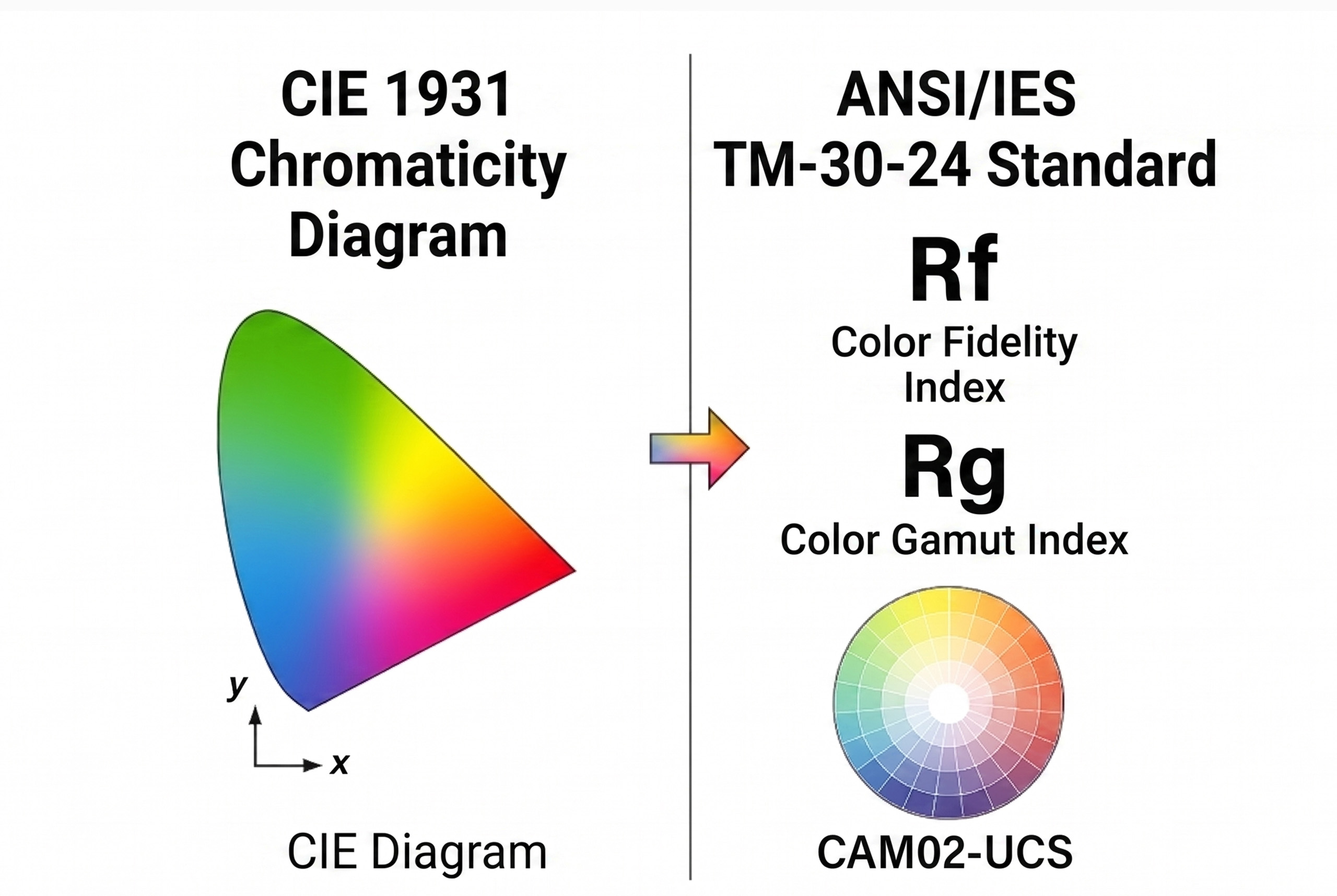
Today's risk lies in the often uncritical rhetoric that accompanies the massive adoption of LEDs. While it is true that the most advanced technologies today offer very high light quality, with balanced spectrums, faithful color rendering and dynamic adaptability, it is equally true that these LEDs – often certified according to TM-30 parameters, with high Rf/Rg and controlled spectral coherence – have high production and integration costs, such as to make them inaccessible for large-scale use.

Tipologie Qualità LED

Data source: The estimates reported are derived from a combination of authoritative sources, in particular, they are based on reports by the U.S. Department of Energy (DOE) – Solid-State Lighting Program, which analyzes the penetration and quality characteristics of LEDs in the United States and globally; on publications of the Joint Research Center (JRC) of the European Commission, which monitors the technological and regulatory evolution of the lighting market in Europe; and independent market surveys conducted by industry bodies and associations, with particular attention to the qualitative differences between the categories of LEDs used in the consumer, commercial and professional sectors.

As a result, the market relies predominantly on inexpensive LEDs, with discontinuous spectrum, blue dominance and compressed color rendering, which, while meeting the minimum regulatory requirements, betray perceptual expectations and compromise the quality of the viewing experience. The rhetoric of efficiency at any cost, although based on energy and environmental reasons, thus risks hiding a fundamental aspect: not all LEDs are the same, and designing with light also means consciously choosing the source, evaluating not only its technical performance, but also its perceptive and cultural impact.

To fully understand the physical nature and functioning of LED light – now ubiquitous in the built environment, in digital devices and in architectural lighting – it is essential to start from the fundamental principles of the physics of materials. The revolution of solid-state lighting does not simply derive from an incremental technical evolution, but from a paradigm shift linked to the electronic structure of matter. In particular, it is in the behavior of semiconductors that the foundation of this transformation lies: only thanks to their unique properties is it possible to generate, modulate and control light dynamically, precisely and integrable into complex electronic systems.

A semiconductor device is an electronic component made of materials such as silicon or gallium arsenide, capable of conducting electricity in a controlled manner. Unlike conductors (such as copper, which allows current to pass freely) and insulators (such as rubber or plastic, which block it), semiconductors occupy an intermediate position: their electrical conductivity can be selectively modified through a process called doping. This consists of introducing small quantities of impurities (such as phosphorus, boron or indium) into the crystal lattice of the material to increase or decrease the concentration of free electrons.

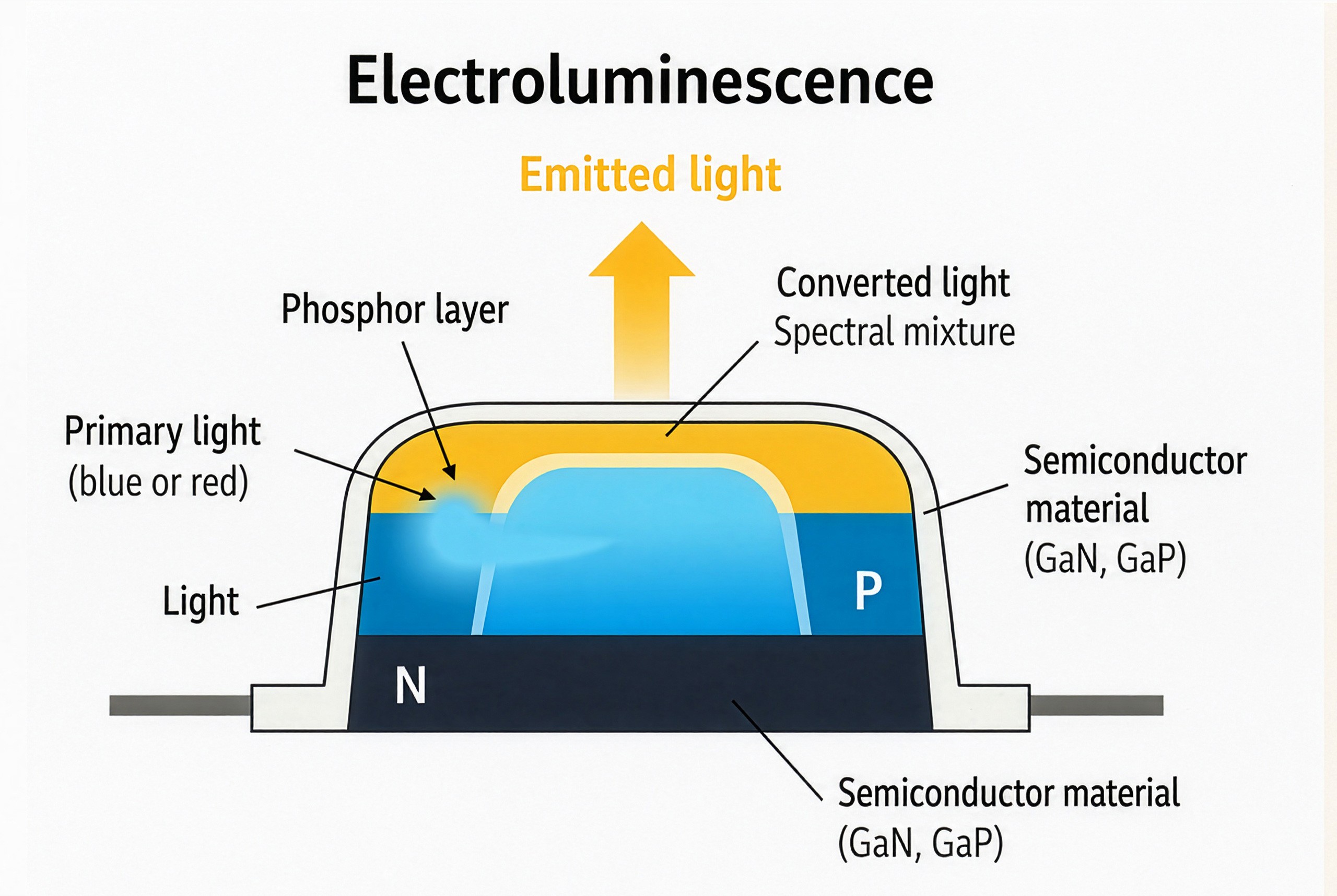
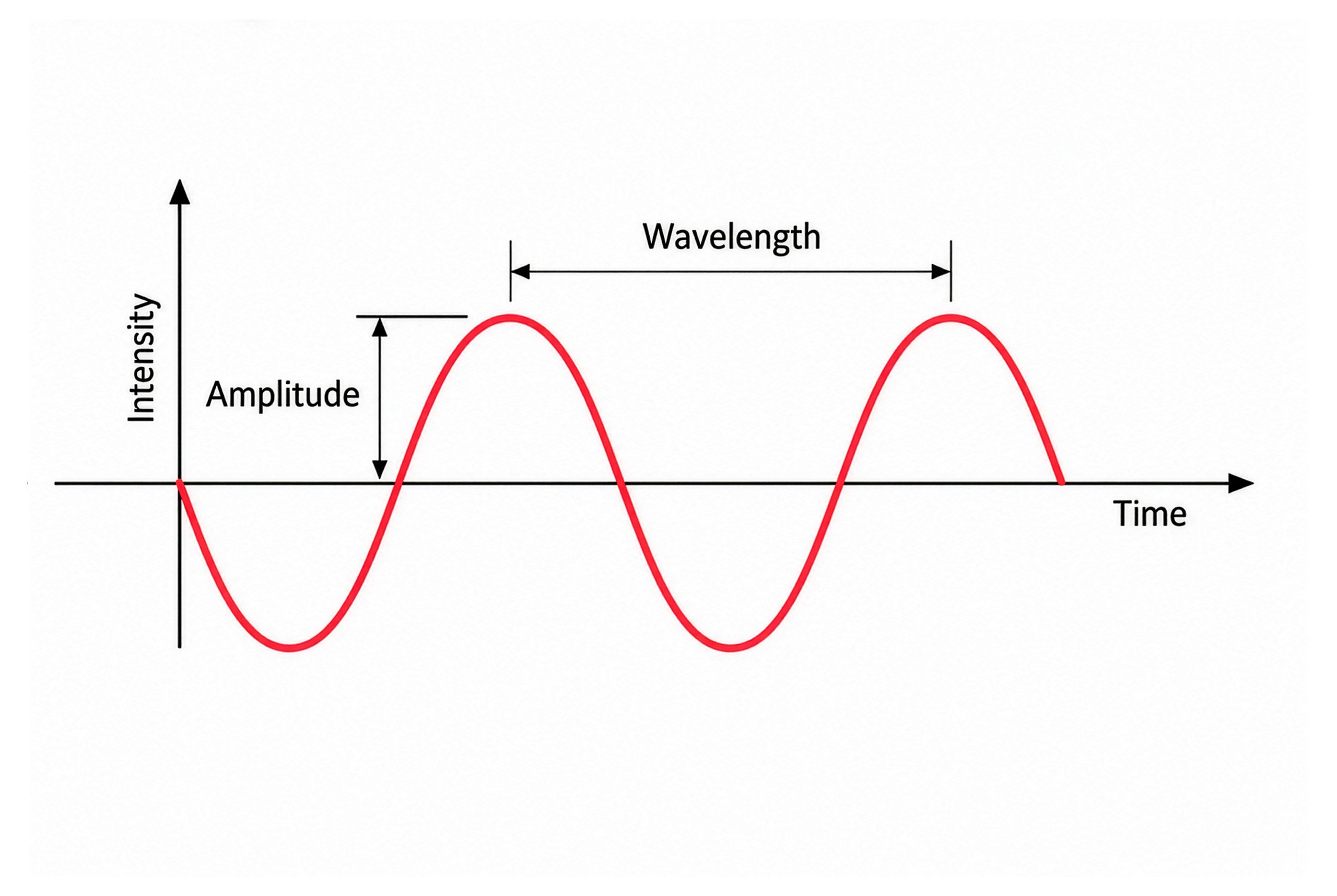
In the case of LEDs (Light Emitting Diodes), two oppositely doped semiconductor materials – one of the n-type (rich in electrons) and one of the p-type (rich in holes, i.e. "free places" for electrons) – are brought into contact to form a p-n junction. When an electrical voltage is applied in the correct direction, the electrons and holes recombine in the junction zone, releasing energy in the form of photons – this is the process of electroluminescence. The wavelength (and therefore the color) of the light emitted depends on the bandgap of the semiconductor material used, i.e. the energy jump required for recombination.

All subsequent evolutions of LEDs derive from this physical basis: from the possibility of achieving  precise monochromatic emissions (such as red, green, blue) to the generation of white light through RGB mixtures or phosphor conversion, up to the development of LEDs with high color rendering, dynamic spectrum control and temporal modulation of luminance. In summary, LED is not simply a more efficient light source: it is the result of an advanced electronic system, capable of transforming current into light in a highly engineered way.

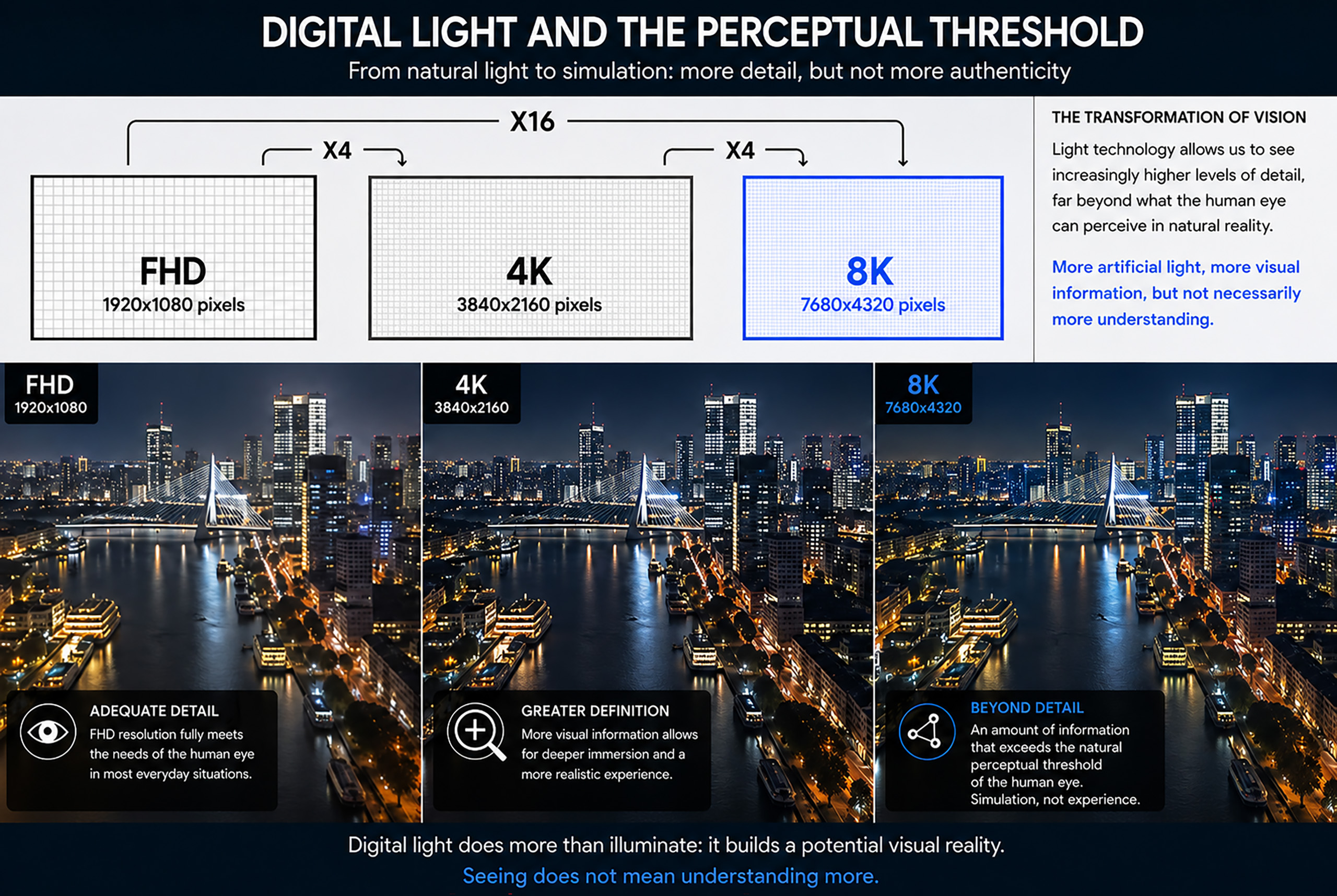
It is in this scenario of transition from experienced to computational light, where LED asserts itself as a platform of synthesis and control, that a new perceptual condition takes shape. In the contemporary era, dominated by the ubiquitous adoption of LED sources, we are witnessing a radical transformation of the visual experience, which goes far beyond luminous efficiency or operational life. Light is no longer just a means of seeing, but an autonomous semiotic system, capable of modifying perceived reality to the point of rewriting its meaning. The capillary diffusion of solid-state sources, highly directional, programmable, chromatically manipulable, has produced two parallel phenomena: on the one hand, the creation of a visual hyper-reality, where light artificially emphasizes, intensifies and enhances vision; on the other, the possibility of a weakened distortion, where the poor quality of LED light reduces the ability to read the environment, generating disorientation, semantic inconsistency and disorientation.

The traditional axiom that "seeing is believing" is now being turned upside down. In the contemporary ecosystem of electric light, what is seen is no longer necessarily a faithful reflection of reality, but increasingly an optical construction, a scenic or commercial device. Light does not show, but interprets. Seeing has become a programmed, filtered, scripted act, often at the service of economic, persuasive or aesthetic logics. It is in this context that phenomenological (Merleau-Ponty), semiotic (Flusser) and aesthetic (Virilio) references find full resonance: LED light no longer acts as a guarantee of reality, but as a symbolic interface, sometimes ambiguous, sometimes strategic.

An emblematic example is Times Square, New York, where dozens of ultra-high luminance LED displays (over 5,000 cd/m²), continuously transmit saturated color content and ultra-defined resolutions. In this environment, light does not orient, it does not shape: it saturates. The spatial references dissolve into a two-dimensional luminous surface, where the real architectures behind become invisible, obscured by the light itself. The absence of shadow or visual stillness generates perceptual stress, disorienting the gaze and compromising spatial understanding.

Similar phenomena can be found in the dynamic RGB facades of shopping malls and showrooms along road axes. Here, light, disconnected from the architectural language, completely overwrites the morphology of the building, transforming it into an arbitrary semantic screen. The speed of light movements, color saturation and flicker generate cognitive interference, also compromising road safety.

Light distortions also occur in everyday contexts such as retail or large-scale distribution. In stores, LED lights with high temperatures or compressed spectrums alter the color perception of clothes and fabrics. In large-scale distribution, light is calibrated to artificially enhance the color of the meat, inducing the customer to perceive it as fresher. In both cases, light becomes  a perceptual marketing tool, masking reality for commercial purposes.

These phenomena are never neutral: digital light changes not only the physical environment, but also the cognitive processes through which we interpret what we see. As Vilém Flusser observes, it behaves like a visual code, a structured and programmable language  that does not limit itself to illuminating, but attributes meanings, builds narratives, directs attention. In other words, light is no longer a simple transparent vehicle of vision: it is an active medium, which can direct or alter the reading of reality.

The philosopher Paul Virilio, for his part, introduced the concept of "aesthetics of disappearance", according to which excess visibility leads to  loss of awareness. When everything is made hyper-visible – bright, detailed, insistent – the eye becomes saturated, the image loses critical depth and the perceptual experience is reduced to a superficial and automatic fruition. "First of all, you must not believe your eyes," Virilio warns, reminding us that vision is not the same as understanding.

In this context, the city illuminated by digital screens, interactive interfaces and backlit surfaces is transformed into a visual environment where the distinction between visible and intelligible is blurred. What appears sharp and bright is not necessarily true or relevant: light builds scenarios that can reveal  as well as mask, as well as disorient. We are thus witnessing a new perceptual regime, in which sensory perception risks disconnecting from critical understanding.

Light no longer guarantees cognitive clarity, but generates an overloaded visual environment, in which seeing requires active interpretation. The risk is twofold: mistaking appearance for reality, or being overwhelmed by an excess of stimuli that annihilates understanding. For this reason, today more than ever, a new form of visual literacy is needed: knowing how to critically read light, images, environments, just as one reads a text.

The lighting designer, in this scenario, is no longer just a lighting technician, but a perceptive and cultural mediator. He must know how to design not only to meet lighting levels, but to build coherent, habitable, meaningful visual experiences. This is where the value of daylight  as a reference comes in: not to be simply replicated, but to be taken as  a model of spectral coherence, dynamic adaptability, biological integration.

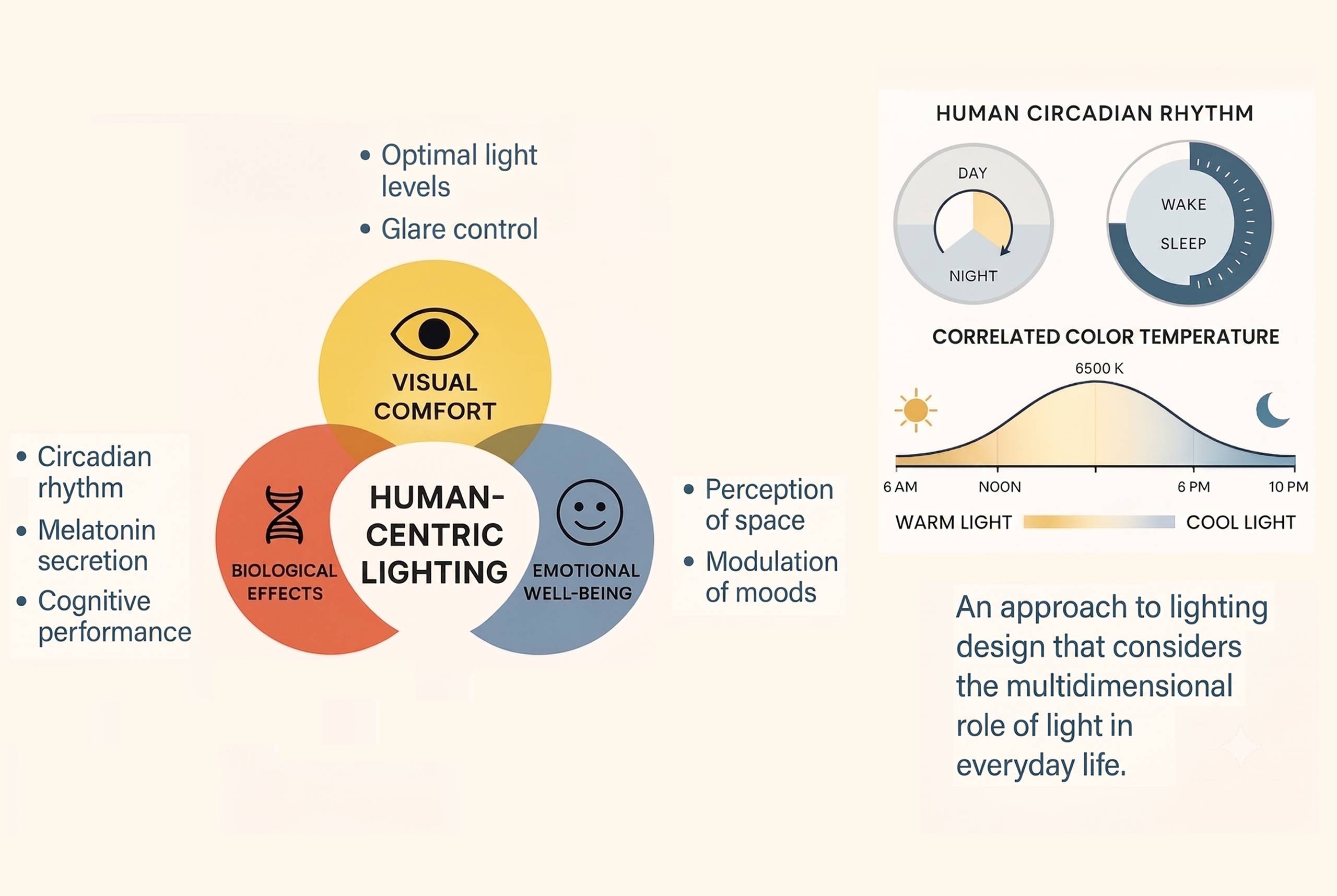
Human Centric Lighting (HCL) strategies, WELL Building Standard protocols, and regulations such as DIN/TS 67600:2022 offer tools to reconcile digital accuracy and human sensitivity. Light must accompany the vision, not overload it. It must educate the gaze, not manipulate it. It must inhabit the shadow, not erase it. In this sense, light can still be  an instrument of revelation – but a revelation that arises from the encounter between eyes, culture and reality. And it is precisely in this fragile and powerful encounter that the future of lighting design is at stake.

La-rivoluzione-silenziosa-del-LED-La-crisi-del-vedere-nell’era-dell’illuminazione-a-stato-solido_Slide

The Silent Revolution of LEDs: The Crisis of Seeing in the Age of Solid-State Lighting

From Daylight to Electrical Simulation, Digital Lighting Redefines Perception, Dissolving the Link Between Visual Experience and Real Understanding

In our imagination, lighting is often a banal, automatic gesture, devoid of complexity: a switch, a light that turns on, a room that reveals itself. But this apparently simple gesture conceals one of the most profound and least perceived transformations of modernity: the progressive digitization of the visible. Electric light, today dominated by the logic of semiconductors, is no longer a simple luminous emanation, but a real cultural interface. It does not limit itself to showing the world: it constructs it, filters it, interprets it. Every source, every lighting scenario, every adjustment algorithm contributes to transforming the perception of space, subtly but incisively changing our experience of the built environment. It is in this context that lighting design can no longer be understood as mere technical management of the lumen, but as a critical and cultural act on how and what we are allowed to see.

This process has its roots in a long evolution of light sources, which represents not only a technological progress, but also an anthropological transformation of our relationship with the visible. For centuries, light has been a metaphor for truth and knowledge: "light presents itself as a metaphor for truth", wrote Hans Blumenberg, evoking the symbolic heritage of the "enlightenment" of reason. In the pre-industrial era, fire, combustible resins, animal and vegetable oil were fragile and precious tools: they produced a dim but meaningful light, which marked social rhythms, accompanied silence, protected the hearth. The eighteenth century introduced whale oil, transforming light into a global commodity and extractive visual power.

With the invention of the incandescent lamp in 1879 by Thomas Edison, light became industrial, persistent, reproducible. The spread of electricity in cities – as in the case of the Galleria Vittorio Emanuele (1881) and New York (1882) – marks the advent of light as an urban infrastructure. The carbonized bamboo filament, and then spiralized tungsten, leads to improvements in efficiency (up to 14 lm/W) and durability (about 1,000 hours). Thus the standardization of light begins: light ceases to be an event and becomes a continuous, abstract, normalized presence. In the twentieth century, discharge sources (fluorescent, sodium vapour and mercury) emerged, capable of exceeding 100 lm/W, but often lacking in colour rendering. Halogen lamps, introduced in 1959, bridge the gap by offering high colour rendering, miniaturisation and controllability, ideal for museums, architecture and theatre. The sources coexist in a hybrid, stratified, adaptive ecosystem.

The pre-LED light sources coexisted within a stratified but recognizable ecosystem, in which each technology – incandescent, halogen, fluorescent, discharge – was associated with specific uses, with photometric, spectral and well-known performance models. Despite their limitations in terms of energy efficiency, durability or colour rendering, these sources offered clear functional legibility, facilitating conscious and contextual design: in other words, it was known which light to  use for which purpose.

The arrival of the LED breaks this balance. It is not just a new source: it is an optoelectronic platform capable of simulating, replacing and rearranging all the previous ones. LEDs are more efficient, more durable, programmable, miniaturized – but also more abstract. Light becomes computational output, the result of algorithmic processing. The LED does not radiate, but processes. In this transition from experienced light to calculated light, an epochal turning point is made. The monoculture of LEDs, although motivated by energy and regulatory reasons, has side effects: reduction of perceptual diversity, homogenization of the visual experience, overwriting of reality.

Today's risk lies in the often uncritical rhetoric that accompanies the massive adoption of LEDs. While it is true that the most advanced technologies today offer very high light quality, with balanced spectrums, faithful color rendering and dynamic adaptability, it is equally true that these LEDs – often certified according to TM-30 parameters, with high Rf/Rg and controlled spectral coherence – have high production and integration costs, such as to make them inaccessible for large-scale use.

Tipologie Qualità LED

Data source: The estimates reported are derived from a combination of authoritative sources, in particular, they are based on reports by the U.S. Department of Energy (DOE) – Solid-State Lighting Program, which analyzes the penetration and quality characteristics of LEDs in the United States and globally; on publications of the Joint Research Center (JRC) of the European Commission, which monitors the technological and regulatory evolution of the lighting market in Europe; and independent market surveys conducted by industry bodies and associations, with particular attention to the qualitative differences between the categories of LEDs used in the consumer, commercial and professional sectors.

As a result, the market relies predominantly on inexpensive LEDs, with discontinuous spectrum, blue dominance and compressed color rendering, which, while meeting the minimum regulatory requirements, betray perceptual expectations and compromise the quality of the viewing experience. The rhetoric of efficiency at any cost, although based on energy and environmental reasons, thus risks hiding a fundamental aspect: not all LEDs are the same, and designing with light also means consciously choosing the source, evaluating not only its technical performance, but also its perceptive and cultural impact.

To fully understand the physical nature and functioning of LED light – now ubiquitous in the built environment, in digital devices and in architectural lighting – it is essential to start from the fundamental principles of the physics of materials. The revolution of solid-state lighting does not simply derive from an incremental technical evolution, but from a paradigm shift linked to the electronic structure of matter. In particular, it is in the behavior of semiconductors that the foundation of this transformation lies: only thanks to their unique properties is it possible to generate, modulate and control light dynamically, precisely and integrable into complex electronic systems.

A semiconductor device is an electronic component made of materials such as silicon or gallium arsenide, capable of conducting electricity in a controlled manner. Unlike conductors (such as copper, which allows current to pass freely) and insulators (such as rubber or plastic, which block it), semiconductors occupy an intermediate position: their electrical conductivity can be selectively modified through a process called doping. This consists of introducing small quantities of impurities (such as phosphorus, boron or indium) into the crystal lattice of the material to increase or decrease the concentration of free electrons.

In the case of LEDs (Light Emitting Diodes), two oppositely doped semiconductor materials – one of the n-type (rich in electrons) and one of the p-type (rich in holes, i.e. "free places" for electrons) – are brought into contact to form a p-n junction. When an electrical voltage is applied in the correct direction, the electrons and holes recombine in the junction zone, releasing energy in the form of photons – this is the process of electroluminescence. The wavelength (and therefore the color) of the light emitted depends on the bandgap of the semiconductor material used, i.e. the energy jump required for recombination.

All subsequent evolutions of LEDs derive from this physical basis: from the possibility of achieving  precise monochromatic emissions (such as red, green, blue) to the generation of white light through RGB mixtures or phosphor conversion, up to the development of LEDs with high color rendering, dynamic spectrum control and temporal modulation of luminance. In summary, LED is not simply a more efficient light source: it is the result of an advanced electronic system, capable of transforming current into light in a highly engineered way.

It is in this scenario of transition from experienced to computational light, where LED asserts itself as a platform of synthesis and control, that a new perceptual condition takes shape. In the contemporary era, dominated by the ubiquitous adoption of LED sources, we are witnessing a radical transformation of the visual experience, which goes far beyond luminous efficiency or operational life. Light is no longer just a means of seeing, but an autonomous semiotic system, capable of modifying perceived reality to the point of rewriting its meaning. The capillary diffusion of solid-state sources, highly directional, programmable, chromatically manipulable, has produced two parallel phenomena: on the one hand, the creation of a visual hyper-reality, where light artificially emphasizes, intensifies and enhances vision; on the other, the possibility of a weakened distortion, where the poor quality of LED light reduces the ability to read the environment, generating disorientation, semantic inconsistency and disorientation.

The traditional axiom that "seeing is believing" is now being turned upside down. In the contemporary ecosystem of electric light, what is seen is no longer necessarily a faithful reflection of reality, but increasingly an optical construction, a scenic or commercial device. Light does not show, but interprets. Seeing has become a programmed, filtered, scripted act, often at the service of economic, persuasive or aesthetic logics. It is in this context that phenomenological (Merleau-Ponty), semiotic (Flusser) and aesthetic (Virilio) references find full resonance: LED light no longer acts as a guarantee of reality, but as a symbolic interface, sometimes ambiguous, sometimes strategic.

An emblematic example is Times Square, New York, where dozens of ultra-high luminance LED displays (over 5,000 cd/m²), continuously transmit saturated color content and ultra-defined resolutions. In this environment, light does not orient, it does not shape: it saturates. The spatial references dissolve into a two-dimensional luminous surface, where the real architectures behind become invisible, obscured by the light itself. The absence of shadow or visual stillness generates perceptual stress, disorienting the gaze and compromising spatial understanding.

Similar phenomena can be found in the dynamic RGB facades of shopping malls and showrooms along road axes. Here, light, disconnected from the architectural language, completely overwrites the morphology of the building, transforming it into an arbitrary semantic screen. The speed of light movements, color saturation and flicker generate cognitive interference, also compromising road safety.

Light distortions also occur in everyday contexts such as retail or large-scale distribution. In stores, LED lights with high temperatures or compressed spectrums alter the color perception of clothes and fabrics. In large-scale distribution, light is calibrated to artificially enhance the color of the meat, inducing the customer to perceive it as fresher. In both cases, light becomes  a perceptual marketing tool, masking reality for commercial purposes.

These phenomena are never neutral: digital light changes not only the physical environment, but also the cognitive processes through which we interpret what we see. As Vilém Flusser observes, it behaves like a visual code, a structured and programmable language  that does not limit itself to illuminating, but attributes meanings, builds narratives, directs attention. In other words, light is no longer a simple transparent vehicle of vision: it is an active medium, which can direct or alter the reading of reality.

The philosopher Paul Virilio, for his part, introduced the concept of "aesthetics of disappearance", according to which excess visibility leads to  loss of awareness. When everything is made hyper-visible – bright, detailed, insistent – the eye becomes saturated, the image loses critical depth and the perceptual experience is reduced to a superficial and automatic fruition. "First of all, you must not believe your eyes," Virilio warns, reminding us that vision is not the same as understanding.

In this context, the city illuminated by digital screens, interactive interfaces and backlit surfaces is transformed into a visual environment where the distinction between visible and intelligible is blurred. What appears sharp and bright is not necessarily true or relevant: light builds scenarios that can reveal  as well as mask, as well as disorient. We are thus witnessing a new perceptual regime, in which sensory perception risks disconnecting from critical understanding.

Light no longer guarantees cognitive clarity, but generates an overloaded visual environment, in which seeing requires active interpretation. The risk is twofold: mistaking appearance for reality, or being overwhelmed by an excess of stimuli that annihilates understanding. For this reason, today more than ever, a new form of visual literacy is needed: knowing how to critically read light, images, environments, just as one reads a text.

The lighting designer, in this scenario, is no longer just a lighting technician, but a perceptive and cultural mediator. He must know how to design not only to meet lighting levels, but to build coherent, habitable, meaningful visual experiences. This is where the value of daylight  as a reference comes in: not to be simply replicated, but to be taken as  a model of spectral coherence, dynamic adaptability, biological integration.

Human Centric Lighting (HCL) strategies, WELL Building Standard protocols, and regulations such as DIN/TS 67600:2022 offer tools to reconcile digital accuracy and human sensitivity. Light must accompany the vision, not overload it. It must educate the gaze, not manipulate it. It must inhabit the shadow, not erase it. In this sense, light can still be  an instrument of revelation – but a revelation that arises from the encounter between eyes, culture and reality. And it is precisely in this fragile and powerful encounter that the future of lighting design is at stake.
Other Lighting Post

Other Lighting Post

This section brings together a comprehensive body of theoretical, scientific, and design insights into the theory of light applied to lighting design, systematically addressing the complex relationship between light, visual perception, and spatial design. The content develops the physical foundations of light, an understanding of the mechanisms of human vision, the differences between photopic and melanopic illuminance, and the biological impact of artificial light, integrating advanced metrics and contemporary interpretation criteria.

The page also explores the functioning of LED sources, the spectral and perceptual implications of solid-state light, the evolution of color rendering criteria, and the growing role of light as an informational and perceptual system, capable of influencing behavior, comfort, and the quality of spatial experience.

Ample space is dedicated to the relevant regulatory and technical framework, international standards, sustainability protocols, and control systems, understood as essential tools for rigorous, measurable, and consistent design.

Overall, the section provides a vision of the theory of light as the cultural and operational basis of lighting design, in which scientific knowledge, perceptual awareness, and design method converge to guide the lighting designer in the construction of balanced, legible, and qualitatively significant spaces.

Fundamental Electrical Quantities: Understanding the Relationship between Electrical Energy and Light Emission From Ohm's Law to LENI: How Current, Voltage, Resistance and Power Influence the Performance of a Lighting System To fully understand the criteria for assessing the energy performance of lighting systems, as in the case of the LENI indicator  defined by  the EN 15193-1:2017+A1:2021 standard, it is necessary to dwell on the physical and electrical bases that regulate the production of artificial light. In fact, each lighting system…
Grandezze Elettriche Fondamentali Comprendere la Relazione tra Energia Elettrica e Emissione Luminosa-Copertina
LENI and Energy Efficiency in Lighting Design From EPBD to EN 15193-1, integration with LEED, WELL and BREEAM To complete the framework outlined by  the LEED, WELL and BREEAM protocols  – voluntary tools aimed at promoting well-being, sustainability and internal environmental quality – it is necessary to consider the evolution of the mandatory legislation on the energy efficiency of buildings, which directly affects the design of lighting systems. The regulatory evolution on energy efficiency is in fact constantly changing. Following…
BREEAM-Standard-Struttura-a-Crediti-e-Requisiti-Illuminotecnici-copertina
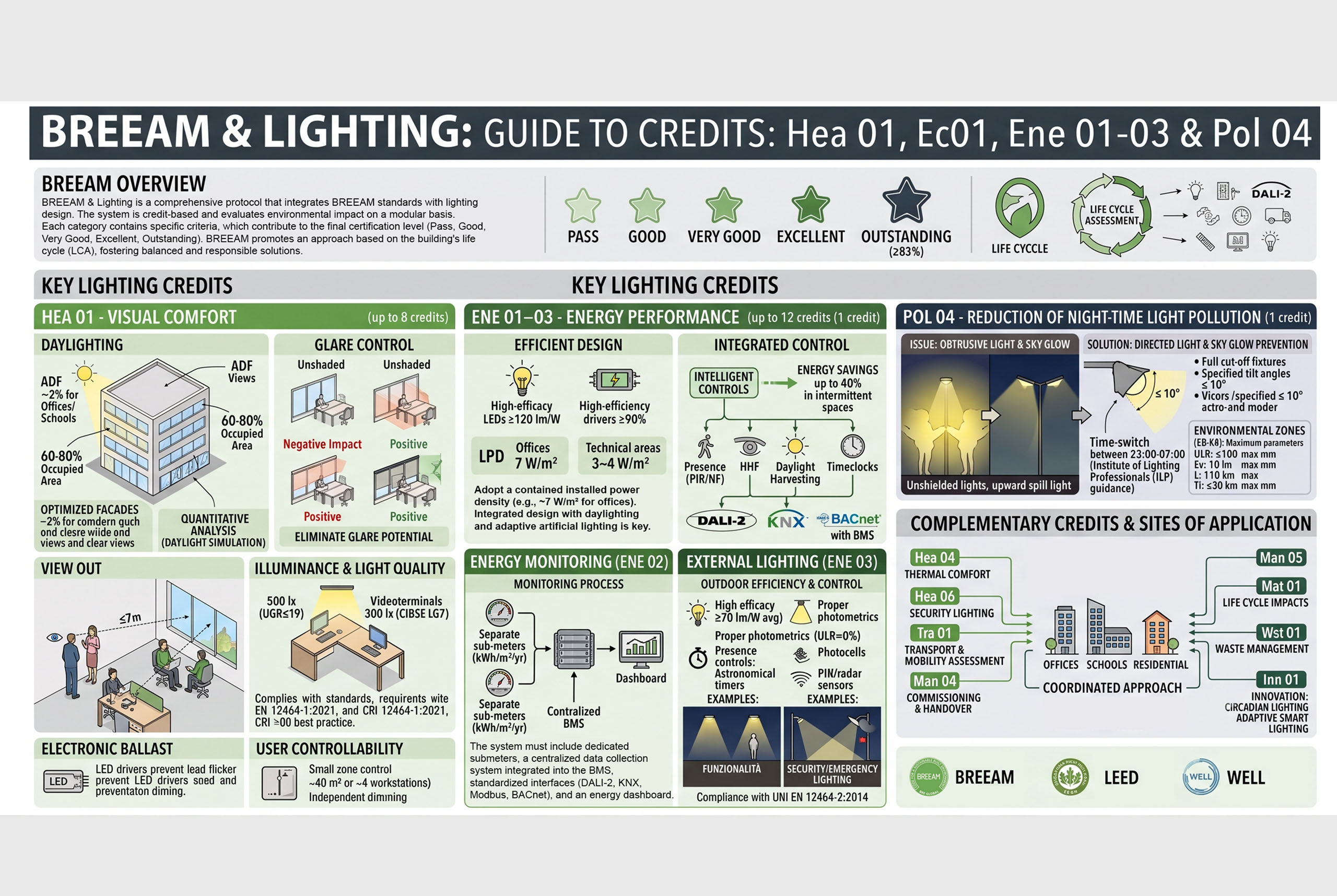
BREEAM: Standards, Credit Structure and Lighting Requirements How to set up a compliant lighting project: daylighting, controls, efficiency and reduction of light pollution. The BREEAM (Building Research Establishment Environmental Assessment Method), developed in the United Kingdom by  the Building Research Establishment (BRE) and introduced in 1990, represents the world's first system for assessing the sustainability of buildings. It is now internationally recognized as a reference standard and is applied in millions of projects around the world, with a particular diffusion…
WEEL-Building-Standard-v2-il-ruolo-della-luce-tra-salute-comfort-e-prestazioni-copertina
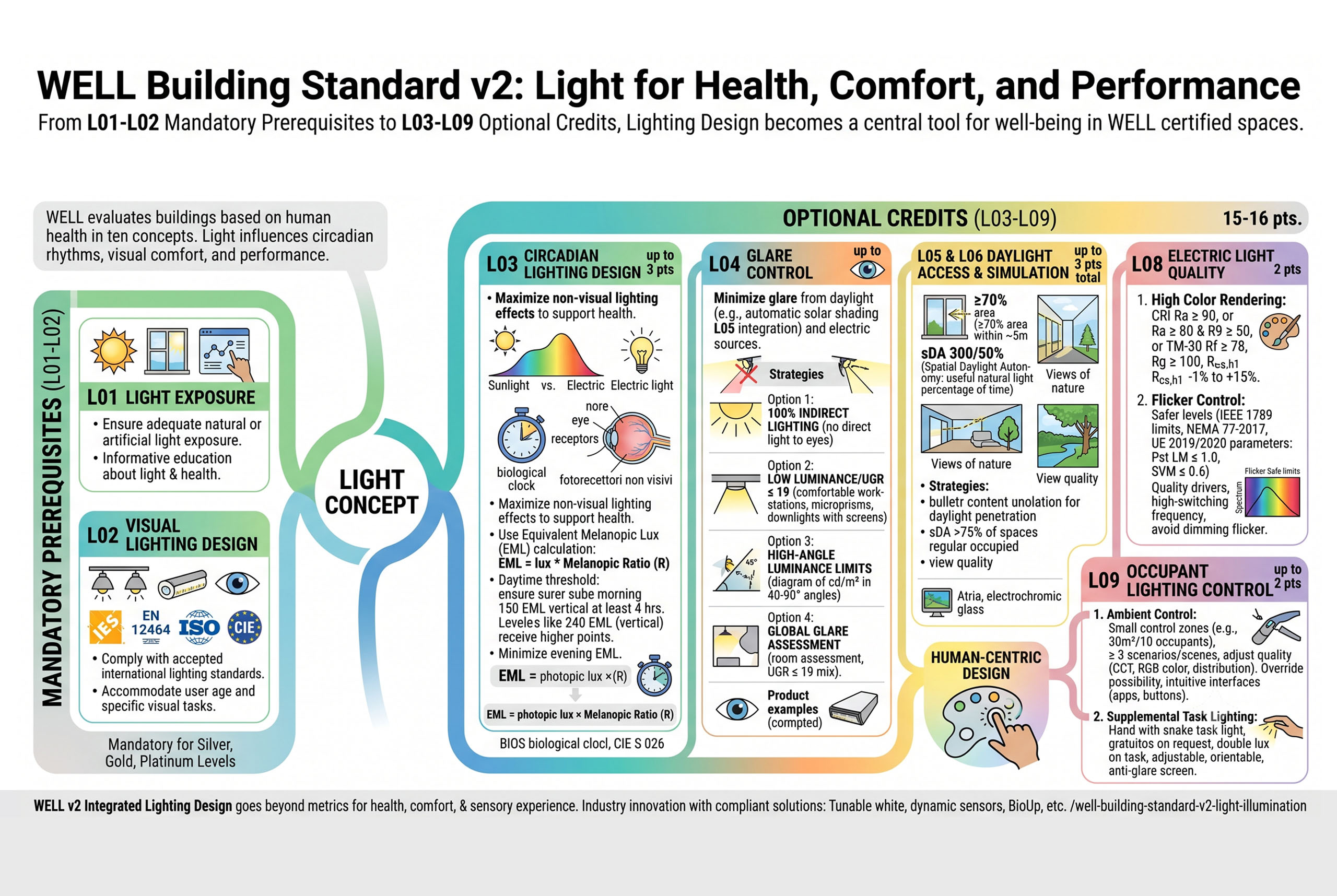
WELL Building Standard v2: The Role of Light in Health, Comfort and Performance From the compulsory prerequisites L01–L02 to the L03–L09 credits, lighting design becomes a central tool for well-being in WELL certified spaces The WELL Building Standard v2 is an international certification protocol that assesses the quality of built environments based on their impact on people's health and well-being. Structured in ten key concepts – including air, water, nutrition, movement and materials – the protocol dedicates a central role…
Protocollo-LEED-Efficienza-Energetica-e-Ambientale-degli-Edifici-copertina
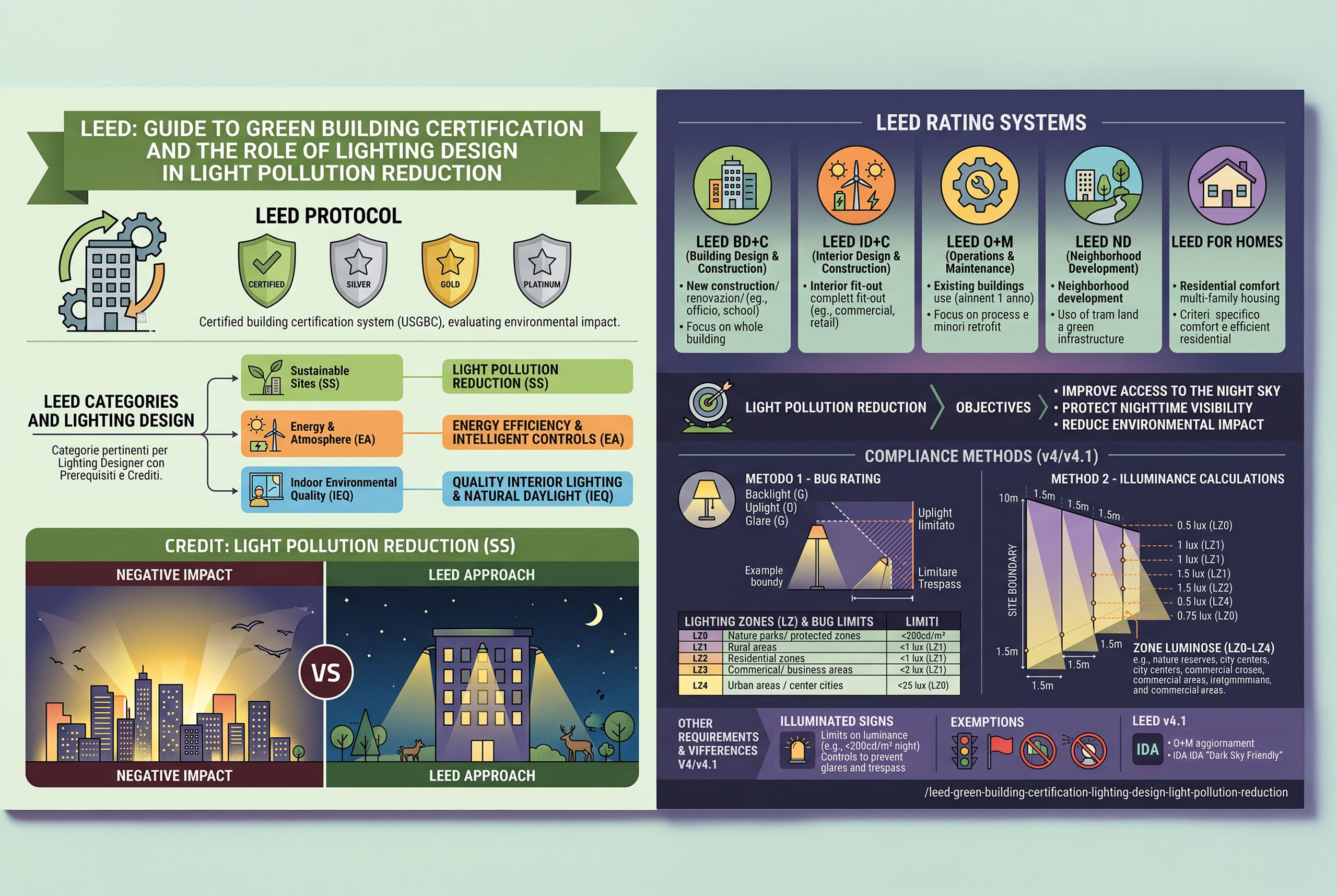
LEED Protocol: Energy and Environmental Efficiency of Buildings Analysis of LEED Categories and Regulations to Reduce Light Pollution through Lighting Design LEED (Leadership in Energy and Environmental Design) is the leading international environmental certification system for buildings, developed by the U.S. Green Building Council (USGBC). It applies to a wide range of projects, from new buildings to renovations, from interiors to existing buildings and neighborhoods (via BD+C, ID+C, O+M, ND, Homes). Each system assesses the environmental impact of the project…
LEED,-WELL-e-BREEAM-Standard-protocolli-e-certificazioni-per-la-progettazione-della-luce-copertina
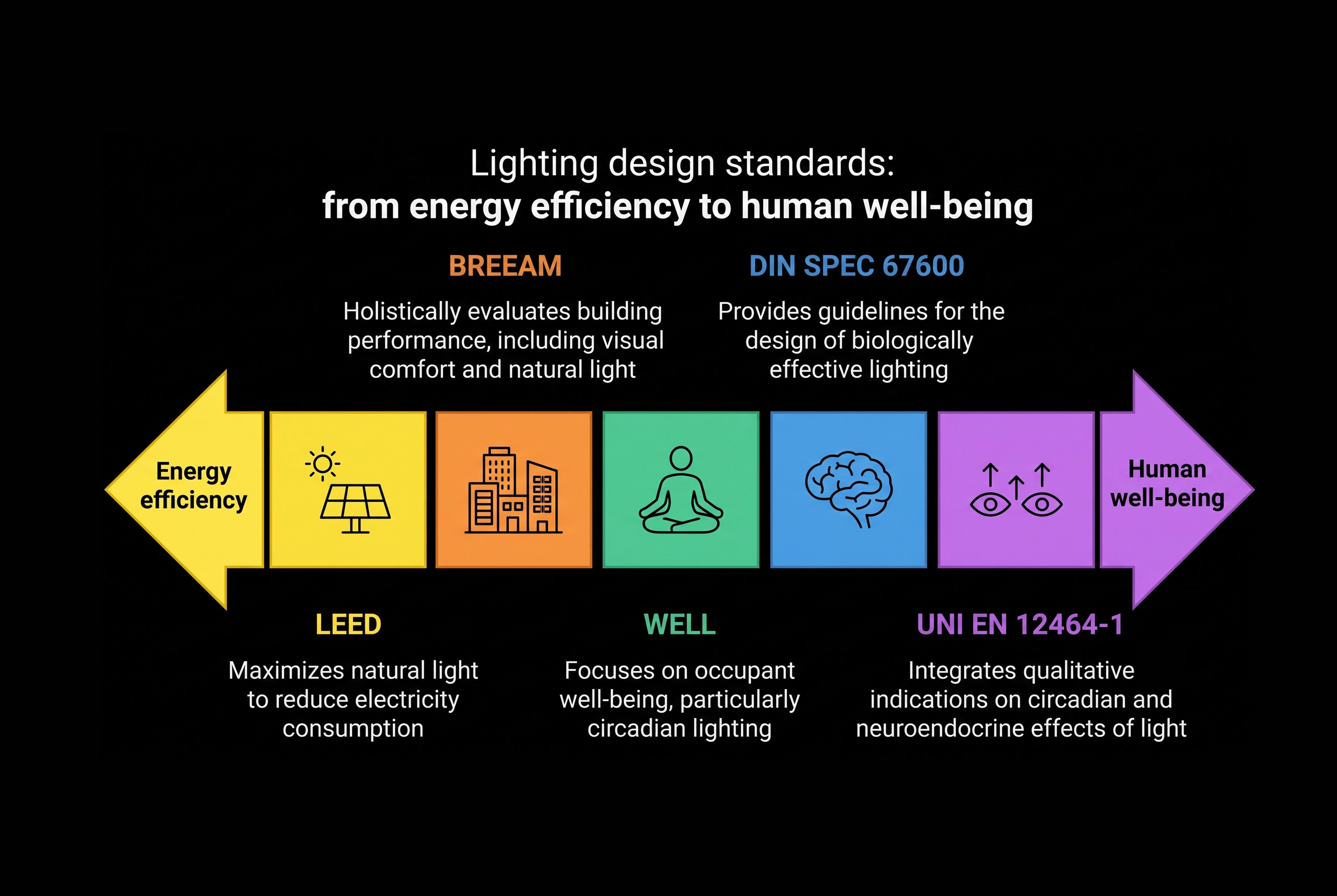
LEED, WELL and BREEAM: Standards, Protocols and Certifications for Light Design Guidelines and design requirements for integrating natural light, visual comfort and biological effects into environmental sustainability protocols Human-Centered Lighting (HCL) represents an advanced design paradigm that integrates the classic criteria of lighting technology (visibility, energy efficiency, aesthetics) with the most recent knowledge on the non-visual effects of light, in particular on the human circadian system. The growing attention to psychophysical well-being in built environments has led to the development…
Progettare-con-la-luce-circadiana-il-potenziale-del-Tunable-White-nellHCL-copertina (1)
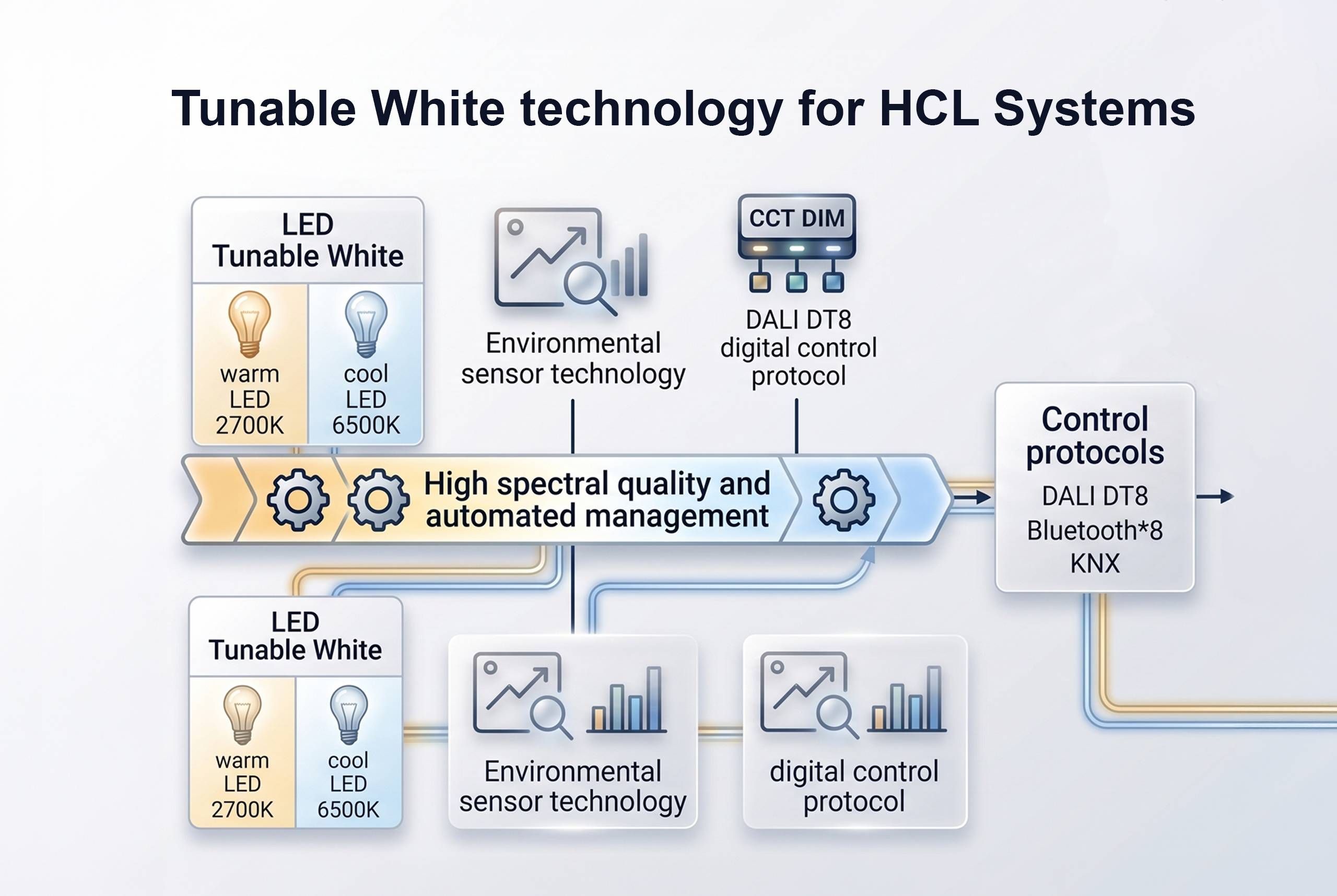
Designing with circadian light: the potential of Tunable White in HCL Technology, intelligent control and perceptual layout for adaptive lighting that follows biological rhythms The regulatory evolution on energy efficiency in buildings is constantly evolving. The practical implementation of an HCL project requires the use of advanced lighting technologies and adherence to specific design strategies dictated by regulations and guidelines. Tunable White technology represents one of the fundamental innovations in dynamic lighting, allowing the continuous and flexible adjustment  of the…
Human-Centric-Lighting-HCL-I-tre-pilastri-Visivo-Emozionale-e-Biologico-Copertina (1)
Human-Centric Lighting (HCL): The Three Pillars, Visual, Emotional, and Biological Visual Comfort, Emotional Impact and Biological Synchronization: The New Frontier of Man-Centered Light From the understanding of the circadian effects of light, the need to overcome a reductive and functionalist vision of lighting emerges strongly. Scientific evidence, clinical data and regulatory developments clearly show how light, in addition to shaping space and influencing visual perception, is an active physiological agent, capable of modulating metabolism, mood, sleep and cognitive functions. In…
Lighting and Circadian Rhythm: Scientific Discoveries and Advanced Technologies Health-oriented lighting design between science, norm and perception After analyzing the color rendering as a key element for the perceptive and sensory quality of light, it is evident that contemporary lighting design can no longer be limited to the visual representation of objects alone. Light, in fact, is not only a vehicle of visual information, but acts in depth on human biology, modulating fundamental physiological processes. In this context, a new…
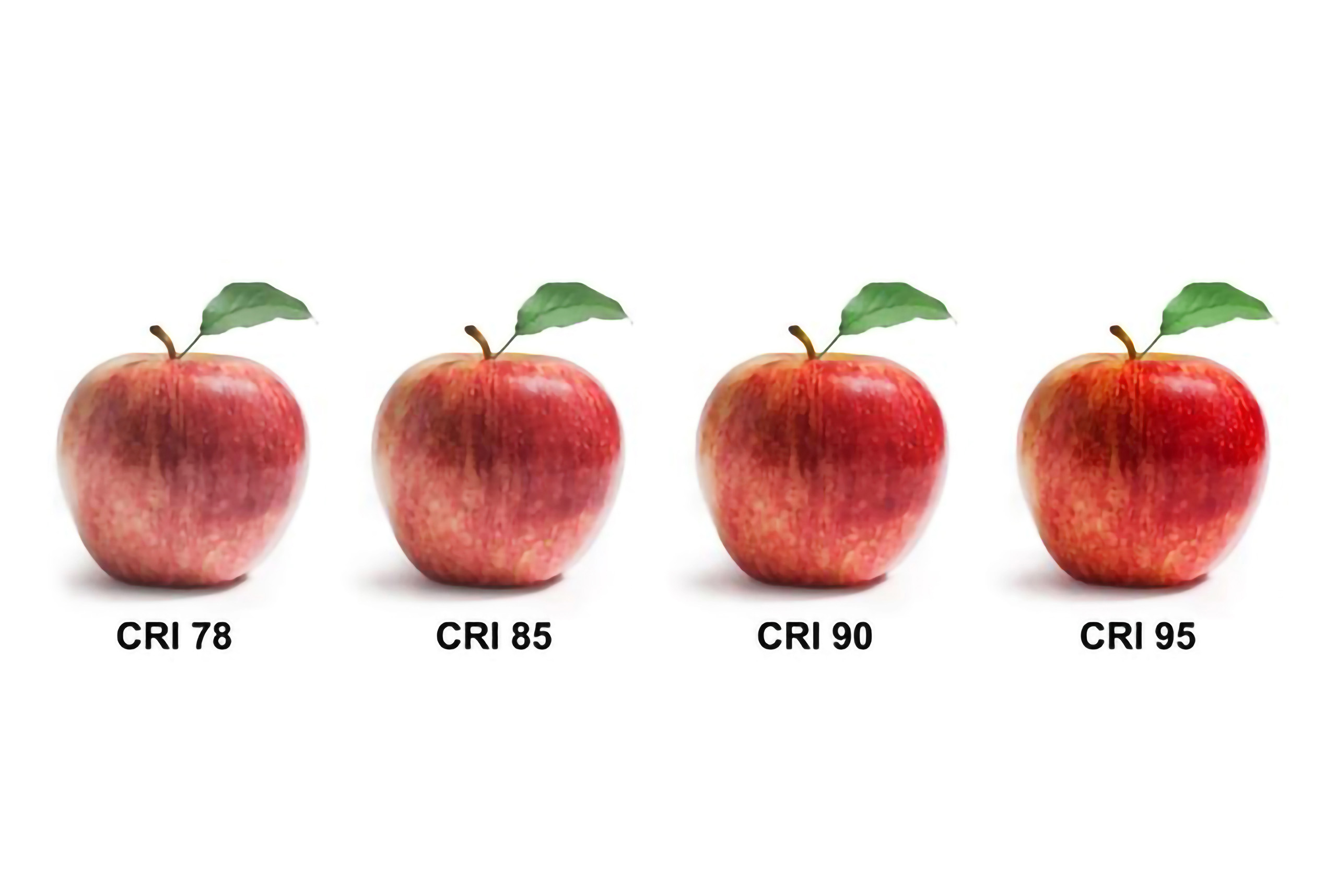
Beyond the CRI: The New Era of Colour Rendering in Architectural Light How Rf and Rg redefine color rendering for a light designed on the visual experience Continuing the analysis of the perceptive quality of light, it is evident that colour rendering, understood in the broadest and most up-to-date sense of the term, represents an essential dimension for conscious lighting design. If the color temperature establishes the emotional and biological tone of the light, it is the color rendering that…
Dalla-Percezione-alla-Funzione-L’Influenza-della-Temperatura-di-Colore-sullo-Spazio-Illuminato-copertina
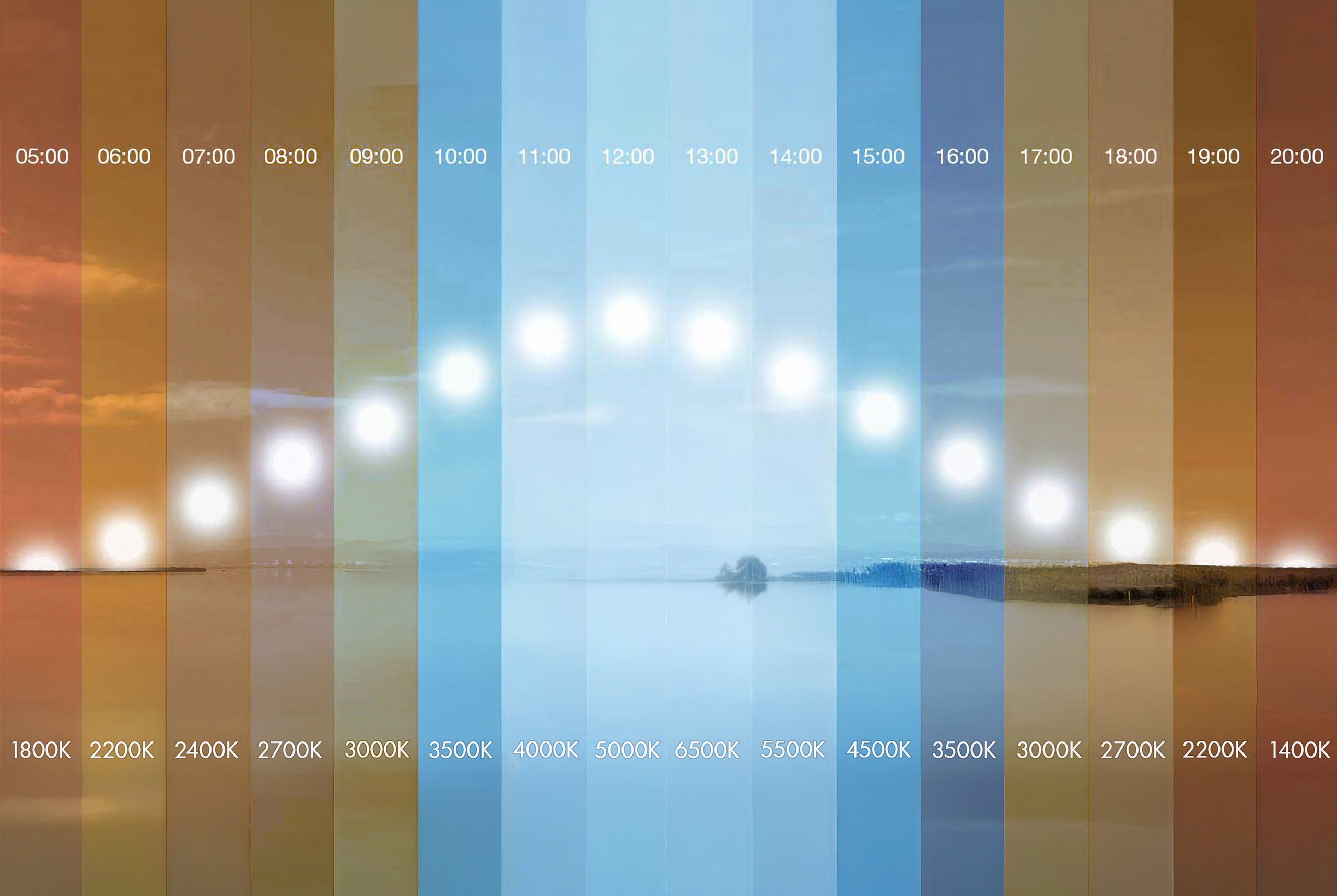
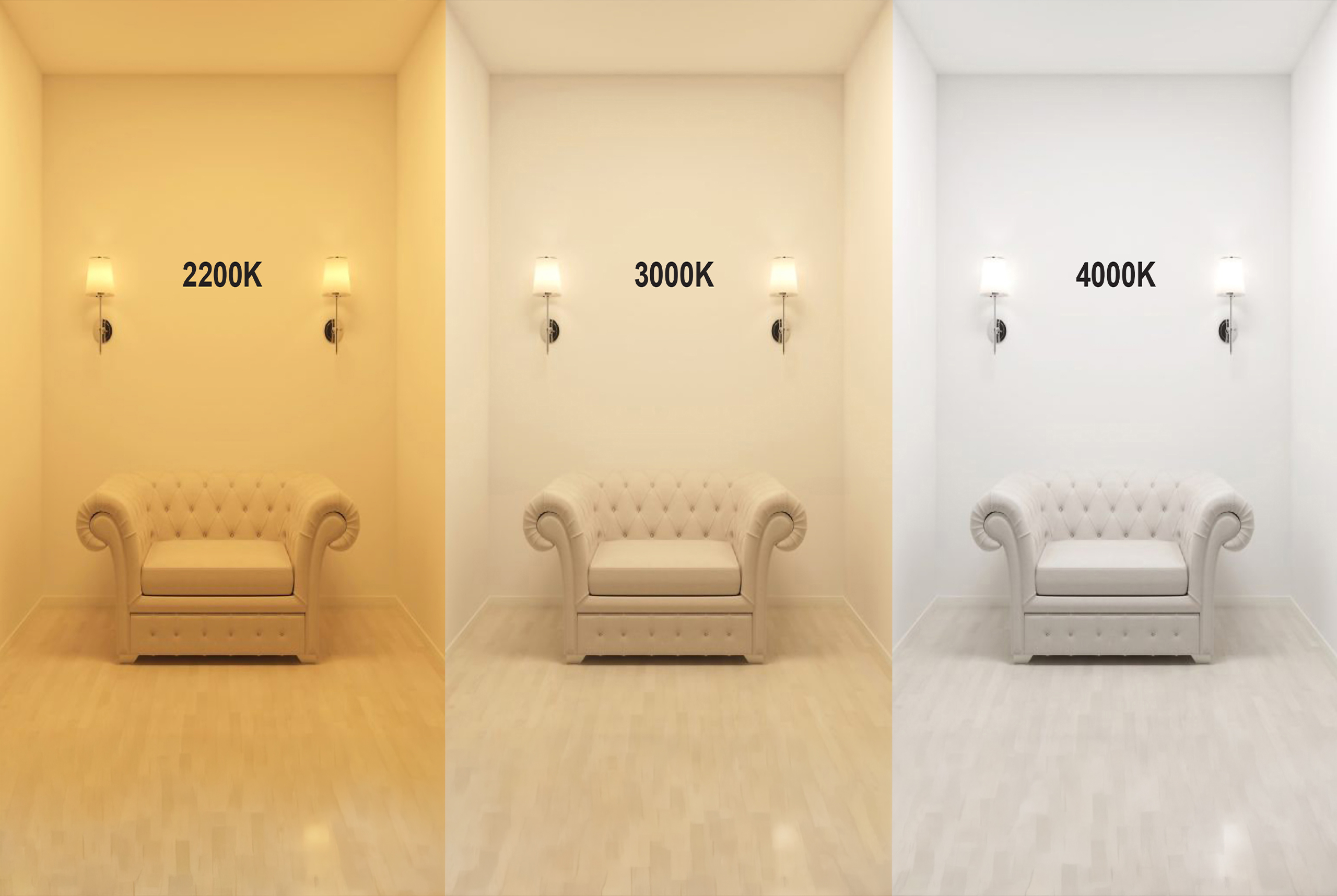
From Perception to Function: The Influence of Color Temperature on Illuminated Space Color temperature as a perceptual language: designing atmospheres, guiding vision and shaping space After exploring the scientific bases, regulatory references and advanced tools to describe light – from  the electromagnetic spectrum to melanopic parameters, from CIE diagrams to IES Technical Memoranda, up to solid-state lighting (SSL) – we focused on both the comparative analysis between traditional LEDs and μPLS as new digital light engine, and on the emerging…
La-luce-che-informa-rivoluzione-o-rischio-per-il-futuro-dell’illuminazione-copertina-eng
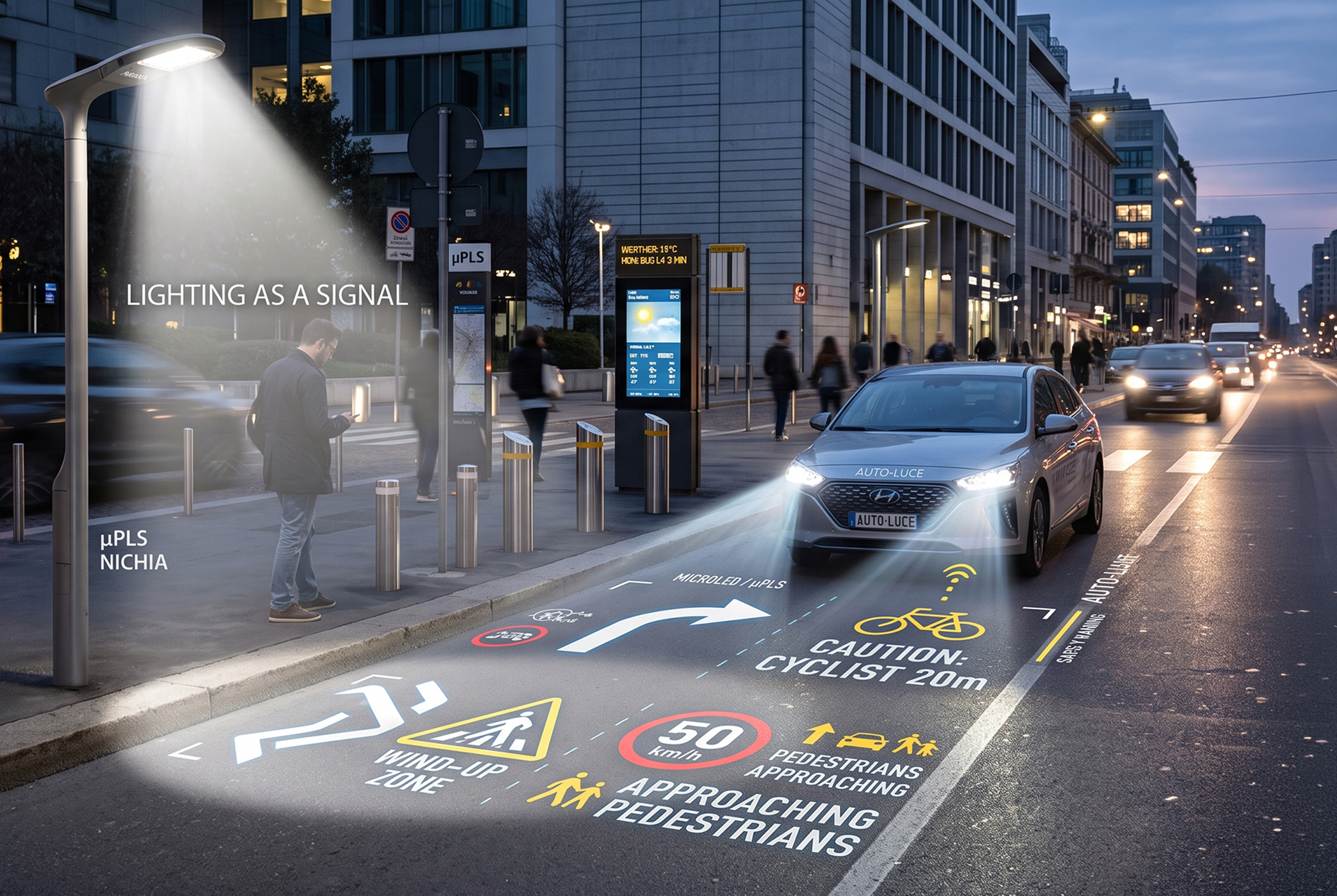
The Light That Informs: Revolution or Risk for the Future of Lighting? μPLS and microLED between innovation and danger of visual excess Historically, we are used to thinking of artificial light as something that just illuminates. A street lamp allows us to see, a car headlight illuminates the way, but does not convey messages or information in itself. This is changing: with the advent of digitally controllable LEDs, lighting can also become  an optical means of communication. A simple everyday…
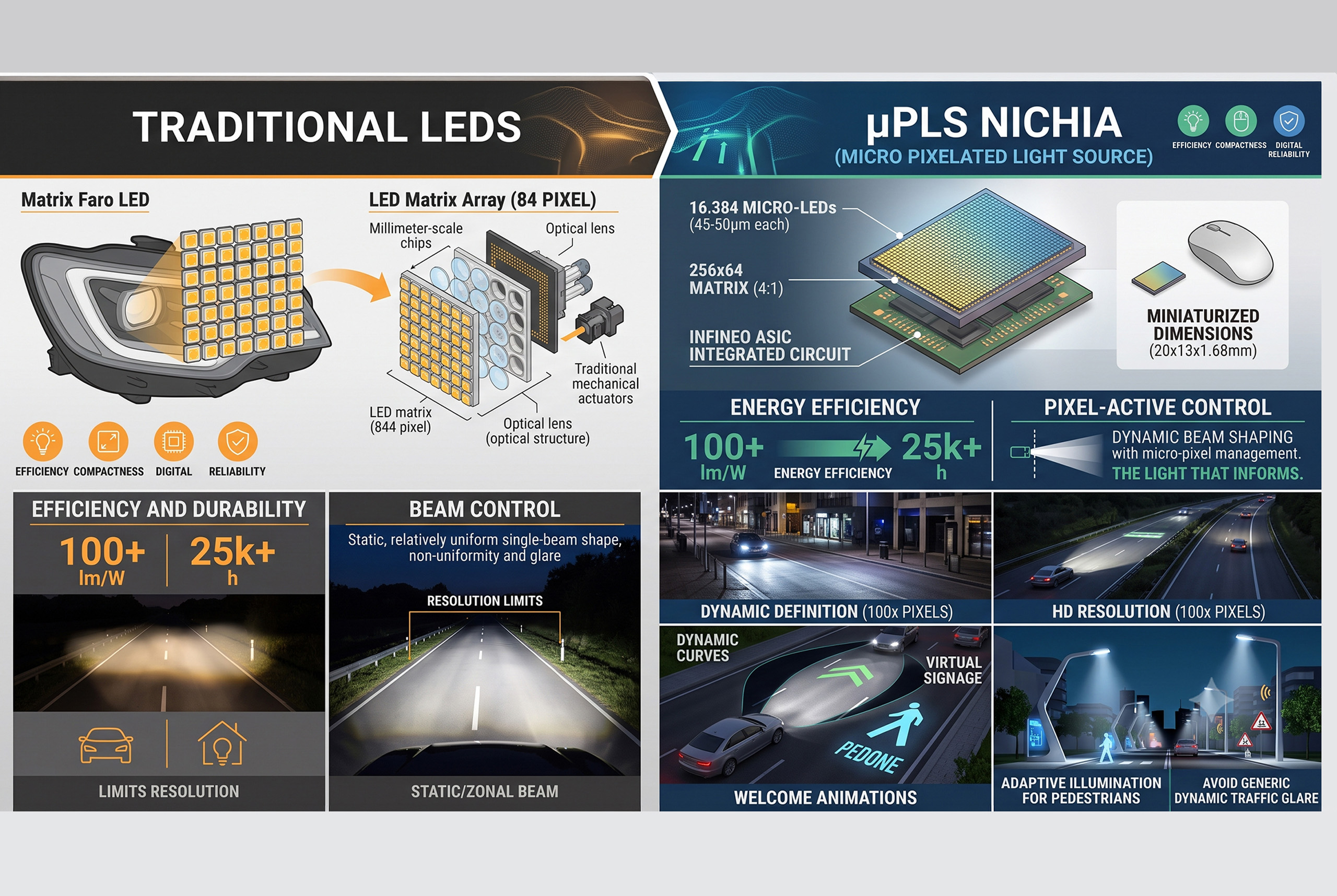
Differences Between Traditional LEDs and μPLS by Nichia: From the Car to the City, the Path of the Digital Light Engine From road safety to smart city: μPLS and high-resolution microLEDs In recent decades, lighting technology has progressed very rapidly, moving from incandescent and halogen lamps to the more efficient and long-lived LED (Light Emitting Diodes) lights. Traditional LEDs, based on semiconductor diodes, have revolutionized lighting thanks to their high luminous efficiency and reliability, gradually supplanting conventional sources in many…
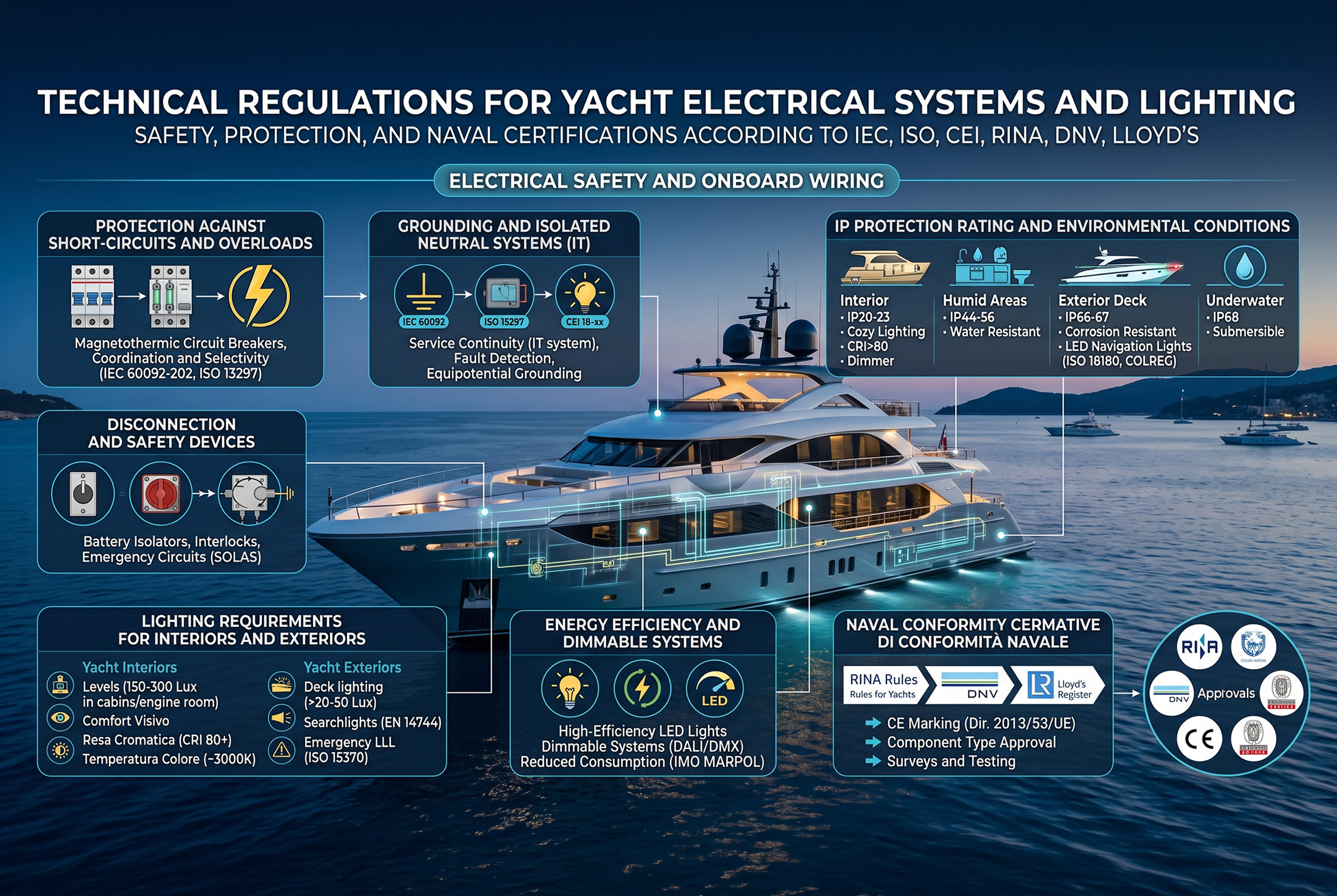
Technical Regulations for Electrical Systems and Lighting in Yachts Electrical safety, visual comfort and ship compliance according to IEC, ISO, CEI, RINA and DNV standards. Electrical Safety and Wiring in On-Board Systems The electrical systems on board yachts must meet strict international regulations to ensure safety against electrocution, fire and breakdowns. The IEC 60092 series  (adopted in Italy as **CEI 18-**xx) is the main reference for naval installations, providing general design requirements and protection criteria in line with international conventions…
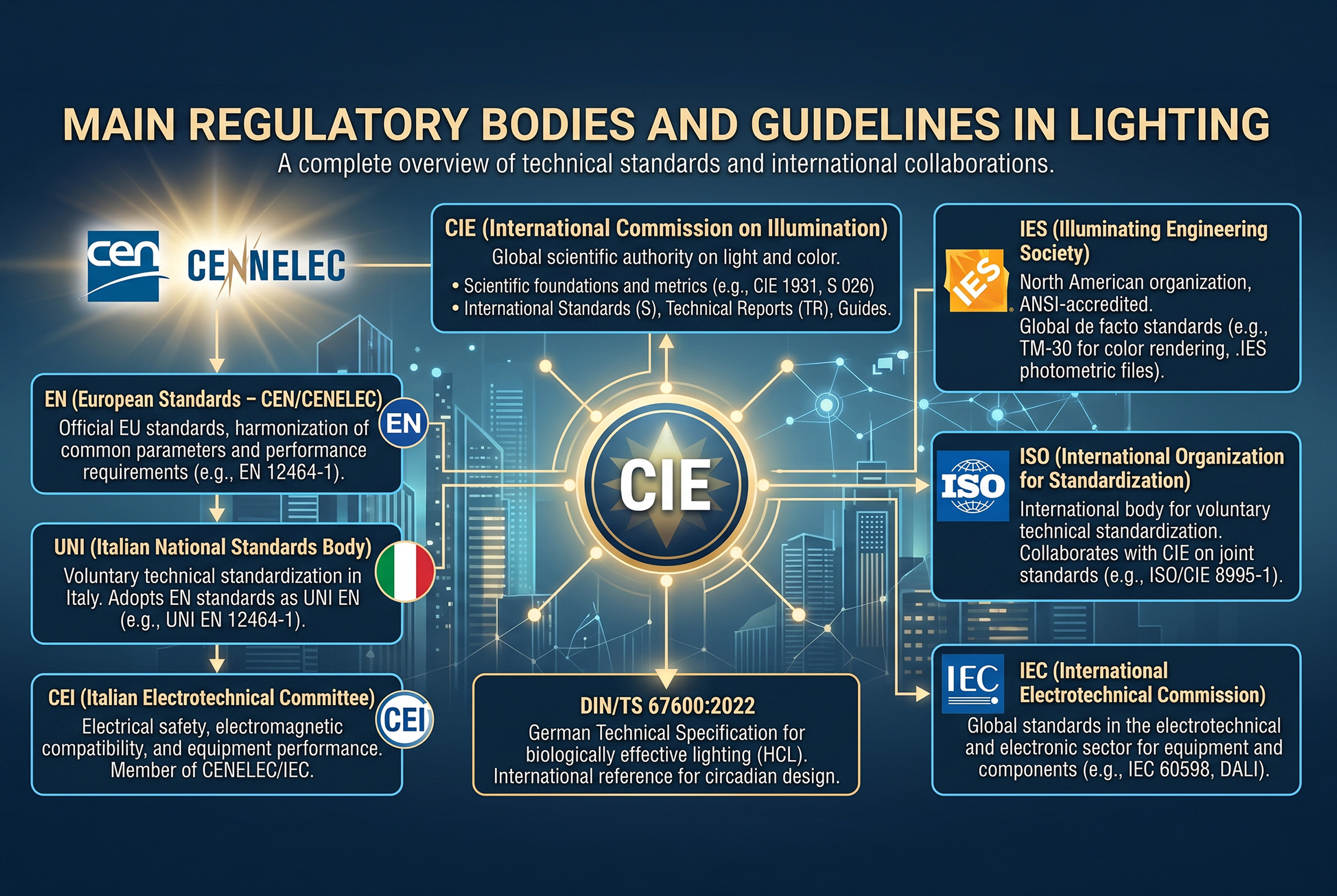
Main Regulatory Bodies and Guidelines in Lighting Technology A comprehensive framework on technical standards, international collaborations and key documents for designing light according to scientific and performance criteria. CIE (International Commission on Enlightenment) Regulatory role and authority - The CIE (Commission Internationale de l'Éclairage) is recognized as the leading international scientific authority in the field of light, color and lighting. Founded in 1913, it is an independent, non-governmental, non-profit organization that operates as a global reference body for the definition…
Standard-Lighting-Measurements-(LM)-dell’IES-Codici,-Struttura-e-Implicazioni-Progettuali_Copertina-eng
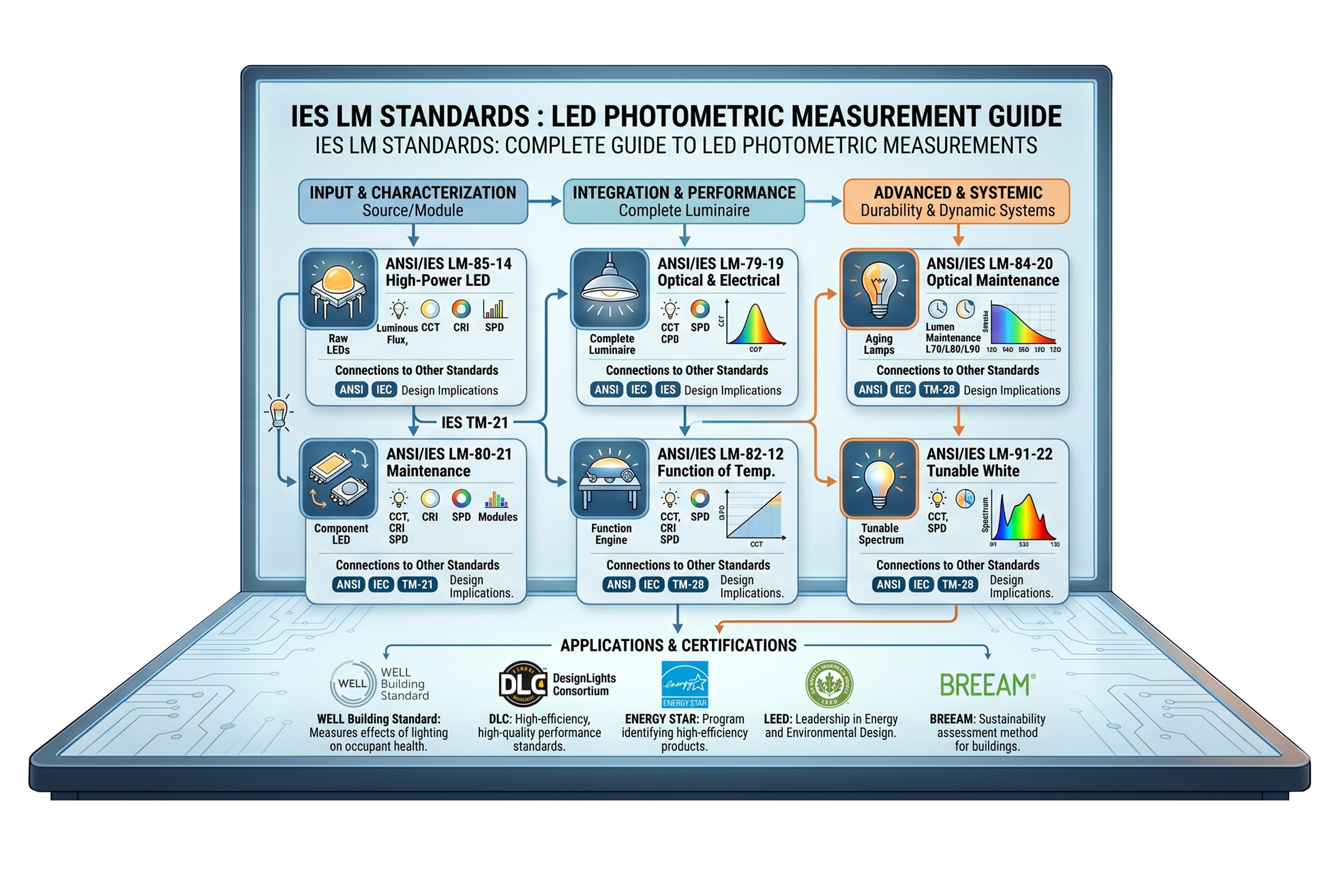
IES Standard Lighting Measurements (LM): Codes, Structure, and Design Implications Technical guide to LM standards for measuring the photometric, chromatic, and electrical performance of LEDs, modules, and luminaires. After having illustrated the function of the Technical Memoranda (TM) of the Illuminating Engineering Society (IES) as technical support tools oriented towards innovation and the definition of emerging guidelines, it is essential to introduce another central regulatory category into the IES system: the documents marked with the acronym LM (Lighting Measurements). These…
Standard-Technical-Memoranda-(TM)-dell’IES-Codici,-Struttura-e-Implicazioni-Progettuali_Copertina-eng
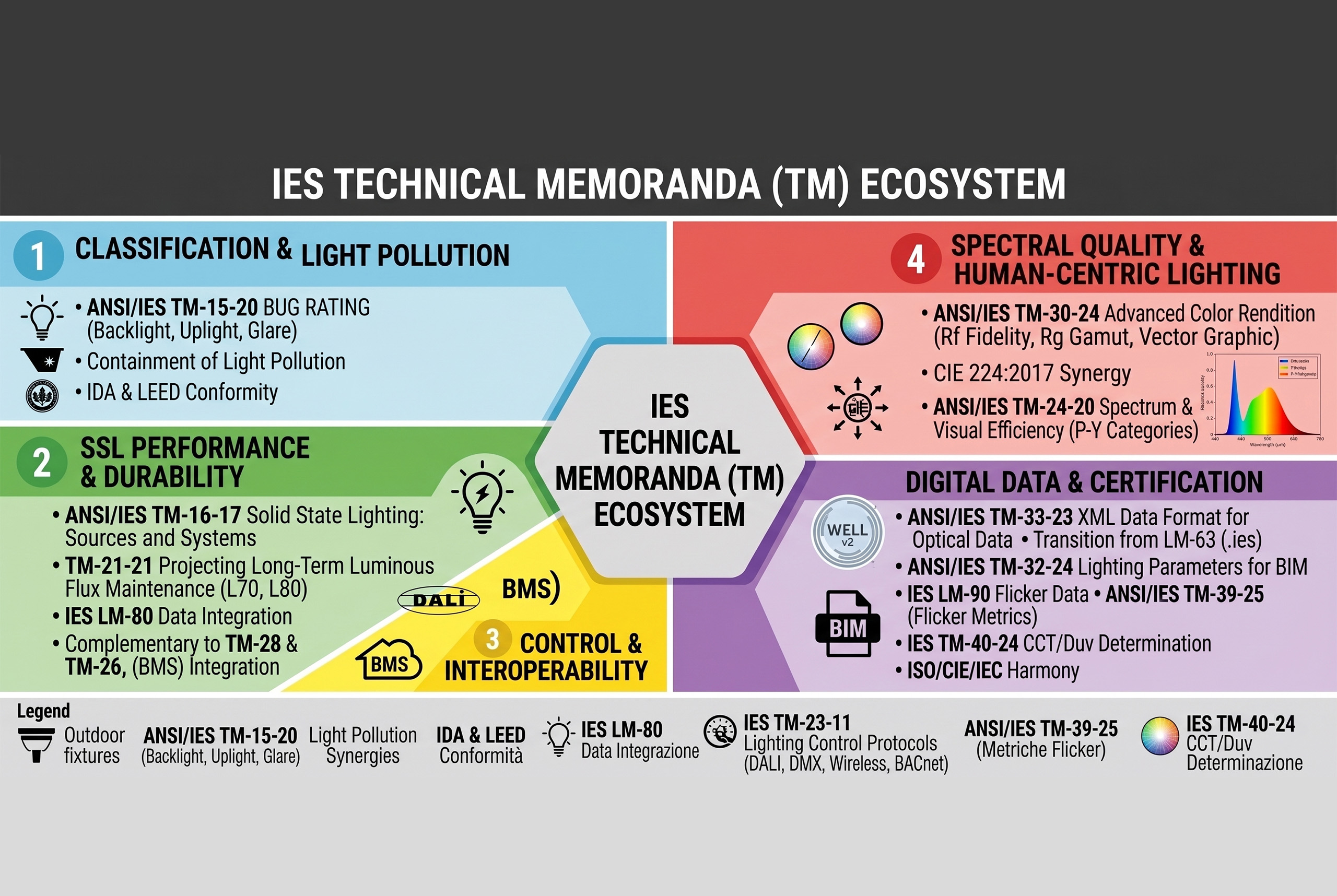
IES Standard Technical Memoranda (TM): Codes, Structure, and Design Implications A technical guide to the use and interpretation of TM documents in lighting design The following insight is dedicated to the Technical Memoranda (TM) published by Illuminating Engineering Society (IES), a collection of technical documents that define methodologies, evaluation criteria and operational guidelines on specific and emerging issues in the field of lighting technology each document is identified by a unique code in the format ANSI/IES TM-##-YY, in which the…
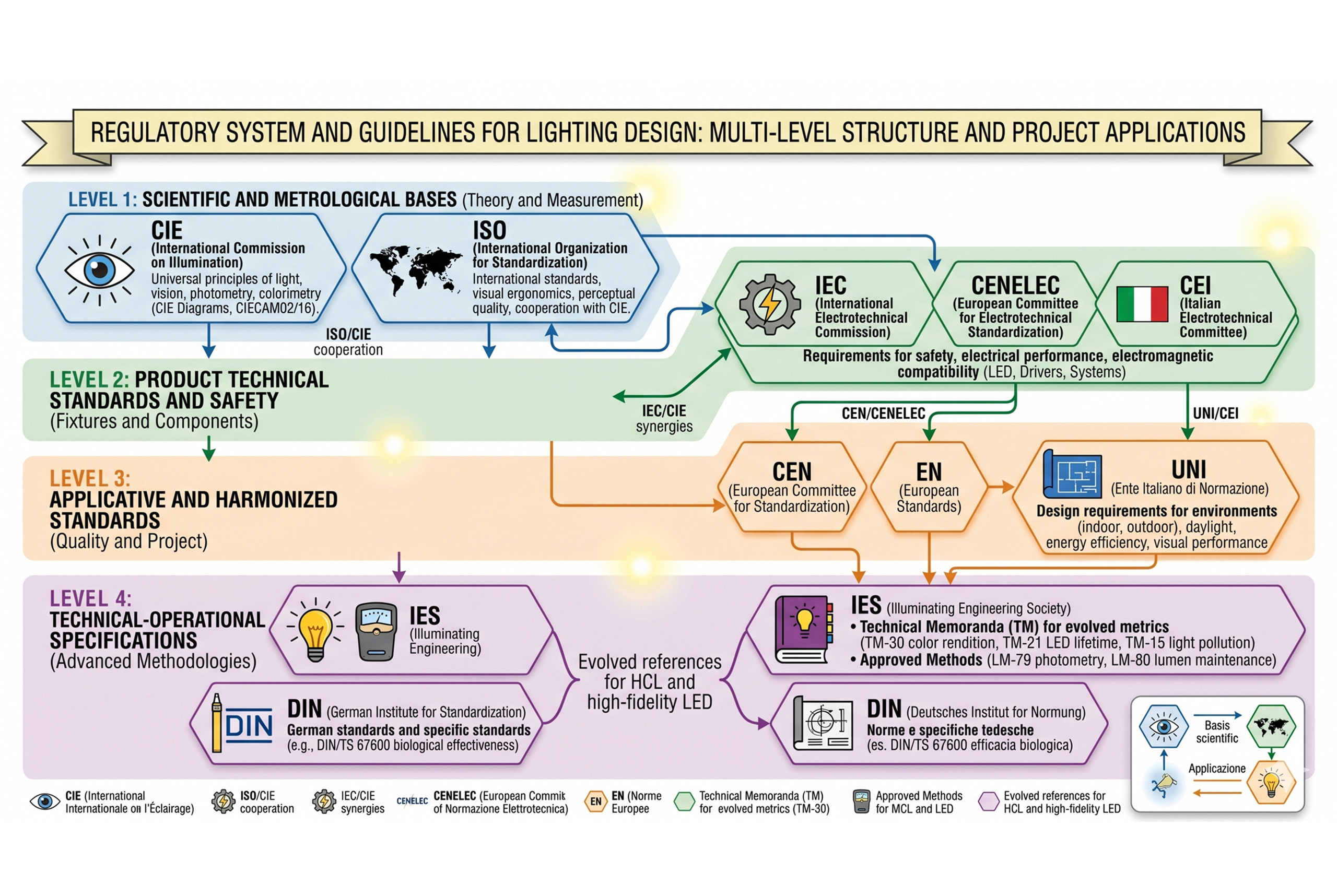
Authoritative Standards and Guidelines in Lighting Technology: Multilevel Structure and Design Applications A complex regulatory system for designing light with technical rigor and application coherence The evolution of light sources – in particular the capillary diffusion of composite spectrum LEDs – has brought about a radical transformation in the way of design, evaluate and regulate the light. As highlighted in the discussion on CIE diagram 1931, the traditional chromatic instruments, while retaining a role historical and regulatory, are revealed today…
With the advent of LED sources, can we define the 1931 CIE diagram as obsolete? Formally no, but practically yes, in many application contexts. Now that we have understood how the spectral distribution of light influences the color rendering, visual perception and biological effects of light radiation, it is necessary to introduce a fundamental tool to represent and quantify the color of light: the chromaticity diagram. To fully understand the color perception in lighting design, it is of fundamental importance…
digital light and perceived thresholds - cover
Digital Lighting and Visual Perception: the Dissolution of the See/Understand Relationship How electric light is changing the relationship between seeing, experiencing, and understanding the world In today's era of digital enlightenment, characterized by bright screens, sensors and omnipresent LED sources, a crisis is emerging in the traditional paradigm according to which seeing is equivalent to understanding. For centuries, the light It has been a privileged metaphor for truth and knowledge (the "lights" of reason, spiritual enlightenment): "light presents itself as…
Electroluminescence Process in LED Semiconductor Devices
How LEDs Work: Electroluminescence, Materials, and the Light Spectrum From semiconductor structure to color rendering: how LED light takes shape Visible light, although perceived as a continuous and unified phenomenon, is actually composed of a multiplicity of wavelengths, each corresponding to a specific stimulation of the visual system. The ability of a light source to ensure natural vision and accurate color rendering depends on its spectral distribution, namely on how luminous energy is distributed within the visible spectrum, ranging approximately…
Fundamental Properties of Electromagnetic-Waves Amplitude and Wavelength
Visible Light and the Electromagnetic Spectrum: Physical Principles for Lighting Design How wavelengths influence perception, color, and light design After examining how the human eye adapts to different illumination levels through photopic, scotopic, and mesopic visual modes, and after exploring the non-visual effects of light on the melanopic system and circadian balance, it is now necessary to take a step back in order to understand the physical nature of light. To design light correctly, in fact, it is not enough…
Visual Signal Transmission Pathway in the Human Retina
Photopic vs Melanopic Illuminance: Definition and Spectral Sensitivity MEDI, EML, and CS. Three essential indicators for measuring the circadian impact of artificial light The perception of light varies according to illumination levels and activates different visual mechanisms. Depending on ambient luminance, the human eye enters a state of photopic, scotopic, or mesopic vision, each mediated by specific photoreceptors and characterized by different perceptual responses. Understanding which visual dominance prevails within a given context is essential for designing coherent lighting scenarios,…
Light Perception Human Eye Capabilities and Limitations
Light Perception: Capabilities and Limits of the Human Eye Understanding how the human eye works is the first step toward designing light with awareness  The human eye is a highly evolved organ, capable of adapting to extreme lighting conditions, distinguishing details with remarkable precision, perceiving a wide chromatic range, and detecting movement with great sensitivity. However, it also presents physiological limitations, such as slow adaptation to darkness, loss of color perception under low-light conditions, sensitivity to glare, and reduced sharpness…
Lighting-Design-e-Teoria-della-Luce
Lighting Design and Light Theory Complexity in the relationship between light, perception, and design   How does a lighting designer develop a lighting project? Which disciplines should a rigorous lighting design study rely upon? How can lighting design improve visual comfort, reduce energy consumption, and enhance the value of a space? Why is it essential for light to be designed in relation to the different activities and functions taking place within an environment? To address these questions, understanding only the…
MENU