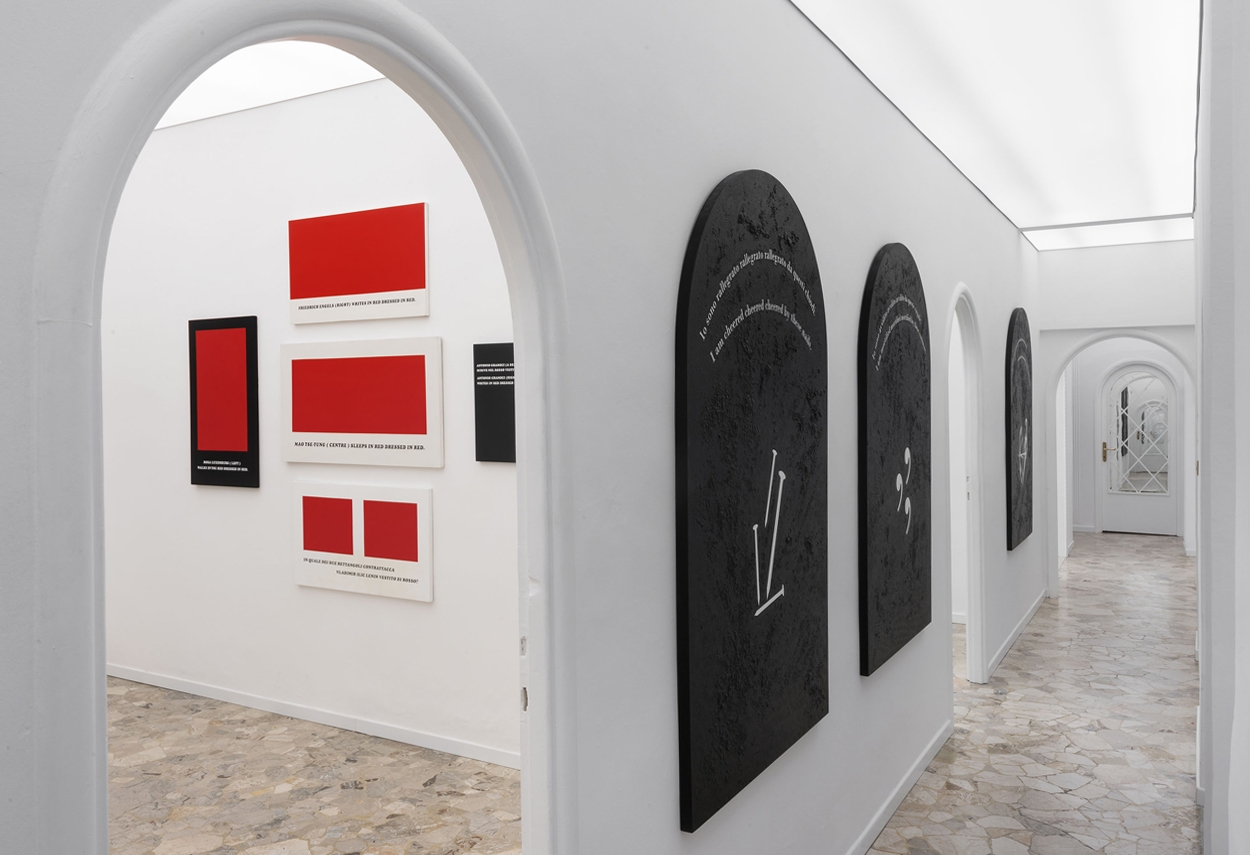
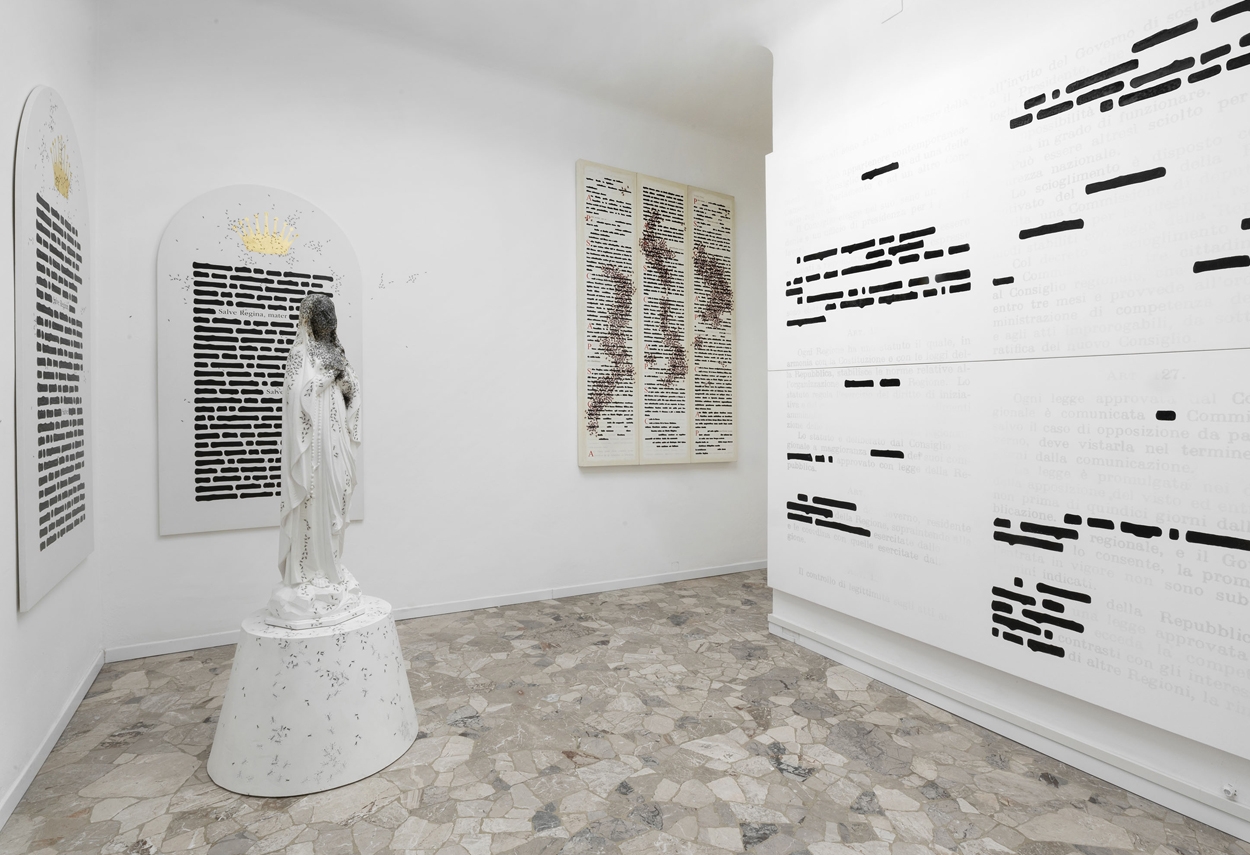
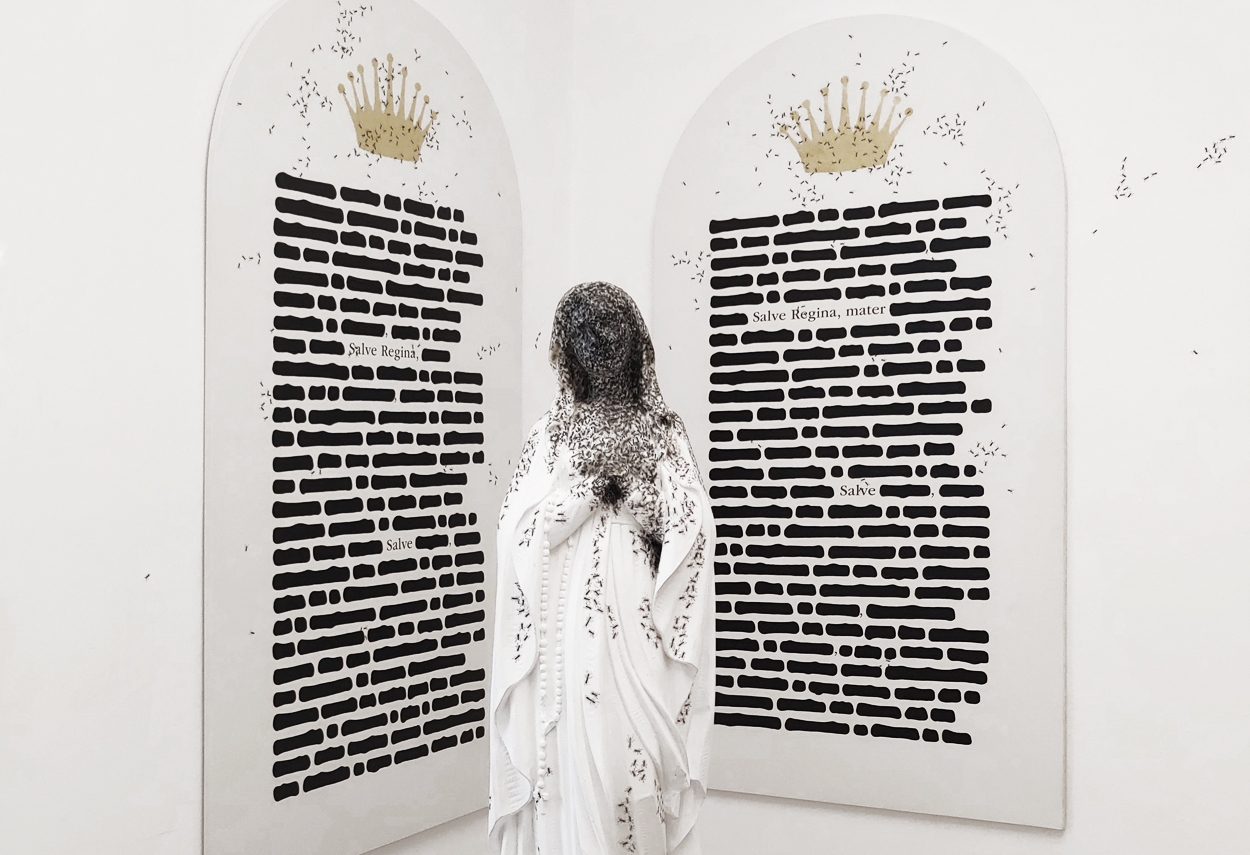
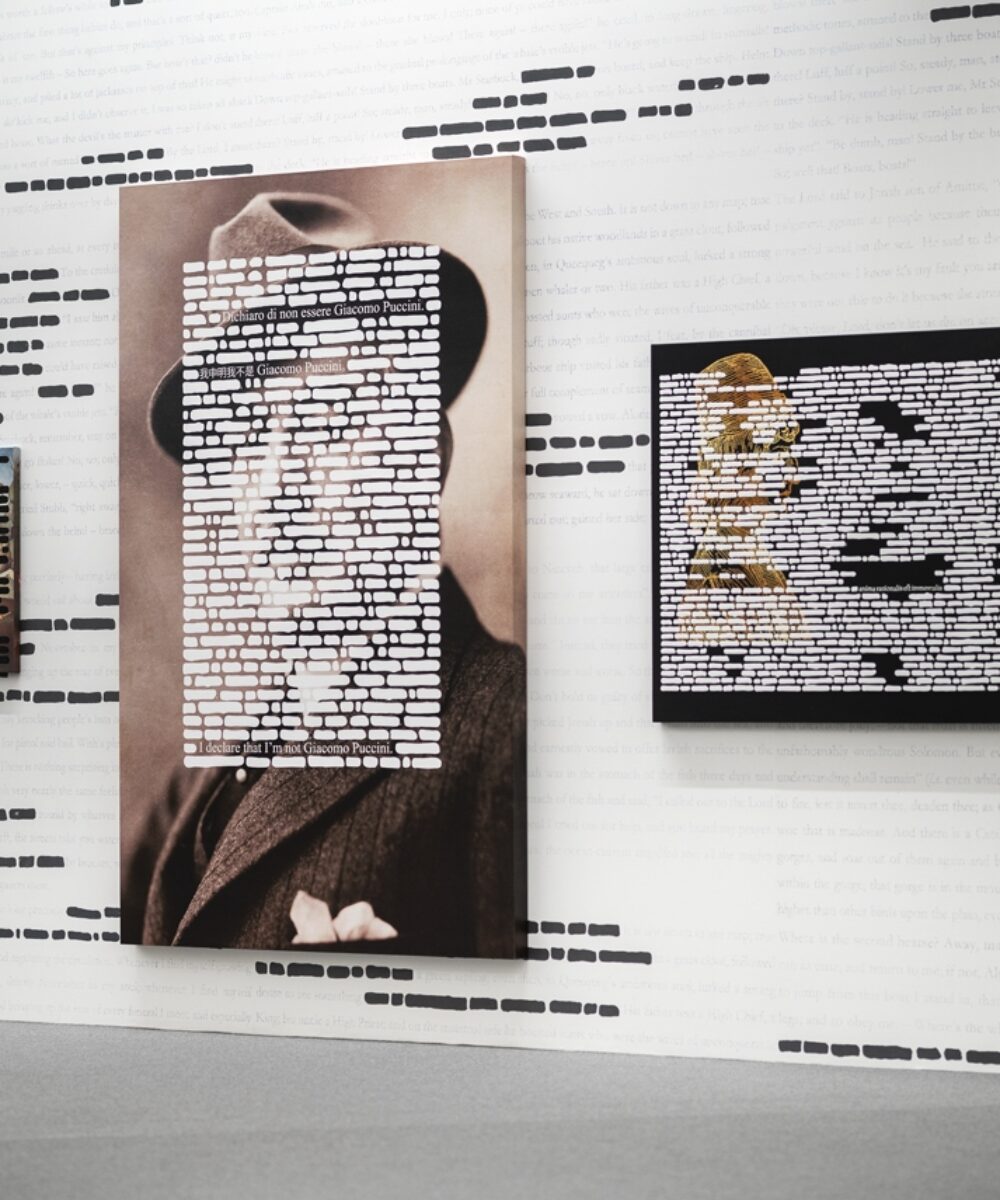
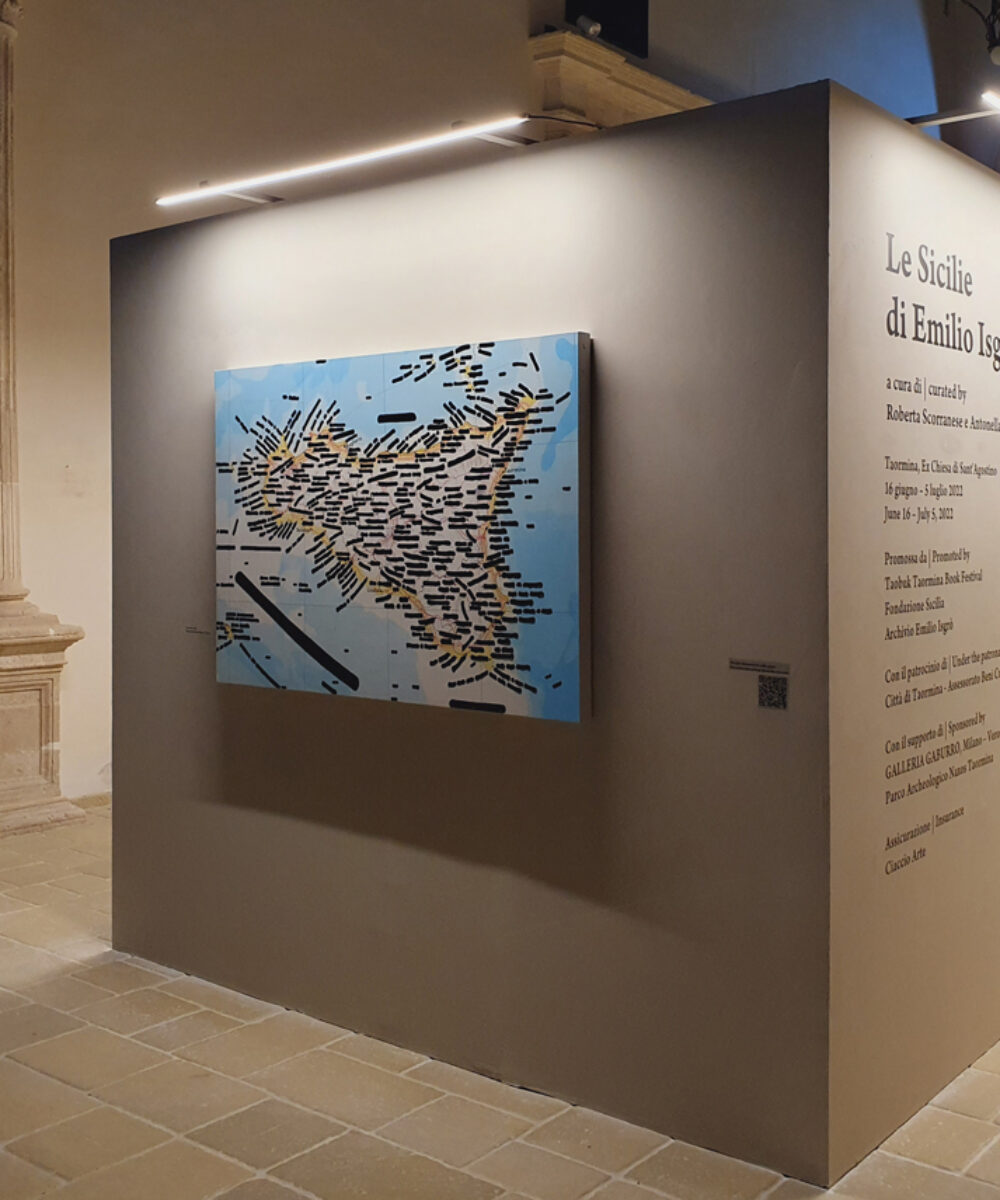
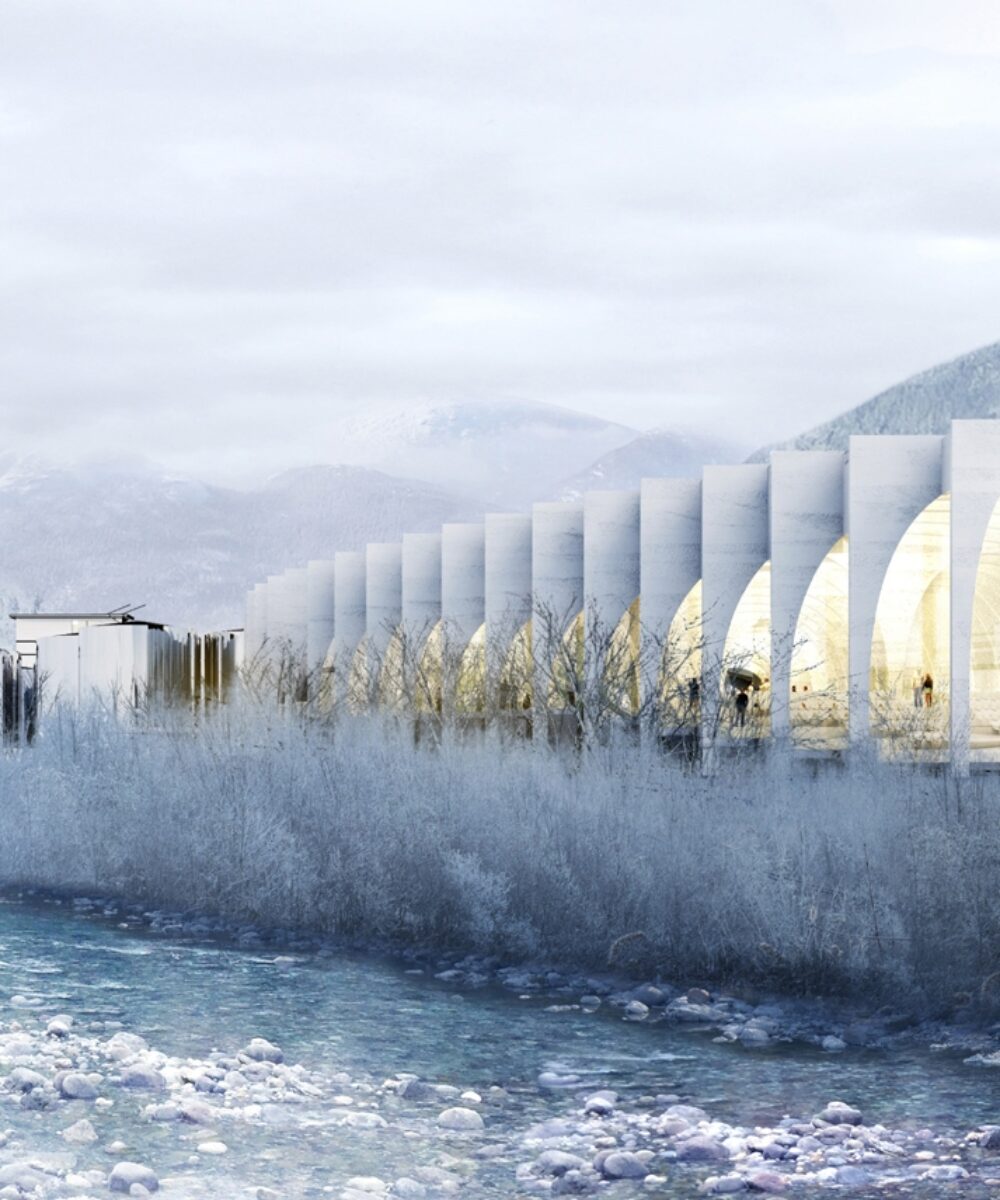
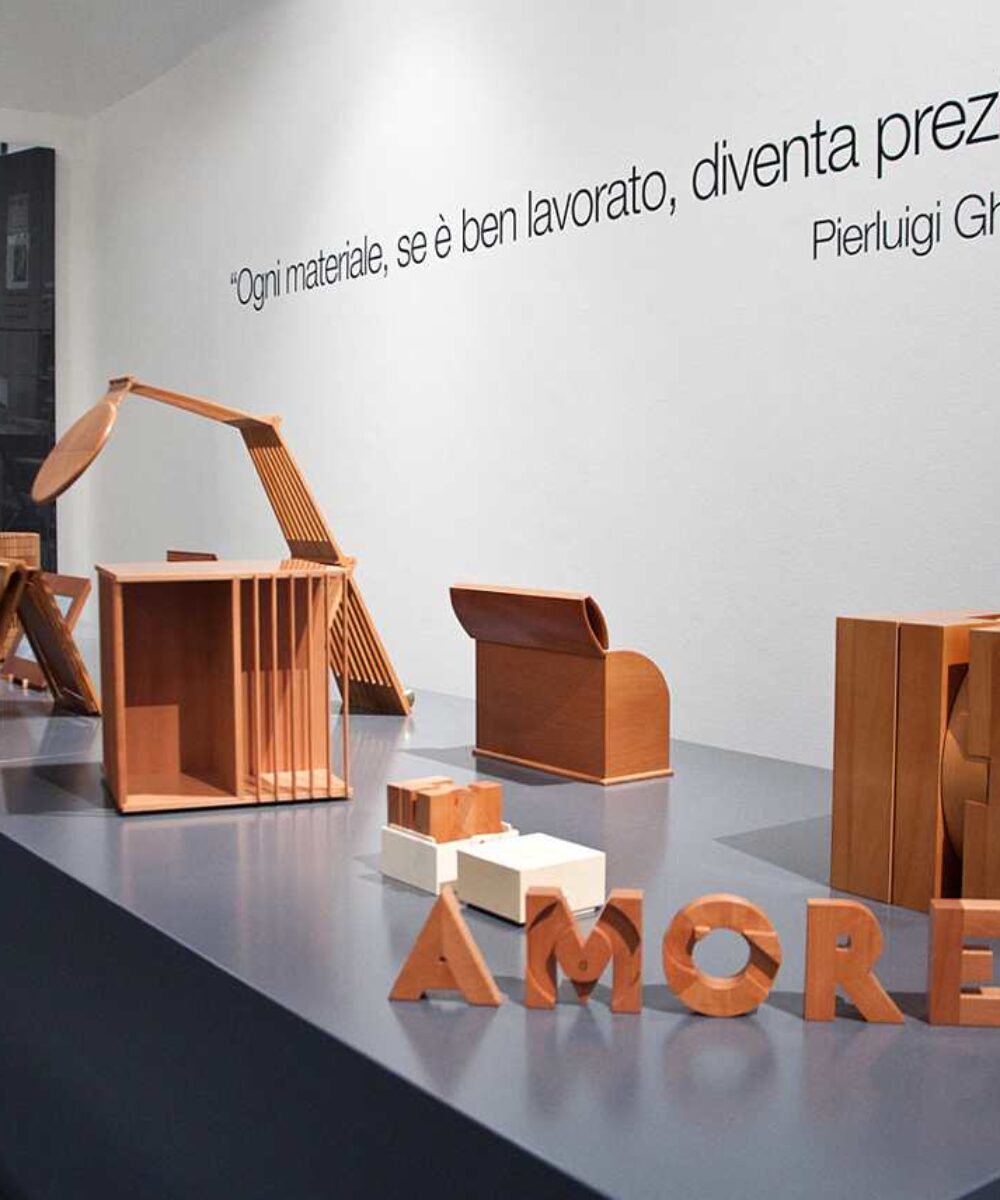
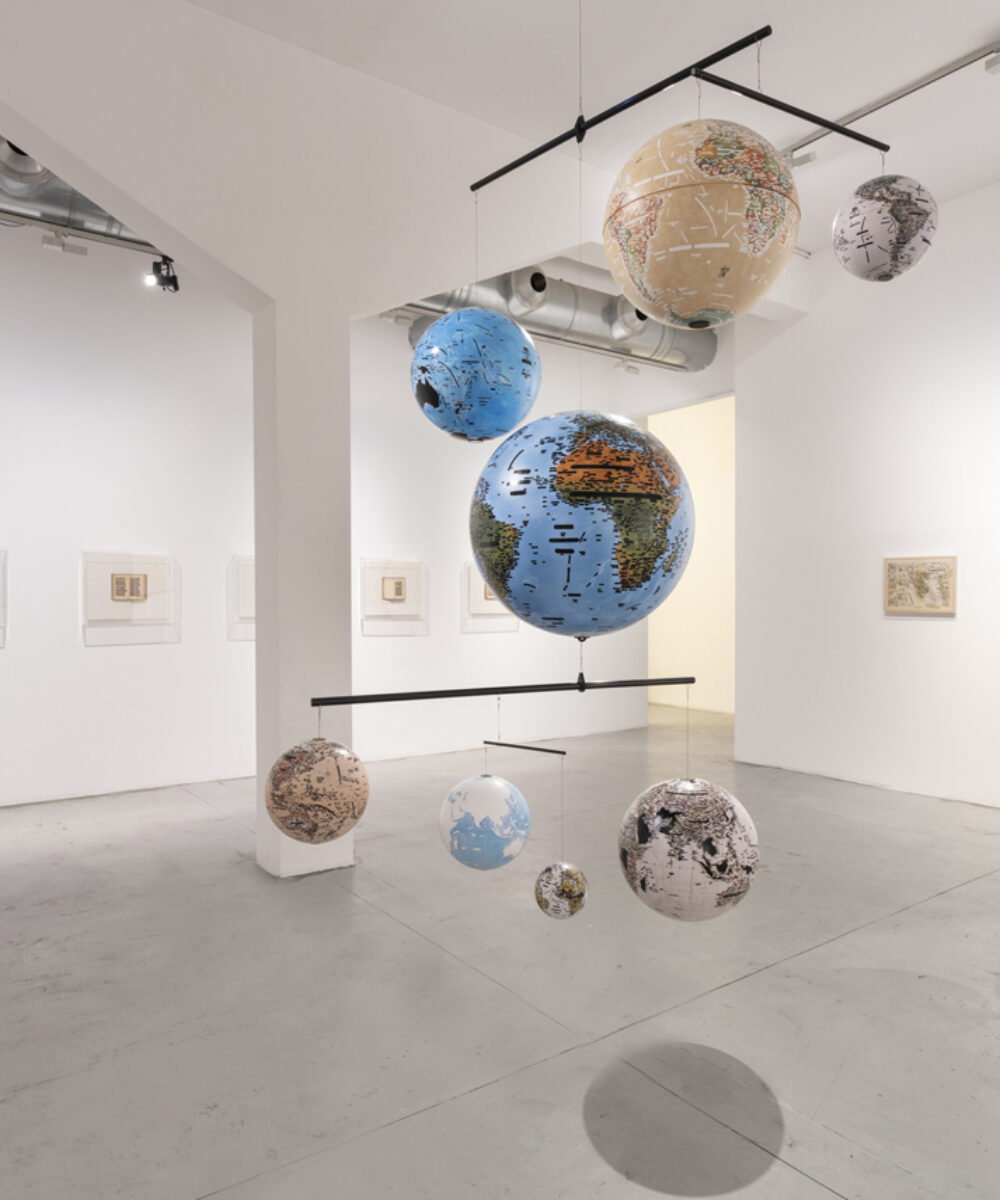
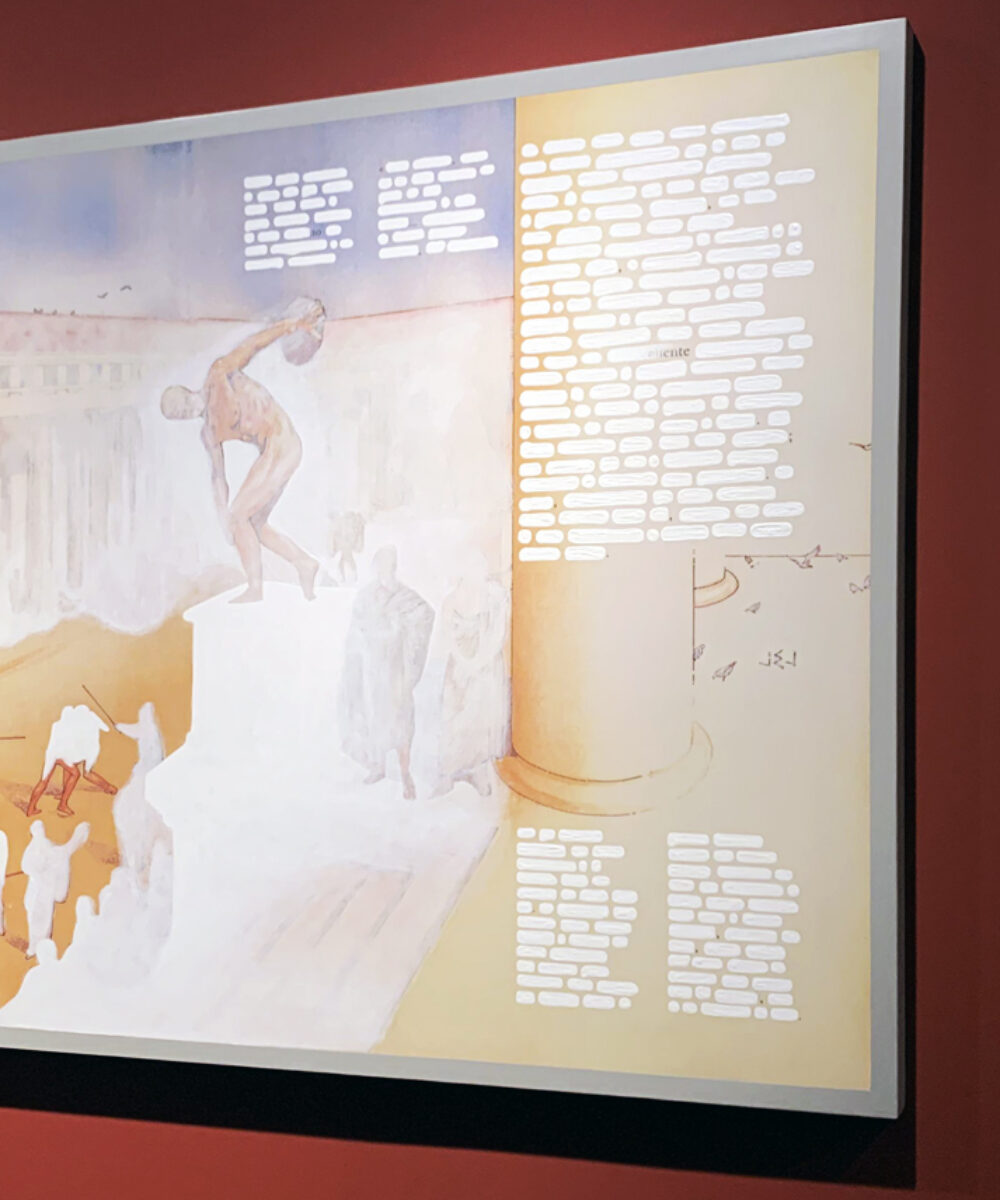
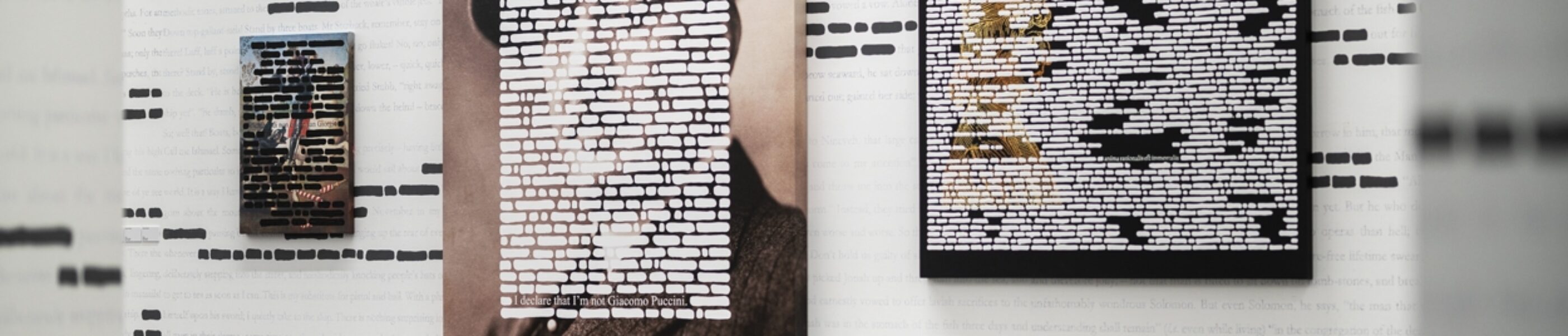
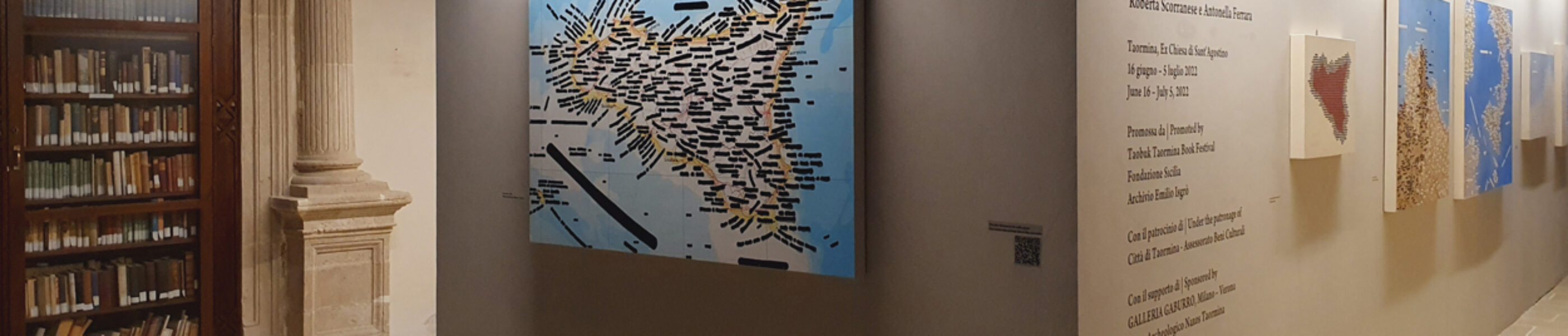
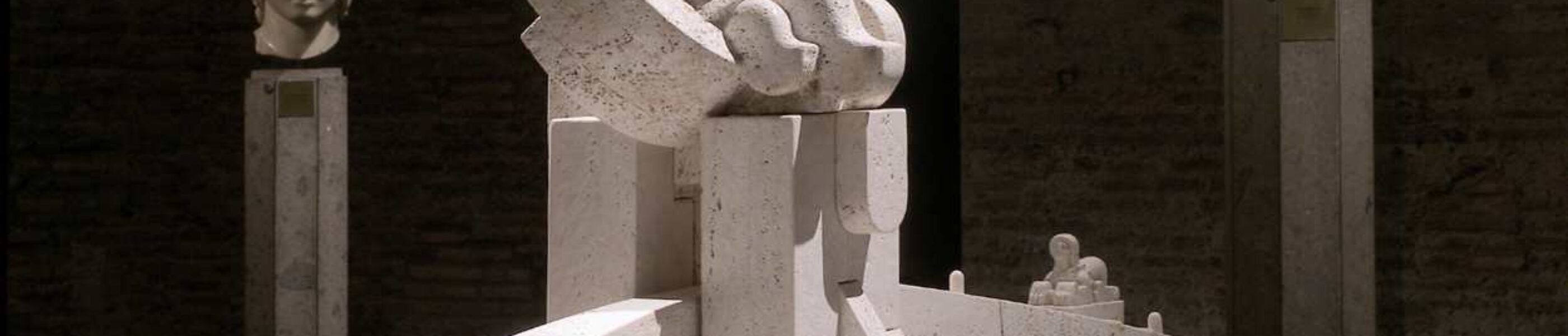
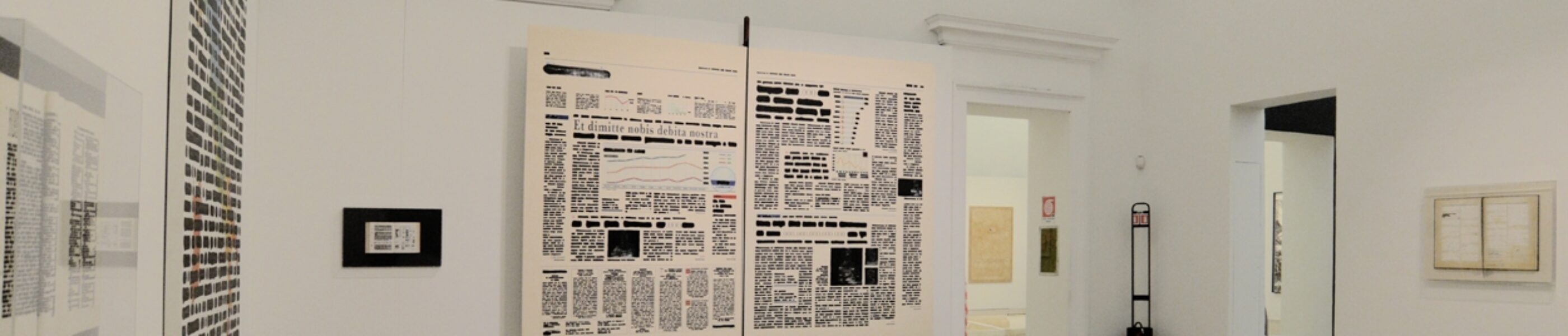
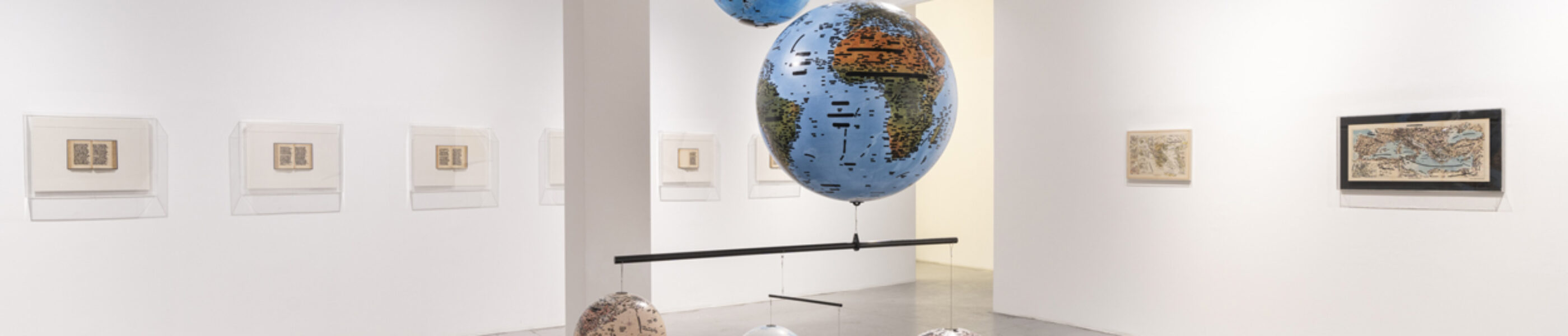
Organized as an unbroken succession of white cubes and walls, the museum was conceived by its two namesakes in order to fulfill a dual task: on the one hand, to archive, preserve and disseminate the memory of Isgrò’s fifty years of work and, on the other, to exhibit approximately 100 works.
The integration of the lighting with the architecture was the basis for the lighting design.
The large exhibition halls are illuminated by a "luminous ceiling". A Barrisol-technology PVC cloth diffuser carries out the dual function of illuminating the spaces below it and concealing the technological systems.
The cloth is backlit with linear LED devices, specially positioned to achieve an uneven, rhythmic effect on it while providing soft, shadowless even lighting for the exhibition spaces, with suitable illuminance values for the type of use.
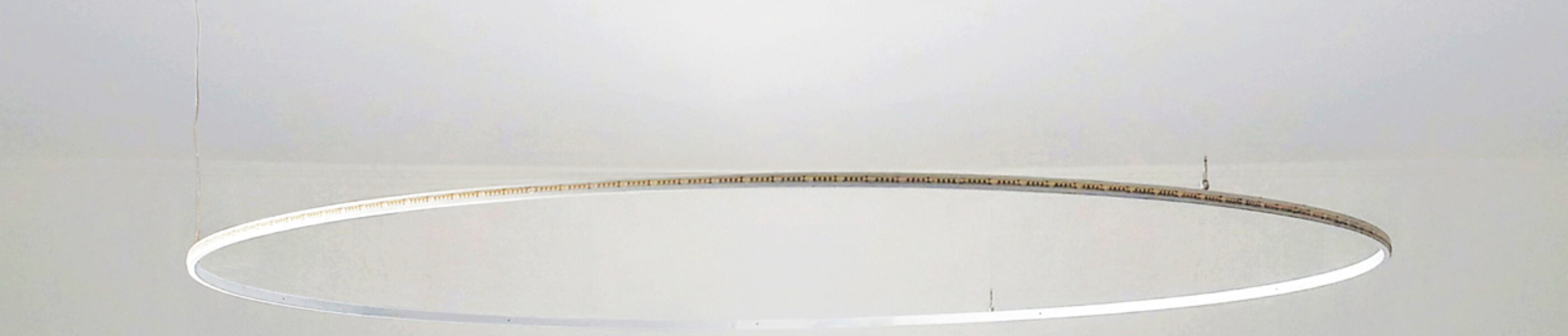
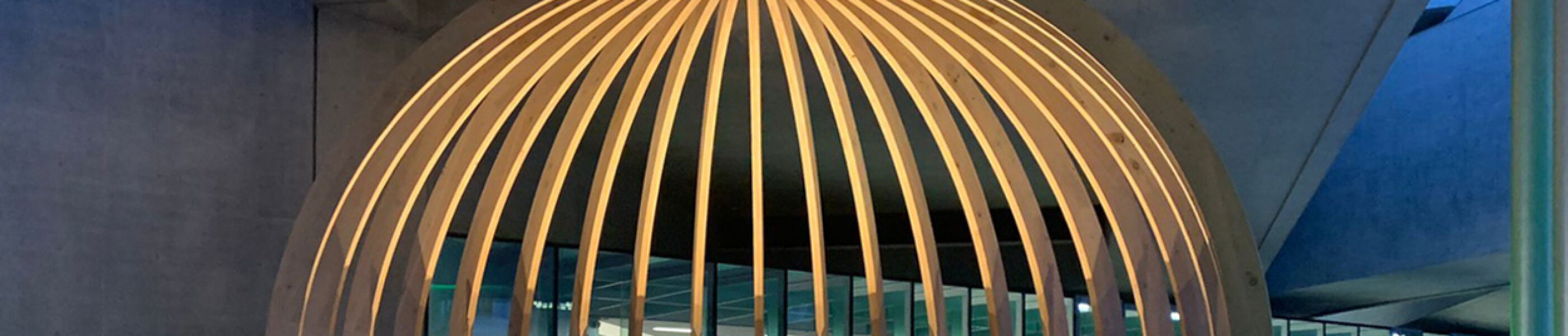
Led light design is characterised by pendant lighting were specially designed using the same Barrisol-technology PVC diffuser for the smaller exhibition rooms. The lamps are of various shapes and sizes in relation to the spaces, with a limited height and linear LED sources positioned along the perimeter. The lighting project thus enables the maximum flexibility for arranging works.
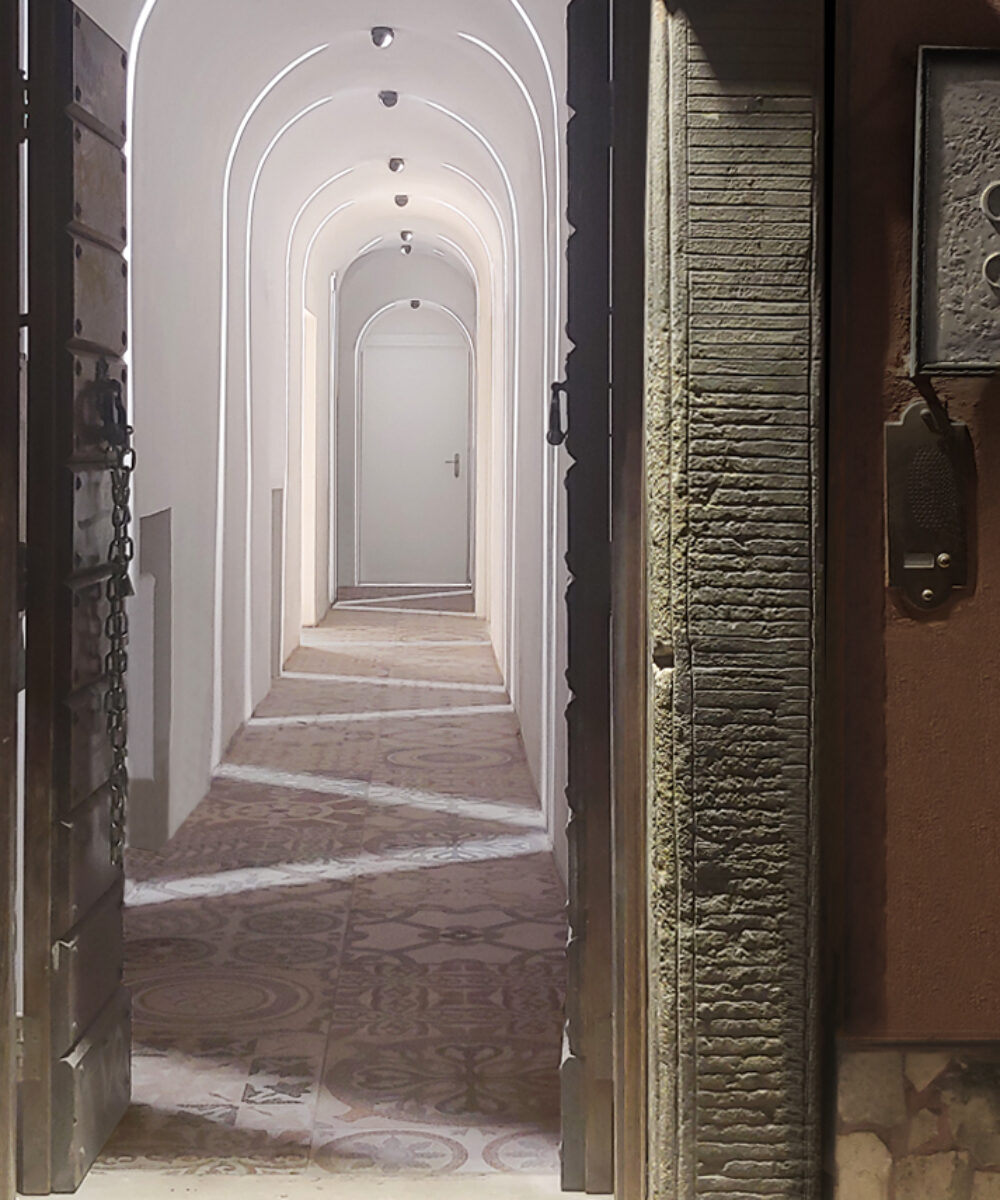
The simultaneous elaboration of the interior design project with the project lighting design makes it possible to develop a tailor-made lighting layout, where it may happen that construction details are modified by virtue of the lighting choices. As in this case, the ceiling finish of the corridor, for example, is given by the pvc diffuser sheet. The architecture itself becomes a lamp, through the 'luminous ceiling'.
Client:
Piero Castiglioni
Collaborations:
Marco Bazzini
Emilio Isgrò
Photo Courtesy:
Piero Castiglioni
Emilio Isgrò
Year:
2018
Organized as an unbroken succession of white cubes and walls, the museum was conceived by its two namesakes in order to fulfill a dual task: on the one hand, to archive, preserve and disseminate the memory of Isgrò’s fifty years of work and, on the other, to exhibit approximately 100 works.
The integration of the lighting with the architecture was the basis for the lighting design.
The large exhibition halls are illuminated by a "luminous ceiling". A Barrisol-technology PVC cloth diffuser carries out the dual function of illuminating the spaces below it and concealing the technological systems.
The cloth is backlit with linear LED devices, specially positioned to achieve an uneven, rhythmic effect on it while providing soft, shadowless even lighting for the exhibition spaces, with suitable illuminance values for the type of use.
Led light design is characterised by pendant lighting were specially designed using the same Barrisol-technology PVC diffuser for the smaller exhibition rooms. The lamps are of various shapes and sizes in relation to the spaces, with a limited height and linear LED sources positioned along the perimeter. The lighting project thus enables the maximum flexibility for arranging works.
The simultaneous elaboration of the interior design project with the project lighting design makes it possible to develop a tailor-made lighting layout, where it may happen that construction details are modified by virtue of the lighting choices. As in this case, the ceiling finish of the corridor, for example, is given by the pvc diffuser sheet. The architecture itself becomes a lamp, through the 'luminous ceiling'.
Client:
Piero Castiglioni
Collaborations:
Marco Bazzini
Emilio Isgrò
Photo Courtesy:
Piero Castiglioni
Emilio Isgrò
Year:
2018
Other Projects
Other Projects
This section brings together a representative selection of lighting design projects in the architectural, museum, urban, cultural, retail, hospitality, and infrastructure sectors, both in Italy and abroad. The gallery documents projects of varying scale, function, and context, all sharing an approach to light as a tool for interpreting space, capable of engaging with architecture, artworks, landscape, and contemporary use.
The projects presented range from museums, foundations, and temporary exhibitions to historic buildings, places of worship, public spaces, and urban complexes, including corporate headquarters, private residences, yachts, and lighting masterplans. In each project, light is designed as a controlled material, calibrated to the characteristics of the location, its functional needs, and the perceptual quality of the experience.
Taken together, the collected works convey a vision of lighting design as an integrated process, in which technical rigor, cultural sensitivity, and attention to context contribute to the construction of spatial identity, orientation, and value. The gallery thus takes the form of a design map, capable of demonstrating how light can take on different roles—discrete or declared—while always maintaining coherence, measure, and design awareness.
This section brings together a representative selection of lighting design projects in the architectural, museum, urban, cultural, retail, hospitality, and infrastructure sectors, both in Italy and abroad. The gallery documents projects of varying scale, function, and context, all sharing an approach to light as a tool for interpreting space, capable of engaging with architecture, artworks, landscape, and contemporary use.
The projects presented range from museums, foundations, and temporary exhibitions to historic buildings, places of worship, public spaces, and urban complexes, including corporate headquarters, private residences, yachts, and lighting masterplans. In each project, light is designed as a controlled material, calibrated to the characteristics of the location, its functional needs, and the perceptual quality of the experience.
Taken together, the collected works convey a vision of lighting design as an integrated process, in which technical rigor, cultural sensitivity, and attention to context contribute to the construction of spatial identity, orientation, and value. The gallery thus takes the form of a design map, capable of demonstrating how light can take on different roles—discrete or declared—while always maintaining coherence, measure, and design awareness.