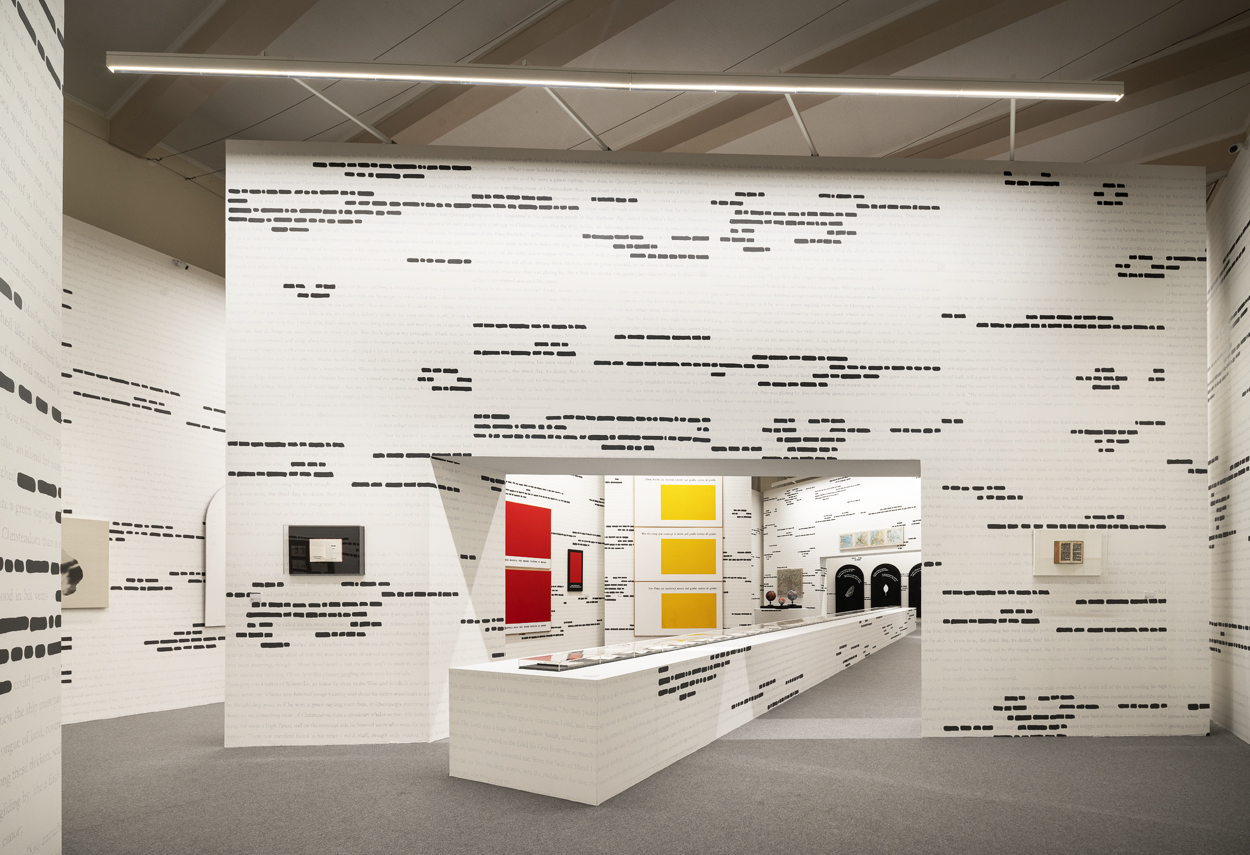
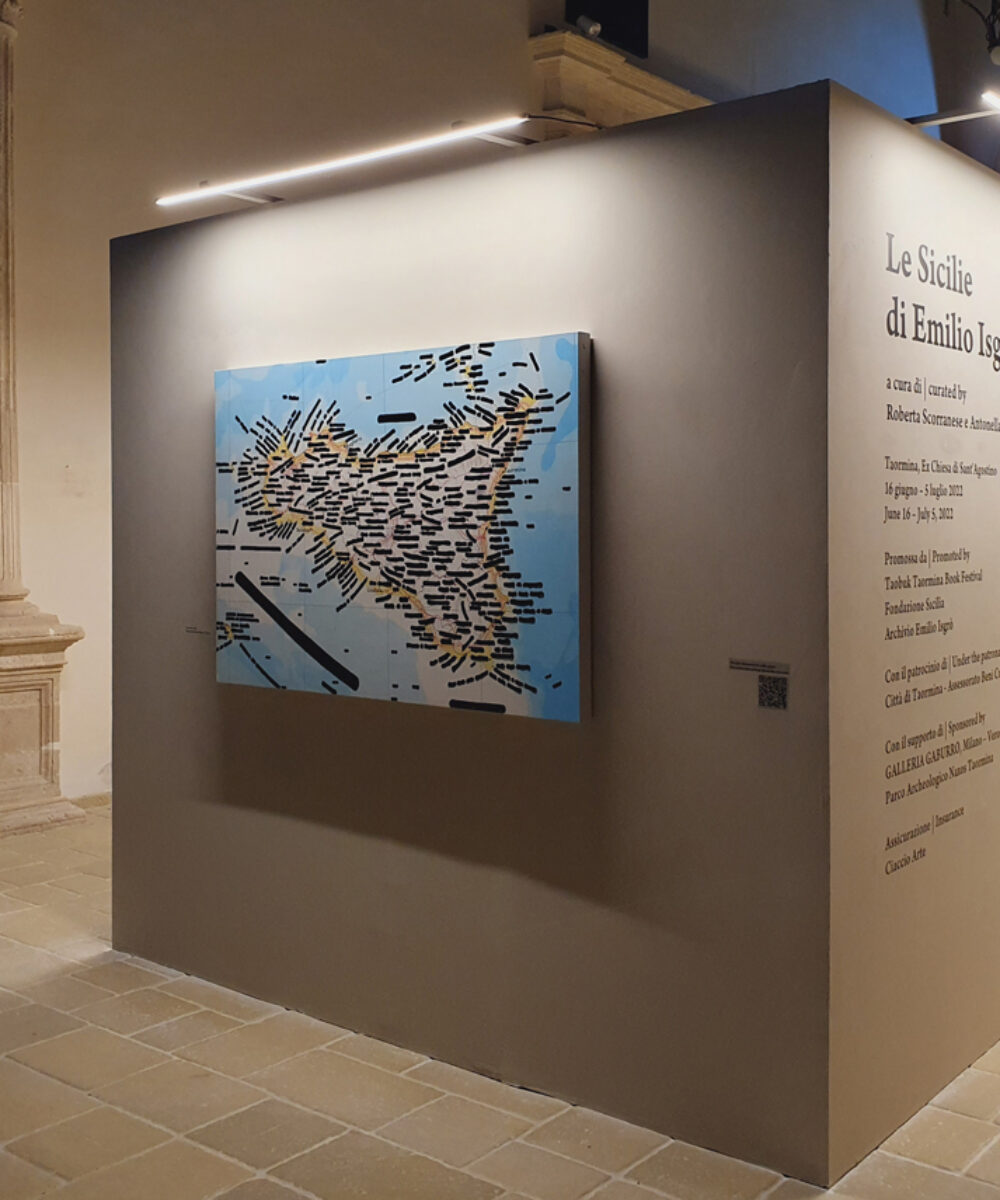
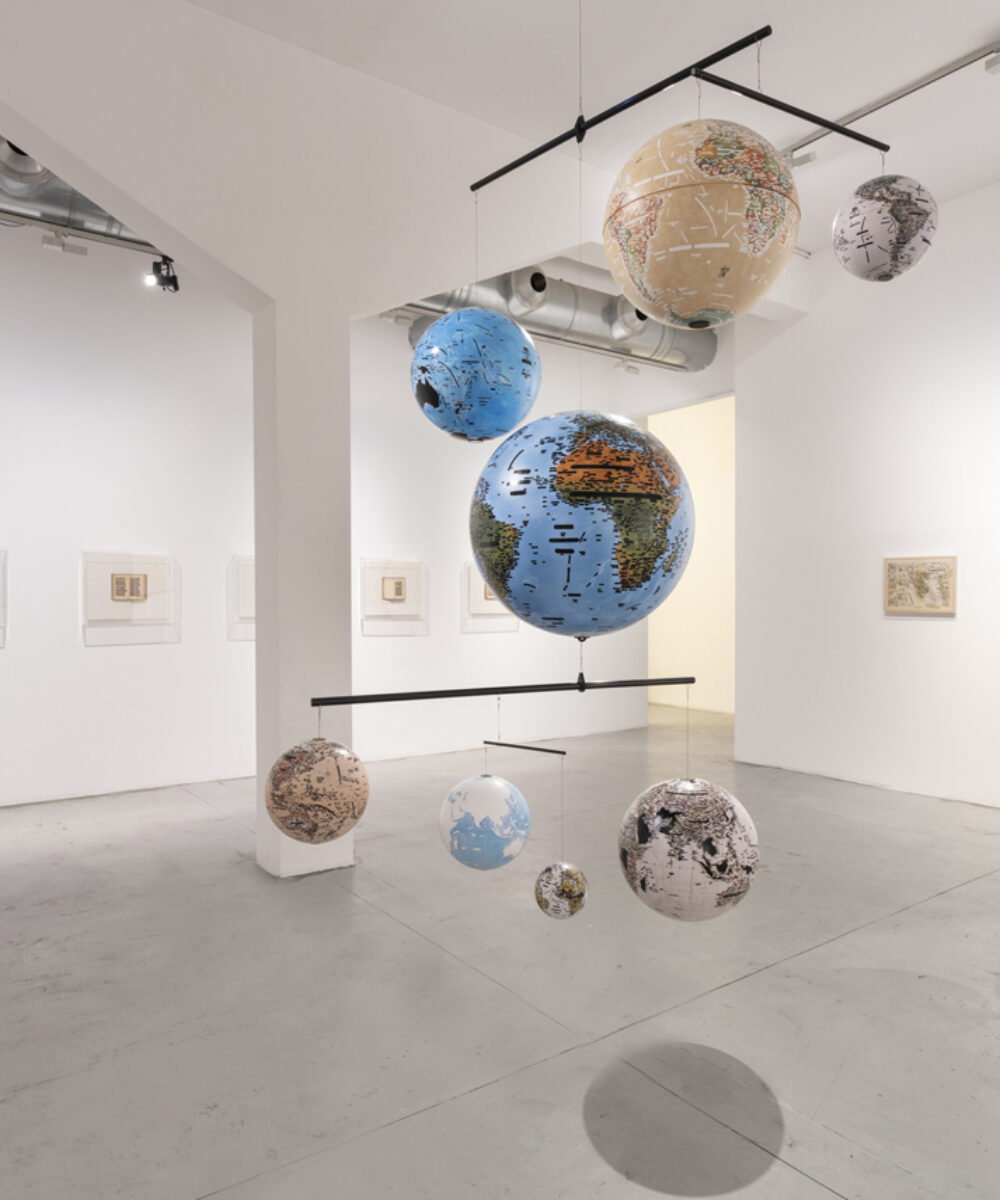
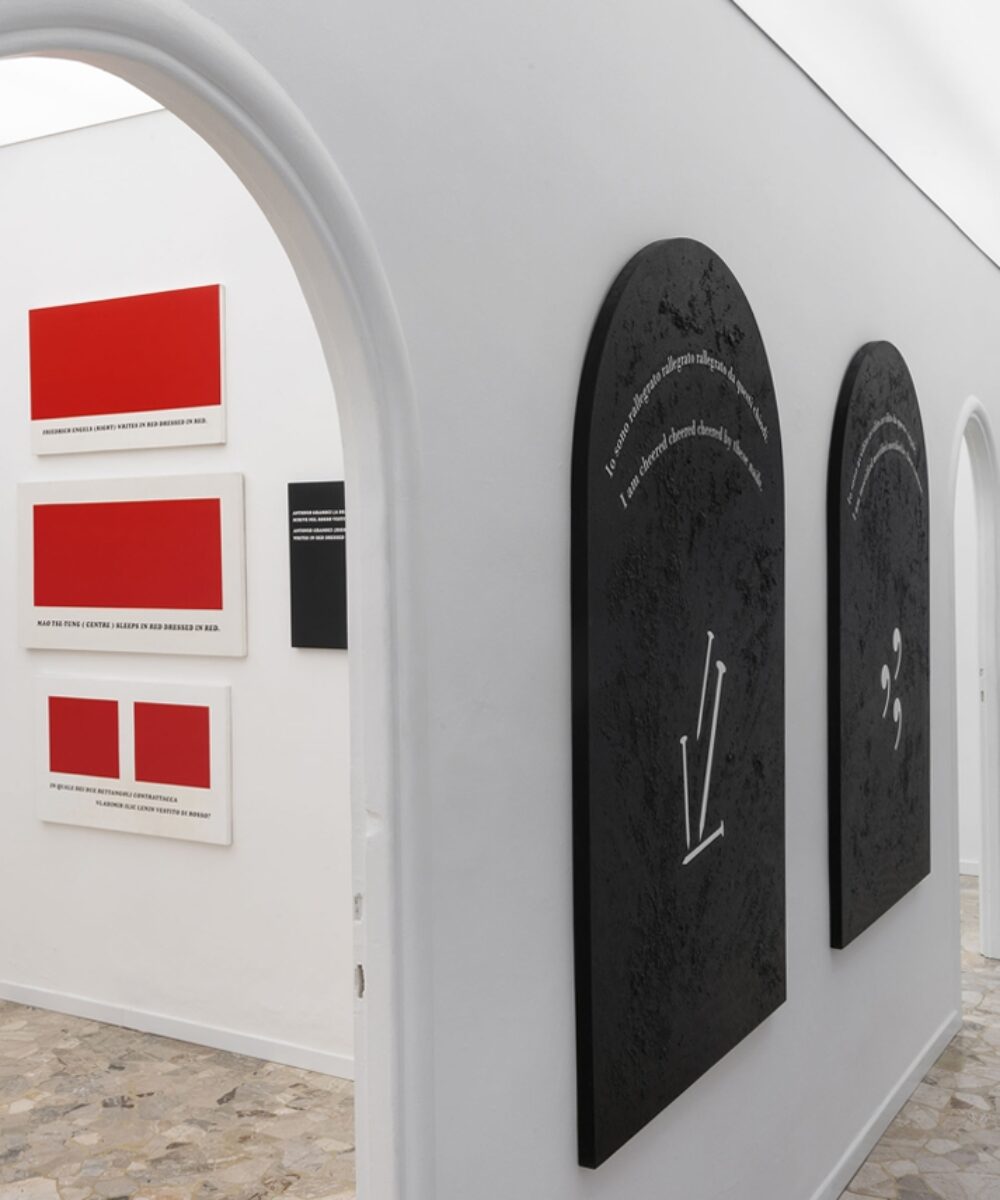
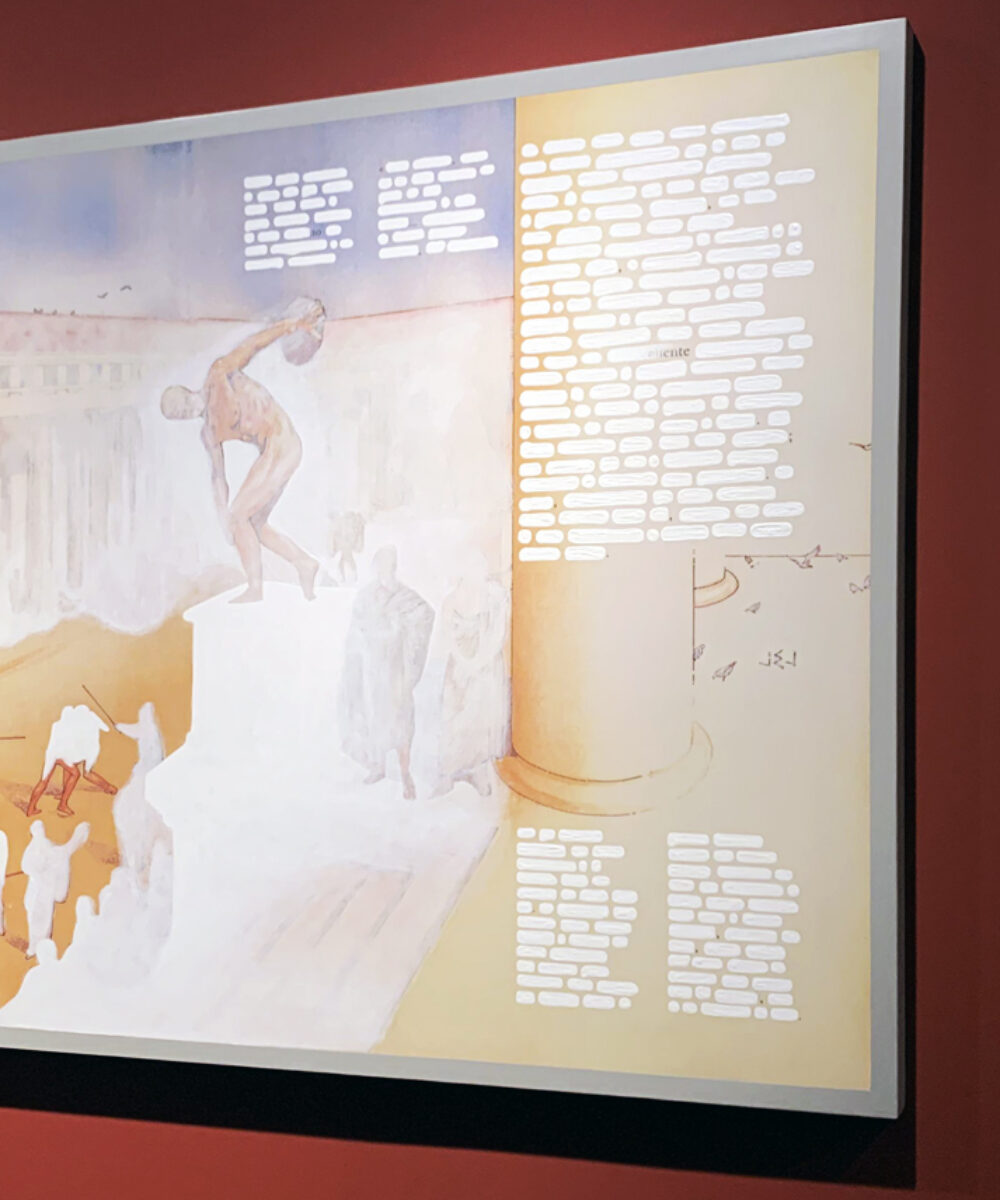
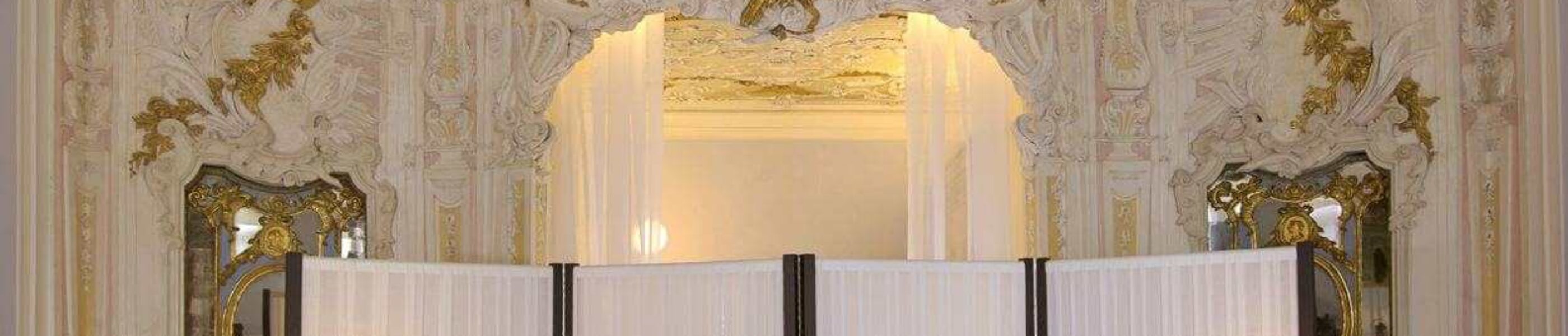
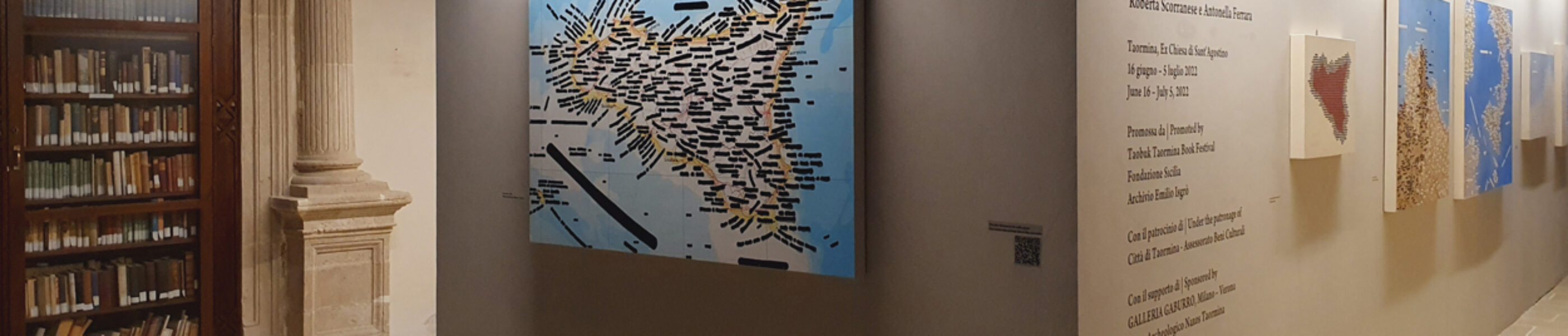
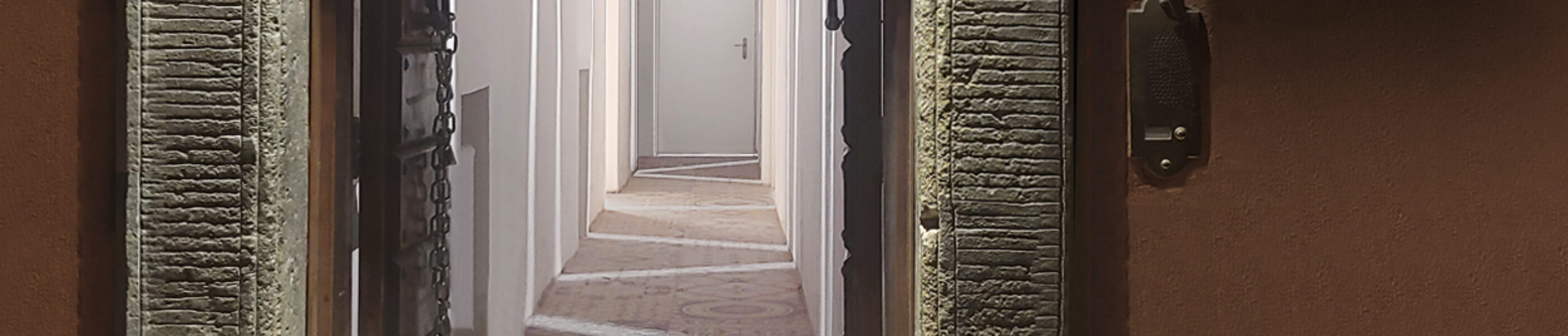
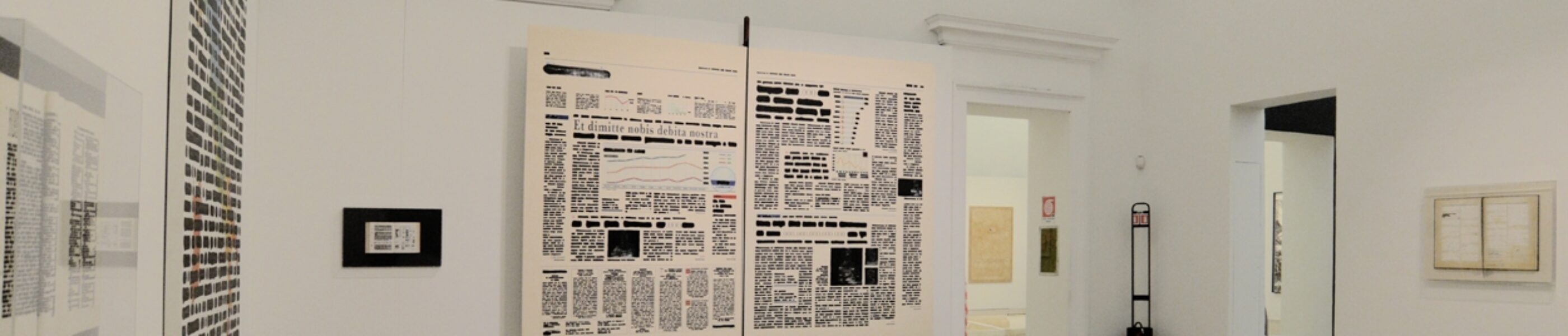
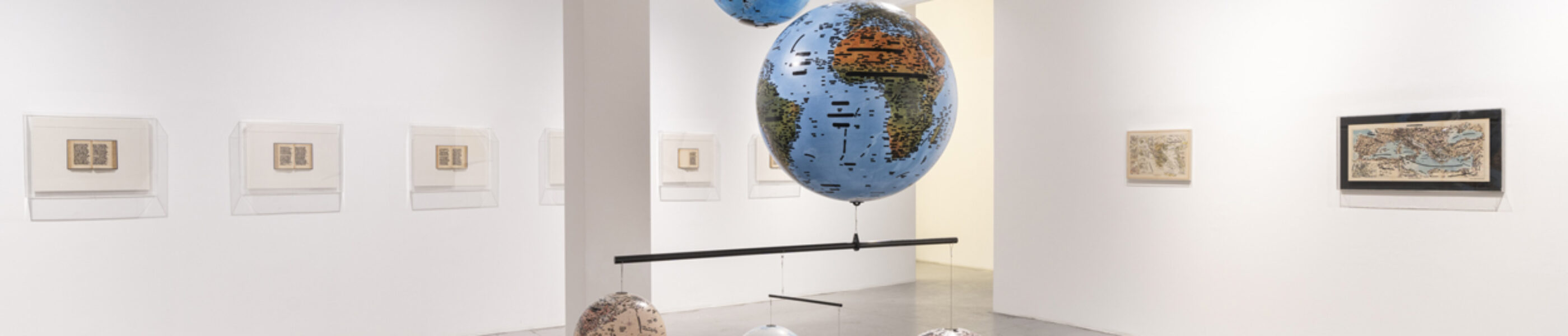
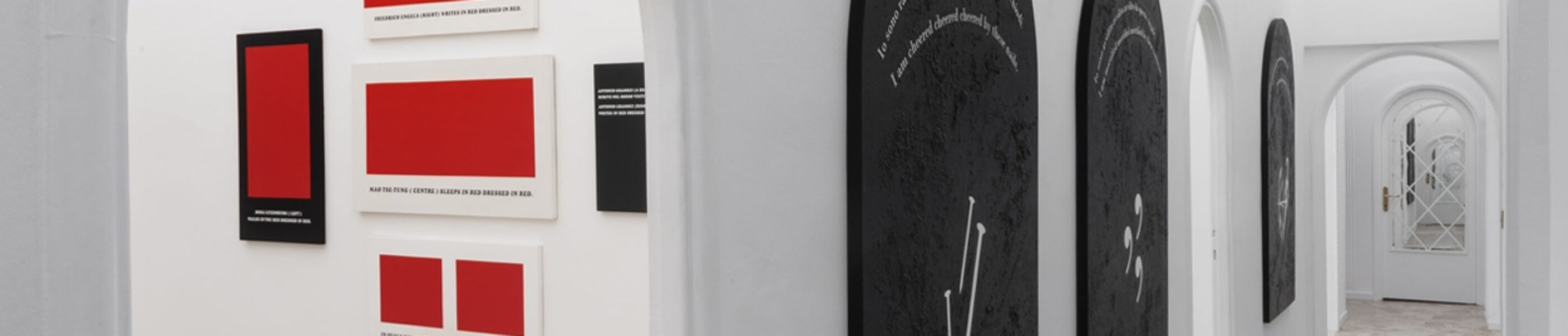
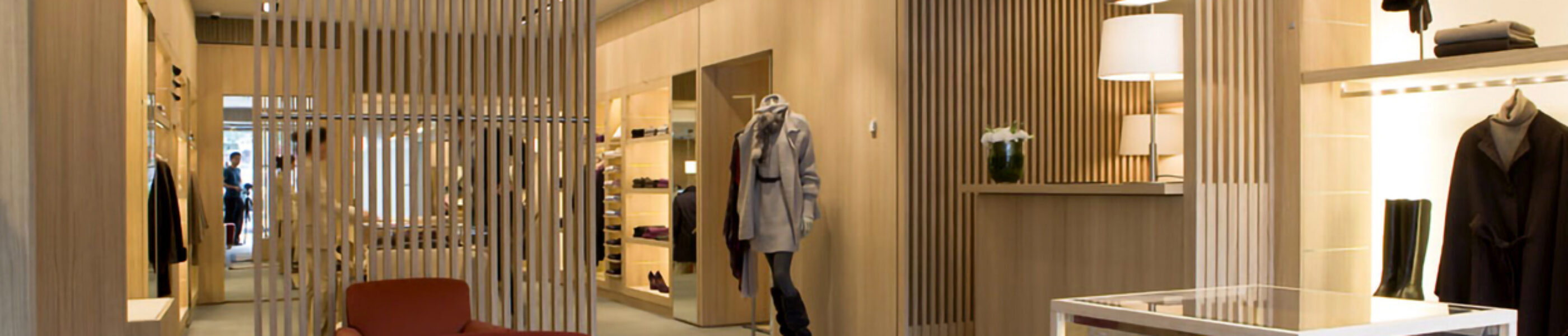
The Fondazione Giorgio Cini proposes: Emilio Isgrò. Curated by Germano Celant, in collaboration with the artist and the Emilio Isgrò Archive, the exhibition is a broad survey reconstructing Isgrò’s creative and aesthetic journey, spanning from the 1960s to the present day. The rich selection of works begins with the first erasures of books (1964) and continues with poems on emulsified canvases and the Storie rosse (Red Stories) to arrive at the imposing, complex series of texts erased in the historic volumes of the Enciclopedia Treccani (1970) and in the more recent ethnic volumes of the Codici ottomani (Ottoman Codices, 2010). The rooms in the Napoleonic Wing of the Fondazione Cini will have additional transversal and diagonal partitions to break up and modify the space, almost as if they were lines on a sheet of paper. They will in fact serve as paper supports for the results of a new enormous operation of erasure, conducted once again on literary material. For the visitor, it will be like entering a large book, visually modified by the artist. The exhibition is being staged with the support of Intesa Sanpaolo – Direzione Arte, Cultura e Beni Storici nell’Ambito di Progetto Cultura.
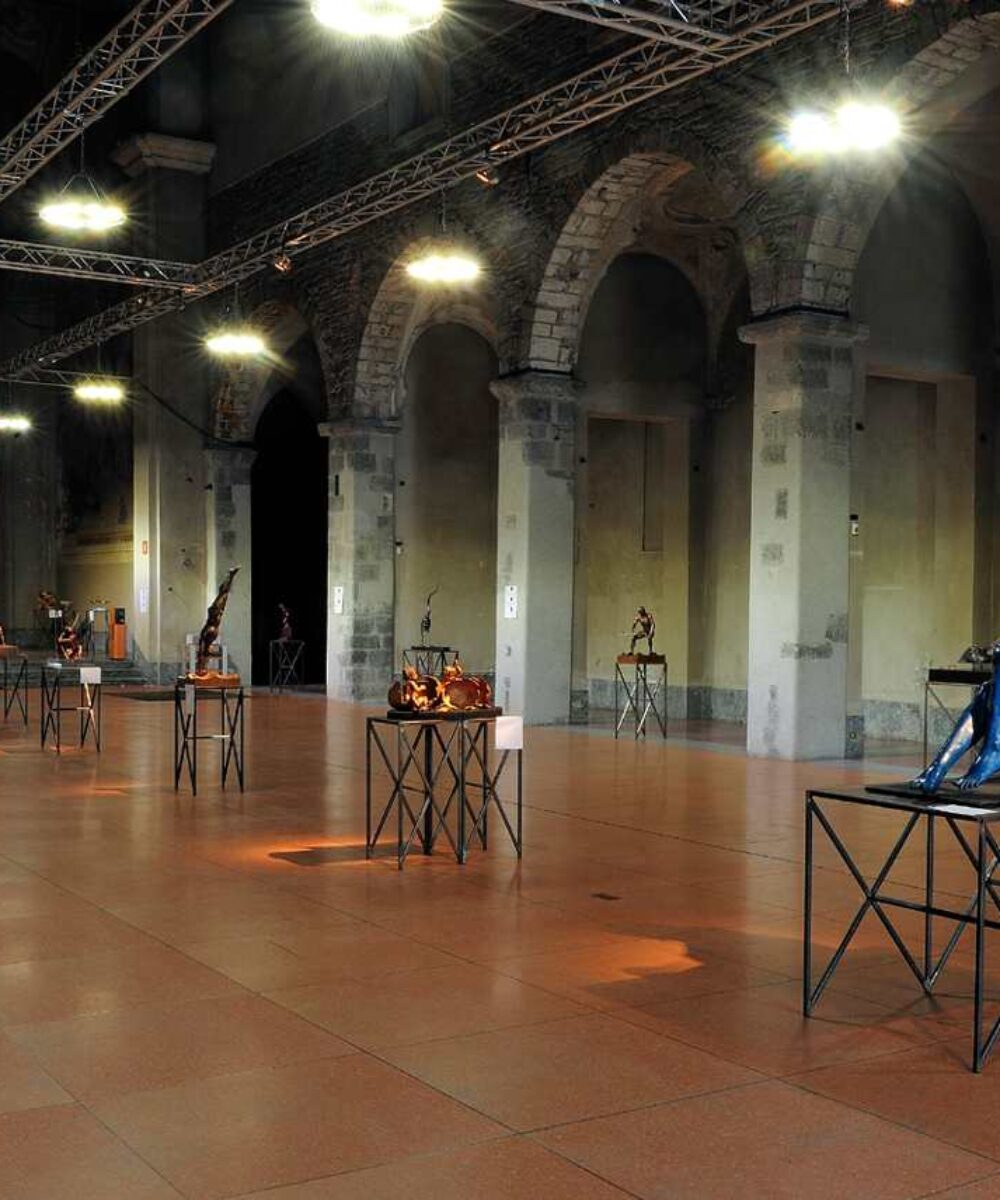
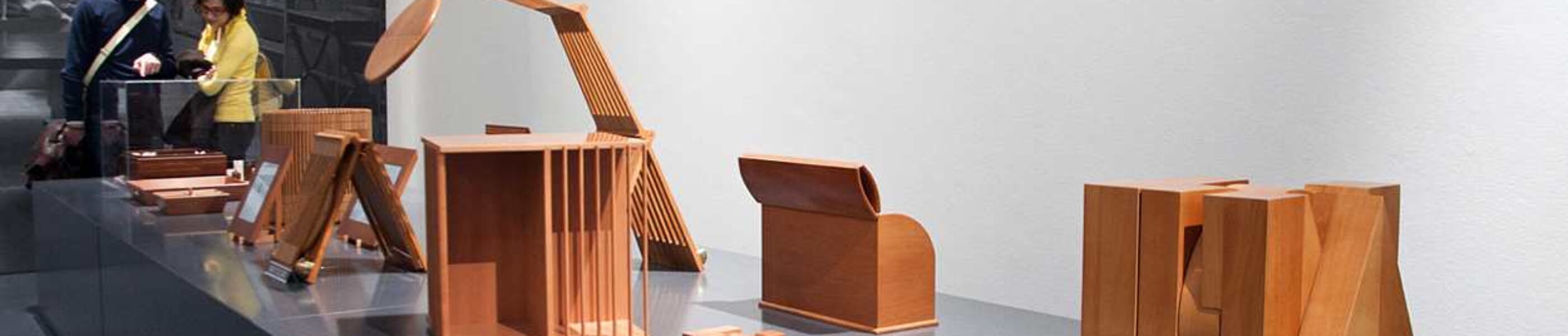
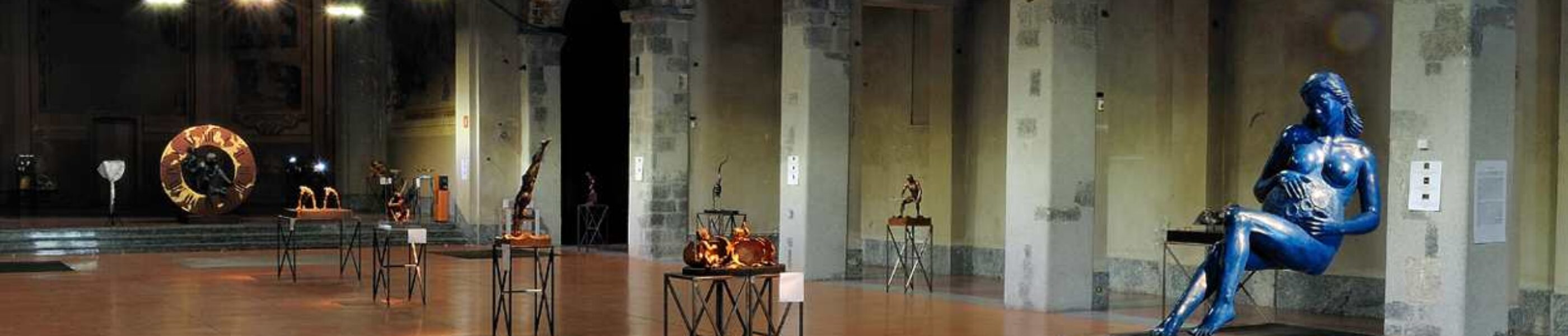
Temporary exhibition spaces open up multiple debates from a lighting point of view, because there is a belief that the existing interior lighting system (in the space hosting the exhibition) is flexible and can be adopted for all situations. Unfortunately, this is not the case. This is why the lighting designer, through his lighting consultancy, has the task of integrating it, modifying it, subtracting it, distorting it according to the needs of the artist, the curator, the client, but first and foremost the protagonists of the exhibition. In this specific case, new linear luminaires with wall washer optics are installed.
Client:
Piero Castiglioni
Collaborations:
Germano Celant
Emilio Isgrò
Photo Courtesy:
Emilio Isgrò
Year:
2019
The Fondazione Giorgio Cini proposes: Emilio Isgrò. Curated by Germano Celant, in collaboration with the artist and the Emilio Isgrò Archive, the exhibition is a broad survey reconstructing Isgrò’s creative and aesthetic journey, spanning from the 1960s to the present day. The rich selection of works begins with the first erasures of books (1964) and continues with poems on emulsified canvases and the Storie rosse (Red Stories) to arrive at the imposing, complex series of texts erased in the historic volumes of the Enciclopedia Treccani (1970) and in the more recent ethnic volumes of the Codici ottomani (Ottoman Codices, 2010). The rooms in the Napoleonic Wing of the Fondazione Cini will have additional transversal and diagonal partitions to break up and modify the space, almost as if they were lines on a sheet of paper. They will in fact serve as paper supports for the results of a new enormous operation of erasure, conducted once again on literary material. For the visitor, it will be like entering a large book, visually modified by the artist. The exhibition is being staged with the support of Intesa Sanpaolo – Direzione Arte, Cultura e Beni Storici nell’Ambito di Progetto Cultura.
Temporary exhibition spaces open up multiple debates from a lighting point of view, because there is a belief that the existing interior lighting system (in the space hosting the exhibition) is flexible and can be adopted for all situations. Unfortunately, this is not the case. This is why the lighting designer, through his lighting consultancy, has the task of integrating it, modifying it, subtracting it, distorting it according to the needs of the artist, the curator, the client, but first and foremost the protagonists of the exhibition. In this specific case, new linear luminaires with wall washer optics are installed.
Client:
Piero Castiglioni
Collaborations:
Germano Celant
Emilio Isgrò
Photo Courtesy:
Emilio Isgrò
Year:
2019
Other Projects
Other Projects
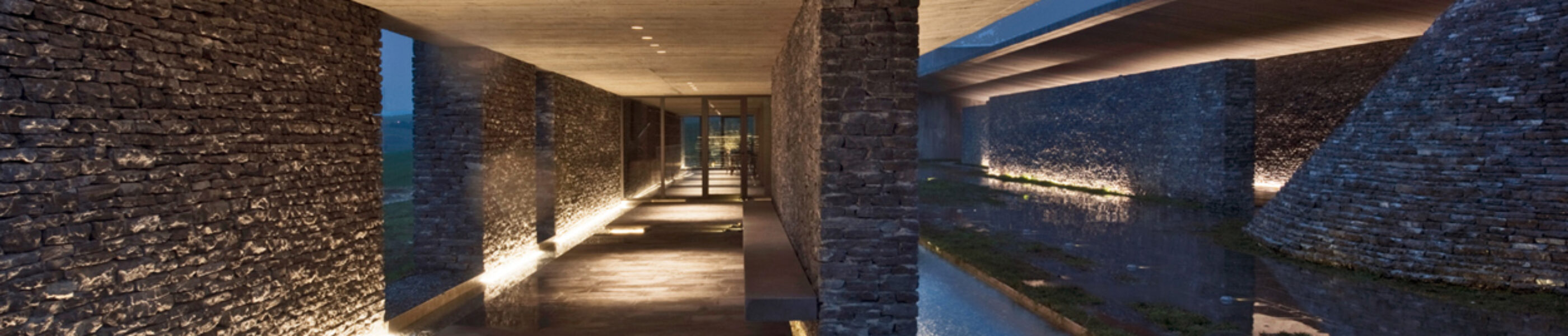
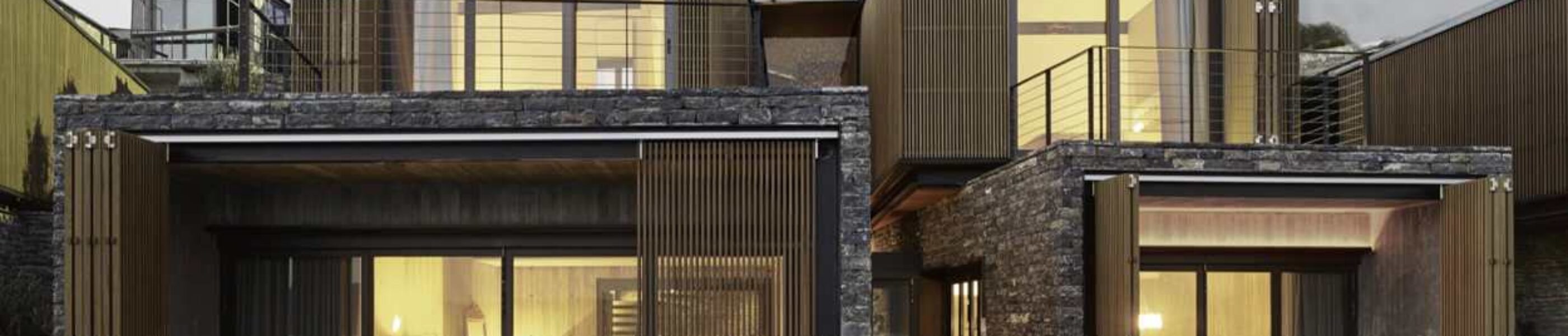
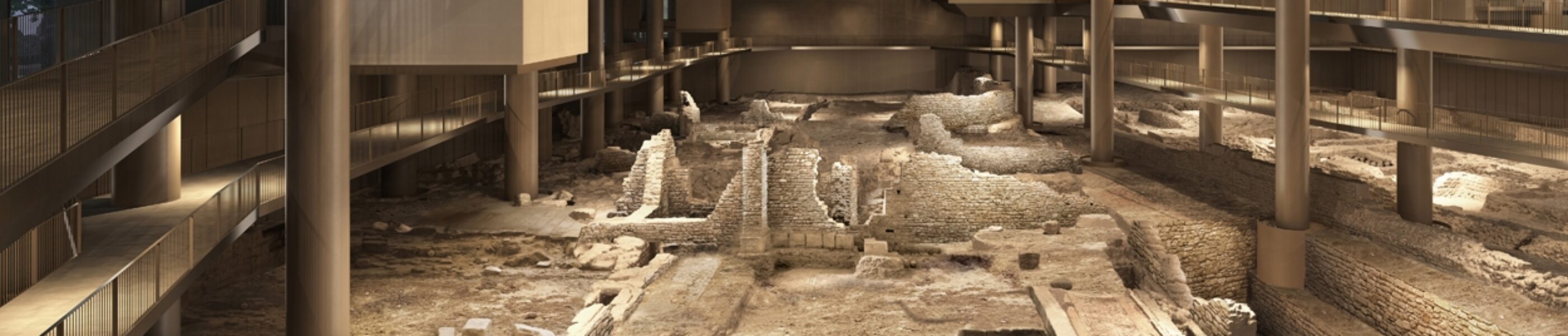
This section brings together a representative selection of lighting design projects in the architectural, museum, urban, cultural, retail, hospitality, and infrastructure sectors, both in Italy and abroad. The gallery documents projects of varying scale, function, and context, all sharing an approach to light as a tool for interpreting space, capable of engaging with architecture, artworks, landscape, and contemporary use.
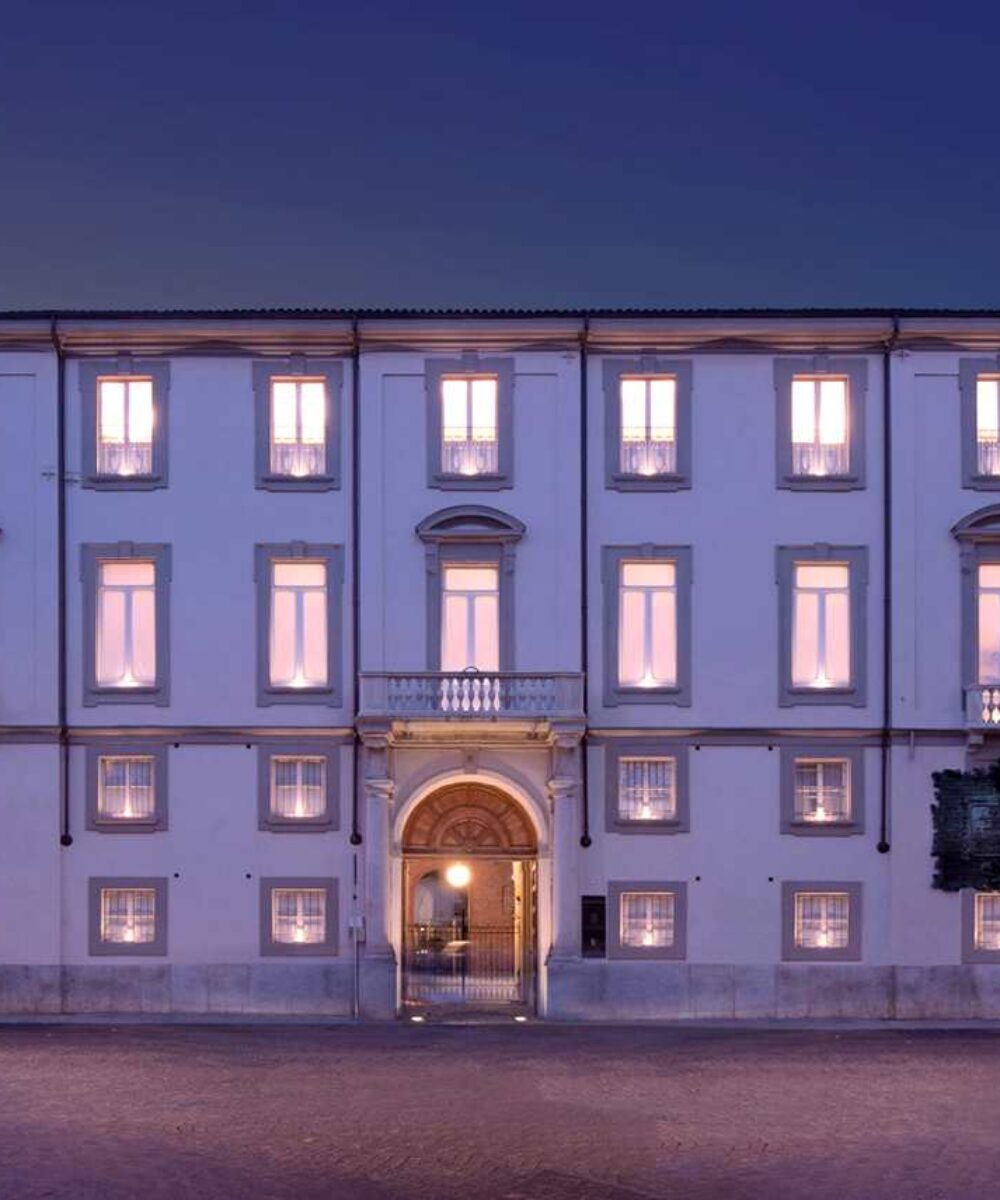
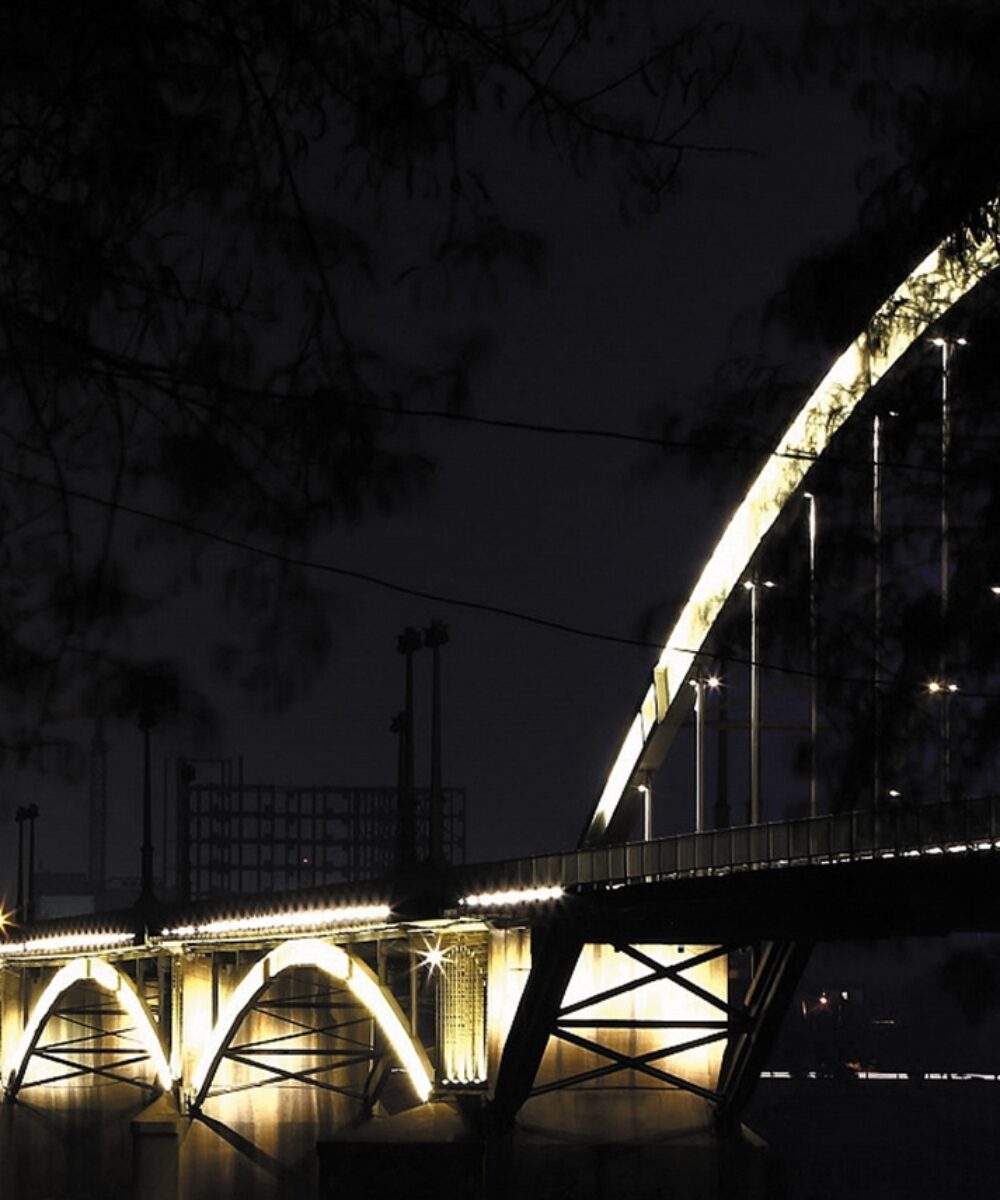
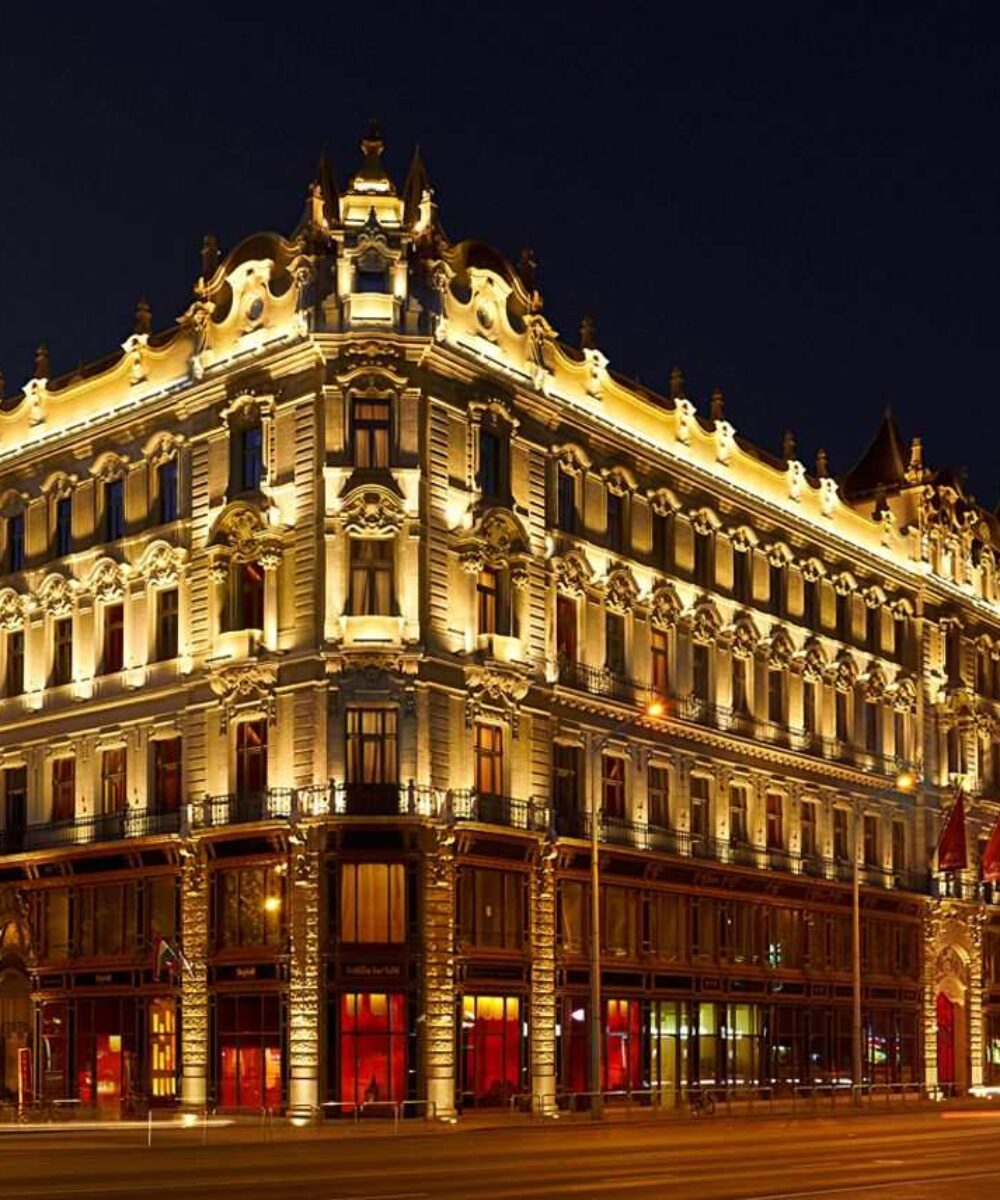
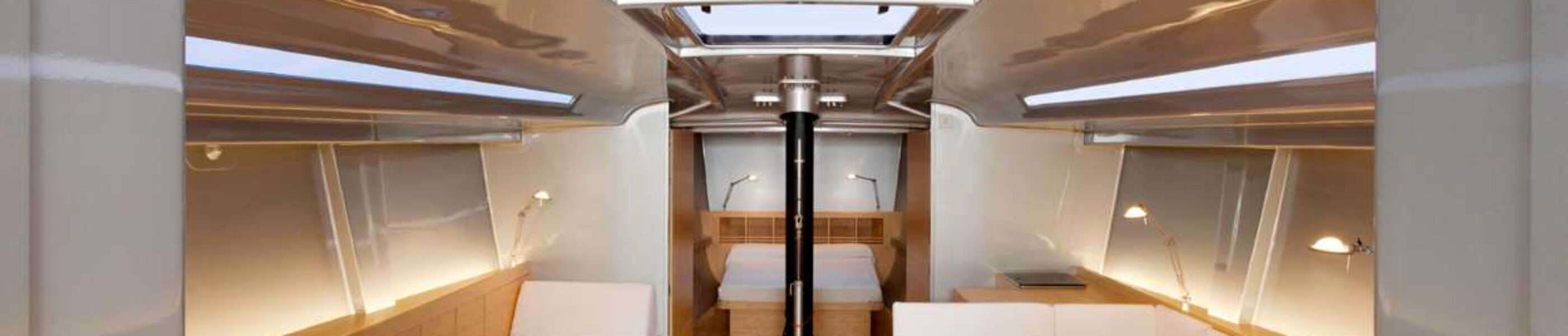
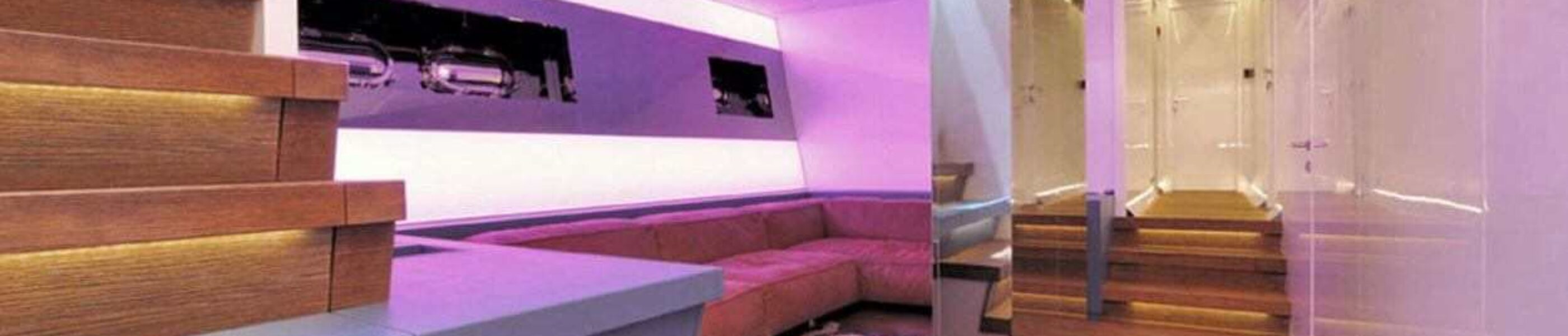
The projects presented range from museums, foundations, and temporary exhibitions to historic buildings, places of worship, public spaces, and urban complexes, including corporate headquarters, private residences, yachts, and lighting masterplans. In each project, light is designed as a controlled material, calibrated to the characteristics of the location, its functional needs, and the perceptual quality of the experience.
Taken together, the collected works convey a vision of lighting design as an integrated process, in which technical rigor, cultural sensitivity, and attention to context contribute to the construction of spatial identity, orientation, and value. The gallery thus takes the form of a design map, capable of demonstrating how light can take on different roles—discrete or declared—while always maintaining coherence, measure, and design awareness.
This section brings together a representative selection of lighting design projects in the architectural, museum, urban, cultural, retail, hospitality, and infrastructure sectors, both in Italy and abroad. The gallery documents projects of varying scale, function, and context, all sharing an approach to light as a tool for interpreting space, capable of engaging with architecture, artworks, landscape, and contemporary use.
The projects presented range from museums, foundations, and temporary exhibitions to historic buildings, places of worship, public spaces, and urban complexes, including corporate headquarters, private residences, yachts, and lighting masterplans. In each project, light is designed as a controlled material, calibrated to the characteristics of the location, its functional needs, and the perceptual quality of the experience.
Taken together, the collected works convey a vision of lighting design as an integrated process, in which technical rigor, cultural sensitivity, and attention to context contribute to the construction of spatial identity, orientation, and value. The gallery thus takes the form of a design map, capable of demonstrating how light can take on different roles—discrete or declared—while always maintaining coherence, measure, and design awareness.