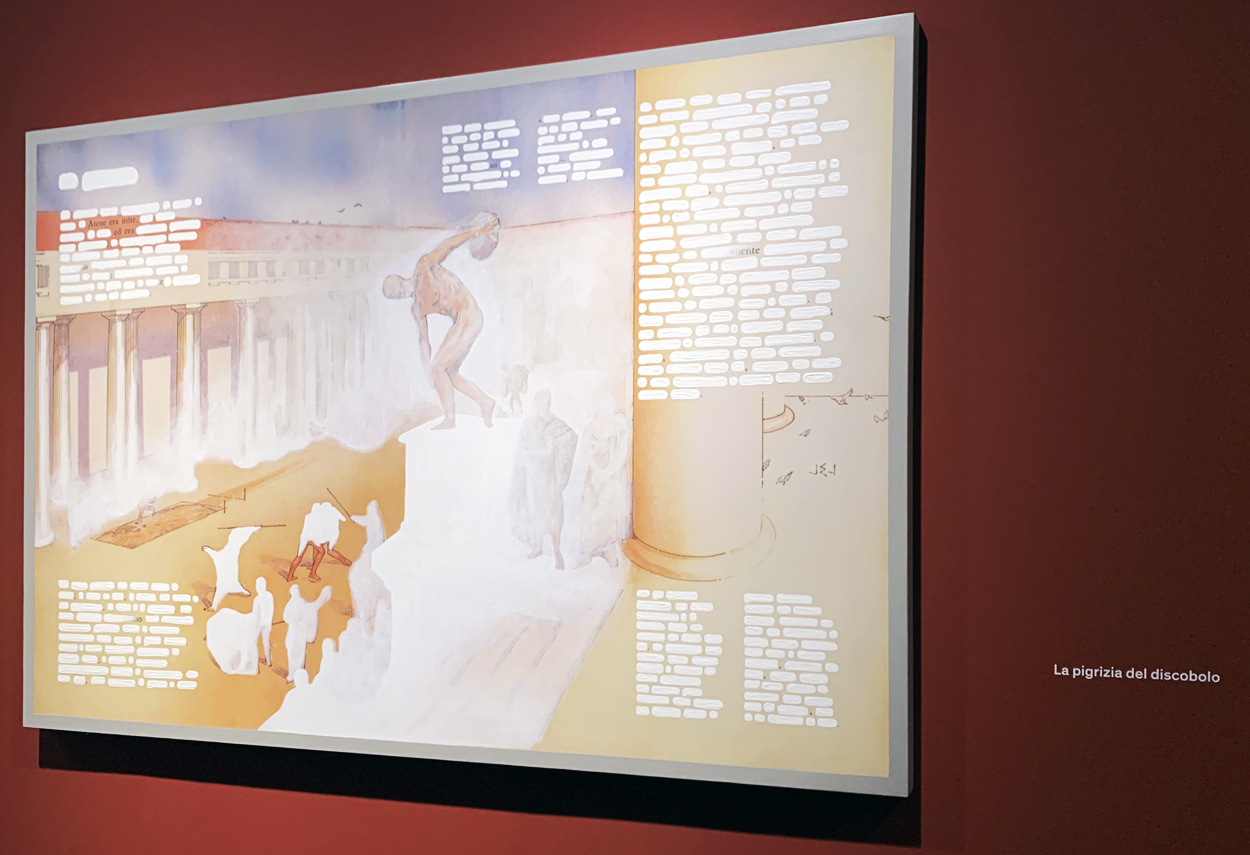
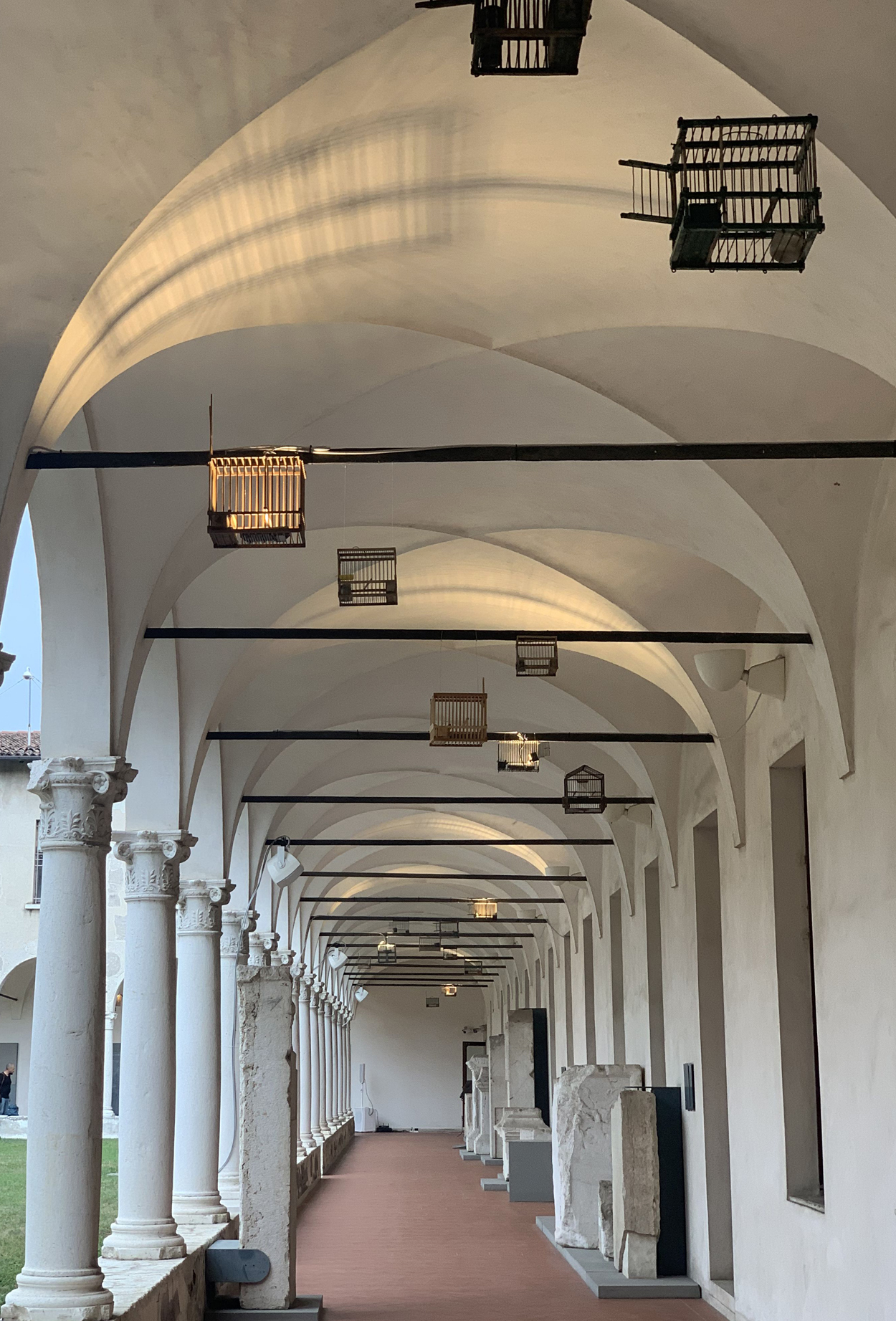
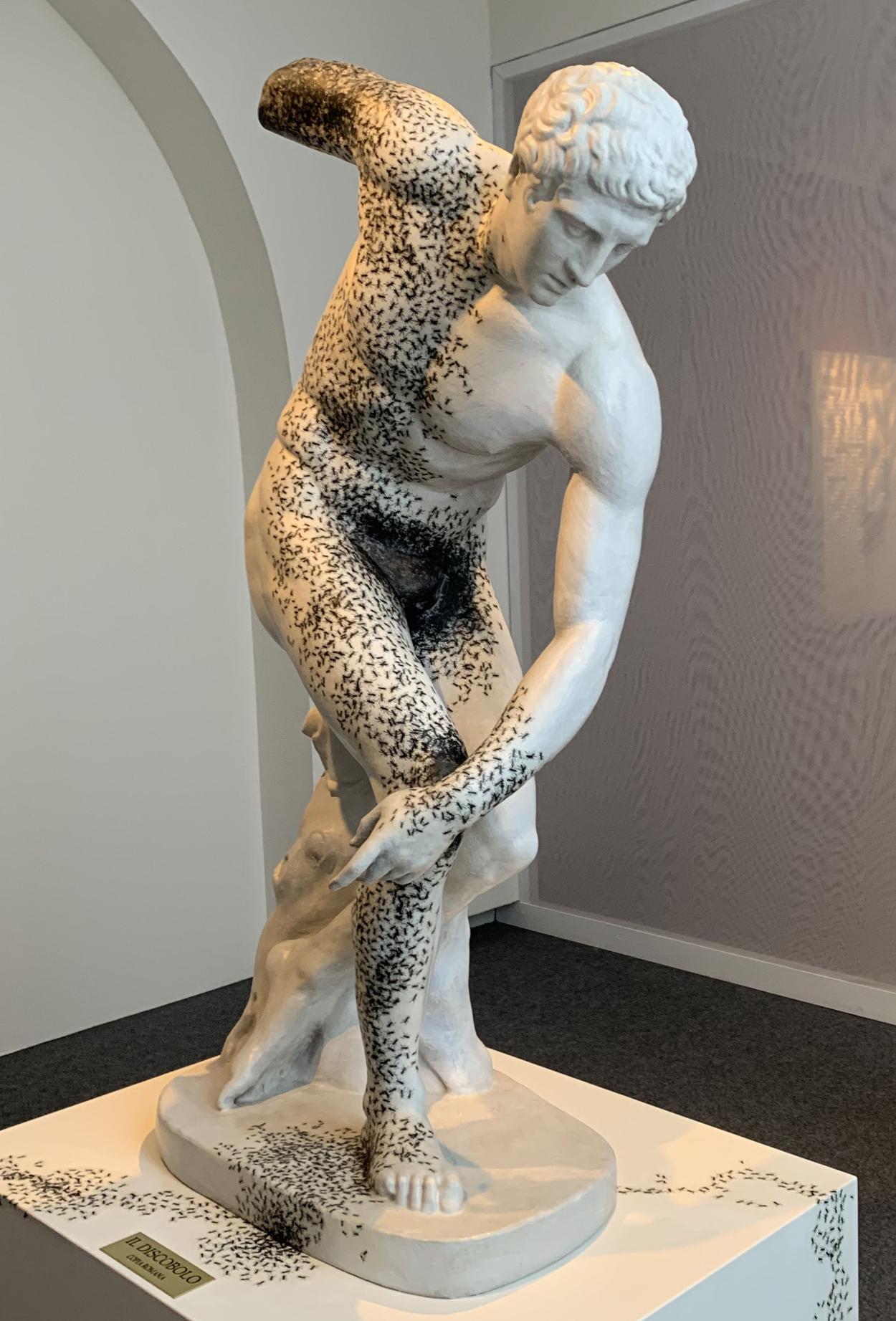
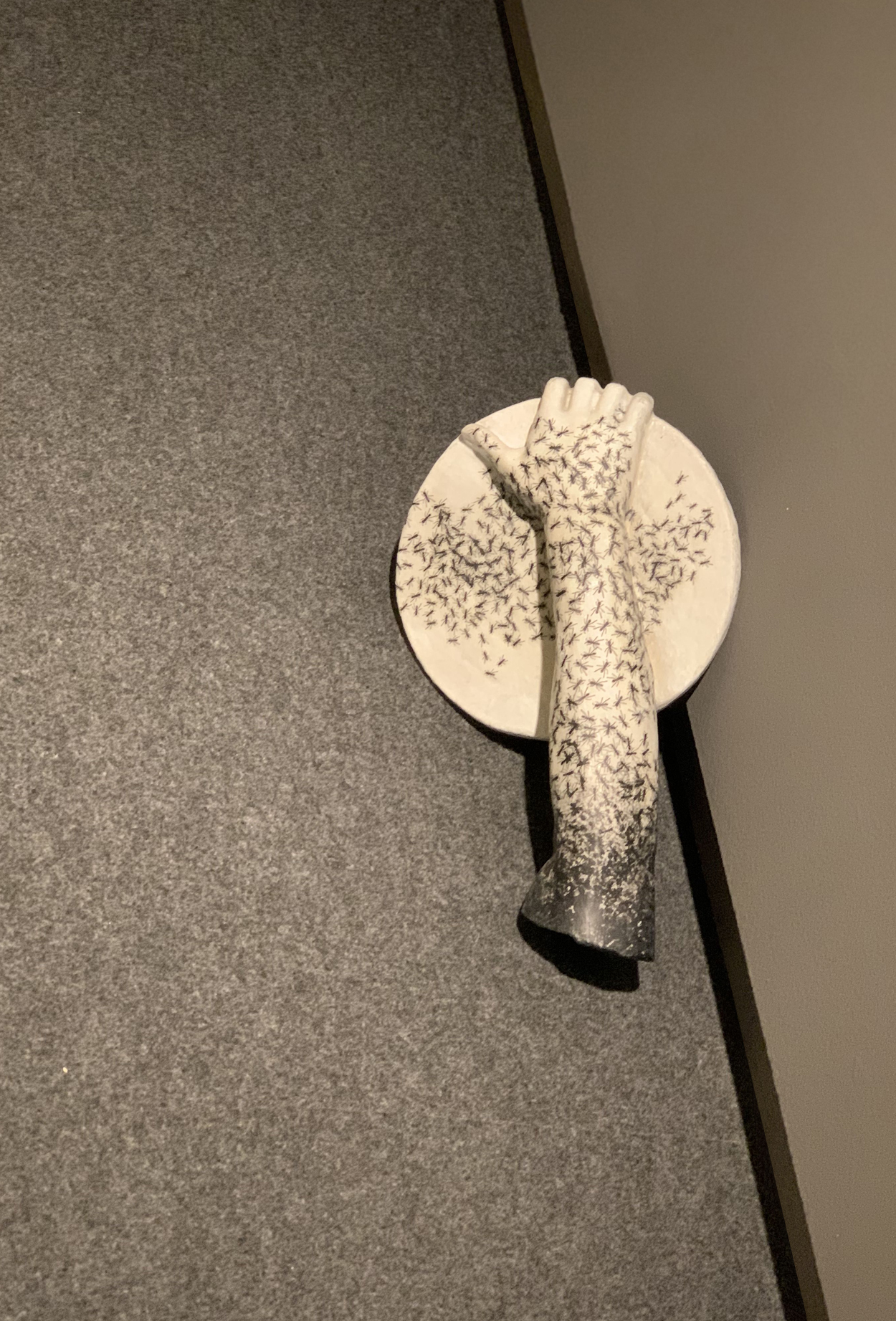
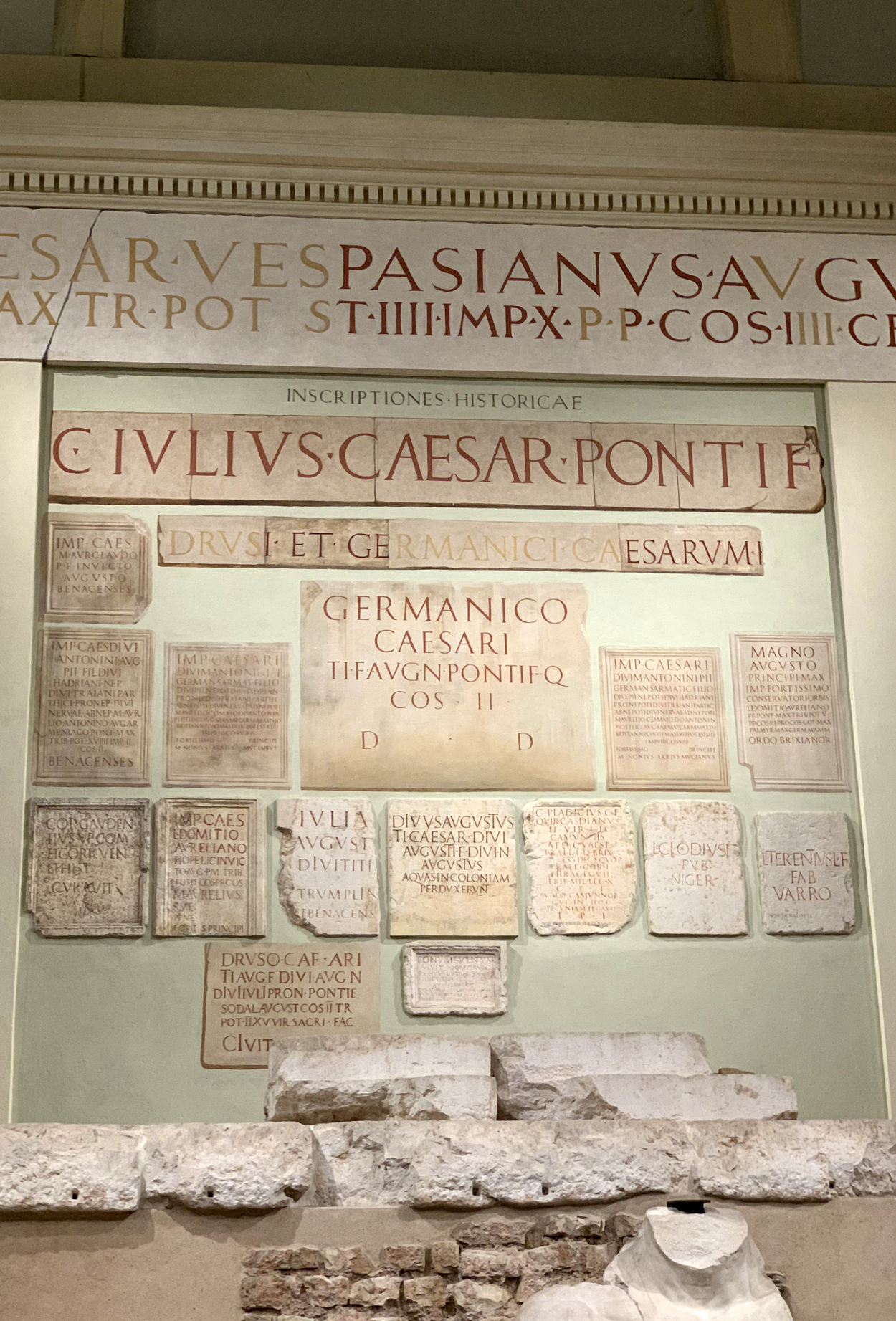
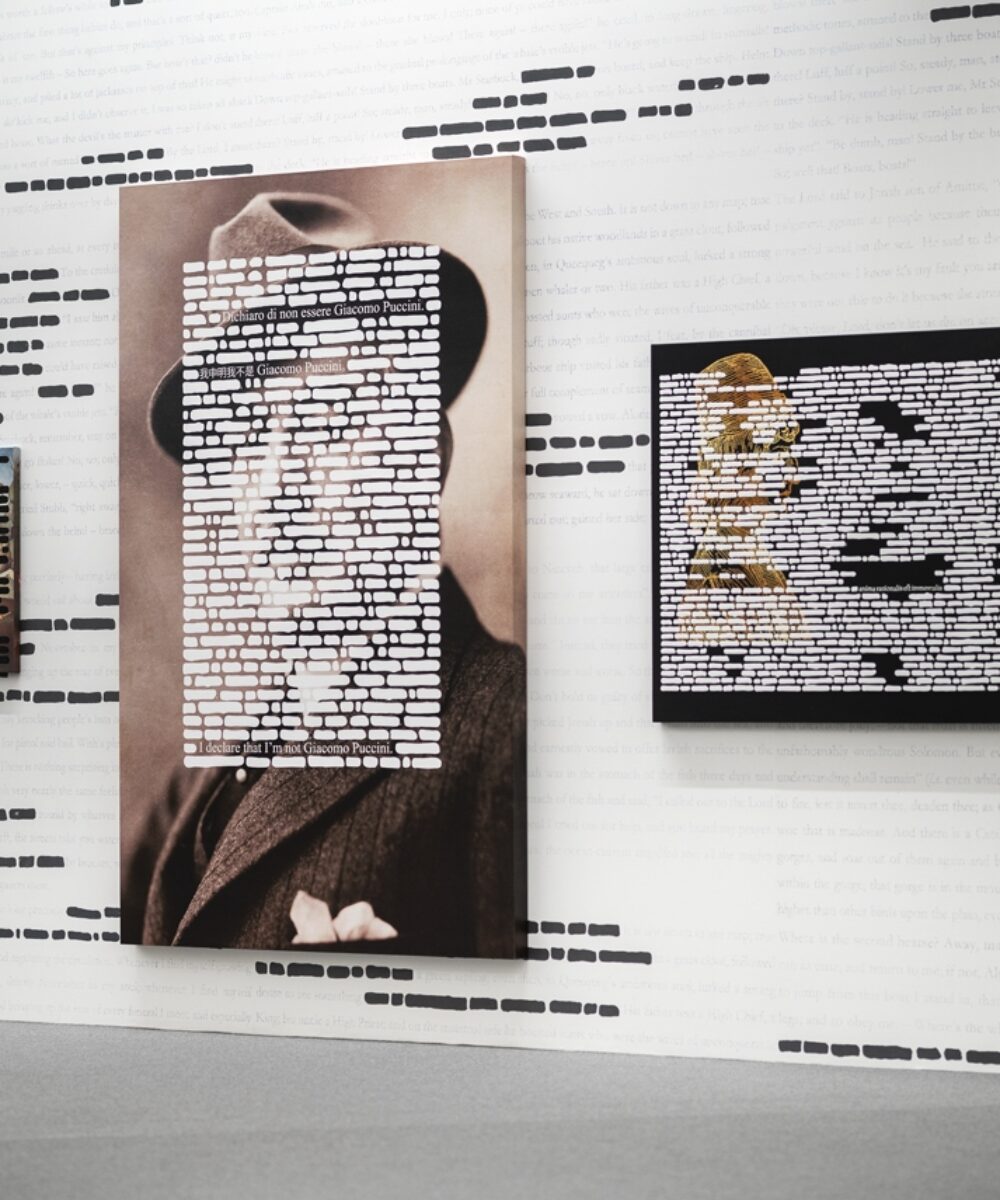
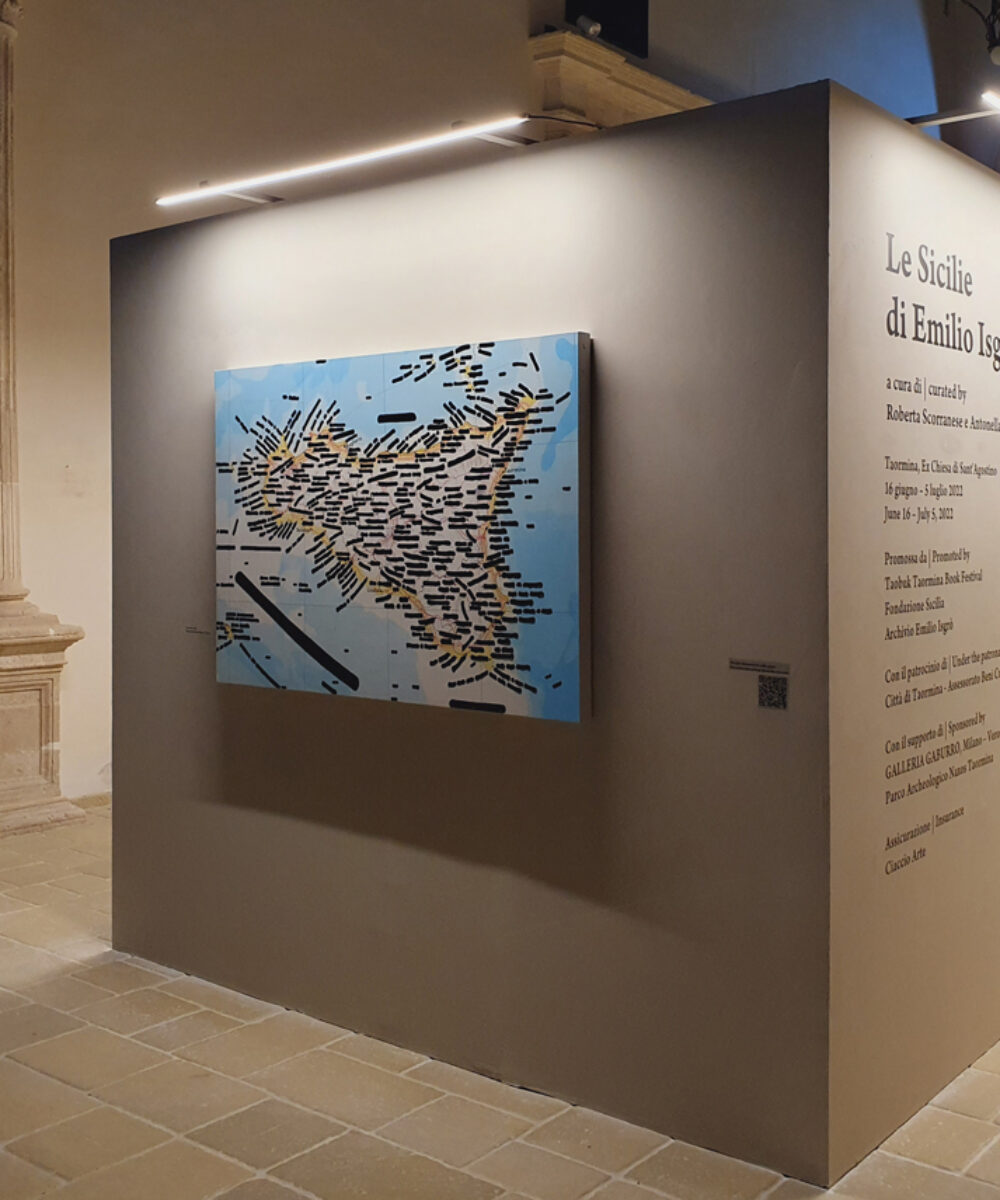
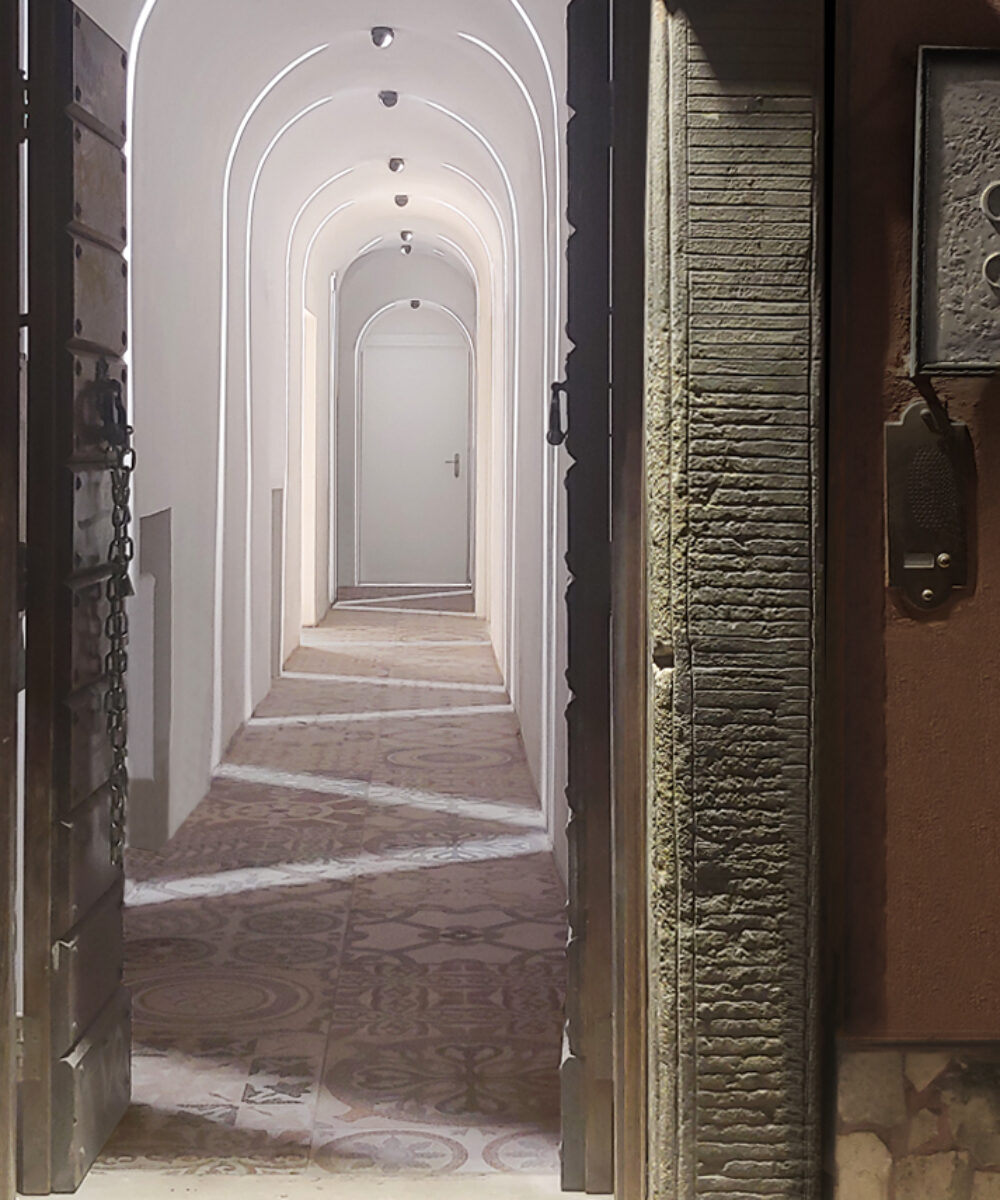
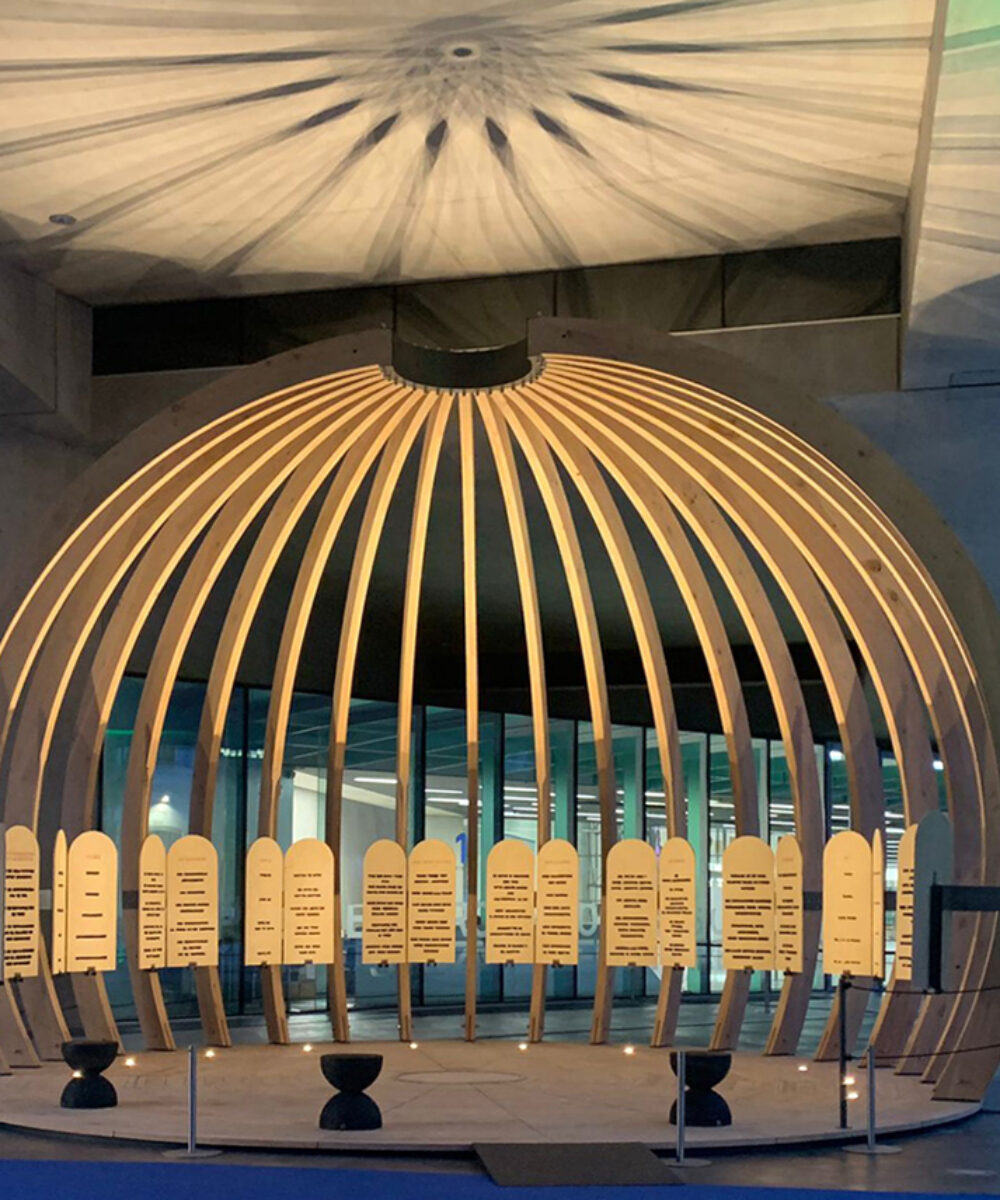
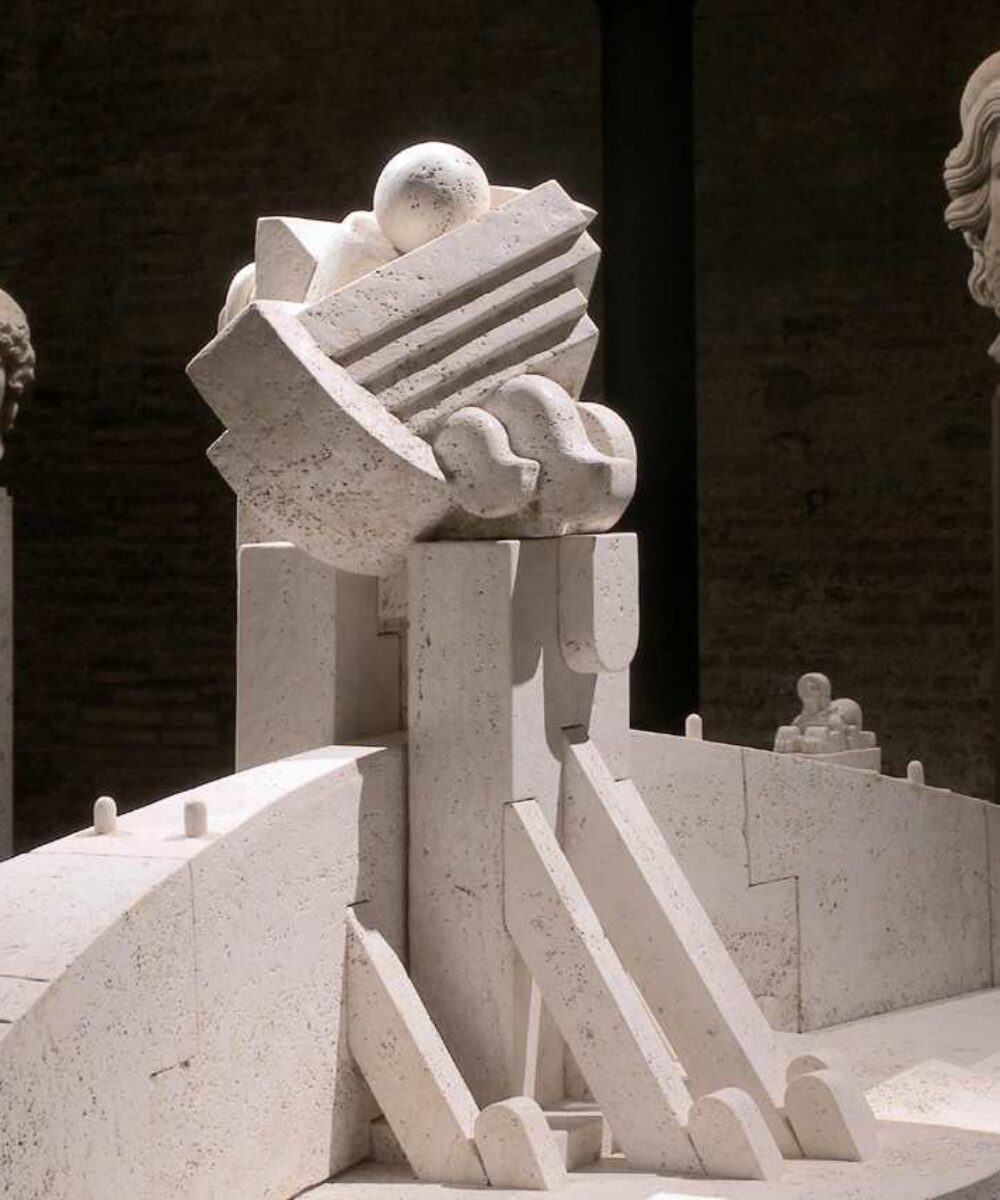
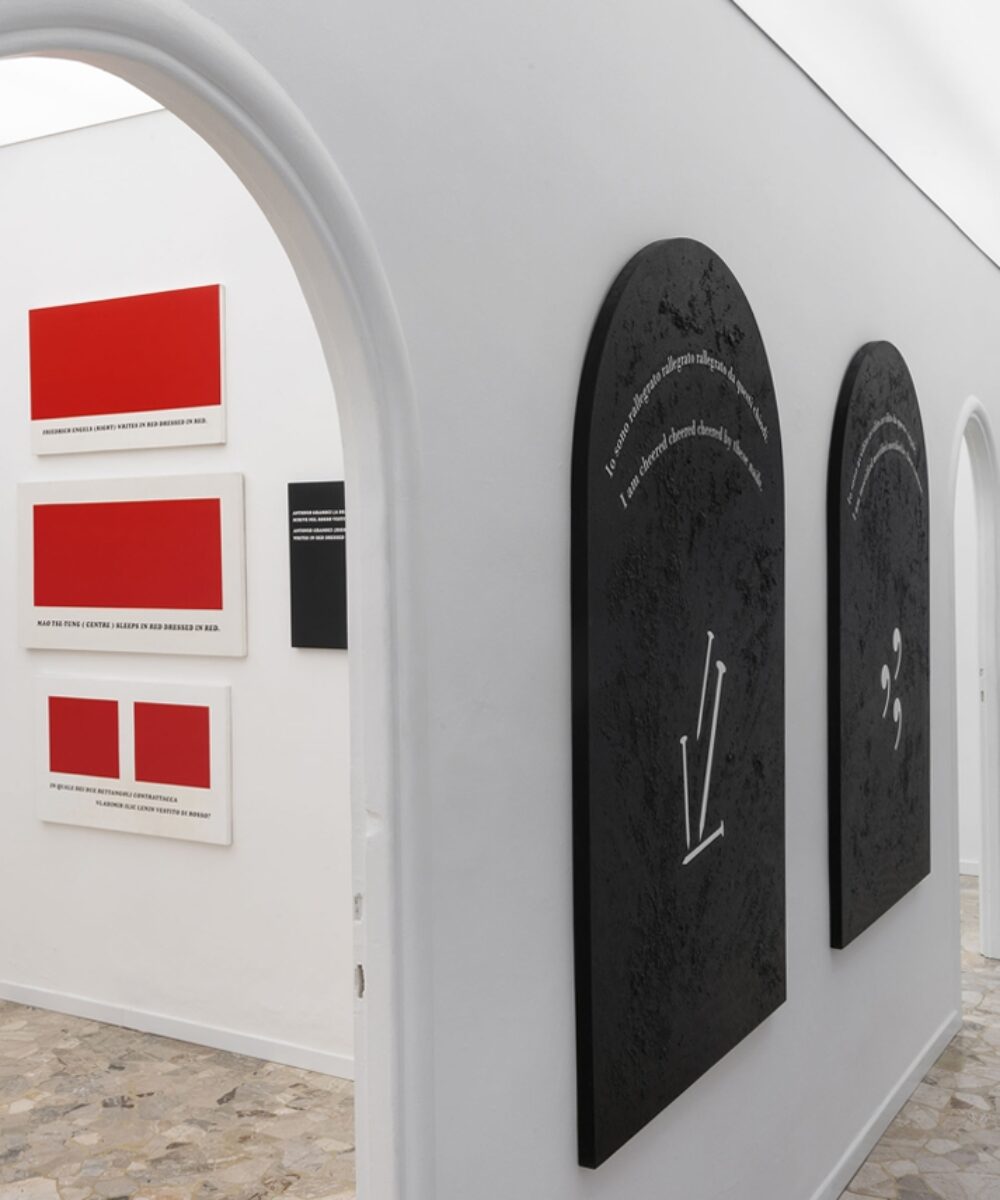
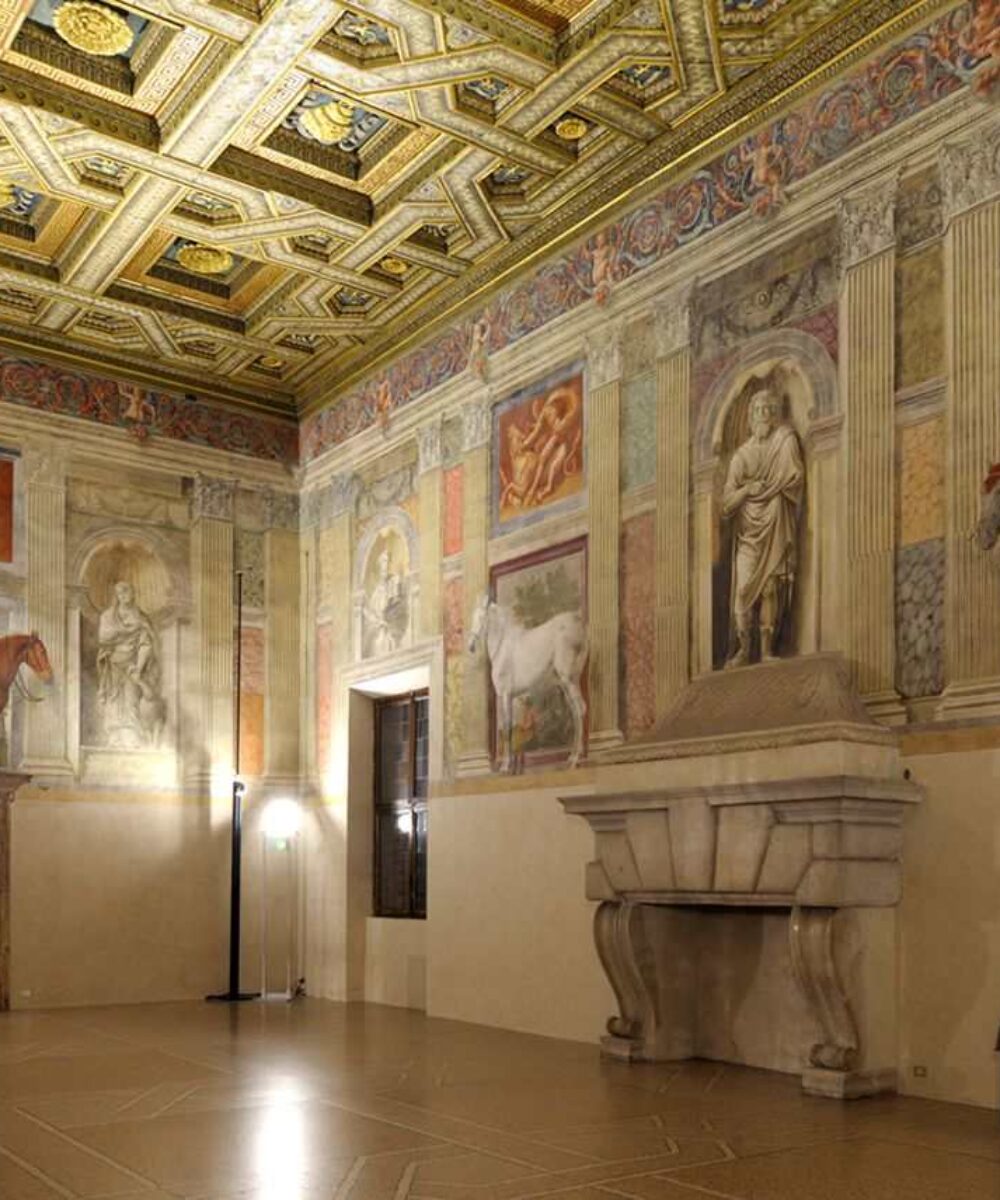
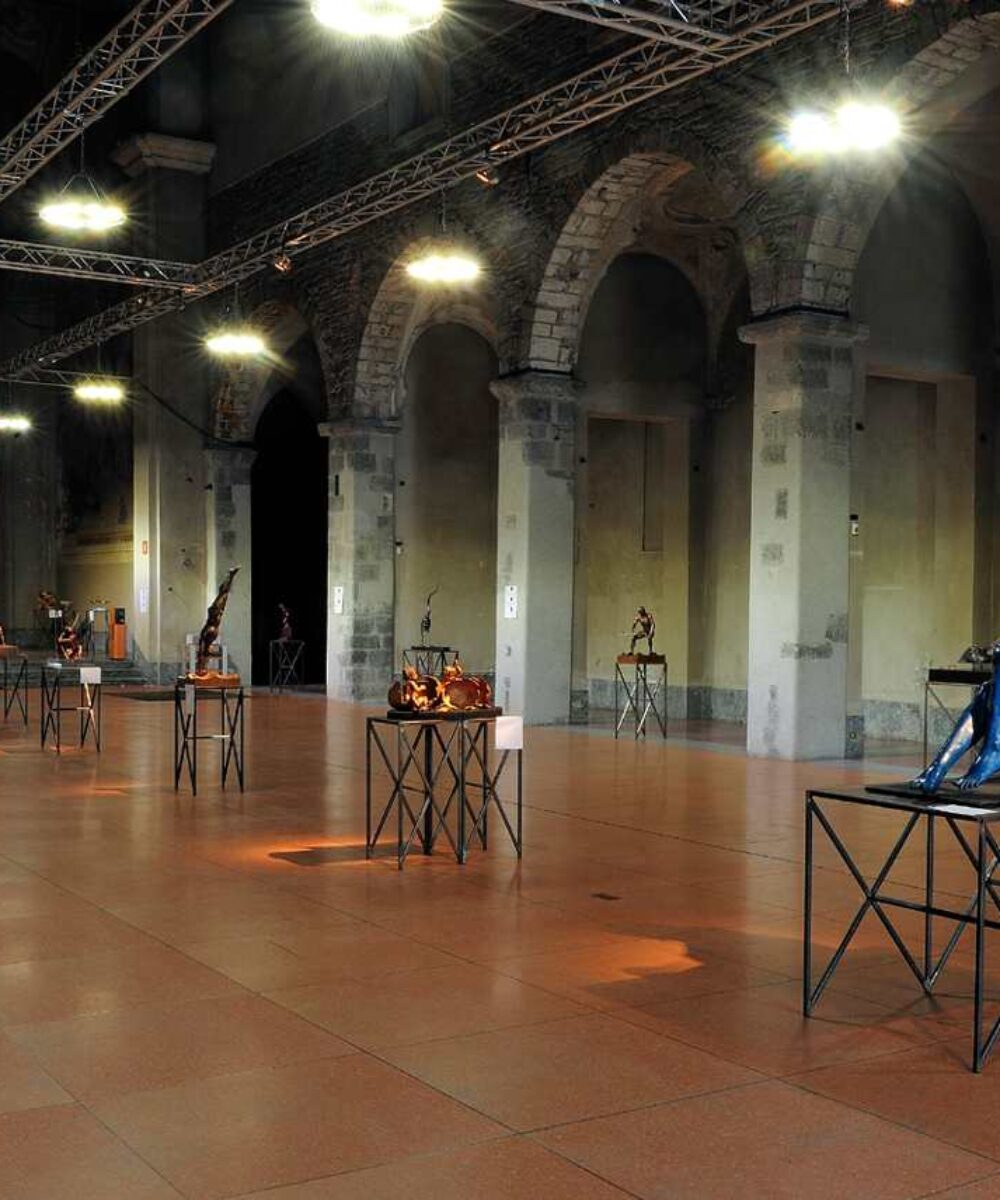
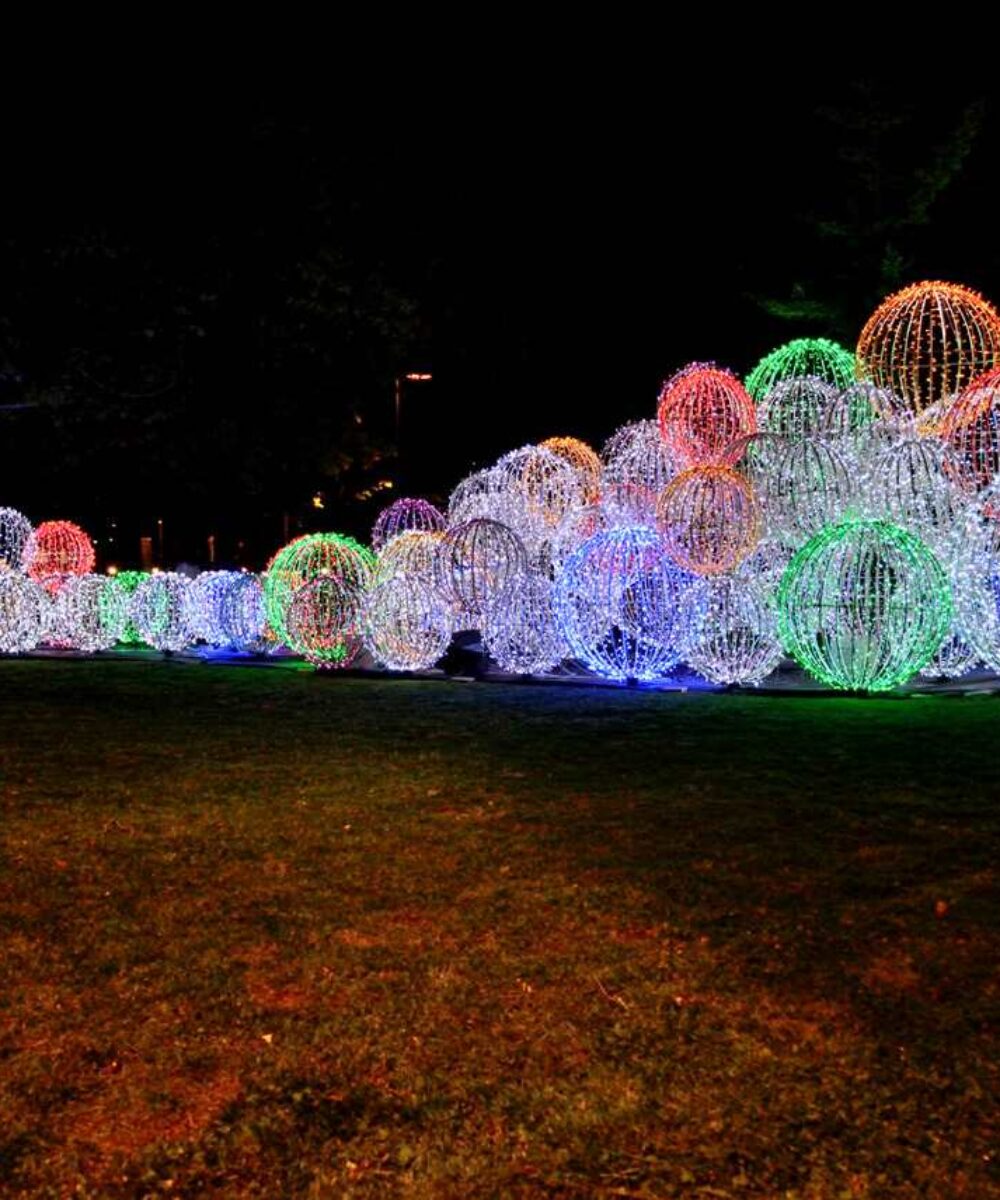
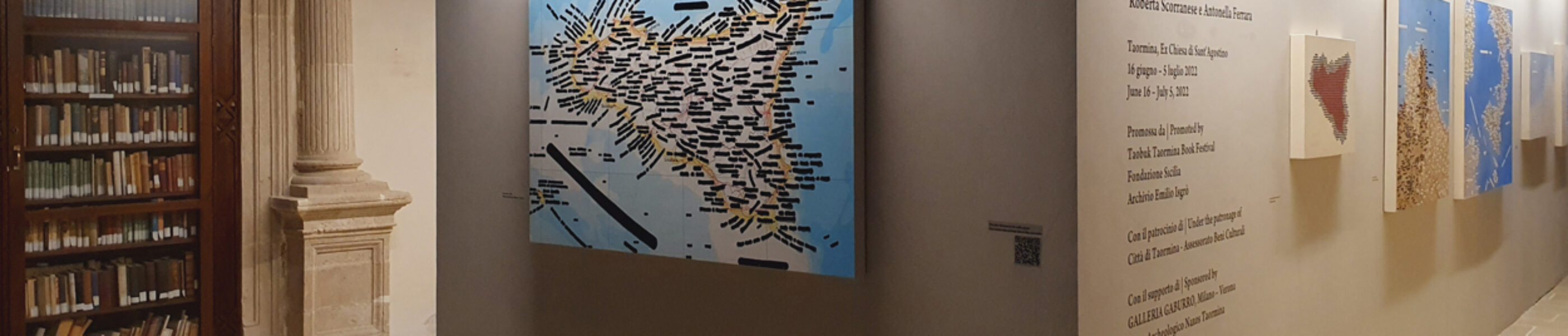
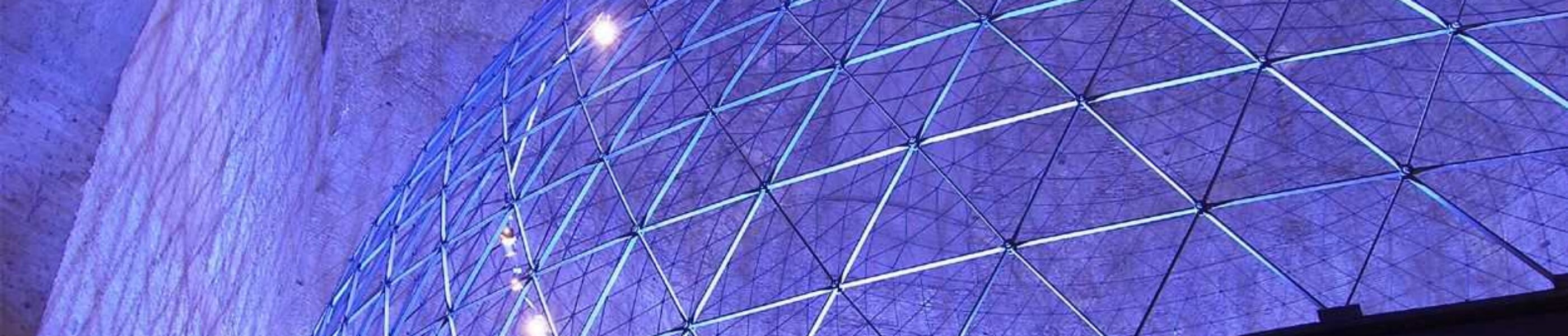
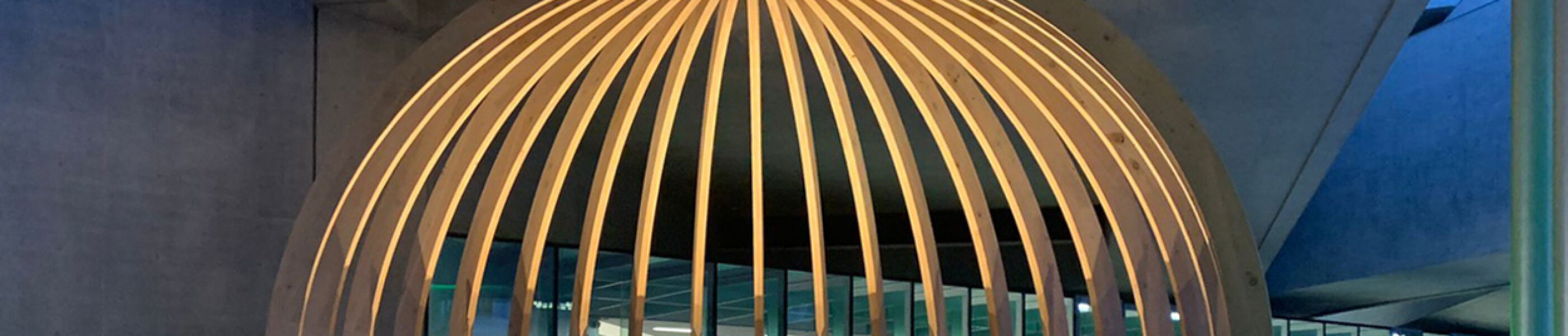
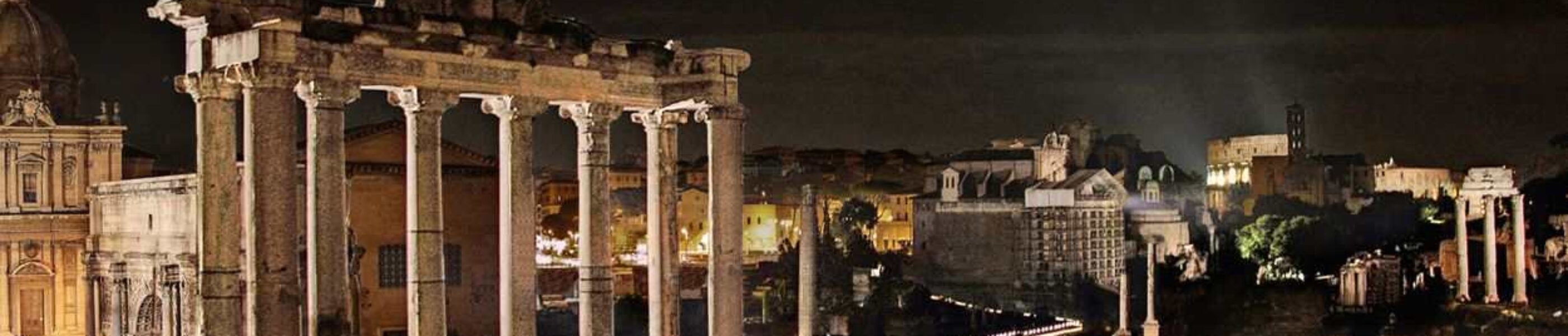
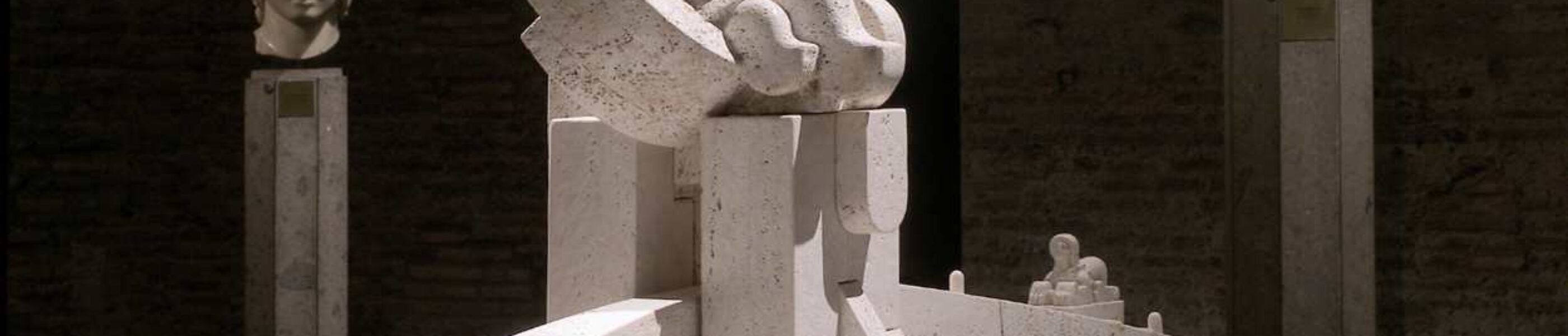
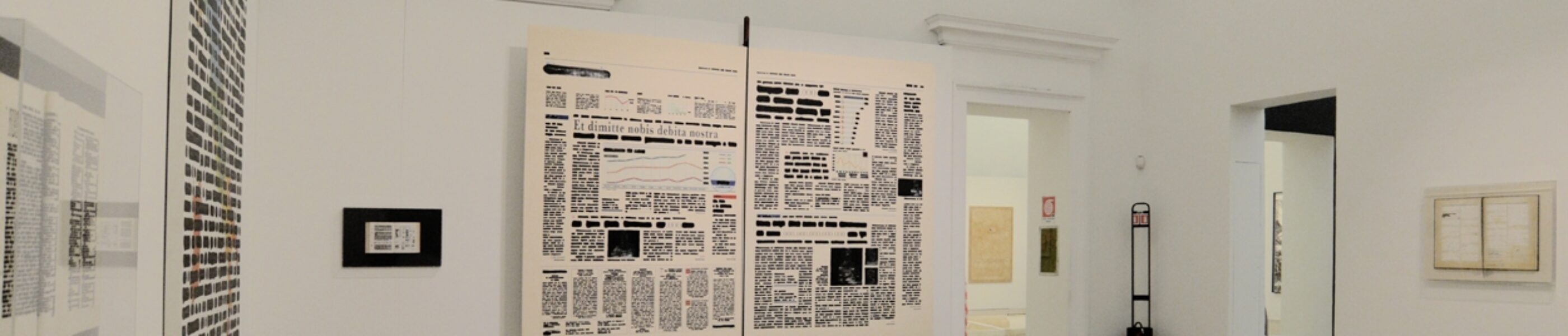
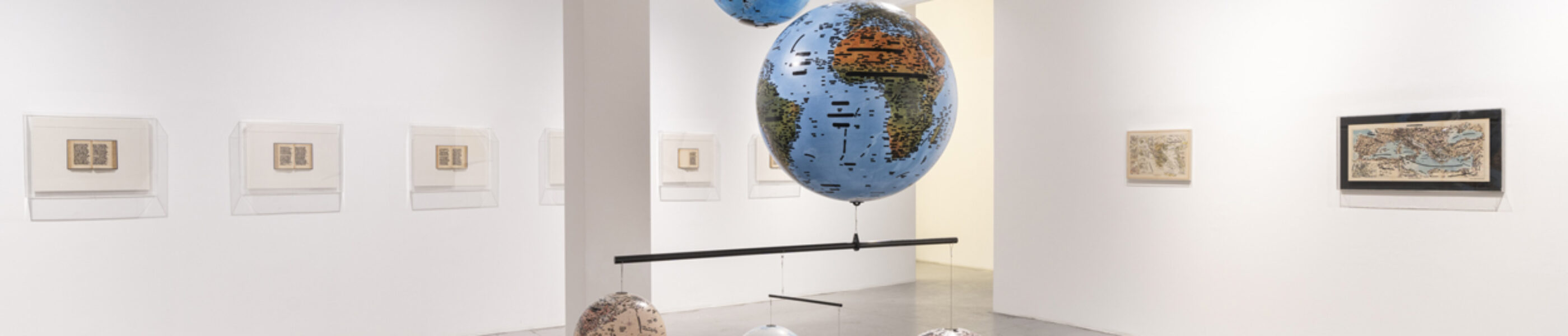
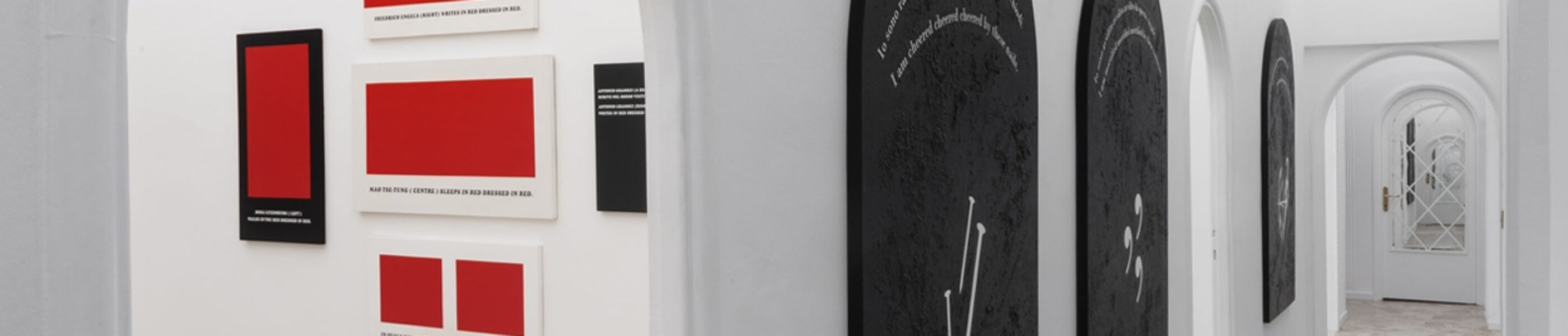
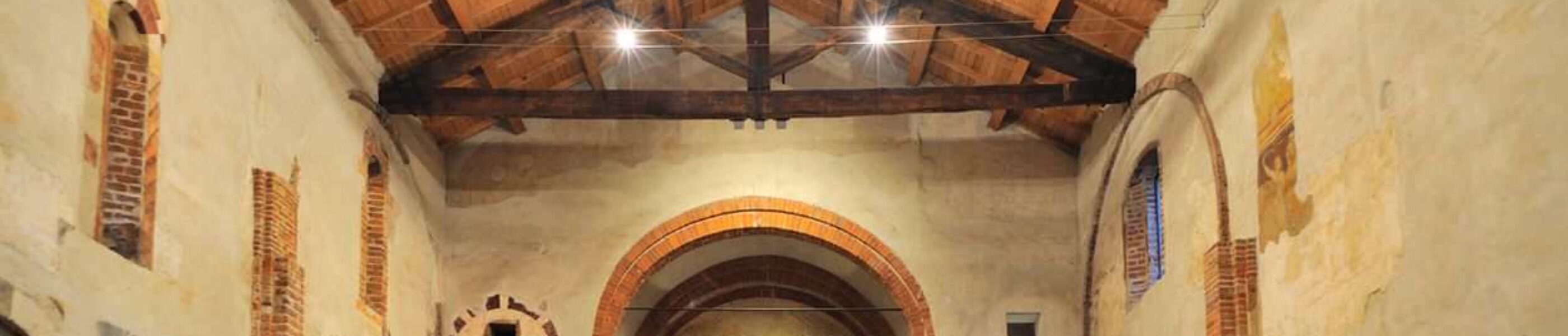
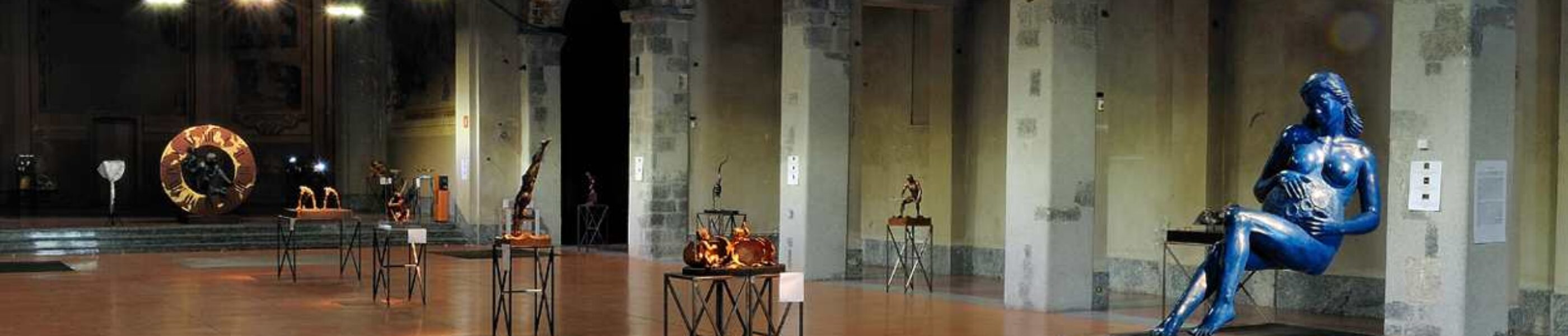
Emilio Isgrò's exhibition, curated by Marco Bazzini, develops through the following exhibition spaces: the Santa Giulia Museum complex hosts in the Renaissance Cloister, "The Harmonum of the Mad Larks", in the exhibition rooms of the Museum we find the unprecedented cycle of paintings entitled "Brixia as Athens". In the central hall of the Capitolium, a veritable epigraphical museum presents the work 'Virgil's Bees'. Also until 3 July it is possible to see the performance 'Dido Adonais Domine' by Emilio Isgrò in the Roman Theatre, part of the Archaeological Park of Roman Brescia. The exhibition project entitled 'Isgrò cancels Brixia' brings together archaeology and contemporary art, history and the present, classical culture and its persistence in our time and consists of monumental installations (physical and digital). Architectural lighting works features 'The Harmonium of the Mad Larks', an enigmatic and monumental musical instrument, on the perimeter of which runs a sequence of piano keys, installed in the centre of the cloister, while along the perimeter of the arcades are installed cages of different designs and sizes. In the silence of the place resounds the aria of Casta diva from Vincenzo Bellini's Norma, one of the most powerful operas in the Italian opera tradition, set in the Roman Gaul.
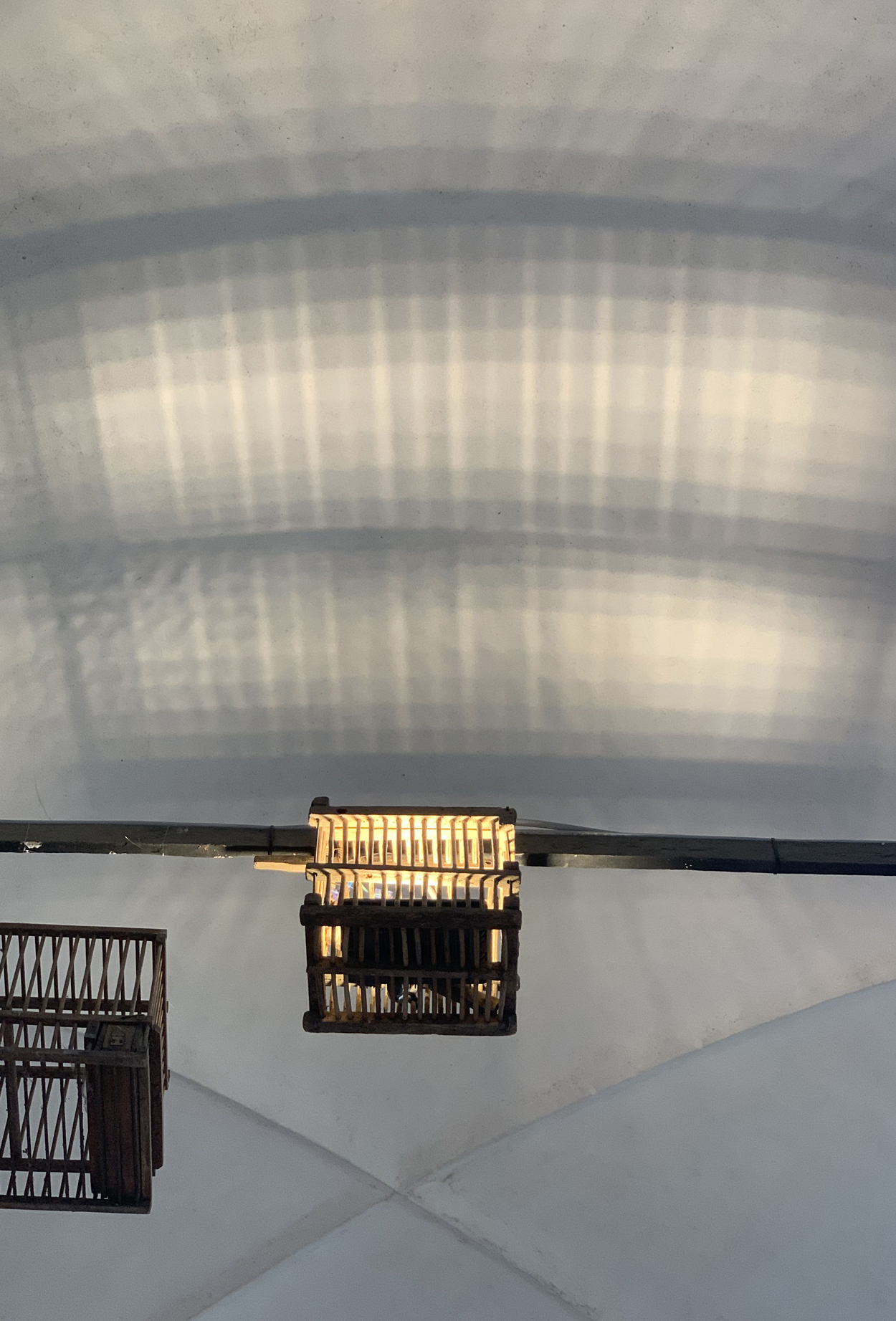
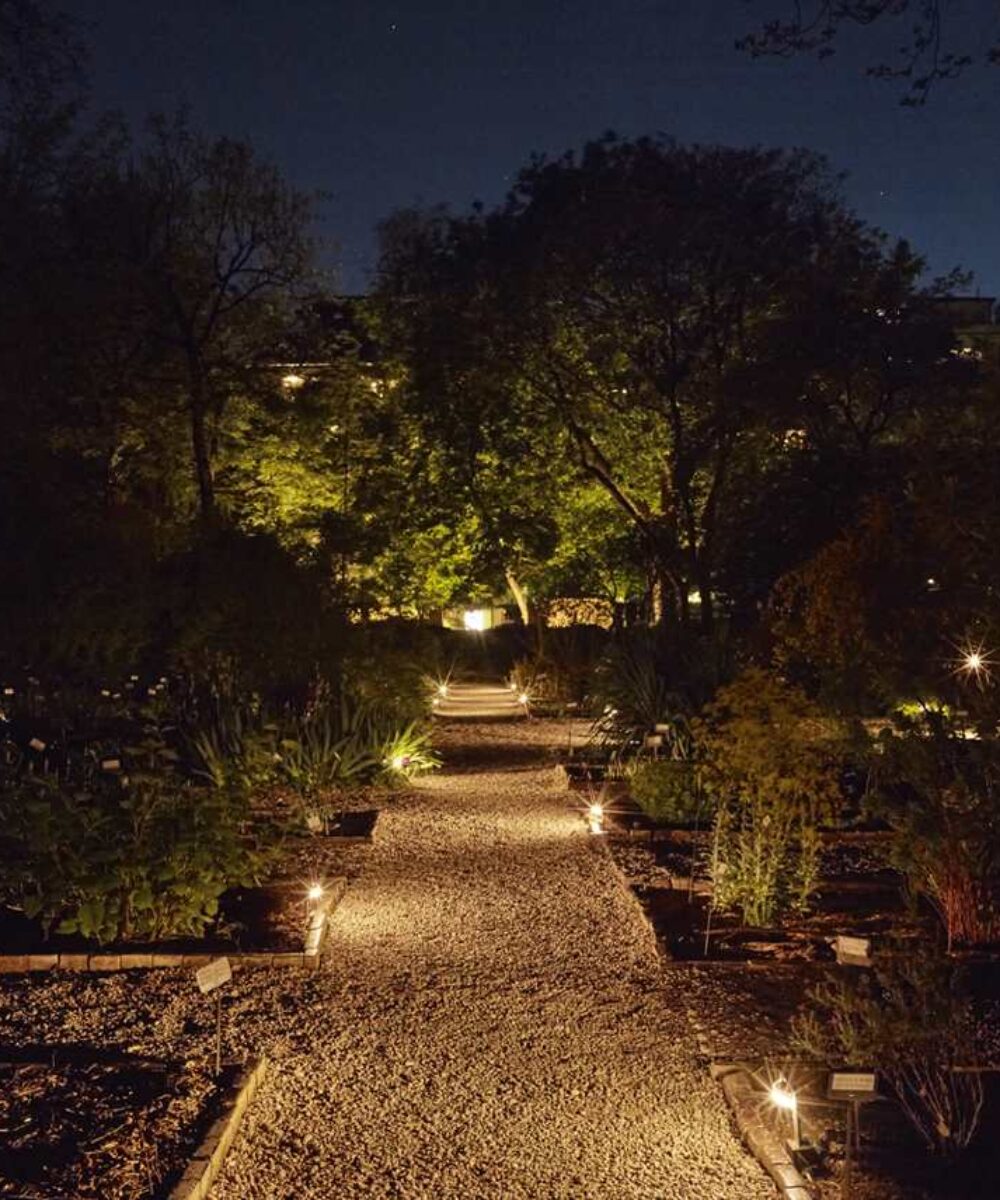
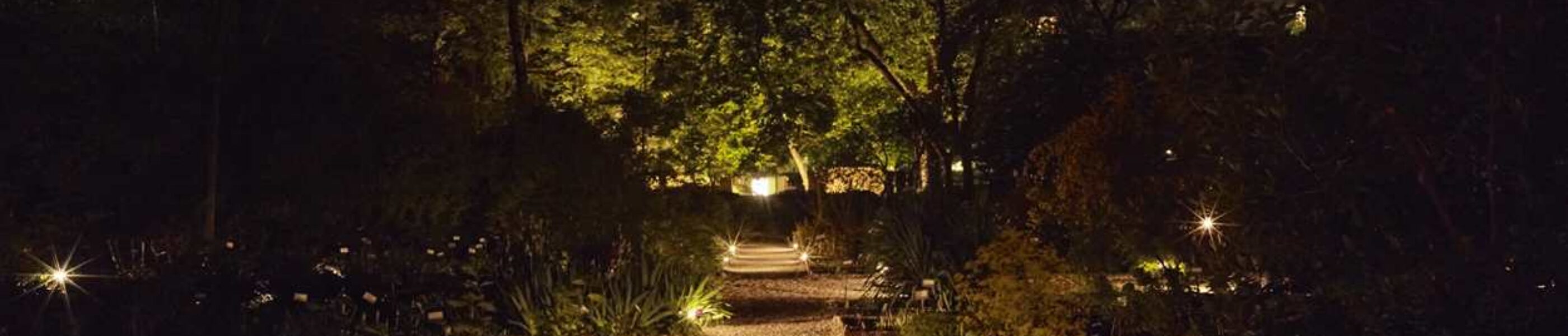
Luminaires are installed inside, only part of the cages. Making light does not mean to dispel the darkness, but, on the contrary, to add a stronger and more involving value to reality itself. In fact, by creating effects of light and shadow, one can generate different emotions and sensations, discover new realities, making the interpretation of space a profoundly personal experience. While the volume and shapes of the Ziggurat are highlighted with outdoor lighting specialists.
Client:
Piero Castiglioni
Collaborations:
Emilio Isgrò
Marco Bazzini
Photo Courtesy:
Emilio Isgrò
Year:
2022
Emilio Isgrò's exhibition, curated by Marco Bazzini, develops through the following exhibition spaces: the Santa Giulia Museum complex hosts in the Renaissance Cloister, "The Harmonum of the Mad Larks", in the exhibition rooms of the Museum we find the unprecedented cycle of paintings entitled "Brixia as Athens". In the central hall of the Capitolium, a veritable epigraphical museum presents the work 'Virgil's Bees'. Also until 3 July it is possible to see the performance 'Dido Adonais Domine' by Emilio Isgrò in the Roman Theatre, part of the Archaeological Park of Roman Brescia. The exhibition project entitled 'Isgrò cancels Brixia' brings together archaeology and contemporary art, history and the present, classical culture and its persistence in our time and consists of monumental installations (physical and digital). Architectural lighting works features 'The Harmonium of the Mad Larks', an enigmatic and monumental musical instrument, on the perimeter of which runs a sequence of piano keys, installed in the centre of the cloister, while along the perimeter of the arcades are installed cages of different designs and sizes. In the silence of the place resounds the aria of Casta diva from Vincenzo Bellini's Norma, one of the most powerful operas in the Italian opera tradition, set in the Roman Gaul.
Luminaires are installed inside, only part of the cages. Making light does not mean to dispel the darkness, but, on the contrary, to add a stronger and more involving value to reality itself. In fact, by creating effects of light and shadow, one can generate different emotions and sensations, discover new realities, making the interpretation of space a profoundly personal experience. While the volume and shapes of the Ziggurat are highlighted with outdoor lighting specialists.
Client:
Piero Castiglioni
Collaborations:
Emilio Isgrò
Marco Bazzini
Photo Courtesy:
Emilio Isgrò
Year:
2022
Other Projects
Other Projects
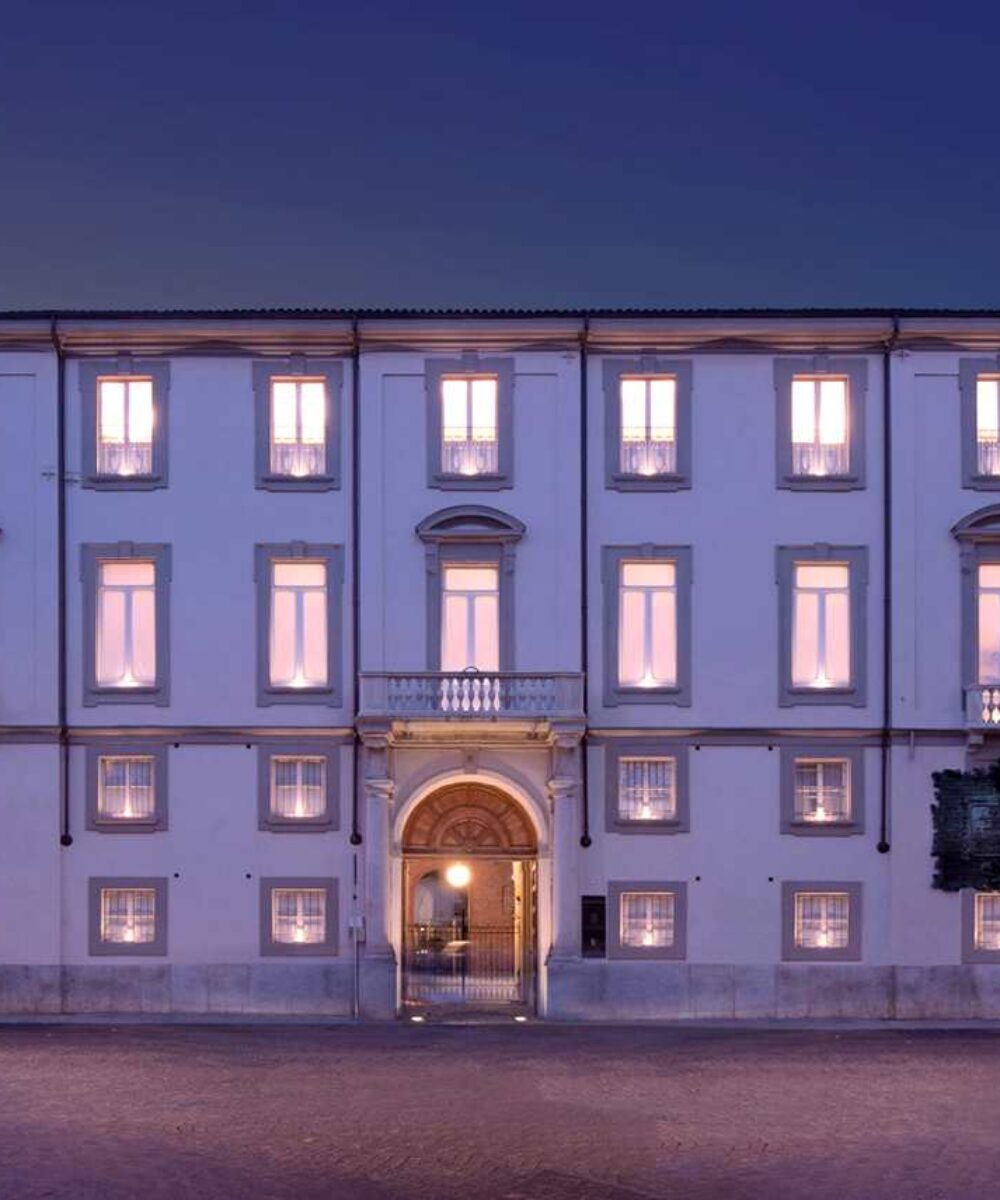
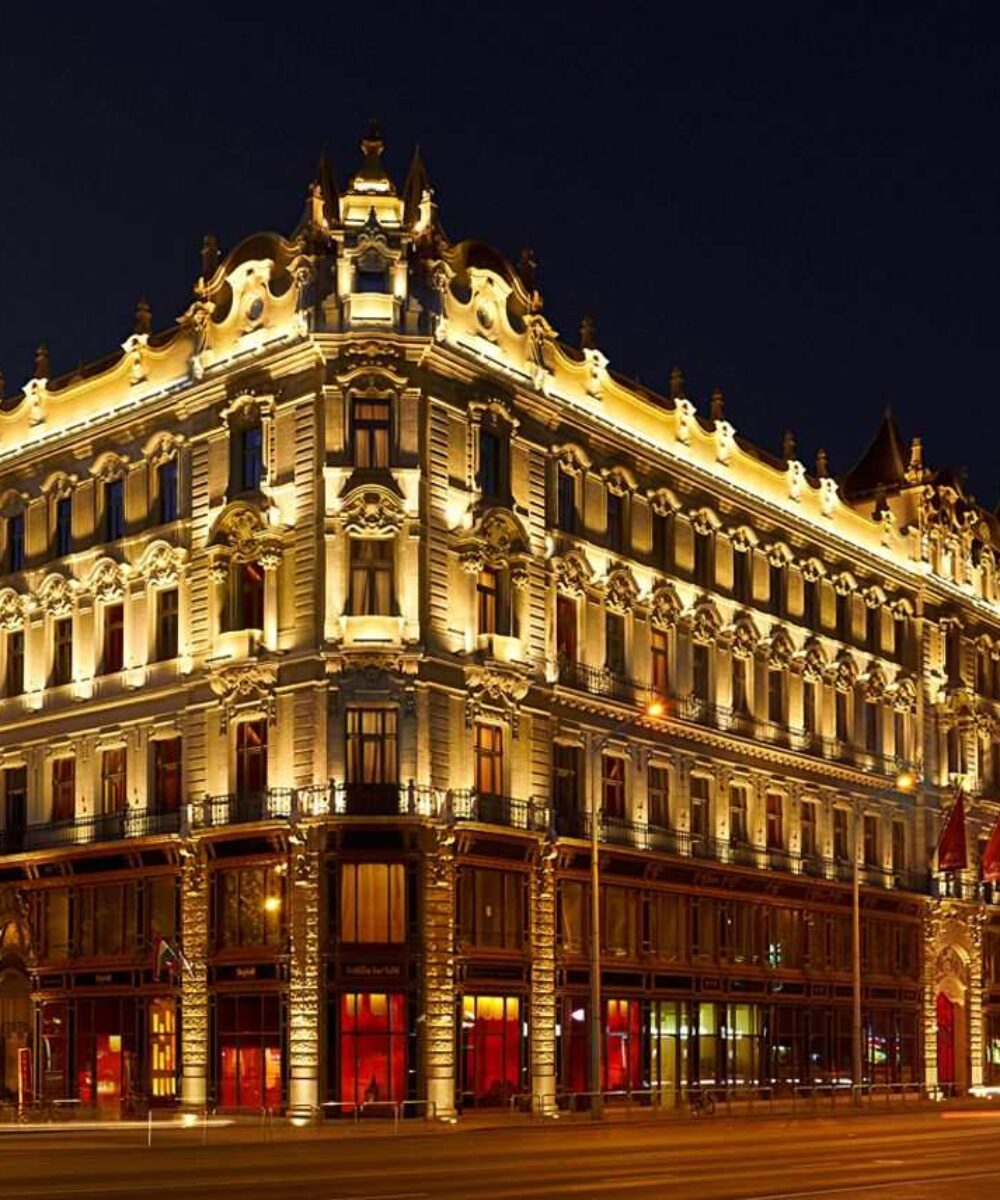
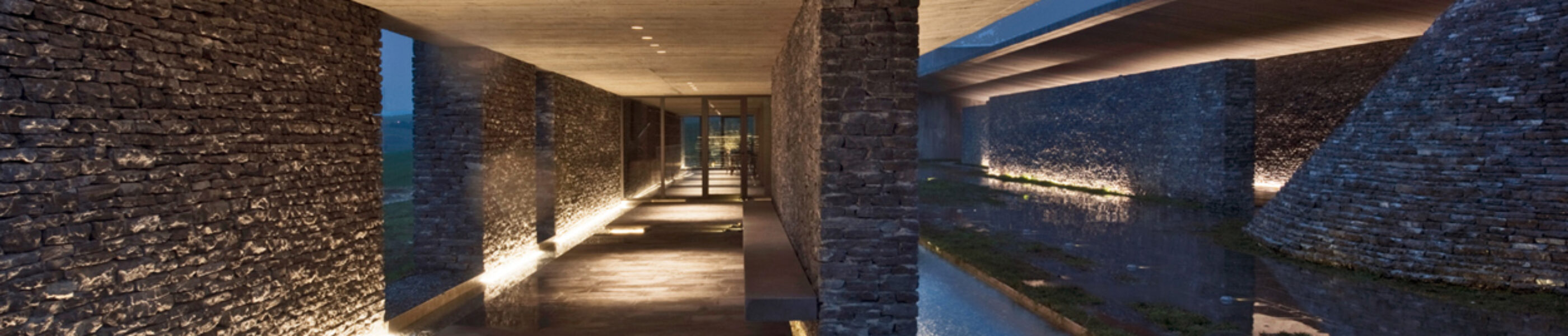
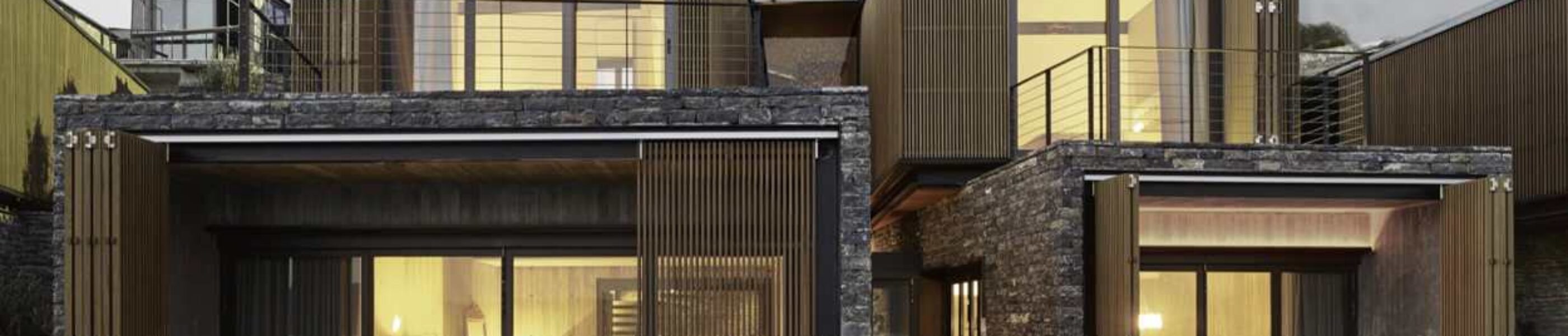
This section brings together a representative selection of lighting design projects in the architectural, museum, urban, cultural, retail, hospitality, and infrastructure sectors, both in Italy and abroad. The gallery documents projects of varying scale, function, and context, all sharing an approach to light as a tool for interpreting space, capable of engaging with architecture, artworks, landscape, and contemporary use.
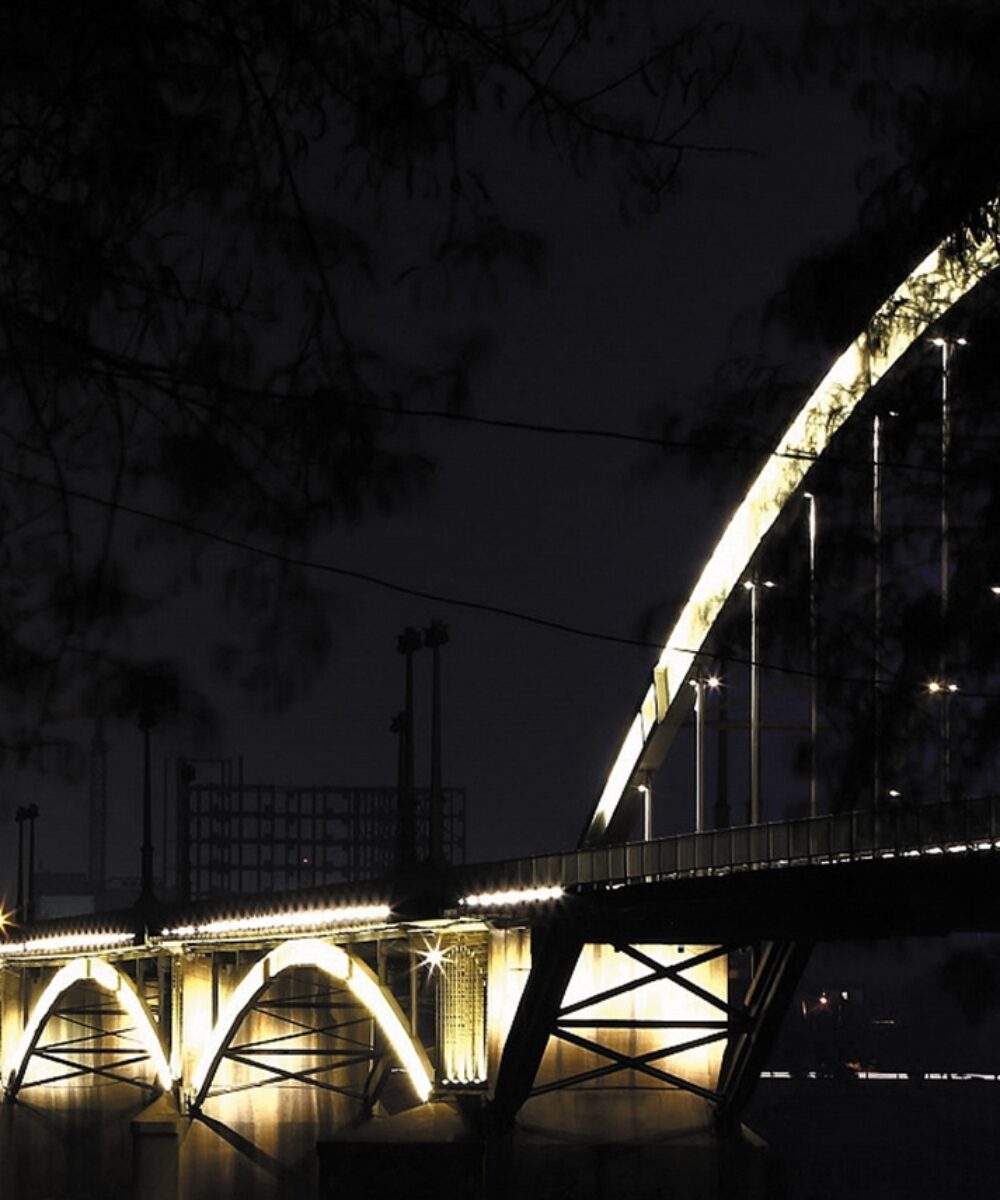
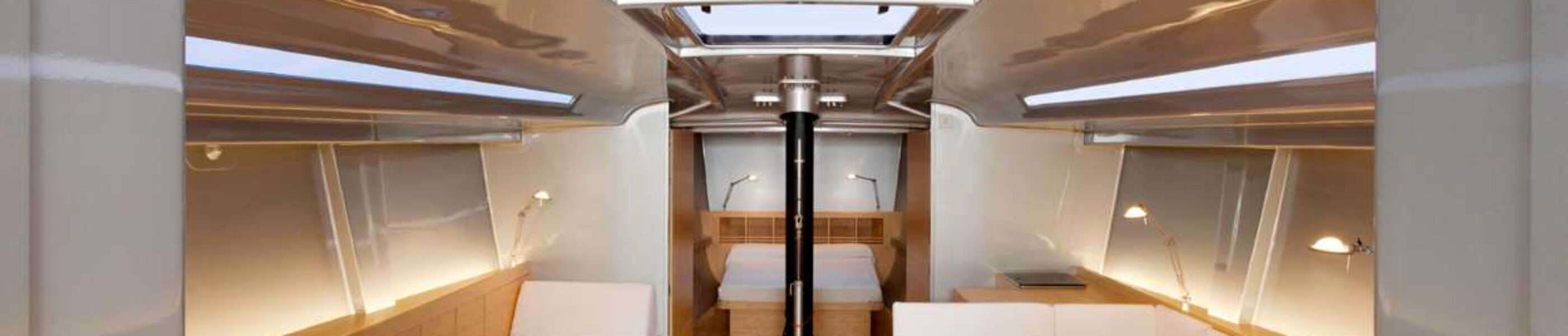
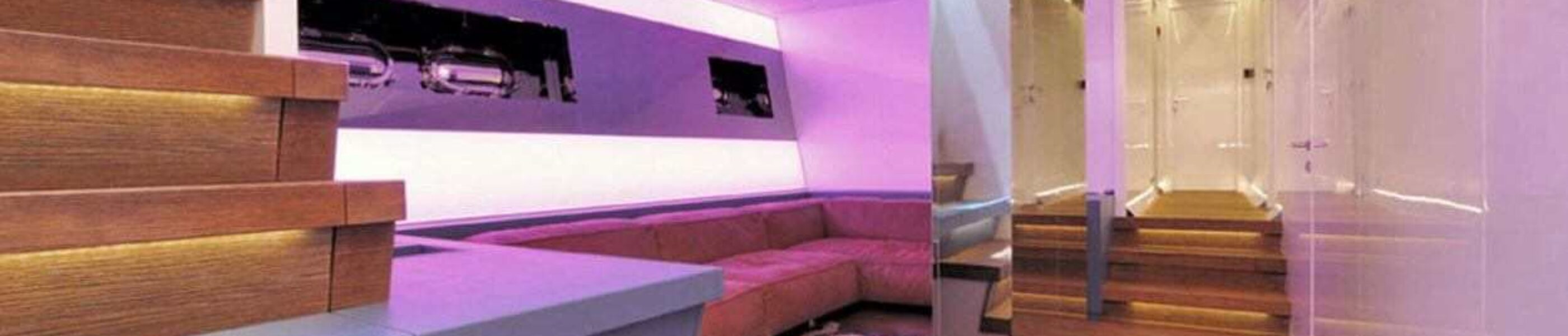
The projects presented range from museums, foundations, and temporary exhibitions to historic buildings, places of worship, public spaces, and urban complexes, including corporate headquarters, private residences, yachts, and lighting masterplans. In each project, light is designed as a controlled material, calibrated to the characteristics of the location, its functional needs, and the perceptual quality of the experience.
Taken together, the collected works convey a vision of lighting design as an integrated process, in which technical rigor, cultural sensitivity, and attention to context contribute to the construction of spatial identity, orientation, and value. The gallery thus takes the form of a design map, capable of demonstrating how light can take on different roles—discrete or declared—while always maintaining coherence, measure, and design awareness.
This section brings together a representative selection of lighting design projects in the architectural, museum, urban, cultural, retail, hospitality, and infrastructure sectors, both in Italy and abroad. The gallery documents projects of varying scale, function, and context, all sharing an approach to light as a tool for interpreting space, capable of engaging with architecture, artworks, landscape, and contemporary use.
The projects presented range from museums, foundations, and temporary exhibitions to historic buildings, places of worship, public spaces, and urban complexes, including corporate headquarters, private residences, yachts, and lighting masterplans. In each project, light is designed as a controlled material, calibrated to the characteristics of the location, its functional needs, and the perceptual quality of the experience.
Taken together, the collected works convey a vision of lighting design as an integrated process, in which technical rigor, cultural sensitivity, and attention to context contribute to the construction of spatial identity, orientation, and value. The gallery thus takes the form of a design map, capable of demonstrating how light can take on different roles—discrete or declared—while always maintaining coherence, measure, and design awareness.