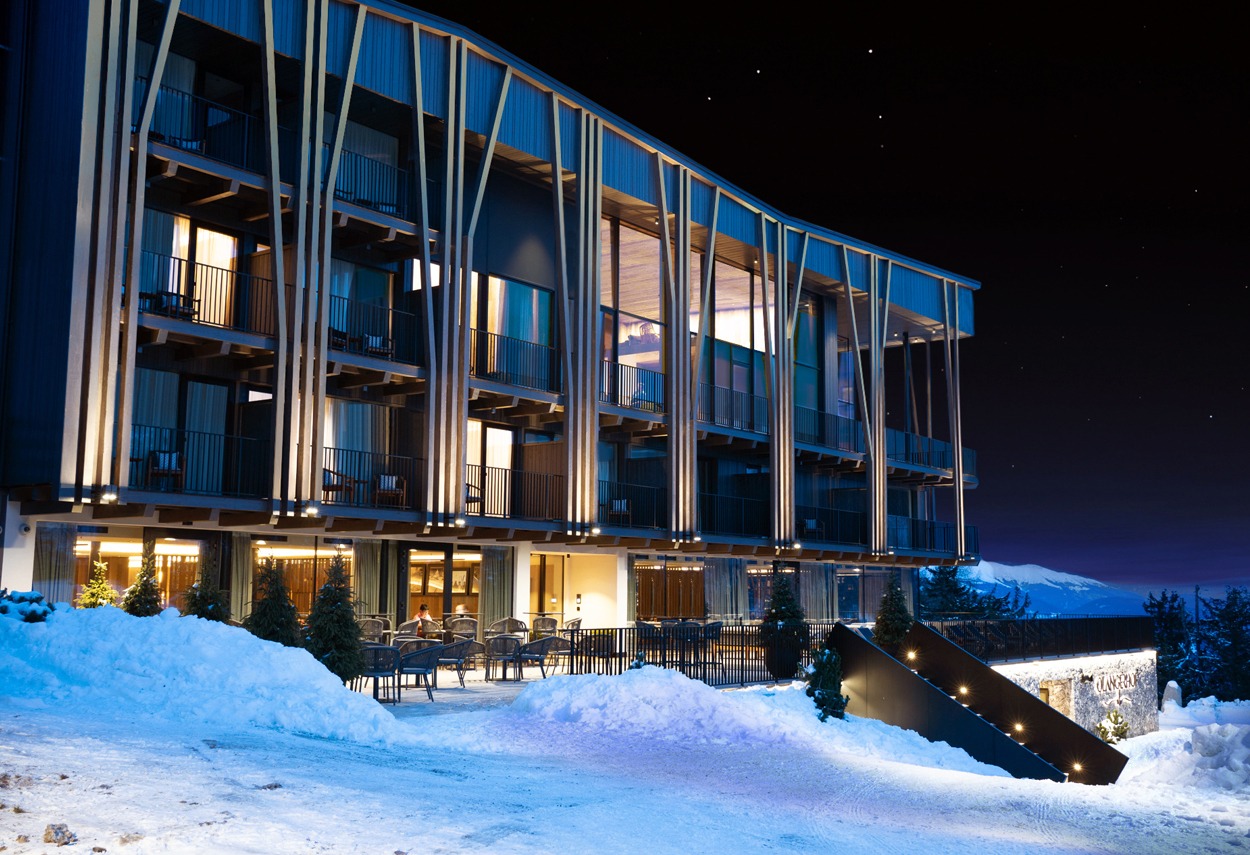
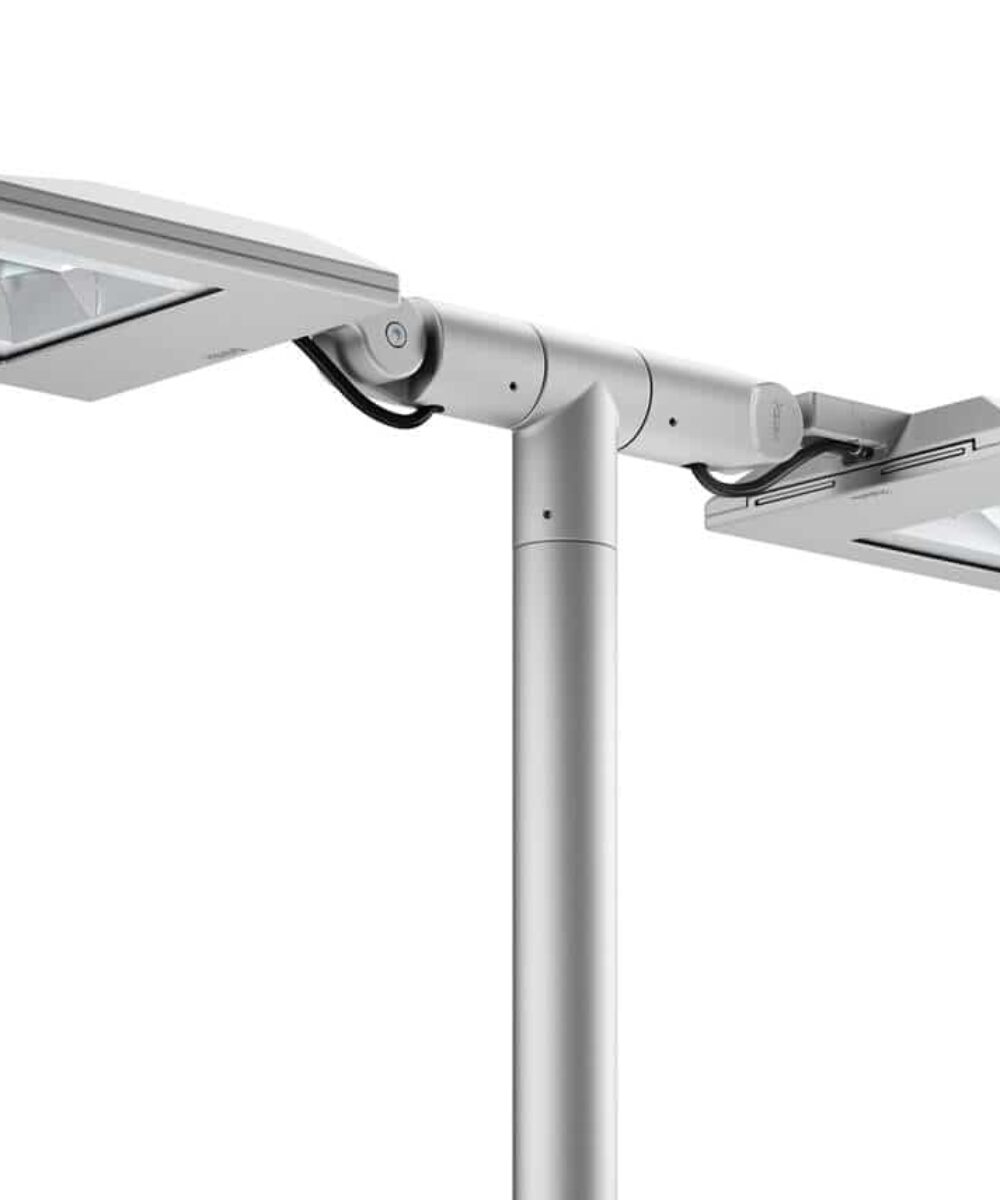
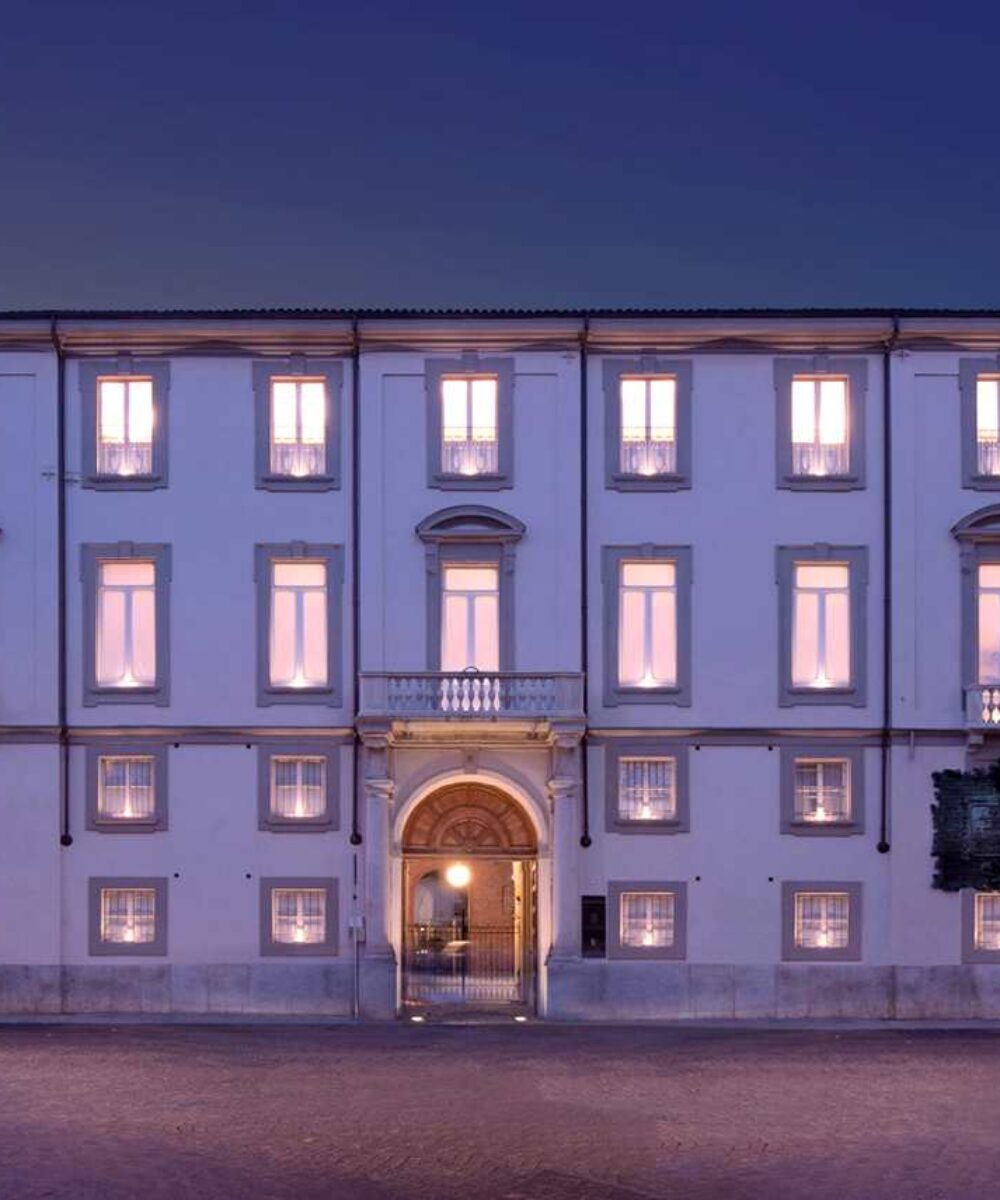
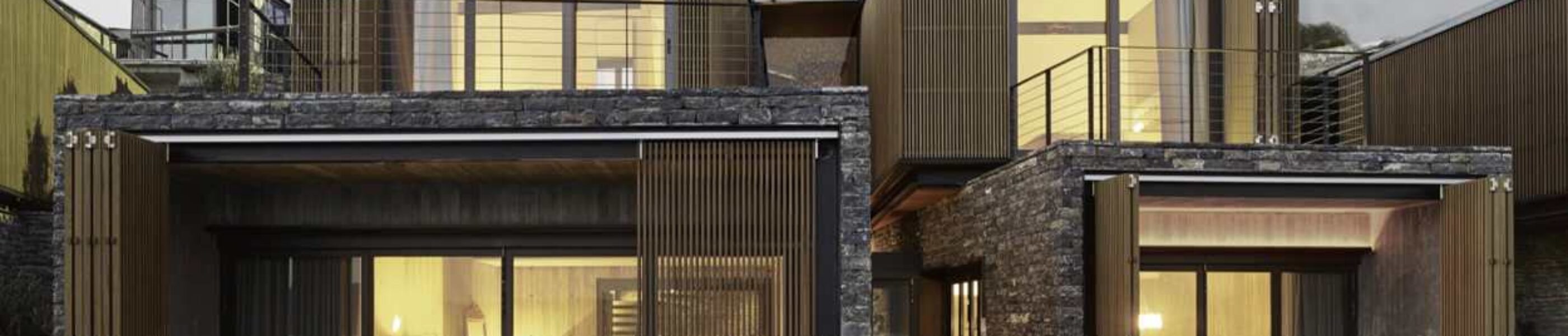
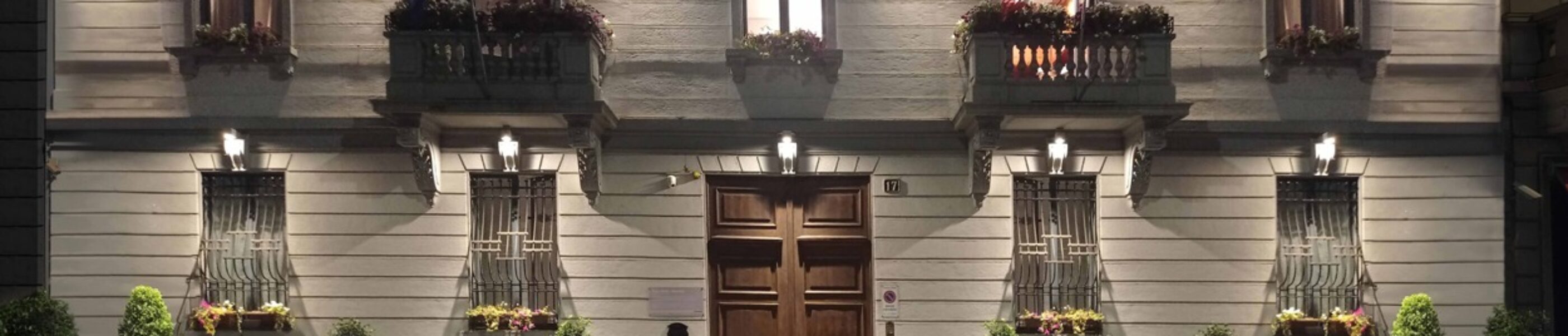
Hotel Olangerhof is the subject of an overall architectural transformation of an existing building, designed by architects Sifola & Sposato is located in the municipality of Valdaora. The town is located in the centre of the Val Pusteria, near the Fanes-Senes-Braies nature park and the Vedrette di Ries-Aurina nature park. This location offers an immersion in nature with the imposing peaks of Plan de Corones, Piz da Peres and Punta Tre Dita as a backdrop. Lighting design enhances the night-time perception of the architectural volume of the facades. The hotel’s concept suggestively as well as making visible the elements that make up the building's elevations, it simplifies orientation. At night, the three-dimensional appearance of the elevations is rendered by an LED light design luminaire, installed at the base of each modular element, which creates a line of light on the internal parts of the uprights. The distribution of the luminous flux favors the illumination of the surfaces framing the windows. Architectural outdoor lighting projectors highlight the vertical elements of the façades. The traditional and easily recognizable urban pole-mounted lighting solutions serves the areas near the building entrance and the terrace. It generates reflections in the snow and creates a building floating in nature.
Light characterises the spaces, lending prestige to the architecture. Architectural outdoor lighting give a accent lighting on the façade attracts visitors, inviting them to discover the beauty of its interior. Light as a constructive material. Through the lighting design project, light becomes a true construction material as it configures spaces and volumes, creating sensations for the user. In this case, the two factors of visual perception and experience of space are combined to generate the relationship between light and architecture from both a functional and symbolic point of view.
Client:
Piero Castiglioni
Collaborations:
Sifola & Sposato Architects
Photo Courtesy:
Sifola & Sposato Architects
Year:
2021 - 2022
Hotel Olangerhof is the subject of an overall architectural transformation of an existing building, designed by architects Sifola & Sposato is located in the municipality of Valdaora. The town is located in the centre of the Val Pusteria, near the Fanes-Senes-Braies nature park and the Vedrette di Ries-Aurina nature park. This location offers an immersion in nature with the imposing peaks of Plan de Corones, Piz da Peres and Punta Tre Dita as a backdrop. Lighting design enhances the night-time perception of the architectural volume of the facades. The hotel’s concept suggestively as well as making visible the elements that make up the building's elevations, it simplifies orientation. At night, the three-dimensional appearance of the elevations is rendered by an LED light design luminaire, installed at the base of each modular element, which creates a line of light on the internal parts of the uprights. The distribution of the luminous flux favors the illumination of the surfaces framing the windows. Architectural outdoor lighting projectors highlight the vertical elements of the façades. The traditional and easily recognizable urban pole-mounted lighting solutions serves the areas near the building entrance and the terrace. It generates reflections in the snow and creates a building floating in nature.
Light characterises the spaces, lending prestige to the architecture. Architectural outdoor lighting give a accent lighting on the façade attracts visitors, inviting them to discover the beauty of its interior. Light as a constructive material. Through the lighting design project, light becomes a true construction material as it configures spaces and volumes, creating sensations for the user. In this case, the two factors of visual perception and experience of space are combined to generate the relationship between light and architecture from both a functional and symbolic point of view.
Client:
Piero Castiglioni
Collaborations:
Sifola & Sposato Architects
Photo Courtesy:
Sifola & Sposato Architects
Year:
2021 - 2022
Other Projects
Other Projects
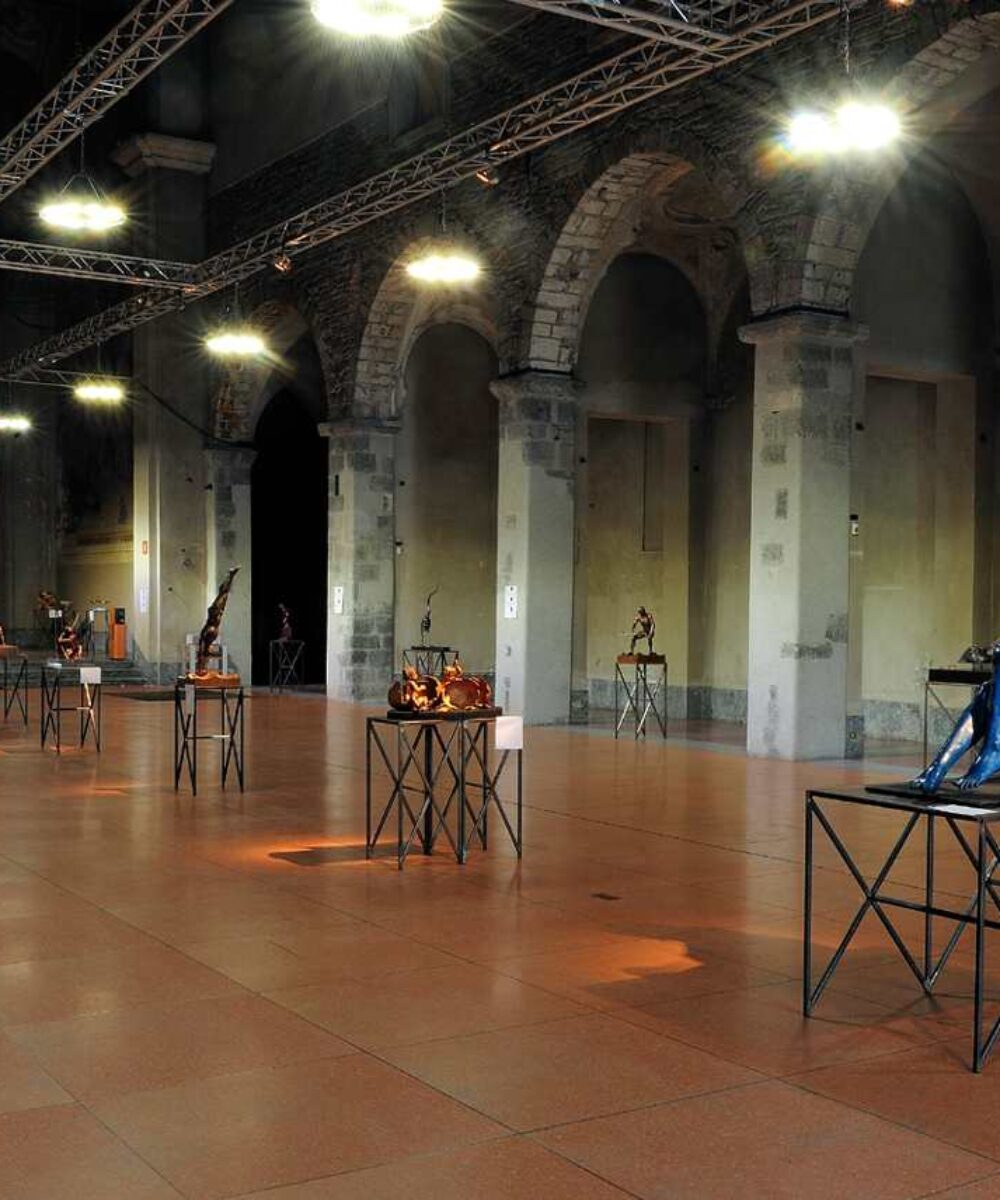
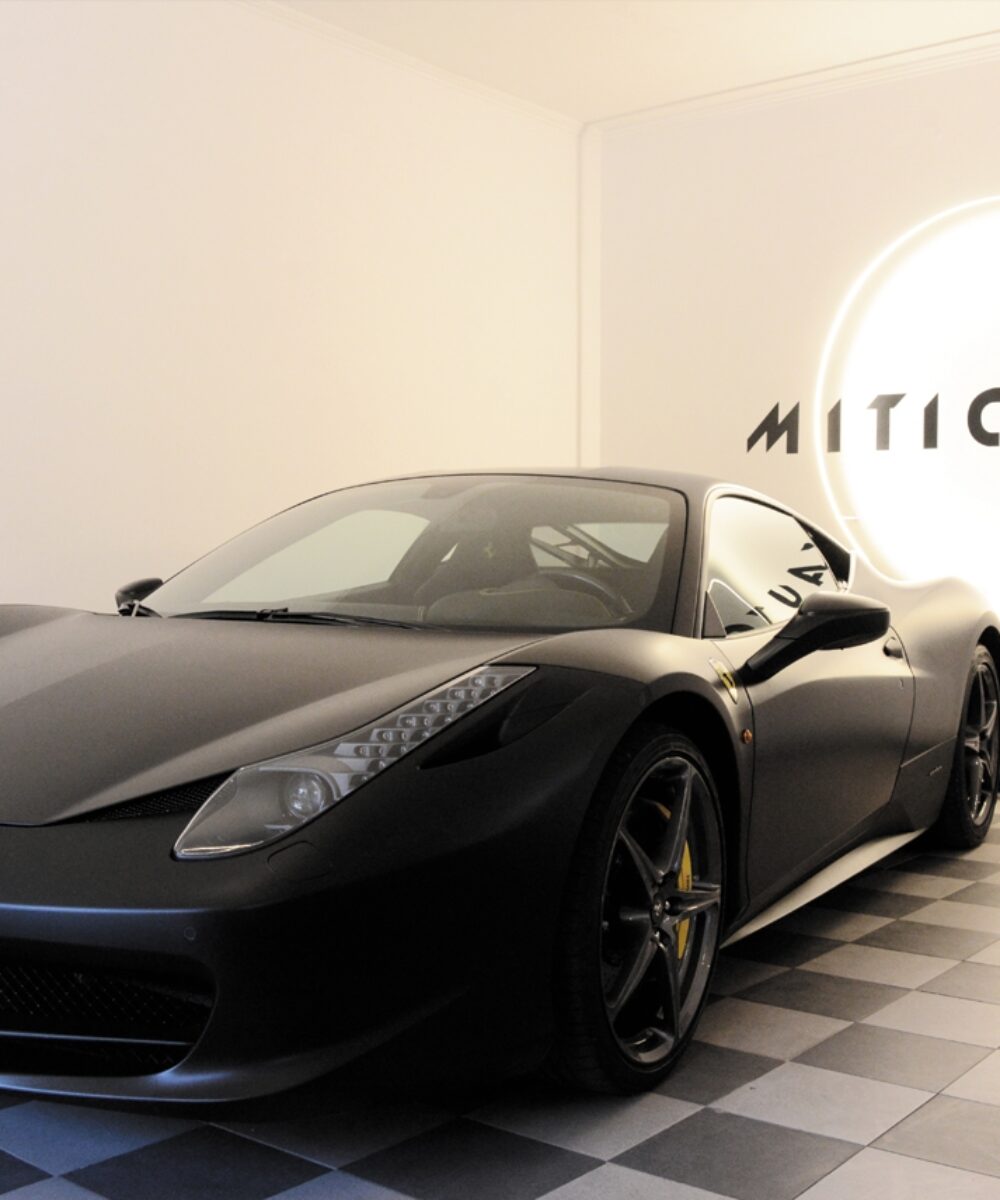
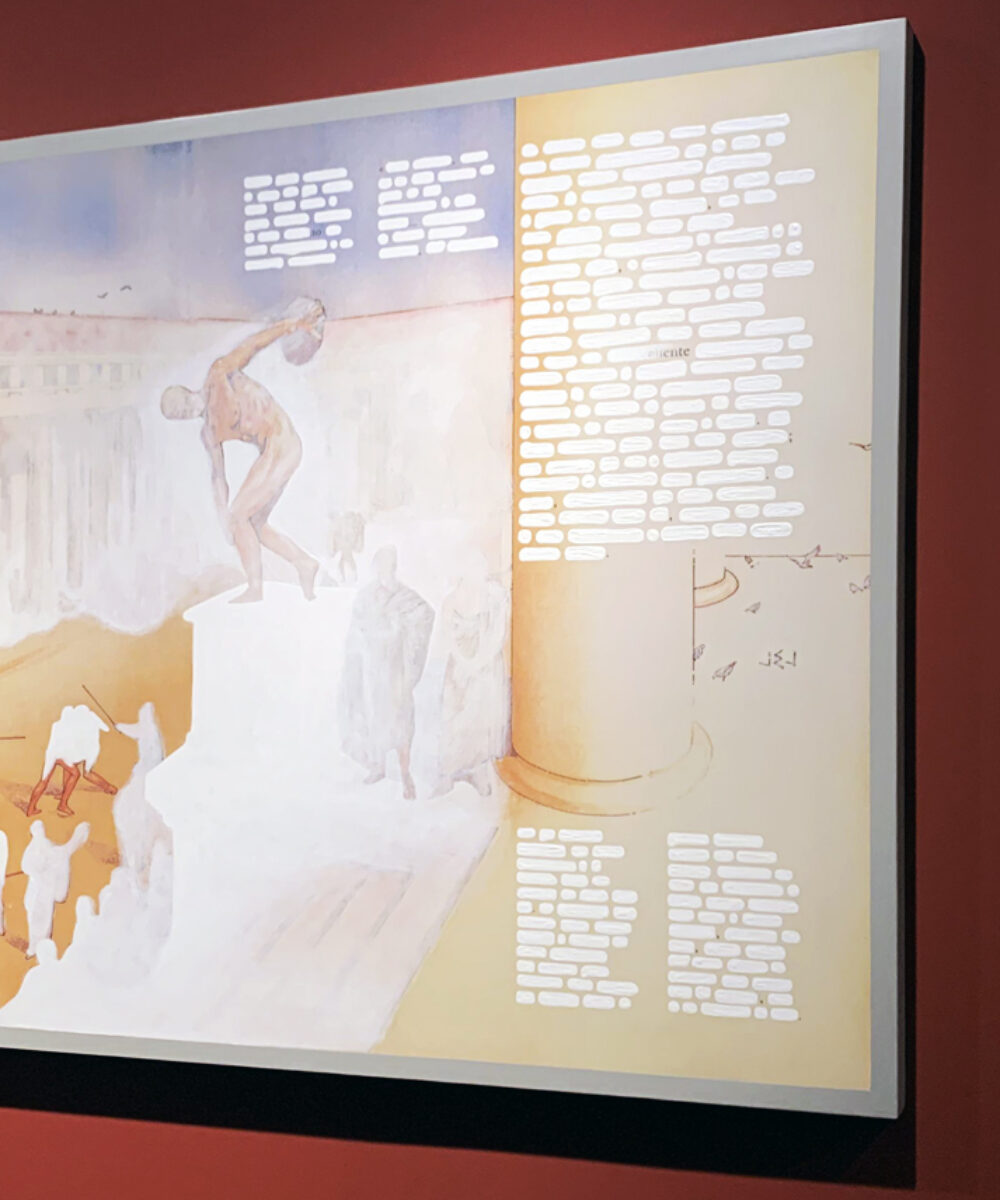
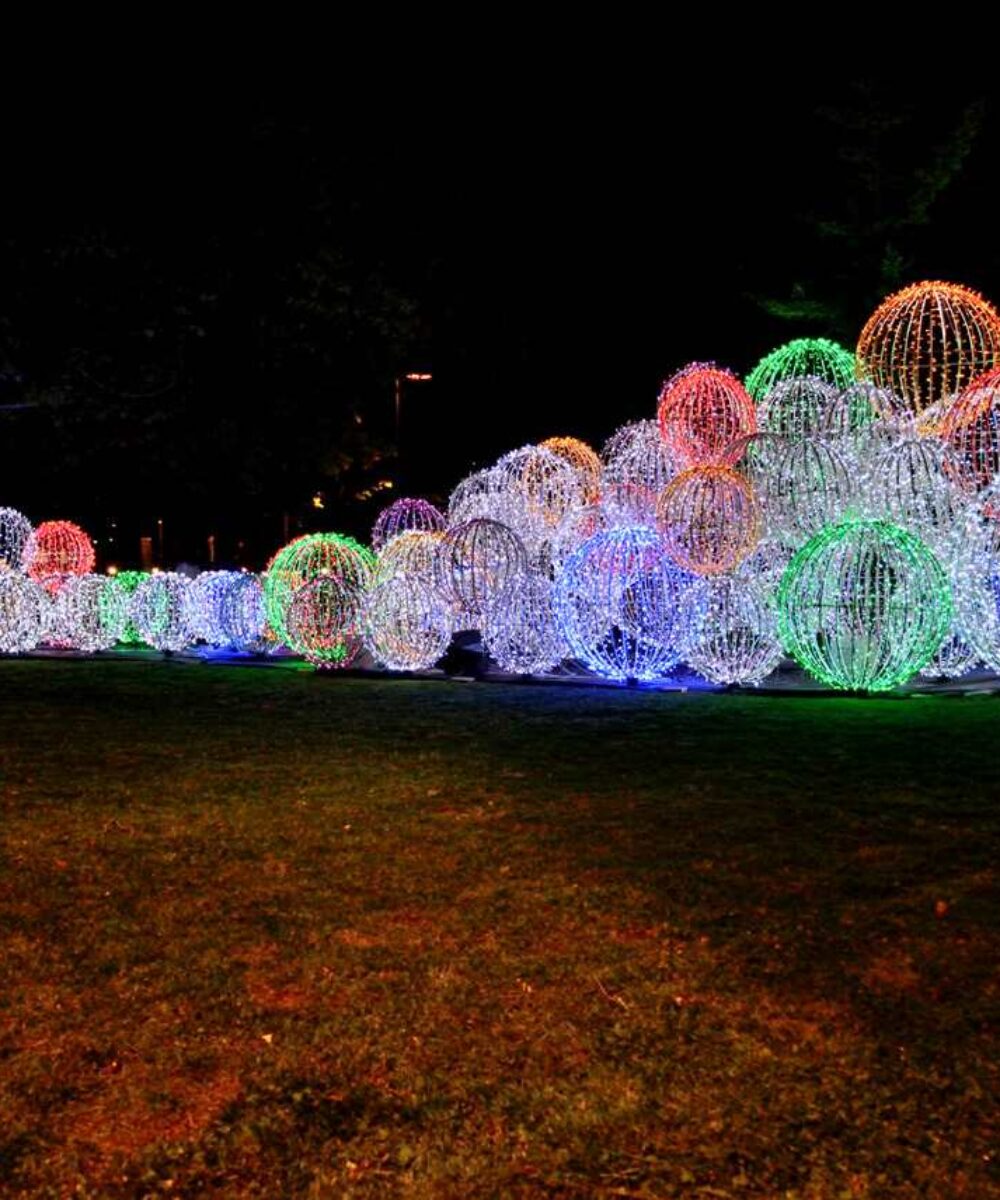
This section brings together a representative selection of lighting design projects in the architectural, museum, urban, cultural, retail, hospitality, and infrastructure sectors, both in Italy and abroad. The gallery documents projects of varying scale, function, and context, all sharing an approach to light as a tool for interpreting space, capable of engaging with architecture, artworks, landscape, and contemporary use.
The projects presented range from museums, foundations, and temporary exhibitions to historic buildings, places of worship, public spaces, and urban complexes, including corporate headquarters, private residences, yachts, and lighting masterplans. In each project, light is designed as a controlled material, calibrated to the characteristics of the location, its functional needs, and the perceptual quality of the experience.
Taken together, the collected works convey a vision of lighting design as an integrated process, in which technical rigor, cultural sensitivity, and attention to context contribute to the construction of spatial identity, orientation, and value. The gallery thus takes the form of a design map, capable of demonstrating how light can take on different roles—discrete or declared—while always maintaining coherence, measure, and design awareness.
This section brings together a representative selection of lighting design projects in the architectural, museum, urban, cultural, retail, hospitality, and infrastructure sectors, both in Italy and abroad. The gallery documents projects of varying scale, function, and context, all sharing an approach to light as a tool for interpreting space, capable of engaging with architecture, artworks, landscape, and contemporary use.
The projects presented range from museums, foundations, and temporary exhibitions to historic buildings, places of worship, public spaces, and urban complexes, including corporate headquarters, private residences, yachts, and lighting masterplans. In each project, light is designed as a controlled material, calibrated to the characteristics of the location, its functional needs, and the perceptual quality of the experience.
Taken together, the collected works convey a vision of lighting design as an integrated process, in which technical rigor, cultural sensitivity, and attention to context contribute to the construction of spatial identity, orientation, and value. The gallery thus takes the form of a design map, capable of demonstrating how light can take on different roles—discrete or declared—while always maintaining coherence, measure, and design awareness.