IES Standard Technical Memoranda (TM): Codes, Structure, and Design Implications
A technical guide to the use and interpretation of TM documents in lighting design
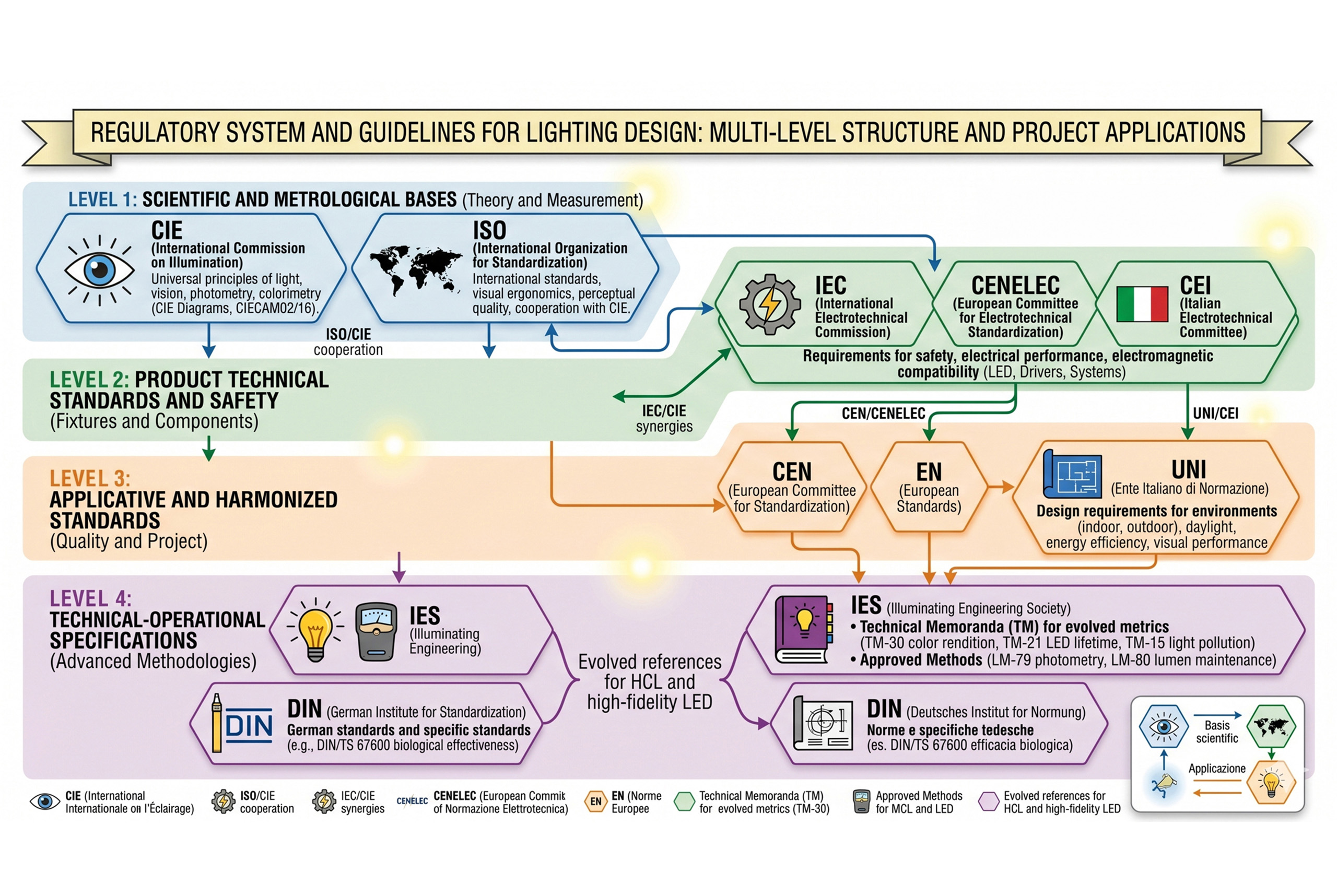
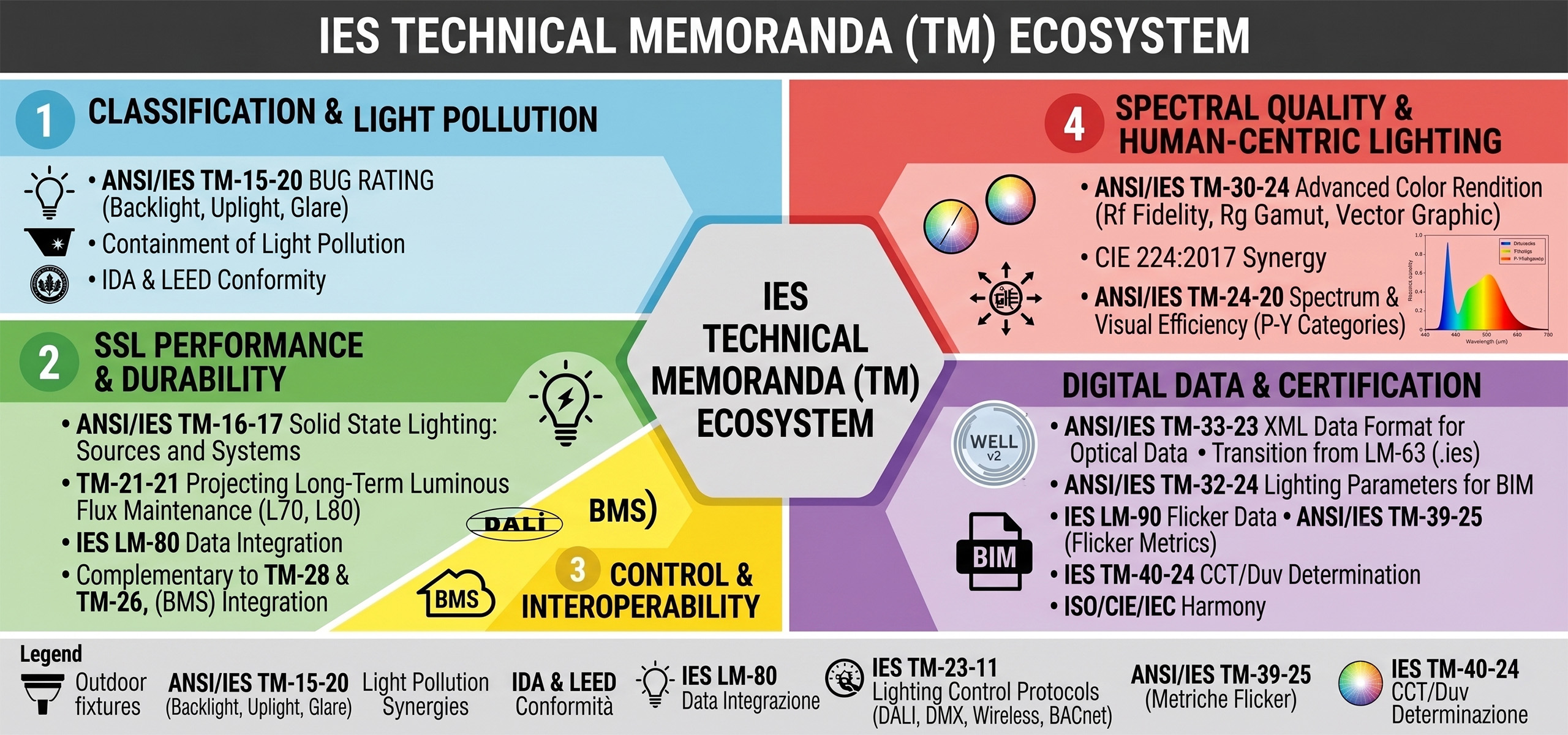
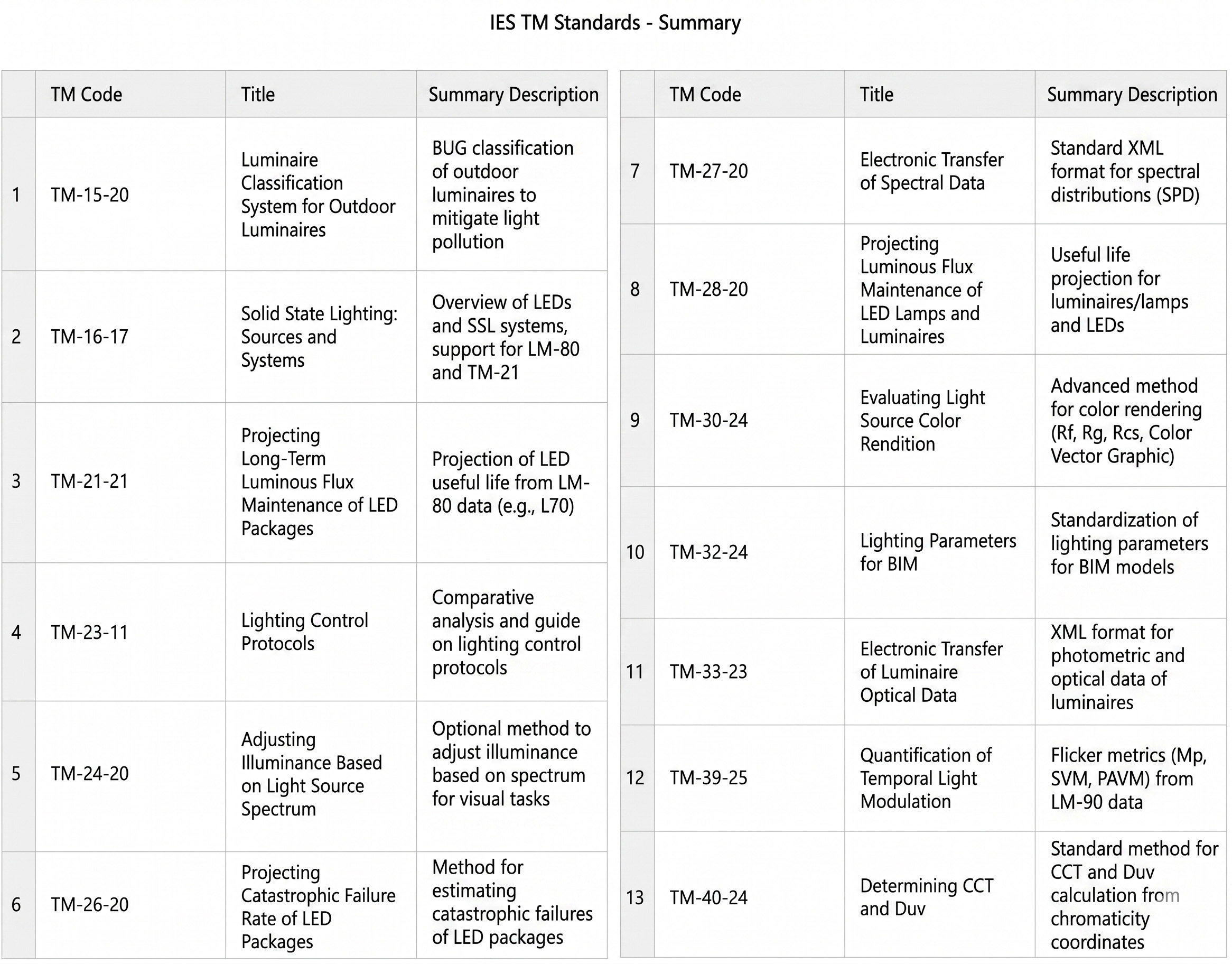
The following insight is dedicated to the Technical Memoranda (TM) published by Illuminating Engineering Society (IES), a collection of technical documents that define methodologies, evaluation criteria and operational guidelines on specific and emerging issues in the field of lighting technology each document is identified by a unique code in the format ANSI/IES TM-##-YY, in which the acronym TM stands for Technical Memorandum, while the two digits ## indicate the progressive number of the document within the series published by the IES. The last two digits,YY, instead refer to the year of publication or most recent revision of the document itself. For example, the code ANSI/IES TM-30-24 identifies the thirtieth memorandum technical published by IES, updated in 2024, which deals with the topic of the subject in an advanced and detailed manner color rendering of light sources, overcoming the historical limitations of the CRI (CIE Ra). Previously, this same document had been published in its first version with the code TM-30-15, corresponding to the year 2015.
For each TM included in this review a structured description, which includes the objective and scope of application, the regulatory and technical connections with other reference standards (such as LM, CIE, ANSI, IEC), and the design implications for lighting designers, engineers, manufacturers and technicians in the sector. These documents represent a consolidated reference for the definition of performance specifications, compliance criteria and calculation tools, with a direct impact on the lighting design and on the evaluation qualitative and quantitative of lighting solutions. The adoption of TM IES guarantees alignment with the most up-to-date international standards, while ensuring data interoperability, reliability of measurements and greater transparency in relations between producers, designers and clients. In the current regulatory and technological context, TMs therefore constitute a essential tool to operate according to scientifically based criteria, in line with the best practice recognized globally.
ANSI/IES TM-15-20 – Luminaire Classification System for Outdoor Luminaires
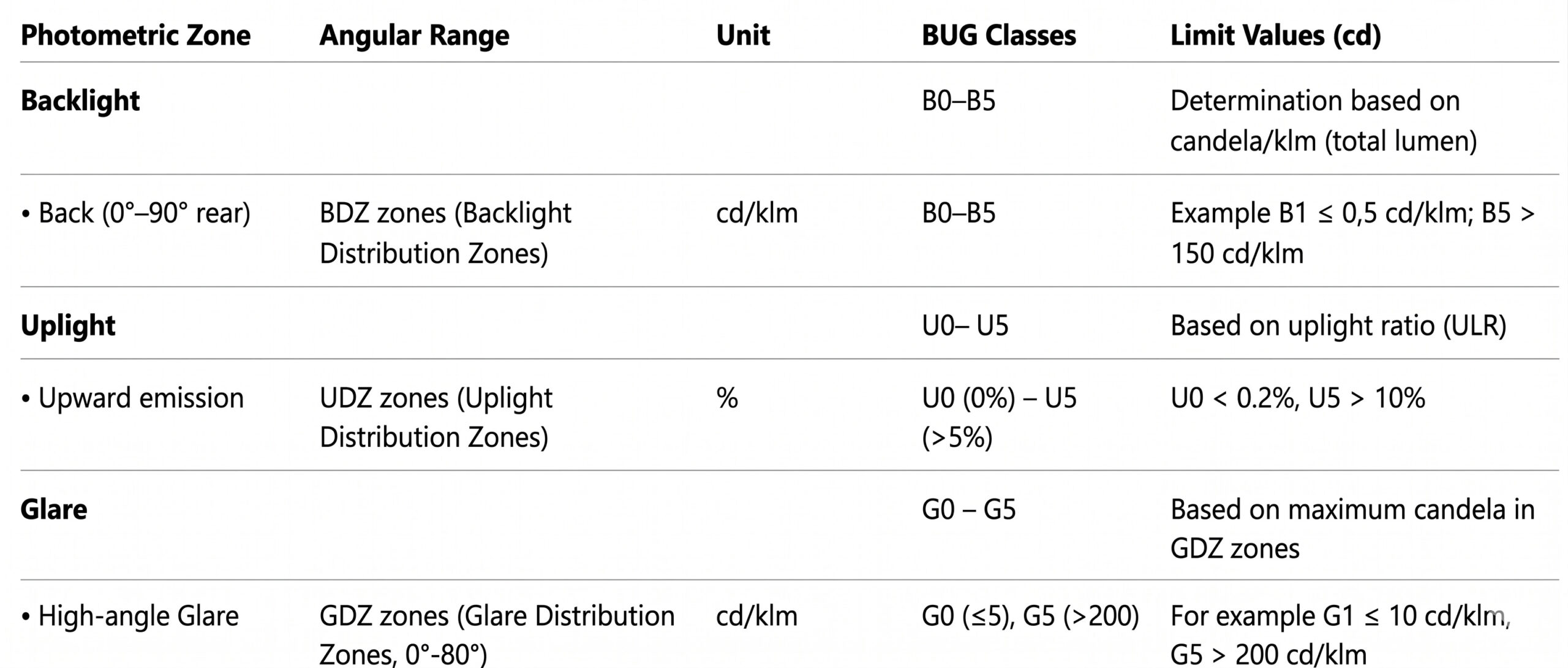
- Objective and scope -The document ANSI/IES TM-15-20 defines a photometric classification system for outdoor lighting fixtures, with the aim of providing professionals with meaningful data on the distribution of luminous flux within specific solid angles. The primary objective is to mitigate the negative effects of outdoor lighting, such as light pollution, glare and disturbance to residents and wildlife, through a more detailed analysis of light emissions. This standard goes beyond the previous concept of "cut-off", now considered obsolete, introducing a more complex and precise approach to photometric evaluation. The model proposed by TM-15-20 structures the light classification into three main components: Backlight, Uplight and Glare, analyzed according to well-defined angular zones, measured in candela per kilolumen (cd/klm) or as a percentage of total flow (ULR).
- Connections to other standards -Central to the TM-15 is the introduction of the U.G. indices – Backlight, Uplight and Glare– which respectively classify the emitted light towards the back of the appliance, upward and in the frontal direction with potential glare these indices are now adopted as a reference in numerous local and international regulations relating to containment of light pollution, and are recognized, for example, by IDA (International Dark-Sky Association) guidelines for the selection of low environmental impact devices. The TM-15 is also cited in energy regulations and regulations in the transport sector, in particular for the requirements of sustainable street lighting.
- Design implications - For In the field of outdoor lighting design, the control of the light dispersion and the prevention of light pollution represent fundamental elements to guarantee environmental quality and compliance with current regulations. BUG Rating (acronym for Backlight, Uplight and Glare) is a classification system introduced by the IESNA to quantitatively evaluate the light emitted by a device in the direction o funwanted photometric zones the three components of the BUG Rating refer to:
Backlight (B): measures the light emission in the rear area of the lighting body, with respect to the main direction. This area is divided into angular sub-areas called BDZ (Backlight Distribution Zones), which include angles from 0° to 90° behind the device, further divided into Low, Medium, High and Very High Backlight.
Uplight (U): evaluates the light emission upward, that is, beyond 90° from the vertical. It is divided into two main zones called UDZ (Uplight Distribution Zones): Low Uplight (90°–100°) and High Uplight (100°–180°). This component is expressed as a percentage of the total emitted flux, also known as ULR – Upward Light Ratio.
Glare (G): analyze the potential glare perceived by observers in proximity to the horizontal plane, evaluating the emissions in angular zones defined as GDZ (Glare Distribution Zones), from 60° to 90° forward and laterally to the main beam direction.
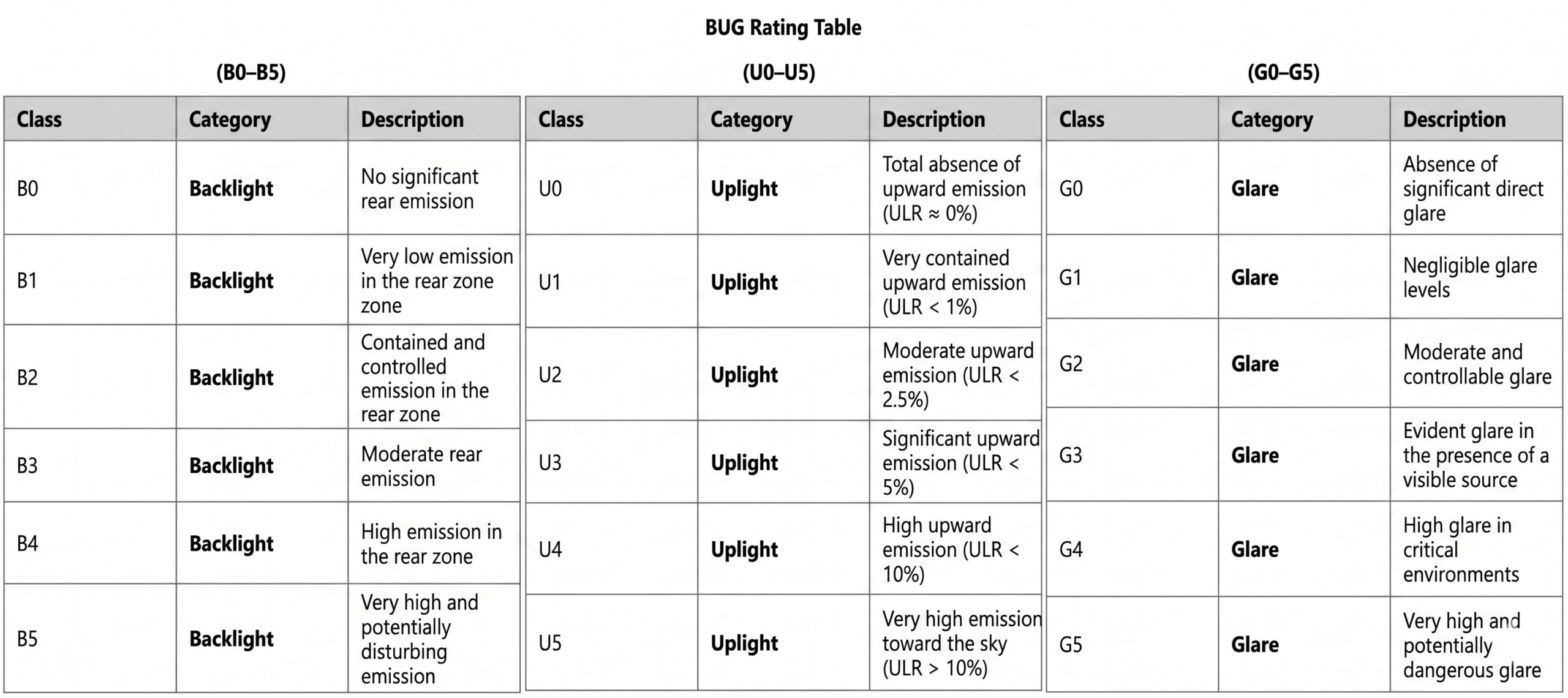
Each device can be classified with a value numeric from 0 to 5 for each component (e.g. B2-U0-G1), according to thresholds defined in cd/clm you are percentage, as established in the classification table TM-15-20. These values allow to quickly determine the environmental compliance of the device and its suitability for use in sensitive environments, such as public parks, residential areas or protected areas.
ANSI/IES TM-16-17 – Solid State Lighting: Sources and Systems
- Objective and scope -The document ANSI/IES TM-16-17 provides a complete technical overview and updated on the technology of the solid-state lighting (SSL), with particular attention to LED and related systems. Originally published in 2005 and subsequently updated in 2017, the TM-16 collects the most relevant information relating to the evolutionary history, all photometric and thermal performance, all electrical characteristics and to the main ones application areas of LED sources. It is configured as a informational and educational document, aimed at designers, engineers and manufacturers, with the aim of providing a solid knowledge base for understanding the peculiarities of LEDs compared to traditional light sources.
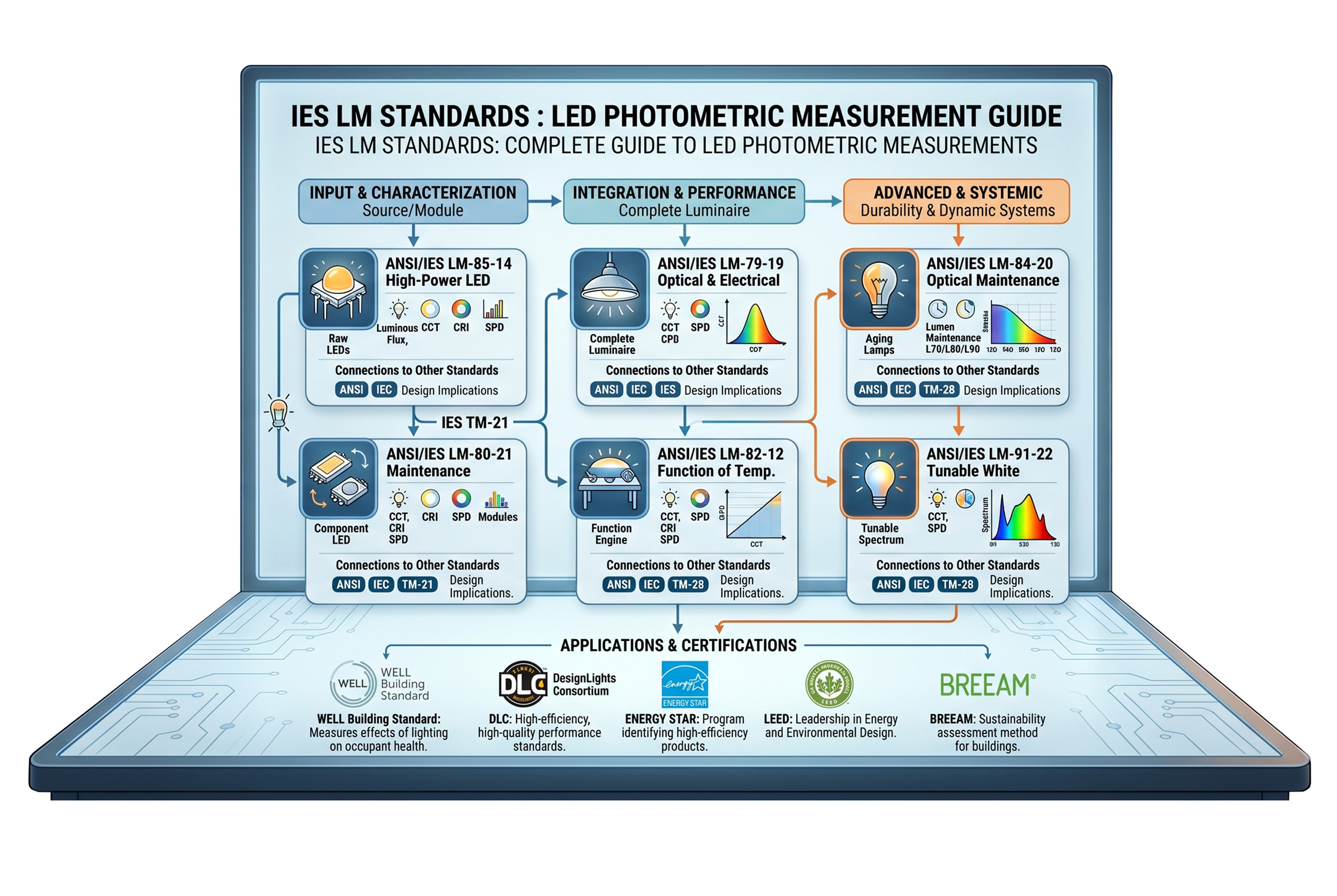
- Connections to other standards -The TM-16 does not introduce specific test methods or regulatory protocols, but is intended as a conceptual and technical support to the consistent adoption of other IES and international standards. Offering an in-depth description of the LED operating principles, of the phenomena of depreciation of luminous flux, from the thermal management and of the photonic and chemical structure of the sources, creates the theoretical background necessary to understand and apply standards such as IES LM-80 (measurement of flow maintenance) and IES TM-21 (useful life projection). Furthermore, the document introduces a standardized technical terminology which has influenced the classifications present in reference regulatory publications such as those of the CIE and of the IEC.
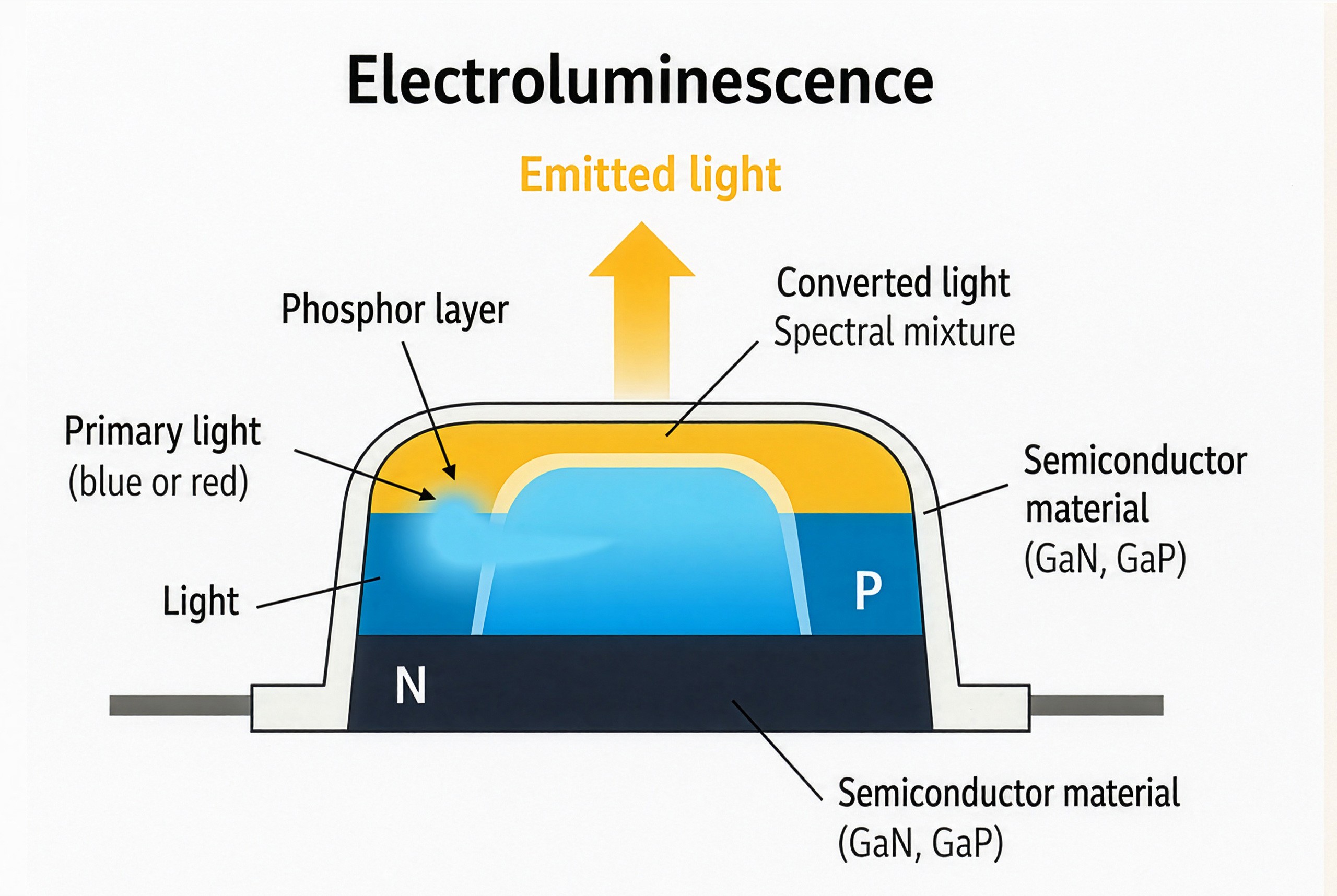
- Design implications - Per i lighting designere iindustry technicians, TM-16 represents a reference manual which allows you to make informed design choices when using LED sources. For example, understanding the Relationship between drive current, junction temperature and light decay allows you to correctly size the systems to ensure stable performance and long life. Similarly, distinguishing between Direct emission LEDandphosphor systems it is essential to accurately evaluate parameters such as color rendering index (CRI) or the extension of the color gamut. In summary, TM-16 provides professionals with a shared knowledge framework, improving communication between designers and manufacturers and promoting the effective integration of SSL technologies in compliance with current standards.
ANSI/IES TM-21-21 – Projecting Long-Term Luminous, Photon, and Radiant Flux Maintenance of LED Light Sources
- Objective and scope - The document ANSI/IES TM-21-21 defines the IES official method for long-term projection of the maintenance of the luminous flux, of the photonic flux and of the radiant flux emitted by LED sources. The method allows to extrapolate the decay curves beyond the experimental duration of the tests, in order to estimate the operational useful life of the LED in terms of indicators such as L70, L80, etc. The projection is based on measured data according to IES LM-80, which provides characterization of LED behavior as a function of time and temperature. The 2021 update expanded the document to include test data up to 9,000 hours, coming from different producers, with the aim of improve statistical robustness of the method and to extend its validity to other types of flow in addition to luminous flux.
- Connections to other standards - The TM-21-21it is closely connected to the document IES LM-80, which represents theprimary source of experimental data used for projections. It is also complementary to TM-28, which extends the methodology to lamps and complete appliances, and to TM-26, focused instead on the catastrophic failure assessment of LEDs. This combined approach allows for a integrated useful life assessment: on the one hand the progressive degradation of the flow, on the other total failures. At an international level, although a CIE normative equivalent, the TM-21 is often recognized as de facto benchmark method, and it is officially adopted by certification programs come ENERGY STAR and DesignLights Consortium (DLC), which require it as a mandatory tool for the long-term performance statement for LED products.
- Design implications - The introduction of the TM-21-21 has profoundly transformed the practices of design and technical specification of LED systems. Thanks to this method, manufacturers, lighting designers and planners can reliably estimate the useful life of sources, even in the presence of experimental data limited in time. For example, it is possible to declare that a source will maintain at least 70% of the initial flux after 50,000 hours (L70), starting from measurements collected over much shorter time intervals. This allows us to integrate L70/L80 values into maintenance plans, performance specifications and tender notices, helping to define the quality, durability and sustainability of the system. Furthermore, TM-21 has provided the LED market with a shared comparative evaluation tool, reducing design uncertainty and facilitating the adoption of high-performance sources in the most demanding contexts. Its systematic application today represents a essential operating standard for those who design architectural, urban, industrial or museum lighting with criteria of durability and long-term reliability.
IES TM-23-11 – Lighting Control Protocols
- Objective and scope - The document ANSI/IES TM-23-11it is configured as a complete introductory guide everyone technologies and protocols for light control, with the aim of offering impartial and up-to-date information on the potential and limitations of different lighting control solutions. The primary aim is to increase the level of technical awareness between designers, specifiers, installers and system integrators, promoting a greater functional integration of control systems (dimming, sensors, automation) in lighting projects. The TM-23 systematically analyzes the control systems architecture, the related components (user interfaces, drivers/ballasts, controllers, gateways), the types of protocols (analog and digital, unidirectional and bidirectional), as well as the main dimming technologies available on the market.
- Connections to other standards - TM-23 does not introduce new protocol standards, but describes comparatively the existing control technologies– including 0-10V analog, DALI e DALI-2 (Digital Addressable Lighting Interface), DMX512, wireless protocols, e i building automation systems come BACnet and KNX– illustrating its functional characteristics and possible coexistence modes within the same plant. Refers to thetechnical standards for interoperability and compliance (for example IEC 62386 for DALI and ANSI E1.11 for DMX), also underlining the importance of processes such as the commissioning. Furthermore, TM-23 recalls the best practices complementary to energy and plant standards, come ASHRAE 90.1 and IEC 60669(for relays and dimmers), thus offering a contextualised regulatory framework from the lighting designer's point of view.
- Design implications - For the lighting designer, TM-23 is a strategic assetfor the informed selection of the control system best suited to the application context. Understanding the operational characteristics of the protocols (for example, easiness for addressable control with feedback, DMX for dynamic scenographic applications, 0–10V for simple retrofits, or wireless protocols for flexibility and scalability) allows you to avoid specification errors, correctly evaluate the infrastructure constraints(such as topologies, distances, compatibilities), and ensure effective integration with sensors and building management systems (BMS). The TM-23 also promotes the adoption of advanced controls to improve both the energy efficiency (e.g. through strategies of daylight harvesting) both the perceptual quality of light (e.g. through custom scenes). Ultimately, the document encourages a multidisciplinary and integrated approach between light and control, enabling professionals to address the technological complexity of contemporary lighting.
ANSI/IES TM-24-20 – An Optional Method for Adjusting the Recommended Illuminance for Visually Demanding Tasks (Categorie P–Y) Based on Light Source Spectrum
- Objective and scope -The document ANSI/IES TM-24-20 introduce a optional calculation method aimed at considering the influence of the light source spectrum on the visual performance in highly demanding visual tasks. In particular, the method describes how the spectral power distribution (SPD) influences fundamental parameters such as the pupil size, l’visual acuity and the visual efficiency in photopic conditions. Based on these considerations, the index is defined Equivalent Visual Efficiency (EVE), which allows – in specific contexts – to modulate the recommended illumination levels depending on the source spectrum, without compromising visual performance.
The scope of application covers the visual tasks classified into categories from P to Y according to the IES classification, or activities characterized by very fine details and the low contrast, in which precision and speed are essential (e.g. control, technical or sanitary environments).
- Connections to other standards - The TM-24-20 fits into the framework of advanced studies on relationship between spectral composition of light and visual performance in the photopic and mesopic range. It extends the standard model based on thecurve V(λ) from the CIE, integrating more up-to-date knowledge on effects of SPD on the retina and pupil dynamics. While not yet formalized within CIE or ISO standards, the TM-24-20 represents a significant step towards the integration of the spectrum as a design parameter the method is complementare ai Recommended Practices IES: for example, a designer can justify variations in illumination values recommended by documents such as IES RP-28 (offices) the RP-29 (healthcare environments) when using sources with a spectrum optimized for viewing achromatic details. The document also refers to international publications such as CIE 191:2010 (mesopic vision) and CIE S 026:2018 (non-visual effects of light), while maintaining the specific focus on the achromatic vision in indoor environments.
- Design implications - In current practice, illumination levels are defined by assuming standard sources, without taking into account the specific spectral composition. The TM-24-20 instead allows designers to optimize lighting for critical visual tasks, introducing a correction factor (EVE) which quantifies the spectral effect on visual efficiency. For example, in a control room where one must distinguish minimal details on low-contrast backgrounds, the use of a source rich in short-wavelength components can promote pupillary constriction, increasing visual acuity and allowing equal visual performance with a lower level of illumination this approach allows fo renhance high spectral quality LED sources in specialized projects, improving visual effectiveness without increasing energy consumption it is important to emphasize that the TM-24-20 is a optional tool, applicable only under specific conditions, that is, where the visual task is extremely critical and the scene is predominantly acromatica. Looking ahead, the TM-24-20 represents a methodological evolution that promotes the inclusion of spectrum among the design criteria, anticipating the possible definition of future international regulationsthat integrate the spectral aspect into the determination of interior lighting levels.
ANSI/IES TM-26-20 (R2023) – Projecting Catastrophic Failure Rate of LED Packages
- Objective and scope - The document ANSI/IES TM-26-20 defines three analysis methodologies aimed at catastrophic failure rate estimation of the LED package over time. Unlike the progressive decay of the luminous flux treated in TM-21, the TM-26 focuses on the irreversible damage, i.e. events in which the LED stops emitting light completely this approach allows us to predict, in a quantitative way, the percentage of LEDs that could turn off completely in a given operating range. The document – concise but highly technical (8 pages) – introduces fundamental concepts of electronic reliability engineering, like the bathtub curve, and proposes statistical models for estimate failures during the constant rate phase, typical of the half-life of an electronic system.
- Connections to other standards - It TM-26-20 completes the IES regulatory framework relating to the LED lifespan, integrating with: IES LM-80, which provides experimental flux decay data; IES TM-21, which allows for the long-term projection of this decay; IES TM-28, applicable to modules and finished devices. While LM-80 and TM-21 deal with the gradual degradation of photometric performance, the TM-26 focuses on the electronic mortality and on the probability of total breakdowns the document is inspired by the models of classic electronic reliability, like the exponential distributions and Weibull, consistent with international regulations such as IEC 61709, Telcordia SR-332 and MIL-HDBK-217. The TM-26 is also considered in the reliability evaluation criteria used by certification bodies such as the DesignLights Consortium (DLC), contributing to the definition of requirements for high-reliability LED products.
- Design implications - Per lighting designer, electronic engineers and LED system manufacturers, TM-26-20 represents a fundamental tool to complete the analysis of the useful life of LEDs, also including the catastrophic failures, in addition to the simple decay of the flow. When designing complex systems – such as display a matrice, information panels, large-scale industrial plants the high density outdoor systems– know the expected percentage of LEDs that will stop working in a given period allows you to optimize maintenance plans, predict replacement cycles and ensure business continuity. Furthermore, TM-26-20 provides manufacturers with a rigorous reference for extrapolate the results of accelerated life testing, supporting transparent and verifiable assurance statements. This leads to the possibility of integrate into the technical specifications not only the values L70/L80 (coming from TM-21), but also 50,000 or 100,000 hour failure rate estimates, increasing the client's confidence in the LED system durability. Ultimately, TM-26-20 helps to strengthen the technical and commercial credibility of LED solutions, supporting an engineering approach based on predictive reliability and risk-based design.
ANSI/IES TM-27-20 – IES Standard Format for the Electronic Transfer of Spectral Data
- Objective and scope - The document ANSI/IES TM-27-20 defines a standardized format for the electronic transmission of spectral data, based on struttura XML (Extensible Markup Language), with the aim of facilitate interoperability between laboratories, manufacturers, designers and lighting software. Until the publication of TM-27, there were standardized formats only for the photometric data (e.g. .IES file according to LM-63) and for the electronic data of the components (e.g. LM-74), but there was no regulation for the formal exchange of spectral power distributions (SPDs). TM-27-20 fills this gap by providing a unified framework for representing, storing and transferring in digital format: the SPDof a source or device (spectral irradiance or luminance); the spectral transmittance of optical filters; the spectral reflectance of surfaces and materials. The format includes XML elements to define the wavelengths, i measured spectral values and critical metadata such as measuring conditions, geometry, sample identifier, color temperature, operating time, etc. The goal is to ensure portability, transparency and compatibility with technical software and simulation platforms.
- Connections to other standards - TM-27-20 is part of the IES regulatory corpus dedicated to interoperable digital formats, and it is complementary to IES TM-33, which defines the XML representation of the multidimensional photometric data (including intensity, color, spectral distribution, and more). Unlike proprietary or internal formats (e.g. CSV, TXT, or non-normalized tables), TM-27 offers a structured and scalable frameworkfor the storage and exchange of optical data, applicable to both static sources he a dynamic systems(e.g. dimmable or tunable white LEDs). At an international level, there was no universally recognized format until 2020 for spectral data; established formats such as EULUMDAT are limited to photometric quantities. TM-27-20 therefore represents the first robust normative attempt to define a universal spectral language in the lighting sector, and it is plausible that it could serve as a basis for future ISO/CIE standards the adoption of TM-27 is also encouraged by scientific and metrological bodies such as the NIST, who could use it as a reference format for spectral calibration data exchanges.
- Design implications - Per lighting designer, photometric laboratories and computing software developers, TM-27-20 represents aqualitative leap in spectral data management obtaining a TM-27 compliant XML file from an LED or fixture manufacturer allows you to: Import the actual spectrum into software that calculates advanced metrics (is. IES TM-30-20, Rf/Rg, Gamut Area, EML, CS, MEDI); Perform more accurate simulations in the field HCL (Human-Centric Lighting) and photobiological risk; Improve the color rendering in photorealistic renderings via spectral simulation engines (e.g. Radiance, AGi32, Dialux Evo compatible). For the LED and lighting fixture manufacturers, adopting the TM-27 means standardize technical communication, offering the customer complete and reliable data on spectral composition, especially for sources tunable the multi-spectrum. This allows: A objective comparison of the performances; A direct integration into BIM and lighting design workflows; Participation in shared databases the open data of SPD, with positive impact on transparency, innovation and research.
ANSI/IES TM-28-20 – Projecting Long-Term Luminous Flux Maintenance of LED Lamps and Luminaires
- Objective and scope - The document ANSI/IES TM-28-20 defines a standardized method for projecting the photometric lifetime of complete LED products, extending the principles already adopted for single LED packages (as inTM-21) all integrated LED lamps and to the finished lighting fixtures. TM-28 provides detailed guidelines for setting up endurance tests – including sampling, operating conditions, measurement frequency and minimum test duration – both inl aboratory that on site the document provides for two methodological approaches: 1) a direct method, based exclusively on data measured on the appliance or lamp under test; 2) a combined method, which integrates the experimental data on the finished product with the maintenance curves of the internal LEDs (coming from LM-80), according to the criteria of TM-21 the aim is to provide a reliable procedure for estimating the luminous useful life – e.g. L70 a 50.000 ore – without having to sustain excessively long experimental campaigns, balancing statistical rigor and economic sustainability of the process.
- Connections to other standards - TM-28-20 fully integrates into the IES regulatory framework for the evaluation of the photometric lifetime of LED systems. It is directly connected to IES LM-84, which establishes how to measure the maintenance of luminous flux on lamps and complete luminaires for initial periods (e.g. 6,000–10,000 hours). From this data, TM-28 provides the rules for extrapolation beyond the test period, also exploiting the data LM-80 of the integrated LEDs and the formulas provided by TM-21 for long-term decay. At the international level,TM-28-20 is the reference standard today for estimating the useful life of integrated LED products. It anticipates and harmonizes the criteria adopted by IEC standards, such as IEC TR 63124 and from voluntary certification programs which ENERGY STAR and DesignLights Consortium (DLC), which expressly require the application of TM-28 to qualify the declared reliability of lamps and luminaires.
- Design implications - Per i producers, the adoption of the TM-28 allows for certify the useful life of an LED device combining reliable data from accelerated tests on the finished product with the known curves of the integrated LEDs. This allows, for example, to declare that a device maintains at least 80% of the initial flux at 50,000 hours (L80) with a defined confidence interval, without having to run tests of the same length. This approach streamlines the introduction of new devices onto the market, reducing validation times and costs, while maintaining scientific soundness in the statements. From the point of view of thedesigners, clients and plant managers, TM-28 provides a objective and shared criterion to evaluate the real life of LED products. Useful life statements based on this standard are founded on methodologies validated by the IES, overcoming the arbitrary projections often used in the past. This allows for insert into the technical specifications requirements such as L70 or L80 according to TM-28, knowing that these are estimates supported by test data and official calculation methods. In short,TM-28-20 strengthens the transparency and reliability of manufacturer-declared performance, supporting the needs of maintainability, economic planning and long-term sustainability for the entire life cycle of the plant.
ANSI/IES TM-30-24 – IES Method for Evaluating Light Source Color Rendition
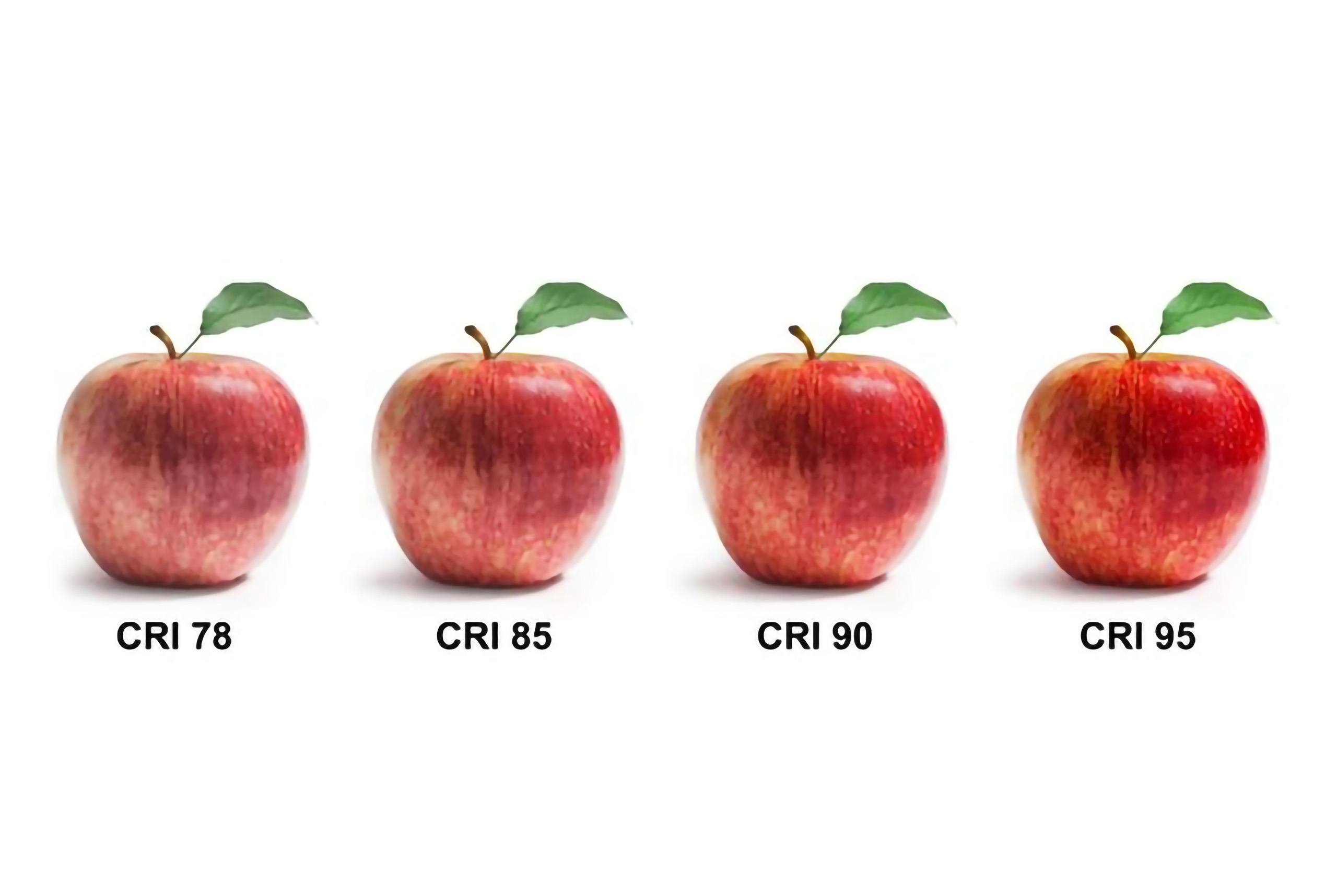
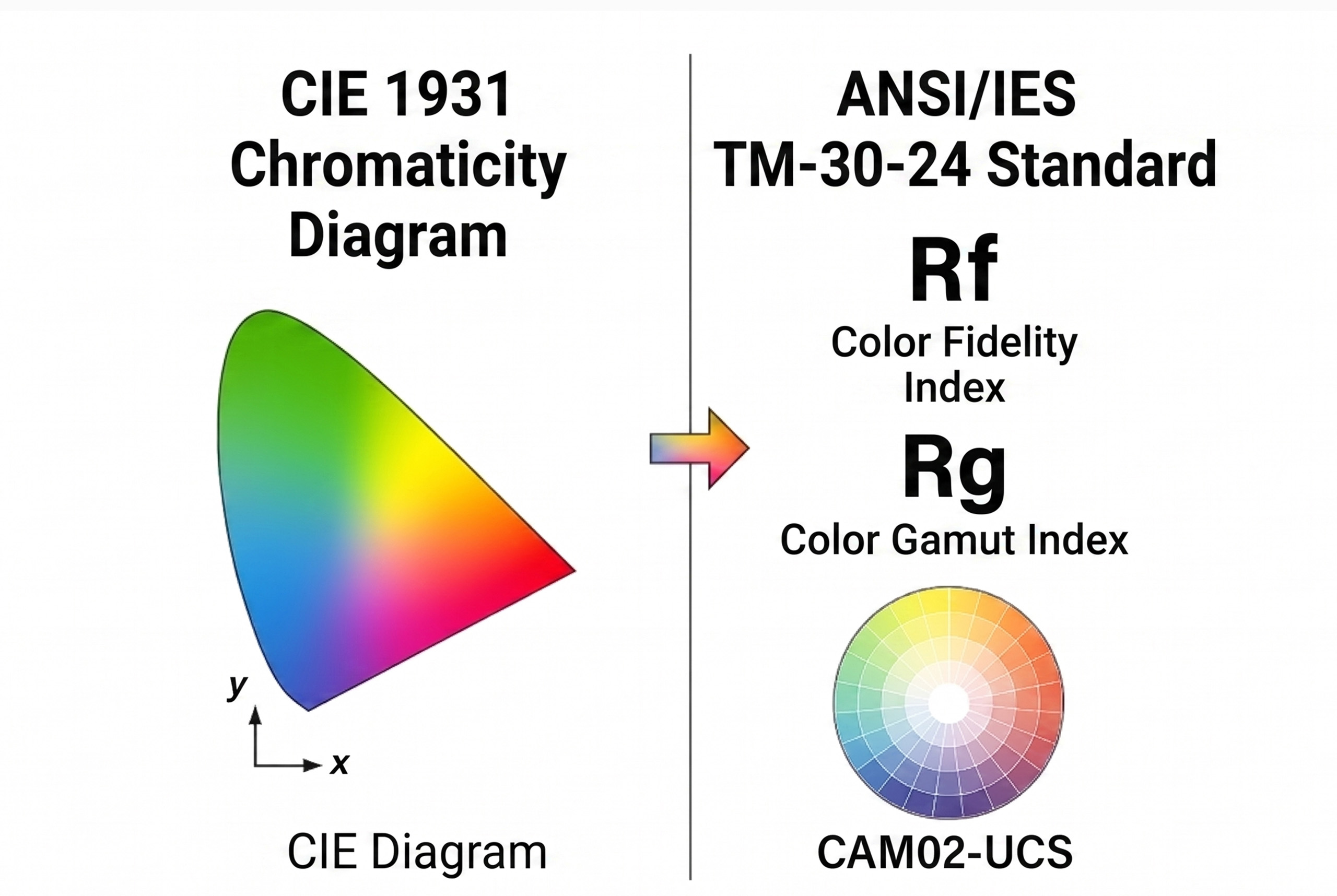
- Objective and scope - The standard ANSI/IES TM-30-24, published in its most recent version in 2024 and recognized as an ANSI national standard, defines a comprehensive, scientifically based, multidimensional method for evaluating the color rendering of light sources, overcoming the limits of the traditional color rendering index CRI (CIE Ra) TM-30 introduces a set of advanced metrics, including: Rf (Fidelity Index): measures the average color fidelity, updated with respect to the CRI for the number and distribution of samples; Rg (Gamut Index): describes the average saturationcompared to a standard reference; Rcs, hj and Rfhj: they evaluate respectively the change of chromaandlocal color fidelity per 16 hue bins the document also provides advanced graphic representations, like the Color Vector Graphic (CVG)and the Gamut Area Graphic (GAG), which allow you to visualize the impact of the source on the saturation and hue of colors, in a much richer way than the simple CRI value.TM-30-24 is applicable to any white or colored source for general lighting, and has progressively established itself as an international reference for the objective evaluation of light quality from a chromatic point of view.
- Connections to other standards -TM-30 has had a significant impact on the international scientific and regulatory community. Its fidelity index Rf it was taken into consideration by the CIE, which recognized its validity in the publication CIE 224:2017, introducing its own similar index based on the same premises. Organisms such as ENERGY STAR, DesignLights Consortium (DLC) and voluntary standards such as the WELL Building Standardand the documents of the International Dark-Sky Association (IDA) they accept today Rf e Rg as alternative or complementary metrics to CRI in technical requirements for LEDs. In the US, TM-30 is consistent with standards such as ANSI C78.377, which defines the color specifications for LEDs, and integrates seamlessly with parameters such as Where? (distance from the Planckian locus), useful for evaluating the quality of white light. TM-30 is considered one of the most popular IES standards. Strong international regulatory influence, and its adoption by the CIE in a unified global system is today a concrete hypothesis.
- Design implications - Per ilighting designer, specificity and clients, TM-30 represents one new generation professional tool, which allows you to select light sources based on the desired color quality, in a way quantifiable, applicative and contextual. For example, a designer may require that the lighting of a retail environment the ospitality reach Rf ≥ 90 (high color fidelity) and Rg ≥ 105 (bright color), or check that human skin tones or artwork are not oversaturated in environments such as museums, showrooms or clinics. TM-30 also allows you to compare in a objective and transparent different LED sources, using the real spectral files and the official calculators provided by IES, available as open-access tools or integrated into lighting software. On the side of theproducers, TM-30 stimulated the LED design with optimized phosphors, giving rise to distinct sources forhigh fidelity(LED for museums, archives, healthcare) or for expanded gamut (LED for retail, fashion, food). Commercial specifications now increasingly include Rf, Rg and CVG graphs, as an integral part of the technical data sheets. In summary, TM-30-24 is now the gold standard for advanced color rendering, making the quality of light measurable in multiple dimensions, consistent with the multidisciplinary approach of contemporary lighting design. This makes it possible to design calibrated visual experiences, meeting both functional and emotional requirements, and promote more refined regulations that go beyond mere CRI compliance, aiming for more effective lighting sensitive, perceptive and end-user oriented.
ANSI/IES TM-32-24 – Lighting Parameters for Building Information Modeling
- Objective and scope - The document ANSI/IES TM-32-24 defines a standardized structure of the technical parameters associated with “luminaire” objects (lighting fixtures) in digital BIM models (Building Information Modeling). The standard was born from the need to harmonize technical information which describe the lighting fixtures, often managed in a heterogeneous way by producers, designersandsoftware authoring BIM, resulting in interoperability problems, ambiguity and incompleteness in information flows. TM-32-24 therefore proposes a shared minimum set of attributes for each BIM object of the lighting fixture type, specifying: 1) parameter name; 2) technical description; 3) unit of measurement, 4) data format recommended fields include, but are not limited to: nominal luminous flux, power absorbed, color temperature (CCT), color rendering index (CRI or Rf), associated photometric curve, item code, physical dimensions, type of maintenance, insulation class and Control system compatibility information the document is addressed to both producers that they make BIM libraries of your products, we a lighting designers and engineers that build parametric families for use in projects, both at BIM platform developers.
- Connections to other standards - TM-32-24 represents the first formal reference of the lighting industry for the coherent integration between technical data and BIM objects, and complements: IES TM-33, which defines the XML format for structured photometric data, compatible with association in BIM environments; international BIM standards, come IFC (Industry Foundation Classes) developed by buildingSMART International, and parameter models defined in the template Revit o nei CDE (Common Data Environment). Although TM-32 is not yet formally integrated into an ISO or CIE standard, it represents a cross-cutting reference document which could influence future regulatory developments in the field of BIM/Lighting interoperability. Its adoption can also facilitate the convergence between lighting standards (IES, IEC, CIE) and shared digital environments in architectural and infrastructure projects
- Design implications - The adoption of TM-32-24 enables lighting professionals to natively integrate consistent technical information into BIM models, improving the efficiency of the entire design process and reducing the need to manually re-enter or search for data in subsequent phases. For the lighting designer, this translates into the possibility of: 1) work with complete and standardized parametric families; 2) ensure immediate accessibility to photometries, powers, flows and maintenance codes; 3) generate automatically metric calculations, performance reports and energy analyses. Per i producers, complying with TM-32 means offer perfectly integrable BIM objects in designers' digital workflows, increasing the probability of specification and simplifying the digitization of the technical catalog. Furthermore, for the clients e i asset managers (facility managers), a TM-32 compliant model allows for a complete traceability of the lighting inventory, supporting activities of: 1) scheduled maintenance; 2) component replacement; 3) verification of installed performance over time.
In summary, ANSI/IES TM-32-24 represents a fundamental step towards the convergence of lighting design and interoperable digital modeling, supporting the transition towards a Integrated, collaborative and standardized management of lighting information in the BIM environment.
ANSI/IES TM-33-23 – Standard Format for the Electronic Transfer of Luminaire Optical Data
- Objective and scope - The document ANSI/IES TM-33-23 defines a advanced XML-based data format for the digital exchange ofphotometric, radiometric and colorimetric information relating to lighting fixtures. TM-33 was born as structural and functional evolution of the traditional. IES format (defined by IES LM-63), widely used to represent the photometric distribution in tabular form but limited in extensibility and interoperability. The TM-33 format introduces a hierarchical and machine-readable data model, designed for: 1) to describe in an exhaustive manner the 2D or 3D light distribution; 2) include technical metadata fundamentals (measurement standards, laboratory conditions, positioning); 3) manage multiple versions or photometric configurations(e.g. emergency state/on/off, variable CCT); 4) to support integration with spectral data or BIM parameters the goal is to ensure completeness, transparency and interoperability in the digital ecosystem of professional lighting.
- Connections to other standards - TM-33-23 is designed for gradually replace the IES format(LM-63) while maintaining backward compatibility through automatic conversion tools. It is consistent with the data architecture promoted in TM-32 (parameters for BIM objects), and integrates advanced concepts from previous experiences such as IESXML, developed in a North American environment, and from parallel formats such as EULUMDAT (.ldt), which is very widespread in Europe. The adoption of the TM-33 format by professional software (e.g. DIALux EVO, Relux, AGi32, Rhino/Grasshopper) is rapidly progressing, with the aim of converging on a unified language for optical description that can also be natively integrated into BIM models (IFC) and in the CDE (Common Data Environment )of digitized projects. TM-33 is released as free standard, to facilitate its widespread global adoption. In perspective, its structure could be implemented by IEC to harmonize the exchange of photometric data in future international product and testing standards.
- Design implications - For the lighting sector, TM-33-23 marks a turning point towards full digital interoperability. Per i lighting designer, means being able to have access to unified, information-rich, and easily readable files from calculation and simulation software, drastically reducing interpretative ambiguities and errors related to proprietary formats, manual conversions or lack of metadata. For the producers, adopting TM-33 allows you to: 1) distribution asingle structured XML file containing all the optical variants of a product (e.g. different fluxes, color temperatures, dimmable modules, emergency versions); 2) include additional parameters come testing standards, luminous efficacy, photometric dimensions, normative references, improving technical-commercial transparency; 3) directly support integration into BIM models and digital project management systems.
TM-33 is also suitable for future extensions, including data for: 1) circadian assessment(e.g., EML, CS); 2) Energy simulations that can be integrated into Building Energy Modeling (BEM) models; 3) CAM, WELL or EN 12464-1 compliance checks, through regulatory tags inserted in the metadata. In summary, TM-33-23 is the gold standard for advanced optical data digitization, essential for anyone working in the lighting supply chain – from the test lab to the designer, from the manufacturer to the BIM infrastructure. Preparing the industry for a future where photometric data are natively interoperable, TM-33 promotes design efficiency, technical transparency and amore integrated, intelligent and verifiable lighting market.
ANSI/IES TM-39-25 – Quantification and Specification of Visual Responses to Temporal Light Modulation (a.k.a. Flicker)
- Objective and scope - The document TM-39-25 defines a unified system for the quantification and specification of visual effects linked to the temporal modulation of light (also known as flicker, in a broad sense). The aim is to provide operators in the sector (designers, producers, laboratories) with a shared technical basis per: 1) to calculate reliable metrics starting from temporal measurements of the luminance or power emitted by a source; 2) evaluate subjective perception of flicker and its stroboscopic effects in real-world conditions of use; 3) specify performance limits in the technical specifications and in the compliance requirements. The main metrics standardized by TM-39 include: 1) Mₚ (Modulation Percent Perceived):evaluates the depth of modulation perceived at significant frequencies, introducing a perceptual weighting; 2) SVM (Stroboscopic Visibility Measure): quantifies the visibility of the stroboscopic effect generated by PWM sources on moving objects; 3) PAVM (Percent Above Visual threshold Modulation): expresses the percentage of the signal that exceeds the flicker visibility threshold, useful for subjective evaluations. Calculation formulas are derived from measurements carried out according to the standard IES LM-90-23, which establishes the technical requirements for the temporal detection of the luminous flux using high-speed photodiodes, coherent sampling, filtering and windowing techniques.
- Connections to other standards - TM-39 is placed in continuity and consolidation compared to pre-existing standards: IEEE 1789-2015: had introduced recommended flicker limits for human health as a function of frequency; IEC TR 61547-1:2017: proposed the use ofSVMas a metric for the stroboscopic effect, but without standardizing the calculation method; IES LM-90-23: establishes the metrological basis from which TM-39 starts for signal processing. TM-39 formalizes and harmonizes these metrics in a unified and replicable format, offering consistency between measurement and specification, an essential condition to ensure comparability of data between different manufacturers and laboratories. Furthermore, it constitutes aoperational reference for entering criteria flicker-free inside of quality protocols, CAM Edilizia, WELL Building Standard (v2 Feature L04), DesignLights Consortium (DLC) and specifications for sensitive environments (e.g. healthcare, education, mechanical industry).
- Design implications - TM-39-25 provides operational tools to scientifically and objectively evaluate the risk of flicker in LED lighting systems, with direct applicability in the following areas: 1) Lighting design: Lighting designers can now insert precise limits in specifications, such as Mₚ < 0.05theSVM < 1,0, depending on the application context (offices, production environments, schools, retail environments with high visual exposure). 2) LED/driver production and testing: Manufacturers can test their devices with the guarantee that the flicker data will be calculated in transparent, reproducible and certifiable way, even in case of PWM dimming. 3) Certification and quality control: Accredited laboratories can adopt LM-90 + TM-39 as a basis for official reports to be included in technical documentation or attached to regulatory compliance requests (e.g. CAM or tender requirements). 4) Health and safety: In environments with prolonged exposure to artificial light or with the presence of moving devices (machine tools, fans, conveyors), the values of SVM the PAVM they become essential to prevent discomfort, ailments and risks related to stroboscopic flicker. In summary, TM-39-25 represents the reference standard for flicker analysis and management, allowing an approach scientific, multidimensional and integrable to the design of visually comfortable lighting.
Its systematic adoption allows for to rise above simple numerical limits (e.g. % modulation or frequency), embracing a validated perceptual model and suited to the challenges posed by LED lighting in highly visually sensitive environments.
ANSI/IES TM-40-24 – IES Method for Determining Correlated Color Temperature (CCT) and Distance from the Planckian Locus (D<sub>uv</sub>)
- Objective and scope - The standard TM-40-24 provides an official and formally approved methodology for consistently determining the correlated color temperature (CCT) and the distance from the Planckian locus (D<sub>uv</sub>), starting from the chromatic coordinates of a light source. Although CCT and D<sub>uv</sub> are widely used parameters in lighting engineering, before TM-40 there was no single method formalized by a regulatory body for their calculation. In the absence of a standard procedure, different algorithmic variants were adopted (e.g. approximations such as McCamy's), generating discrepancies between software, datasheets and measuring instruments. With TM-40-24, the IES fills this gap by introducing a rigorous approach based on: 1) coordinate (x, y) of the diagram CIE 1931 or (u', v') of the diagram CIE 1960 UCS; 2) interpolations with the Planckian curve; 3) iterative formulas with defined accuracy criteria; 4) explicit calculation of the value D<sub>uv</sub>, that is, the orthogonal distance of the chromaticity point from the blackbody curve. The document also includes an updated review of scientific studies which justify the chosen method and clarifications on limits and interpretability of CCT and D<ub>uv.
- Connections to other standards - TM-40-24 fits into an international regulatory framework which, until now, had not produced complete operating specifications on these parameters: The CIE (Commission Internationale de l’Éclairage), although it introduced the concepts of CCT and chromaticity as early as CIE 15 and CIE 13.3, had never defined a binding algorithm; ANSI C78.377 has long employed D<sub>uv</sub> to classify whites in LED binning schemes, but TM-40 formalizes its calculation with algorithmic precision; TM-40 is particularly synergistic with TM-30-24, which evaluates the color rendering starting from the spectrum: TM-30 depends on the accuracy of CCT and D<sub>uv</sub>, which can now be guaranteed through TM-40. The standard was conceived for a universal implementation: LED manufacturers, simulation software, spectrophotometers, BIM systems and luminaire databases can now use a consistent and certifiable methodology, improving the transparency and comparability of product specifications. There are not yet CIE or ISO equivalents, but the adoption of TM-40 could guide future international regulatory updates.
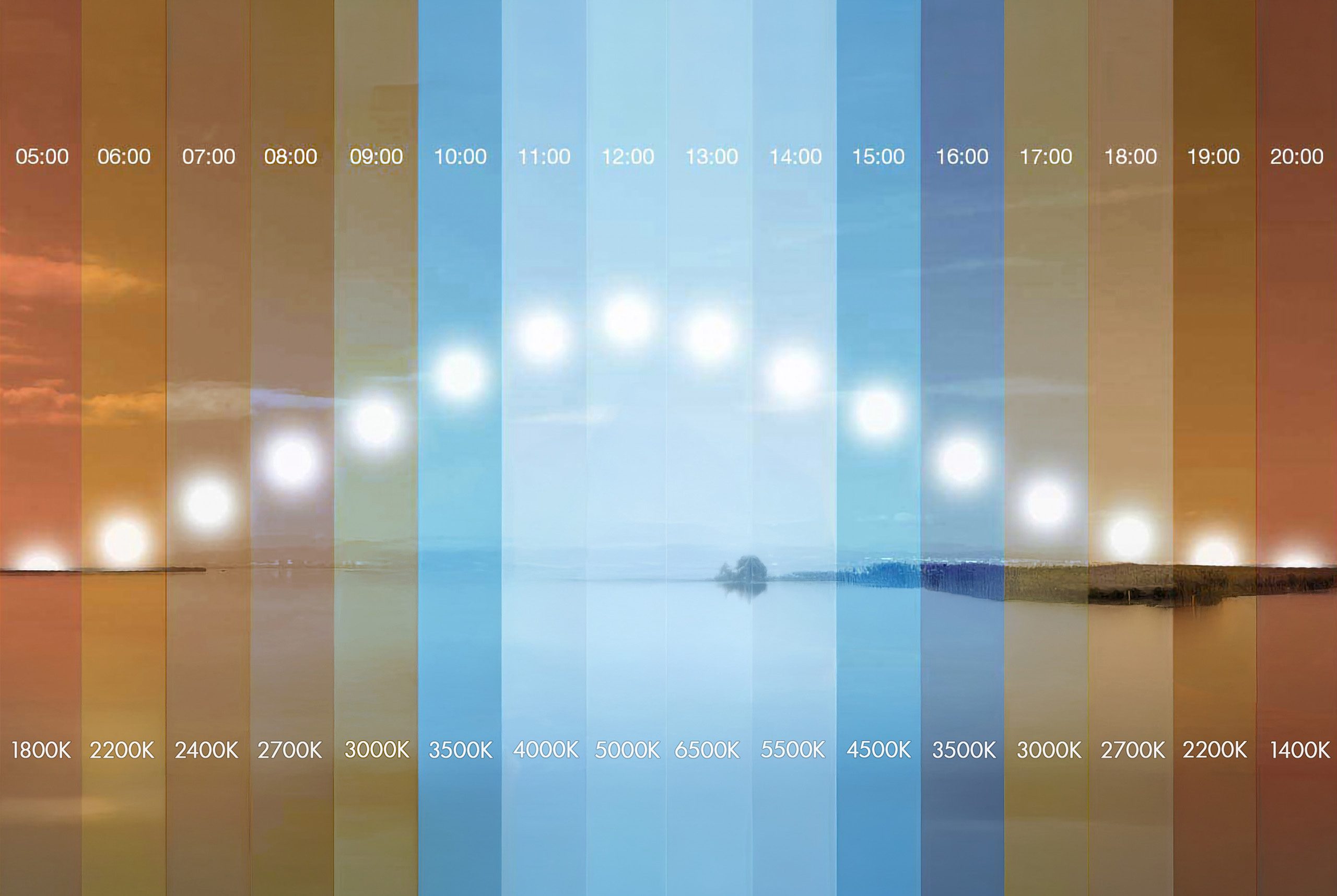
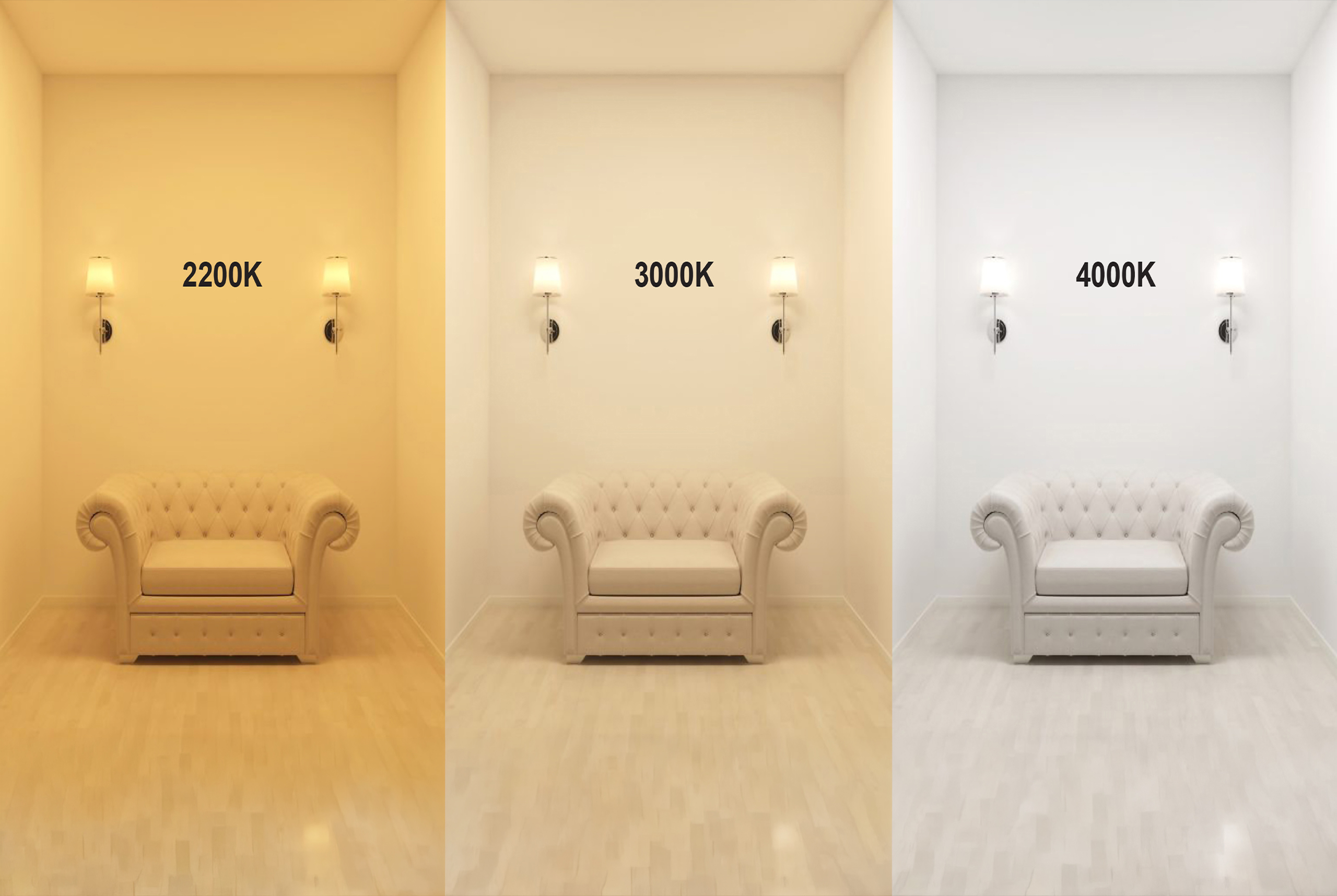
- Design implications - The adoption of TM-40-24 produces tangible benefits throughout the entire design process: Per i lighting designer, means being able to count on CCT and D<sub>uv</sub> values unique, comparable and technically reliable a project that specifies “CCT = 4000 K ± 100 K, D<sub>uv</sub> between –0.003 and +0.003 according to TM-40” provides clear and verifiable criteria to suppliers. For producers, allows you to declare the chromatic characteristics of LED products in a uniform and compliant with an ANSI standard increasing the commercial credibility and reducing technical ambiguities. For photometric and metrological laboratories, allows you to apply a traceable and documented procedure, integrable into official reports, ensuring consistency between different tools (e.g. spectrophotometric measurements vs. simulations). For the client, implies a greater reliability in actual color perception of the system, especially in contexts where color consistency and fidelity are critical: museum, hospital, retail, high-end hospitality lighting. An additional advantage of TM-40 is its clarity in defining the limitations of CCT as a metric, emphasizing that small differences in Kelvin may not be noticeable, while the D<sub>uv</sub> reflects significant qualitative deviations (e.g. greenish or pinkish hues), often underestimated when comparing products. In summary, TM-40-24 does not introduce any new concepts, and establishes for the first time a common and standardized language for two fundamental parameters in lighting design. Its adoption promotes greater colorimetric rigor, consistency of specification and data interoperability between tools, software and technical documents, making lighting design more precise, transparent and oriented towards perceived quality.