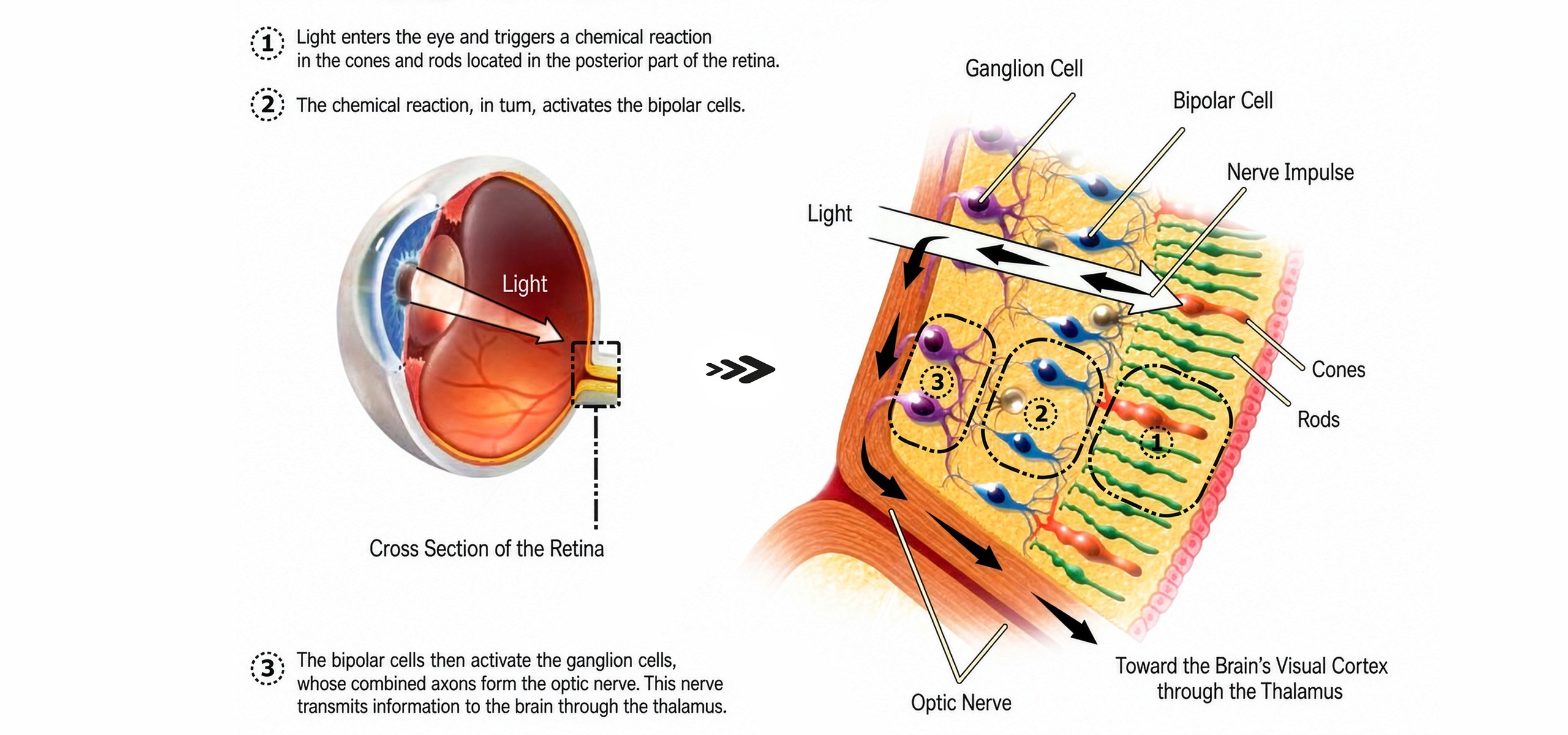
The perception of light varies according to illumination levels and activates different visual mechanisms. Depending on ambient luminance, the human eye enters a state of photopic, scotopic, or mesopic vision, each mediated by specific photoreceptors and characterized by different perceptual responses. Understanding which visual dominance prevails within a given context is essential for designing coherent lighting scenarios, avoiding errors related to over-illumination or insufficient visual performance.
We will also examine the set of non-visual effects that light radiation exerts on the human body through the melanopic system, responsible for regulating circadian rhythms. Within this framework, we will analyze the three essential indicators used to measure the biological impact of artificial light: MEDI, EML, and CS — tools that are now indispensable for a truly human-centered lighting design approach.
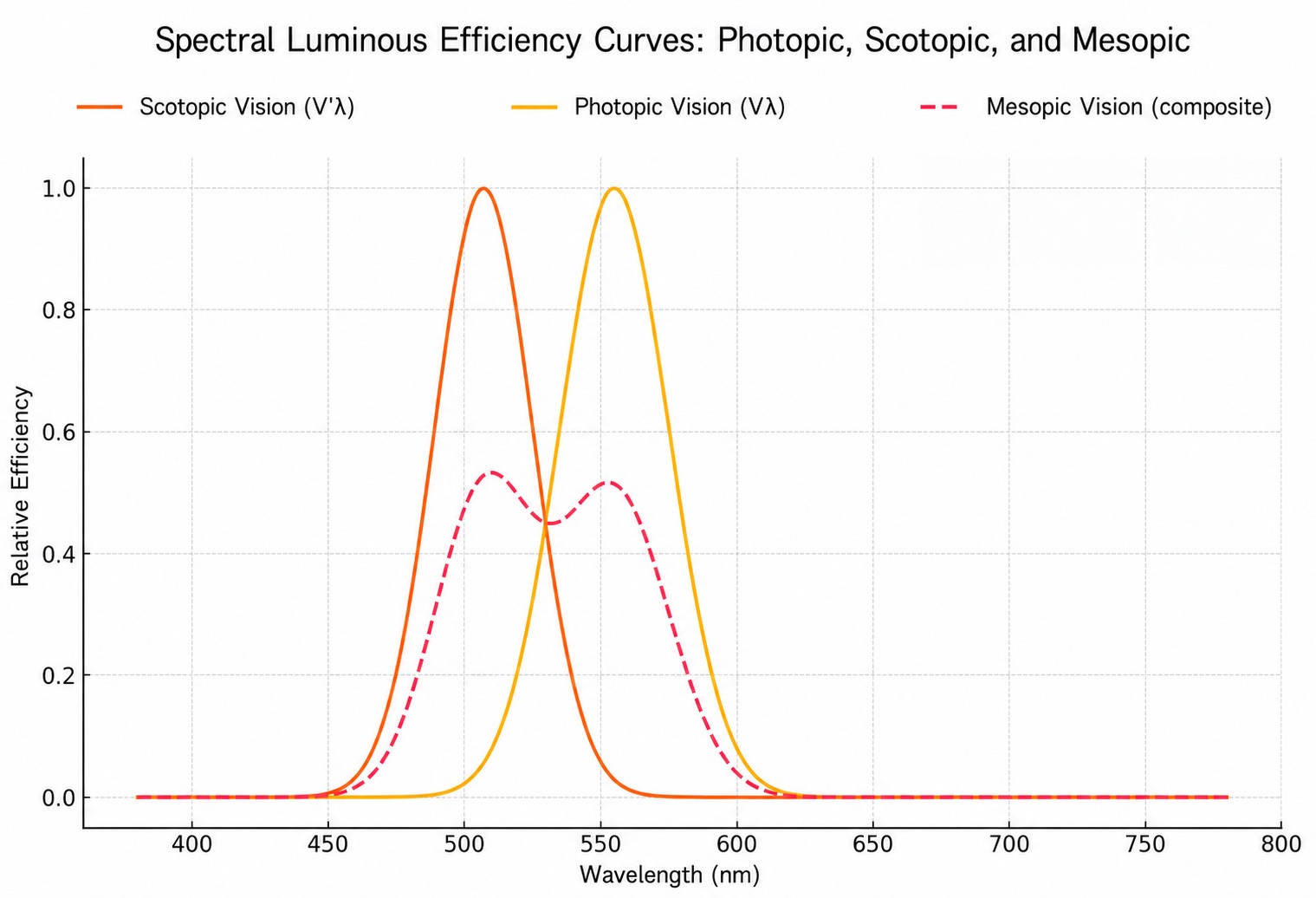
Photopic illuminance (measured in lux) quantifies the light perceived by the human visual system under high illumination conditions, weighting the spectrum according to the luminous efficiency curve V(λ), which describes cone sensitivity. These photoreceptors, active during daytime conditions, enable detailed and color vision of the environment, with a peak sensitivity around 555 nm in the green-yellow region.
In practical terms, 1 lux corresponds to a luminous flux of 1 lumen per square meter, evaluated according to this visual response.
Traditional lighting design has historically been based on this parameter, assuming that vision was governed exclusively by cones. However, the human eye exhibits adaptive and dynamic behavior: visual perception changes substantially depending on the illuminance level.
At low luminance levels, such as during twilight or nighttime, scotopic vision becomes dominant, mediated by rods. These photoreceptors are extremely sensitive to light but do not allow chromatic discrimination. Their spectral sensitivity differs from that of cones, peaking around 507 nm in the blue-green region.
The resulting vision is monochromatic and less detailed, yet highly efficient in detecting movements and contrasts within poorly illuminated environments. Furthermore, color rendering and visual acuity decrease dramatically, while the ability to perceive minimal luminous thresholds significantly increases.
Between these two extremes lies mesopic vision, typical of intermediate conditions — such as twilight, dawn, or weakly illuminated urban environments. In this visual regime, the eye simultaneously uses cones and rods, generating a mixed and complex response that is difficult to describe through a single spectral curve.
The mesopic efficiency curve varies dynamically according to luminance levels, making lighting measurement and evaluation more complex. Standard systems based exclusively on photopic vision (such as lux) are not sufficient to accurately describe visual perception in mesopic contexts. For this reason, adaptive spectral efficiency curves have been developed, as also established by CIE 191:2010, which proposes conversion methods between photopic and mesopic illuminance (mesopic lumens), taking into account both the type of light source and the level of visual adaptation.
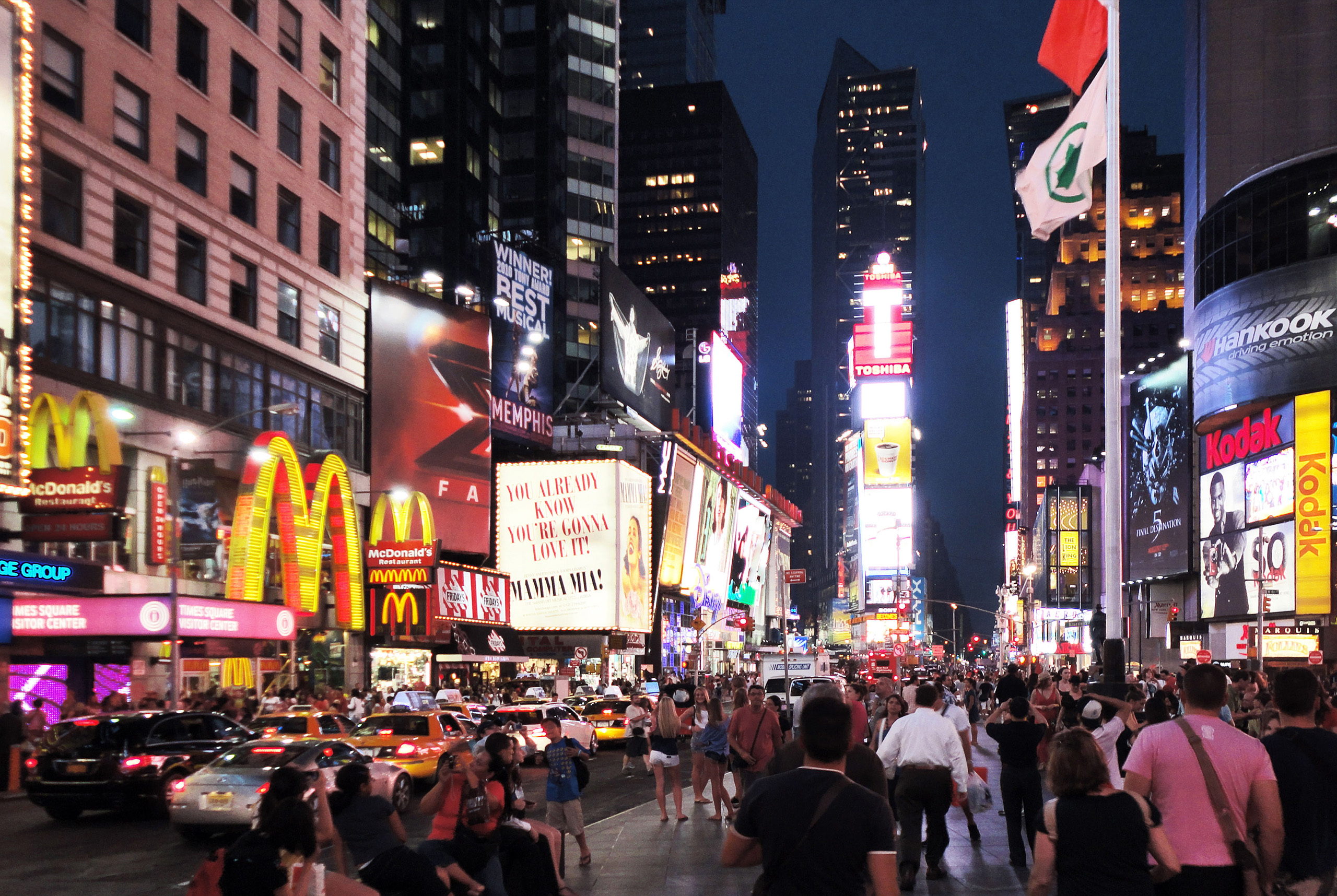
Finally, some authors also refer to “mixed” or hybrid vision — a less formal but useful expression for describing situations in which luminous distribution within space is heterogeneous, as occurs in environments with strong contrasts between illuminated areas and zones of semi-darkness. In such contexts, the eye adapts locally, continuously shifting from one visual mode to another, with a functional overlap between cones and rods.
This occurs, for example, in complex architectural environments, museum pathways with controlled lighting, or nighttime outdoor spaces where visual perception is influenced not only by light intensity but also by its spatial and spectral distribution.
Understanding the difference between photopic, scotopic, and mesopic vision — and how these conditions influence human perception — is essential for designing lighting scenarios consistent with the actual use of space, avoiding common mistakes related to over-illumination or, conversely, inadequate conditions of visual adaptation.
Furthermore, when designing environments in which static and dynamic activities alternate, indoor and outdoor spaces coexist, or lighting conditions vary over time (as in museum, landscape, or residential concepts), it is fundamental to consider the adaptive behavior of the human visual system rather than relying exclusively on traditional photopic values used in conventional lighting design.
In recent years, however, lighting design has moved beyond traditional visual paradigms to embrace a broader and more integrated vision of human well-being. Within this context, the circadian component of light has become increasingly central — namely, the set of non-visual effects that light radiation exerts on the human body through the melanopic system. This system, mediated by intrinsically photosensitive retinal ganglion cells containing melanopsin, is responsible for regulating biological rhythms, including the sleep-wake cycle, hormonal secretion, and mood regulation.
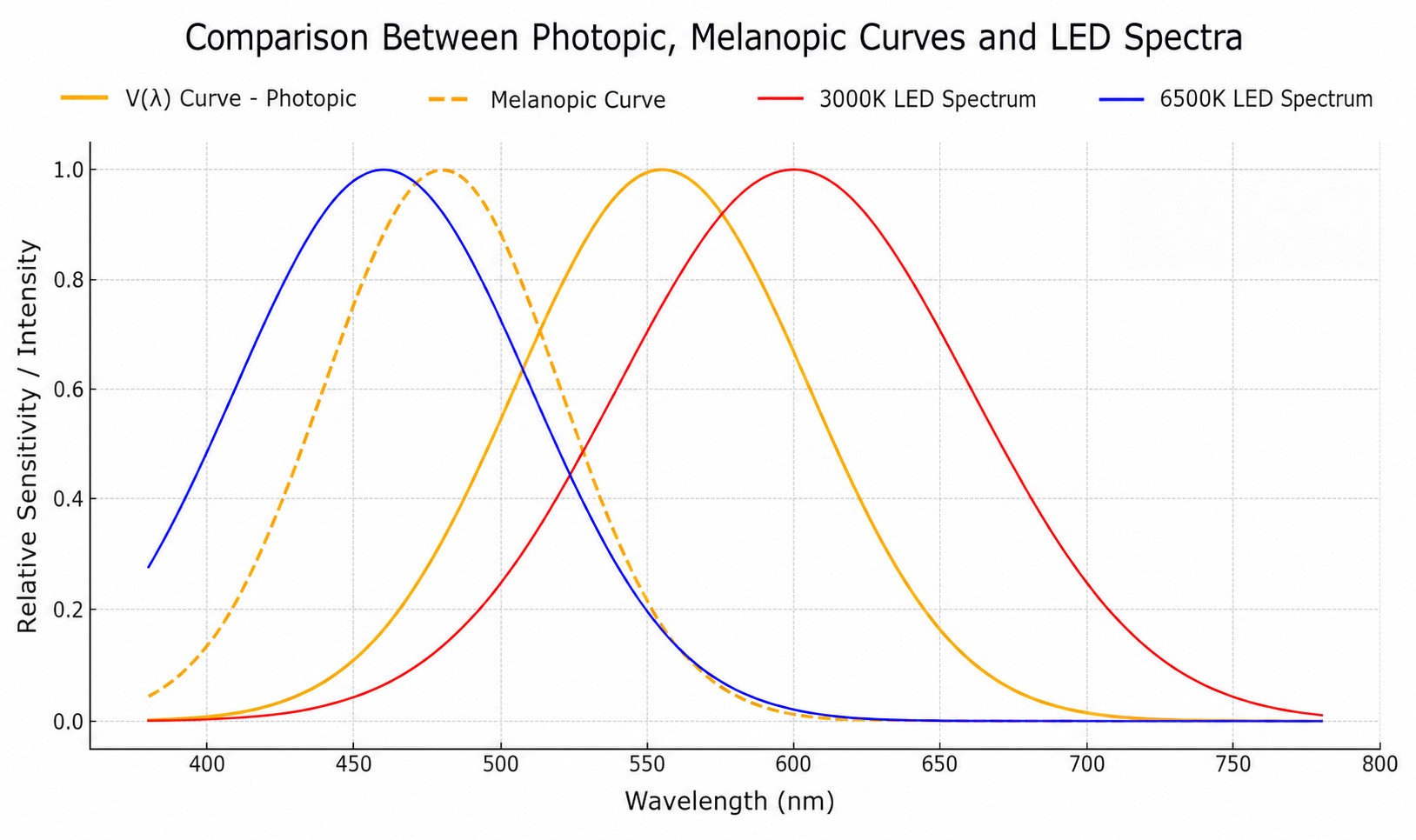
To quantify the circadian impact of a light source, considering only photopic illuminance (measured in lux), based on cone sensitivity, is no longer sufficient. Instead, it is necessary to introduce parameters capable of measuring the effectiveness of light in melanopic terms — that is, according to the spectral sensitivity of ipRGCs (intrinsically photosensitive retinal ganglion cells) and their response to wavelengths between 460 and 490 nm (blue-cyan region).
Precisely to address this design requirement, the use of specific photometric indices and metrics has become increasingly widespread. These parameters compare the visual and circadian components of light, providing quantitative tools for evaluating its overall impact.
Among these, the melanopic / photopic ratio (M/P) represents one of the most direct and effective metrics for estimating the “circadianity” of a light source. Under equivalent spectral conditions, this parameter compares the illuminance effective on the melanopic system with the illuminance visually perceived by the photopic system, providing a synthetic measure of the biological potential of light.
The adoption of this ratio, together with metrics such as MEDI, EML, and Circadian Stimulus (CS), enables the lighting designer to select and calibrate light sources not only according to visual performance criteria, but also in relation to the chronobiological needs of users. This approach contributes significantly to the quality of the built environment and to the psychophysiological well-being of occupants.
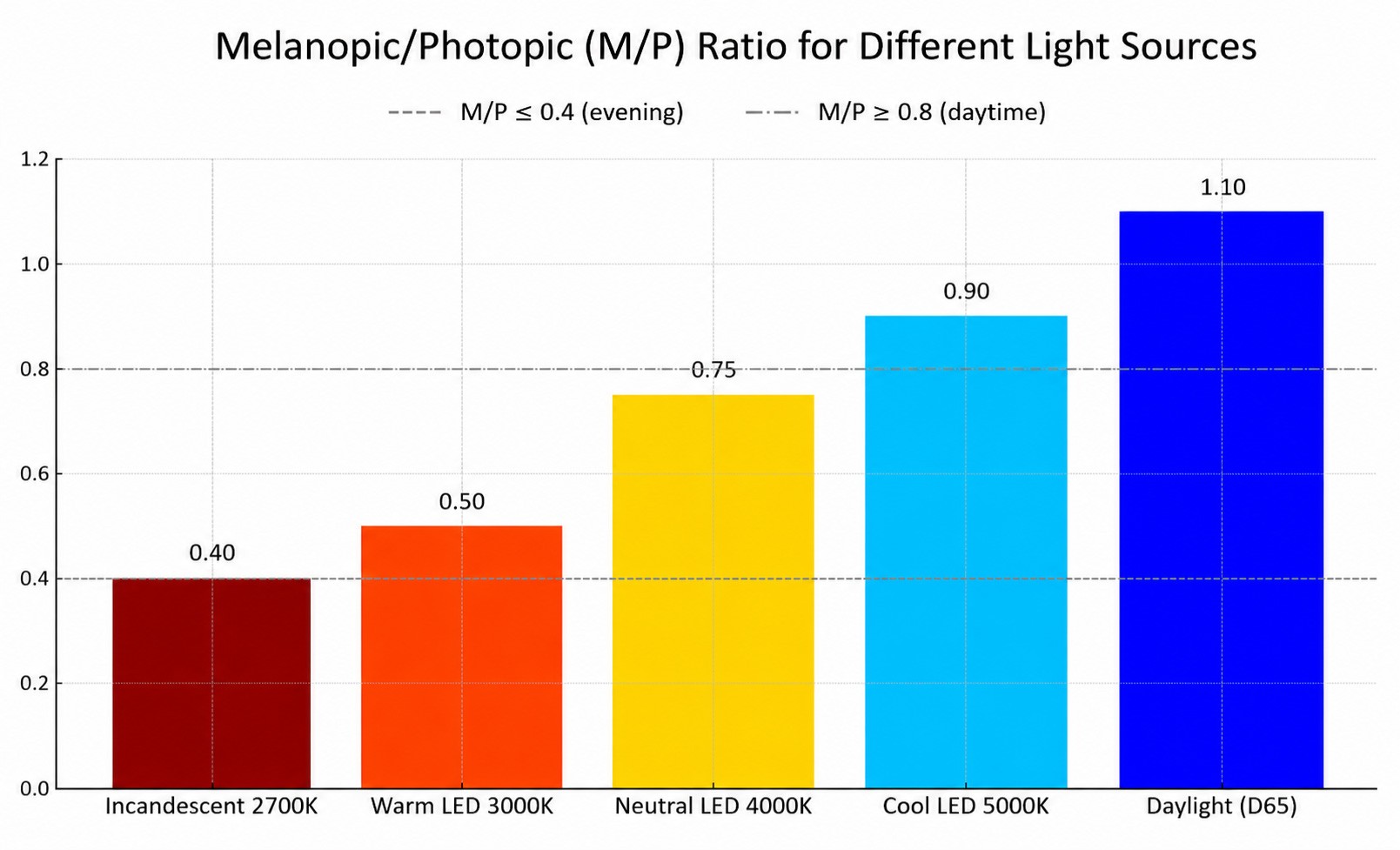
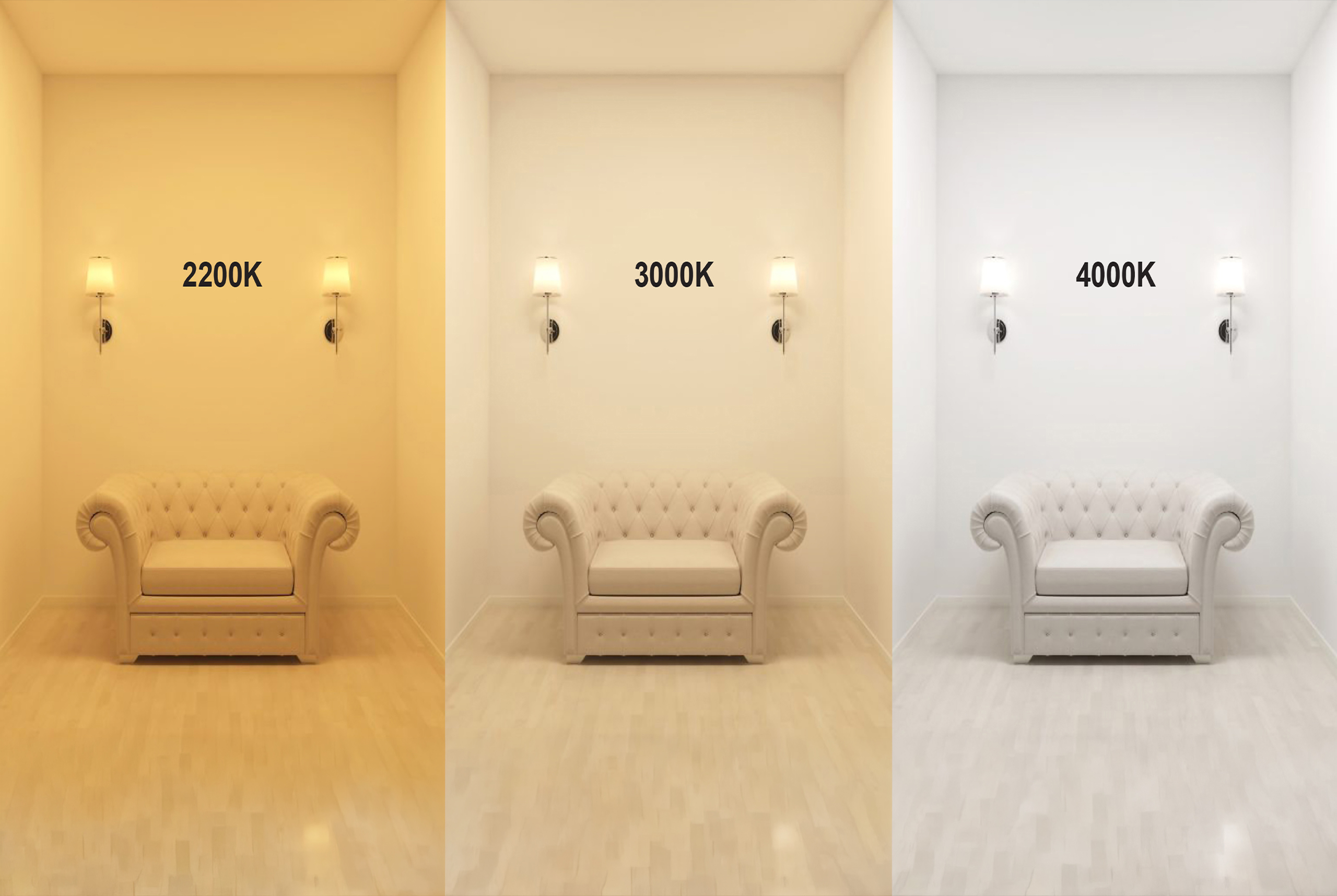
For example, a 4000 K LED lamp (CRI > 80) may have an M/P ratio of approximately 0.75: this means that for every 100 photopic lux it produces around 75 “equivalent melanopic lux.” Standard natural daylight (D65, ~6500 K) has by definition an M/P ratio close to 1 (used as a reference value), whereas warm light sources such as incandescent lamps (~2700 K or lower) typically have M/P values below 0.5, since they emit very little blue spectral content.
The M/P ratio is a direct indicator of the circadian effectiveness of a light source: high M/P values (close to or above 1) indicate a spectrum rich in melanopically effective wavelengths (blue-cyan region), therefore with greater potential to stimulate alertness and suppress melatonin production. Conversely, low M/P values indicate warmer light with reduced blue content, more suitable for minimizing sleep disruption.
For example, natural daylight at 6500 K has an M/P ratio of approximately 1.1, a cool 5000 K LED may have M/P values around 0.8–0.9, while a 2700 K incandescent lamp has an M/P ratio of approximately 0.4.
This parameter allows lighting designers to rapidly evaluate the “circadianity” of a light source and compare different sources independently of their absolute illuminance level. In practical applications, general recommendations suggest preferring sources with high M/P values (≥0.7–0.8) during daytime hours in order to maximize circadian stimulation, while selecting sources with low M/P values (≤0.4) in the evening to reduce unwanted biological stimulation.
Within the field of circadian lighting design, several metrics have been introduced to quantify the melanopic component of light and predict its biological effects: Melanopic Equivalent Daylight Illuminance (MEDI), Equivalent Melanopic Lux (EML), and Circadian Stimulus (CS).
The Melanopic Equivalent Daylight Illuminance (MEDI), also known as M-EDI, is a standardized metric defined by the CIE in 2018 to evaluate the circadian effectiveness of light. It is expressed in lux and indicates how much melanopically active light (that is, capable of stimulating ipRGC cells) is present within a luminous scene, comparing it to the effect produced by standard natural daylight (D65).
In practical terms, the MEDI value indicates how many lux of natural D65 daylight would be required to generate the same biological stimulus produced by the artificial light being analyzed. This makes it possible to compare different light sources — even those with very different spectral distributions — using a common reference framework based on natural daylight.
For example, if an indoor environment measures a MEDI value of 30 lux, this means that the light produces the same circadian impact as a D65 daylight source at 30 lux.
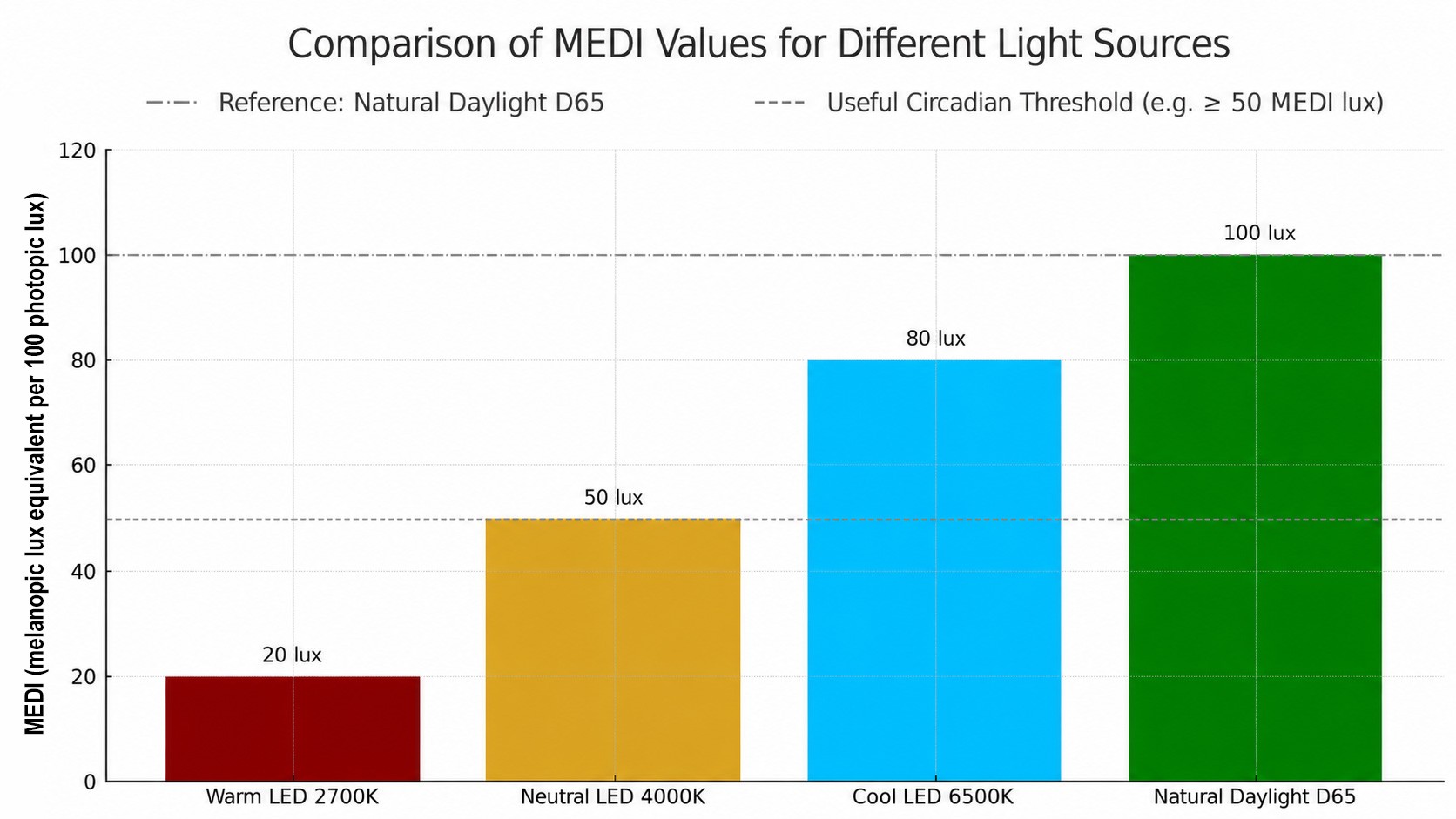
In general, within indoor environments, a value of at least 30–50 equivalent melanopic lux is considered useful for activating the human circadian system, depending on the type of activity, exposure duration, and the age of occupants.
For this reason, MEDI is currently considered one of the primary metrics for Human Centric Lighting (HCL) design, since it enables the integration of both visual and biological parameters into the evaluation of light quality.
The Equivalent Melanopic Lux (EML) is a metric used to evaluate the biological effectiveness of light within indoor environments, particularly in relation to circadian rhythms. It was introduced in applied frameworks — such as the WELL Building Standard — to define minimum thresholds of melanopically active light.
EML indicates how many lux are effectively stimulating for the melanopic system, and it is calculated by multiplying the vertical photopic illuminance at the eye (E_v) by the melanopic/photopic ratio (M/P) of the light source. The formula is:
EML = E_v × M/P
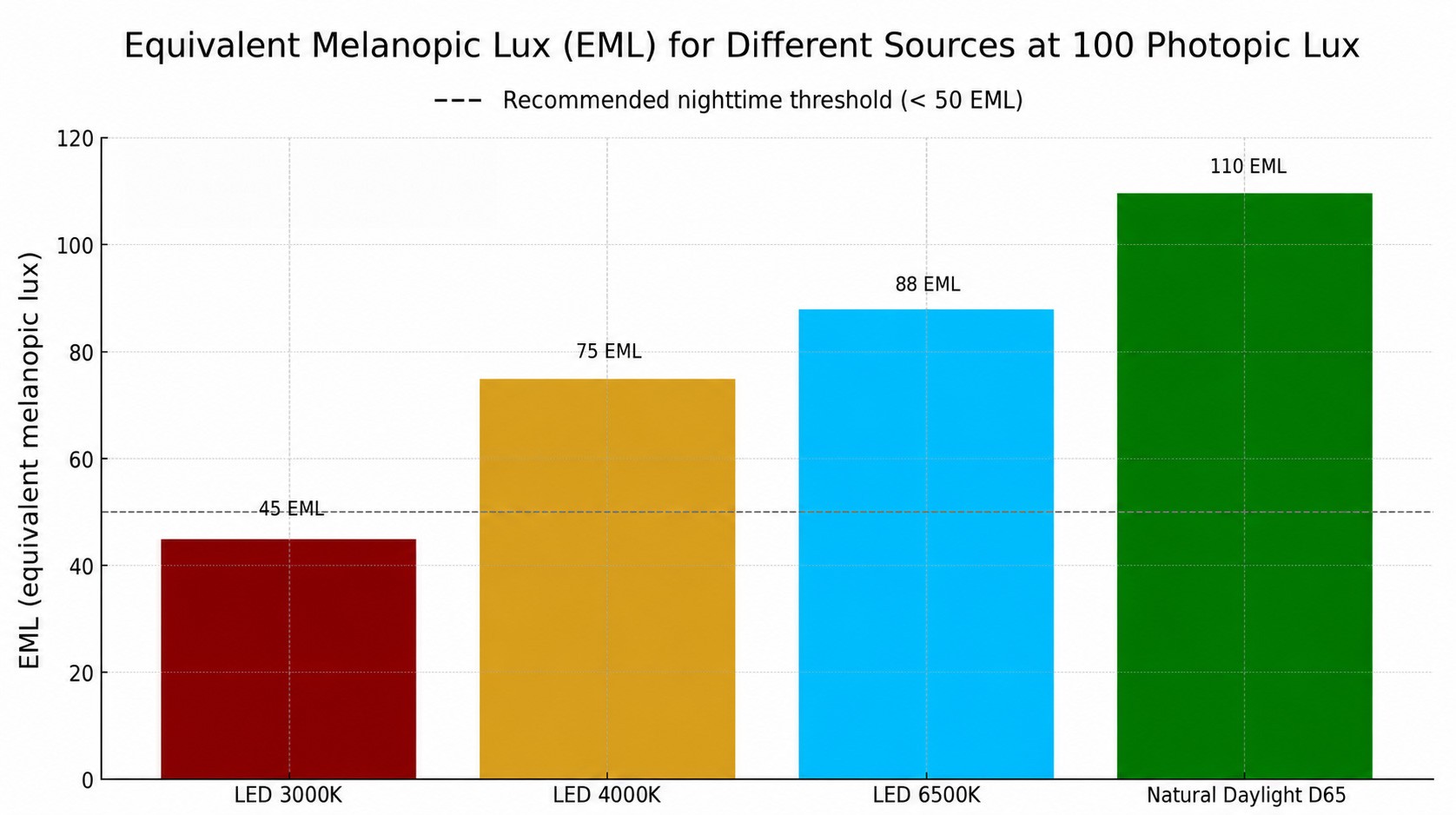
In this way, both the quantity of light and its spectral composition are taken into account, allowing evaluation of the actual impact on the circadian system. For example, 100 vertical lux from a 3000 K LED source (warm light) may generate only approximately 45 EML, whereas a 4000 K LED produces around 75 EML, a 6500 K LED reaches approximately 88 EML, and natural daylight (D65) can exceed 110 EML.
At equal lux levels, light sources richer in blue spectral components are more effective in stimulating the melanopic system.
Within a lighting design project, EML is used to verify whether an environment provides appropriate daytime stimulation (for example ≥200 EML during daytime hours in workstations) and reduced activation in the evening (for example <50 EML), thereby contributing to the circadian well-being of occupants.
The Circadian Stimulus (CS) is a biological index developed by the Lighting Research Center to measure how light influences the human circadian rhythm, particularly through the suppression of melatonin, the hormone responsible for regulating sleep.
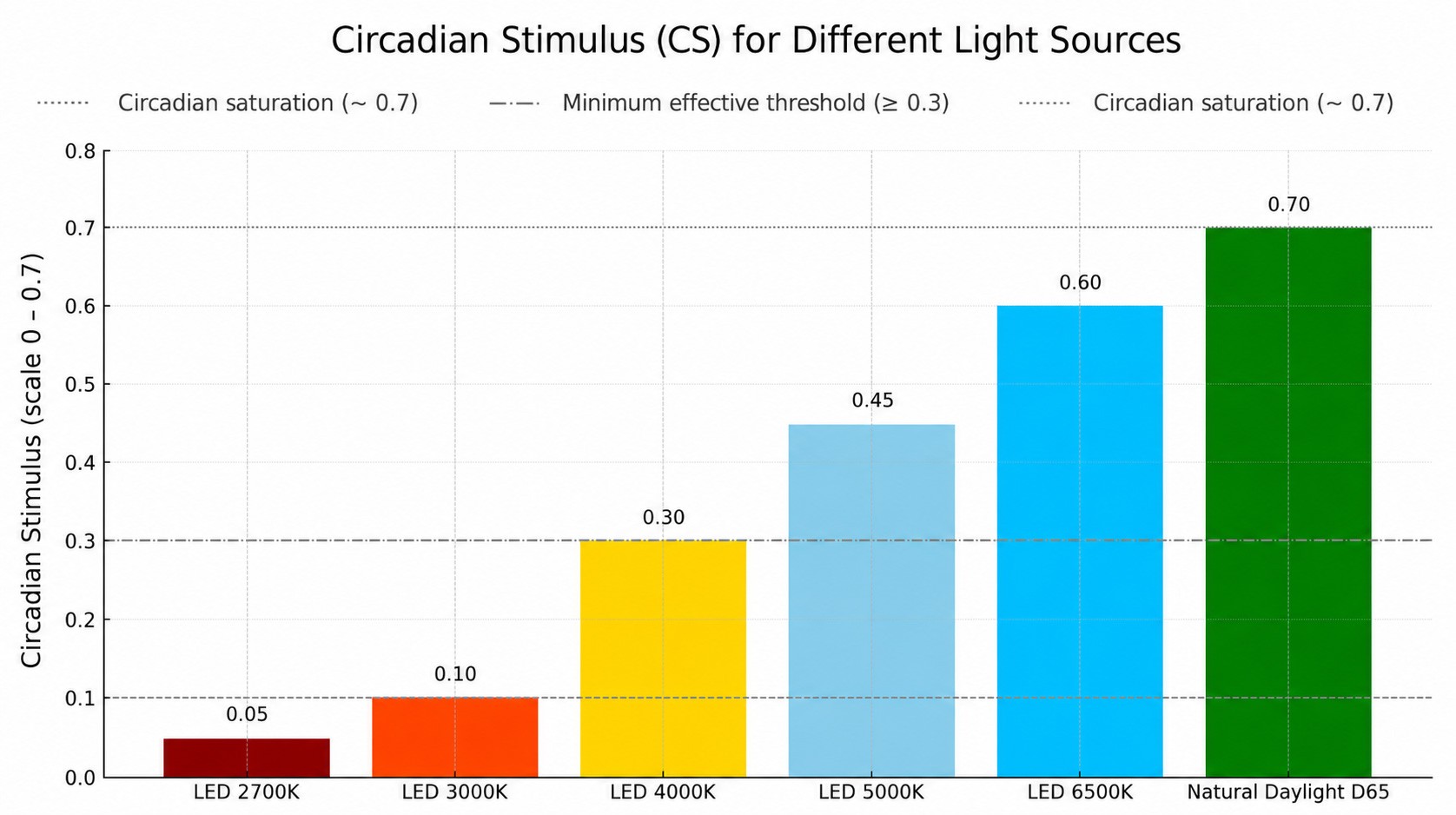
Unlike other metrics expressed in lux, CS is based on a normalized scale ranging from 0 to 0.7:
The CS metric takes into account spectral composition, light quantity, and exposure duration. In practical terms, it is a value that summarizes how biologically active a light source is in regulating the body’s internal clock.
It has been applied in numerous studies involving offices, schools, nursing homes, and hospitals, demonstrating that CS values ≥ 0.3 during morning hours help improve sleep quality, mood, attention, and synchronization of the sleep-wake cycle.
Conversely, it is recommended to maintain CS values below 0.1 during evening or nighttime hours in order to avoid interference with rest and melatonin production.
For the lighting designer, CS represents a valuable tool for evaluating the overall circadian effectiveness of light, combining illuminance level, spectral distribution, and exposure duration into a single synthetic parameter.
Within this scenario, lighting is no longer merely a question of quantity, but above all of spectral characteristics, directionality, duration, and adaptive intensity, all of which must be modulated according to the physiological needs of users. Integrating these metrics into professional practice means moving beyond the paradigm of lux as the sole quantitative measure and embracing a broader and more comprehensive vision. Light therefore opens a new design frontier, where science, visual perception, and architecture converge into an advanced model of lighting design that is genuinely human-centered.
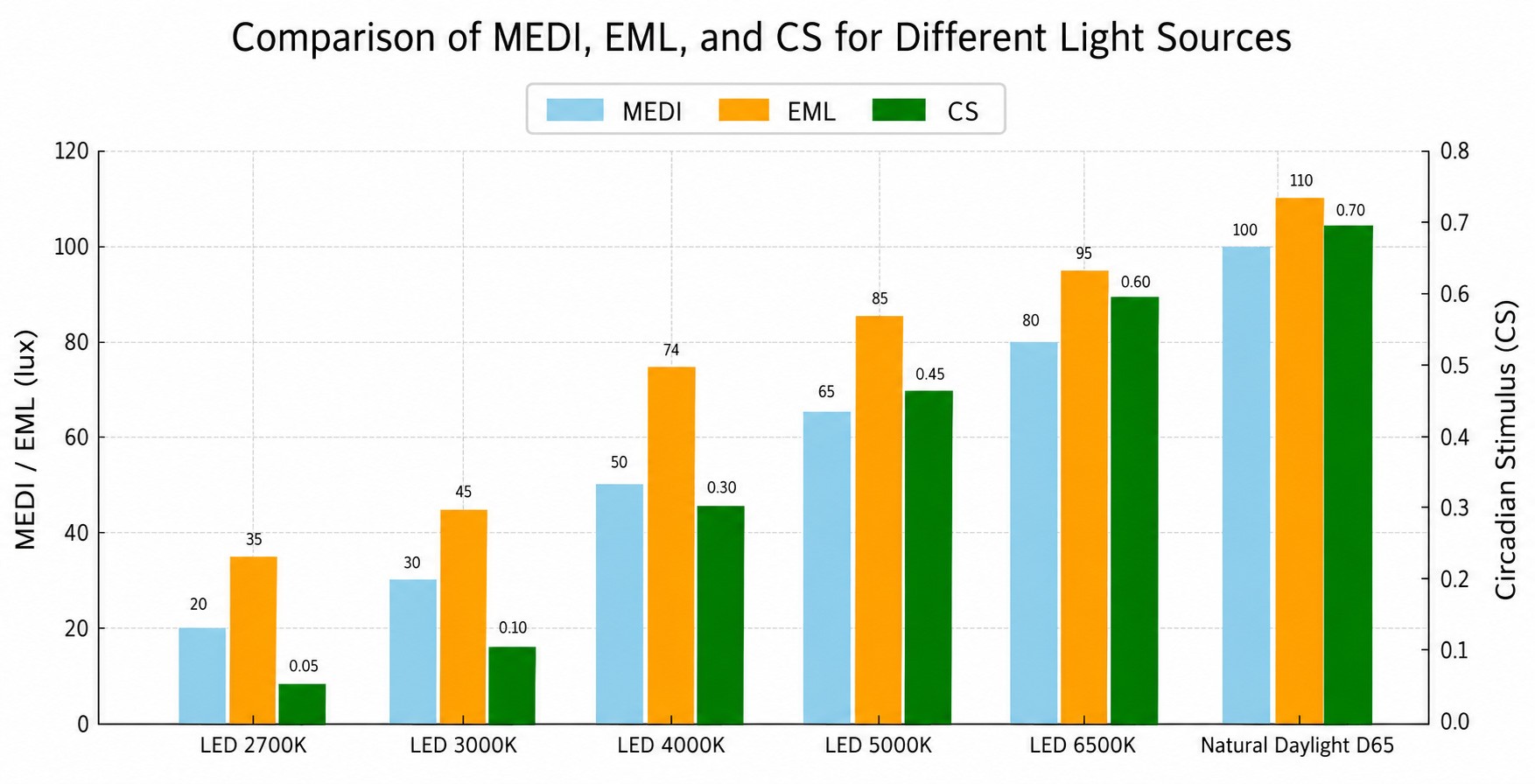
The graph clearly shows the comparative trends of MEDI, EML, and Circadian Stimulus (CS) across different light sources at equal photopic illuminance levels. Although all three indicators evaluate the circadian effectiveness of light, they follow different criteria: MEDI provides a normalized comparison with natural daylight, EML directly measures the melanopic component useful for the non-visual system, while CS synthetically expresses the biological impact on the sleep-wake rhythm.
It can be observed that EML is systematically higher than MEDI, especially in cooler light sources, whereas CS increases more gradually, reaching the biologically effective threshold (CS ≥ 0.3) only under neutral or daylight-like lighting conditions.
The growing understanding of the biological mechanisms related to light has led to the development of increasingly precise metrics for quantifying the circadian impact of light sources. Parameters such as MEDI, EML, and Circadian Stimulus (CS) now make it possible to move beyond the limitations of exclusively photopic evaluation, introducing design criteria that consider not only visibility, but also the physiological well-being of users.

The perception of light varies according to illumination levels and activates different visual mechanisms. Depending on ambient luminance, the human eye enters a state of photopic, scotopic, or mesopic vision, each mediated by specific photoreceptors and characterized by different perceptual responses. Understanding which visual dominance prevails within a given context is essential for designing coherent lighting scenarios, avoiding errors related to over-illumination or insufficient visual performance.
We will also examine the set of non-visual effects that light radiation exerts on the human body through the melanopic system, responsible for regulating circadian rhythms. Within this framework, we will analyze the three essential indicators used to measure the biological impact of artificial light: MEDI, EML, and CS — tools that are now indispensable for a truly human-centered lighting design approach.
Photopic illuminance (measured in lux) quantifies the light perceived by the human visual system under high illumination conditions, weighting the spectrum according to the luminous efficiency curve V(λ), which describes cone sensitivity. These photoreceptors, active during daytime conditions, enable detailed and color vision of the environment, with a peak sensitivity around 555 nm in the green-yellow region.
In practical terms, 1 lux corresponds to a luminous flux of 1 lumen per square meter, evaluated according to this visual response.
Traditional lighting design has historically been based on this parameter, assuming that vision was governed exclusively by cones. However, the human eye exhibits adaptive and dynamic behavior: visual perception changes substantially depending on the illuminance level.
At low luminance levels, such as during twilight or nighttime, scotopic vision becomes dominant, mediated by rods. These photoreceptors are extremely sensitive to light but do not allow chromatic discrimination. Their spectral sensitivity differs from that of cones, peaking around 507 nm in the blue-green region.
The resulting vision is monochromatic and less detailed, yet highly efficient in detecting movements and contrasts within poorly illuminated environments. Furthermore, color rendering and visual acuity decrease dramatically, while the ability to perceive minimal luminous thresholds significantly increases.
Between these two extremes lies mesopic vision, typical of intermediate conditions — such as twilight, dawn, or weakly illuminated urban environments. In this visual regime, the eye simultaneously uses cones and rods, generating a mixed and complex response that is difficult to describe through a single spectral curve.
The mesopic efficiency curve varies dynamically according to luminance levels, making lighting measurement and evaluation more complex. Standard systems based exclusively on photopic vision (such as lux) are not sufficient to accurately describe visual perception in mesopic contexts. For this reason, adaptive spectral efficiency curves have been developed, as also established by CIE 191:2010, which proposes conversion methods between photopic and mesopic illuminance (mesopic lumens), taking into account both the type of light source and the level of visual adaptation.
Finally, some authors also refer to “mixed” or hybrid vision — a less formal but useful expression for describing situations in which luminous distribution within space is heterogeneous, as occurs in environments with strong contrasts between illuminated areas and zones of semi-darkness. In such contexts, the eye adapts locally, continuously shifting from one visual mode to another, with a functional overlap between cones and rods.
This occurs, for example, in complex architectural environments, museum pathways with controlled lighting, or nighttime outdoor spaces where visual perception is influenced not only by light intensity but also by its spatial and spectral distribution.
Understanding the difference between photopic, scotopic, and mesopic vision — and how these conditions influence human perception — is essential for designing lighting scenarios consistent with the actual use of space, avoiding common mistakes related to over-illumination or, conversely, inadequate conditions of visual adaptation.
Furthermore, when designing environments in which static and dynamic activities alternate, indoor and outdoor spaces coexist, or lighting conditions vary over time (as in museum, landscape, or residential concepts), it is fundamental to consider the adaptive behavior of the human visual system rather than relying exclusively on traditional photopic values used in conventional lighting design.

In recent years, however, lighting design has moved beyond traditional visual paradigms to embrace a broader and more integrated vision of human well-being. Within this context, the circadian component of light has become increasingly central — namely, the set of non-visual effects that light radiation exerts on the human body through the melanopic system. This system, mediated by intrinsically photosensitive retinal ganglion cells containing melanopsin, is responsible for regulating biological rhythms, including the sleep-wake cycle, hormonal secretion, and mood regulation.

To quantify the circadian impact of a light source, considering only photopic illuminance (measured in lux), based on cone sensitivity, is no longer sufficient. Instead, it is necessary to introduce parameters capable of measuring the effectiveness of light in melanopic terms — that is, according to the spectral sensitivity of ipRGCs (intrinsically photosensitive retinal ganglion cells) and their response to wavelengths between 460 and 490 nm (blue-cyan region).
Precisely to address this design requirement, the use of specific photometric indices and metrics has become increasingly widespread. These parameters compare the visual and circadian components of light, providing quantitative tools for evaluating its overall impact.
Among these, the melanopic / photopic ratio (M/P) represents one of the most direct and effective metrics for estimating the “circadianity” of a light source. Under equivalent spectral conditions, this parameter compares the illuminance effective on the melanopic system with the illuminance visually perceived by the photopic system, providing a synthetic measure of the biological potential of light.
The adoption of this ratio, together with metrics such as MEDI, EML, and Circadian Stimulus (CS), enables the lighting designer to select and calibrate light sources not only according to visual performance criteria, but also in relation to the chronobiological needs of users. This approach contributes significantly to the quality of the built environment and to the psychophysiological well-being of occupants.

For example, a 4000 K LED lamp (CRI > 80) may have an M/P ratio of approximately 0.75: this means that for every 100 photopic lux it produces around 75 “equivalent melanopic lux.” Standard natural daylight (D65, ~6500 K) has by definition an M/P ratio close to 1 (used as a reference value), whereas warm light sources such as incandescent lamps (~2700 K or lower) typically have M/P values below 0.5, since they emit very little blue spectral content.
The M/P ratio is a direct indicator of the circadian effectiveness of a light source: high M/P values (close to or above 1) indicate a spectrum rich in melanopically effective wavelengths (blue-cyan region), therefore with greater potential to stimulate alertness and suppress melatonin production. Conversely, low M/P values indicate warmer light with reduced blue content, more suitable for minimizing sleep disruption.
For example, natural daylight at 6500 K has an M/P ratio of approximately 1.1, a cool 5000 K LED may have M/P values around 0.8–0.9, while a 2700 K incandescent lamp has an M/P ratio of approximately 0.4.
This parameter allows lighting designers to rapidly evaluate the “circadianity” of a light source and compare different sources independently of their absolute illuminance level. In practical applications, general recommendations suggest preferring sources with high M/P values (≥0.7–0.8) during daytime hours in order to maximize circadian stimulation, while selecting sources with low M/P values (≤0.4) in the evening to reduce unwanted biological stimulation.
Within the field of circadian lighting design, several metrics have been introduced to quantify the melanopic component of light and predict its biological effects: Melanopic Equivalent Daylight Illuminance (MEDI), Equivalent Melanopic Lux (EML), and Circadian Stimulus (CS).
The Melanopic Equivalent Daylight Illuminance (MEDI), also known as M-EDI, is a standardized metric defined by the CIE in 2018 to evaluate the circadian effectiveness of light. It is expressed in lux and indicates how much melanopically active light (that is, capable of stimulating ipRGC cells) is present within a luminous scene, comparing it to the effect produced by standard natural daylight (D65).
In practical terms, the MEDI value indicates how many lux of natural D65 daylight would be required to generate the same biological stimulus produced by the artificial light being analyzed. This makes it possible to compare different light sources — even those with very different spectral distributions — using a common reference framework based on natural daylight.
For example, if an indoor environment measures a MEDI value of 30 lux, this means that the light produces the same circadian impact as a D65 daylight source at 30 lux.
In general, within indoor environments, a value of at least 30–50 equivalent melanopic lux is considered useful for activating the human circadian system, depending on the type of activity, exposure duration, and the age of occupants.
For this reason, MEDI is currently considered one of the primary metrics for Human Centric Lighting (HCL) design, since it enables the integration of both visual and biological parameters into the evaluation of light quality.

The Equivalent Melanopic Lux (EML) is a metric used to evaluate the biological effectiveness of light within indoor environments, particularly in relation to circadian rhythms. It was introduced in applied frameworks — such as the WELL Building Standard — to define minimum thresholds of melanopically active light.
EML indicates how many lux are effectively stimulating for the melanopic system, and it is calculated by multiplying the vertical photopic illuminance at the eye (E_v) by the melanopic/photopic ratio (M/P) of the light source. The formula is:
EML = E_v × M/P
In this way, both the quantity of light and its spectral composition are taken into account, allowing evaluation of the actual impact on the circadian system. For example, 100 vertical lux from a 3000 K LED source (warm light) may generate only approximately 45 EML, whereas a 4000 K LED produces around 75 EML, a 6500 K LED reaches approximately 88 EML, and natural daylight (D65) can exceed 110 EML.
At equal lux levels, light sources richer in blue spectral components are more effective in stimulating the melanopic system.
Within a lighting design project, EML is used to verify whether an environment provides appropriate daytime stimulation (for example ≥200 EML during daytime hours in workstations) and reduced activation in the evening (for example <50 EML), thereby contributing to the circadian well-being of occupants.

The Circadian Stimulus (CS) is a biological index developed by the Lighting Research Center to measure how light influences the human circadian rhythm, particularly through the suppression of melatonin, the hormone responsible for regulating sleep.
Unlike other metrics expressed in lux, CS is based on a normalized scale ranging from 0 to 0.7:
The CS metric takes into account spectral composition, light quantity, and exposure duration. In practical terms, it is a value that summarizes how biologically active a light source is in regulating the body’s internal clock.
It has been applied in numerous studies involving offices, schools, nursing homes, and hospitals, demonstrating that CS values ≥ 0.3 during morning hours help improve sleep quality, mood, attention, and synchronization of the sleep-wake cycle.
Conversely, it is recommended to maintain CS values below 0.1 during evening or nighttime hours in order to avoid interference with rest and melatonin production.
For the lighting designer, CS represents a valuable tool for evaluating the overall circadian effectiveness of light, combining illuminance level, spectral distribution, and exposure duration into a single synthetic parameter.

Within this scenario, lighting is no longer merely a question of quantity, but above all of spectral characteristics, directionality, duration, and adaptive intensity, all of which must be modulated according to the physiological needs of users. Integrating these metrics into professional practice means moving beyond the paradigm of lux as the sole quantitative measure and embracing a broader and more comprehensive vision. Light therefore opens a new design frontier, where science, visual perception, and architecture converge into an advanced model of lighting design that is genuinely human-centered.

The graph clearly shows the comparative trends of MEDI, EML, and Circadian Stimulus (CS) across different light sources at equal photopic illuminance levels. Although all three indicators evaluate the circadian effectiveness of light, they follow different criteria: MEDI provides a normalized comparison with natural daylight, EML directly measures the melanopic component useful for the non-visual system, while CS synthetically expresses the biological impact on the sleep-wake rhythm.
It can be observed that EML is systematically higher than MEDI, especially in cooler light sources, whereas CS increases more gradually, reaching the biologically effective threshold (CS ≥ 0.3) only under neutral or daylight-like lighting conditions.
The growing understanding of the biological mechanisms related to light has led to the development of increasingly precise metrics for quantifying the circadian impact of light sources. Parameters such as MEDI, EML, and Circadian Stimulus (CS) now make it possible to move beyond the limitations of exclusively photopic evaluation, introducing design criteria that consider not only visibility, but also the physiological well-being of users.
Other Lighting Post
Other Lighting Post
This section brings together a comprehensive body of theoretical, scientific, and design insights into the theory of light applied to lighting design, systematically addressing the complex relationship between light, visual perception, and spatial design. The content develops the physical foundations of light, an understanding of the mechanisms of human vision, the differences between photopic and melanopic illuminance, and the biological impact of artificial light, integrating advanced metrics and contemporary interpretation criteria.
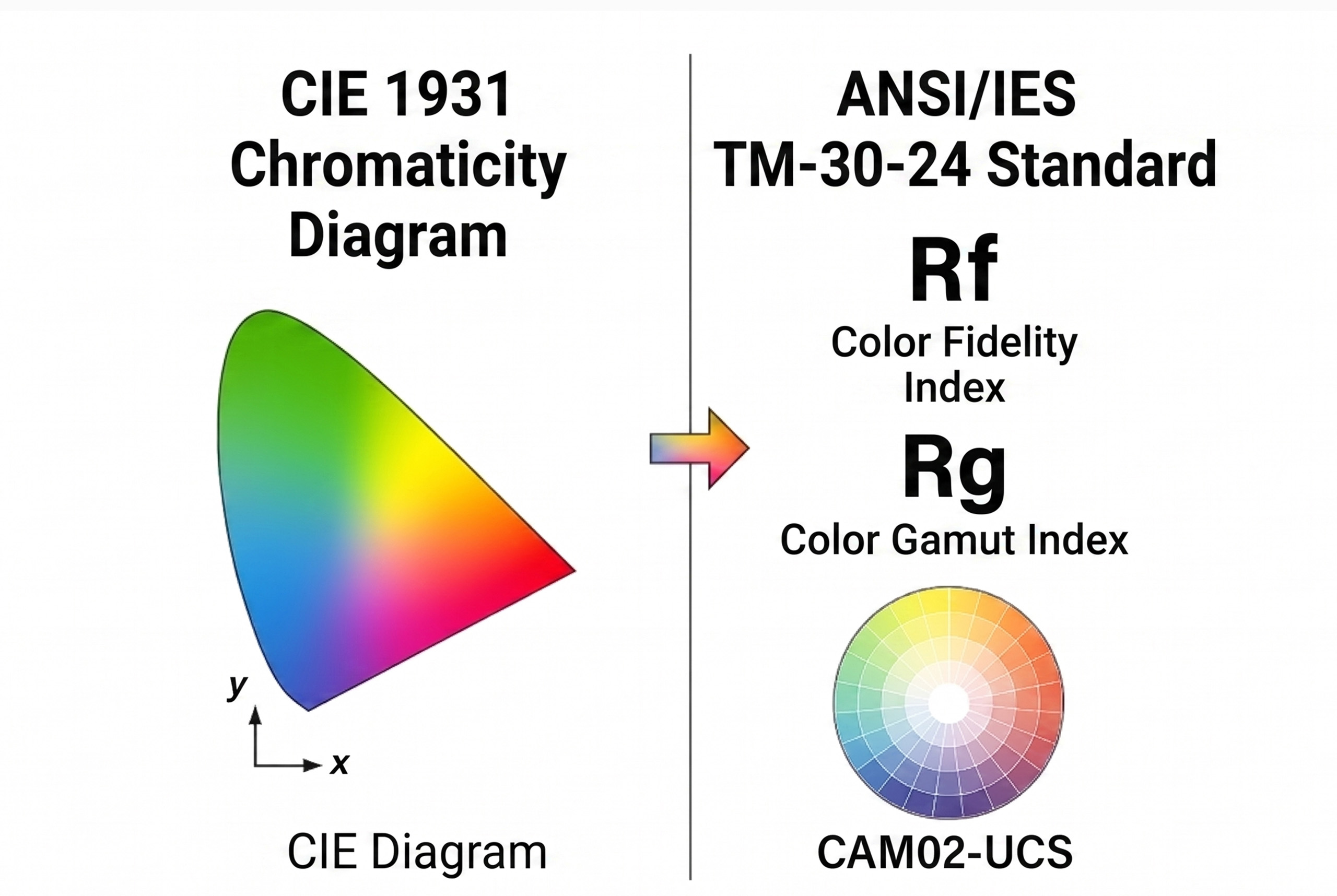
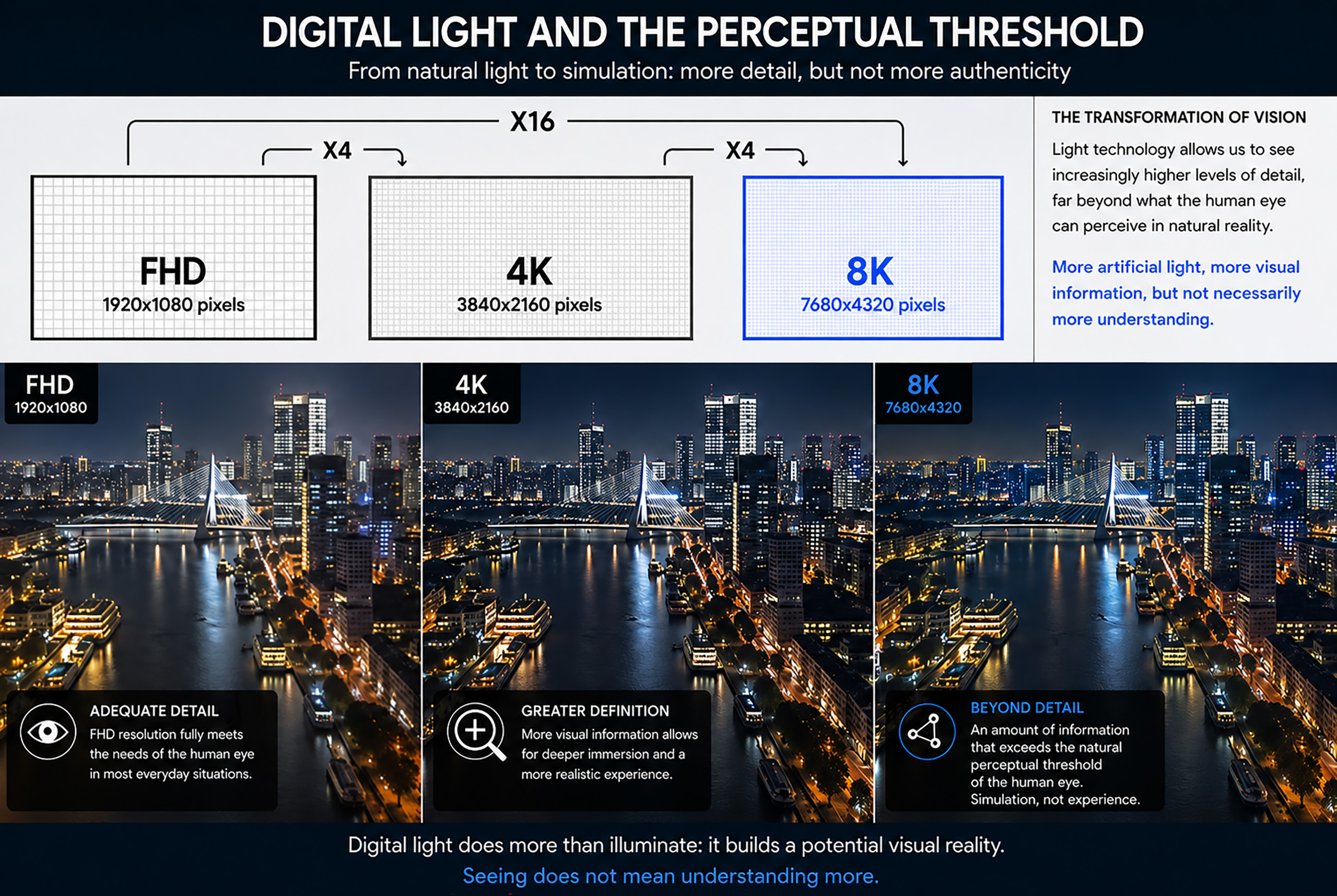
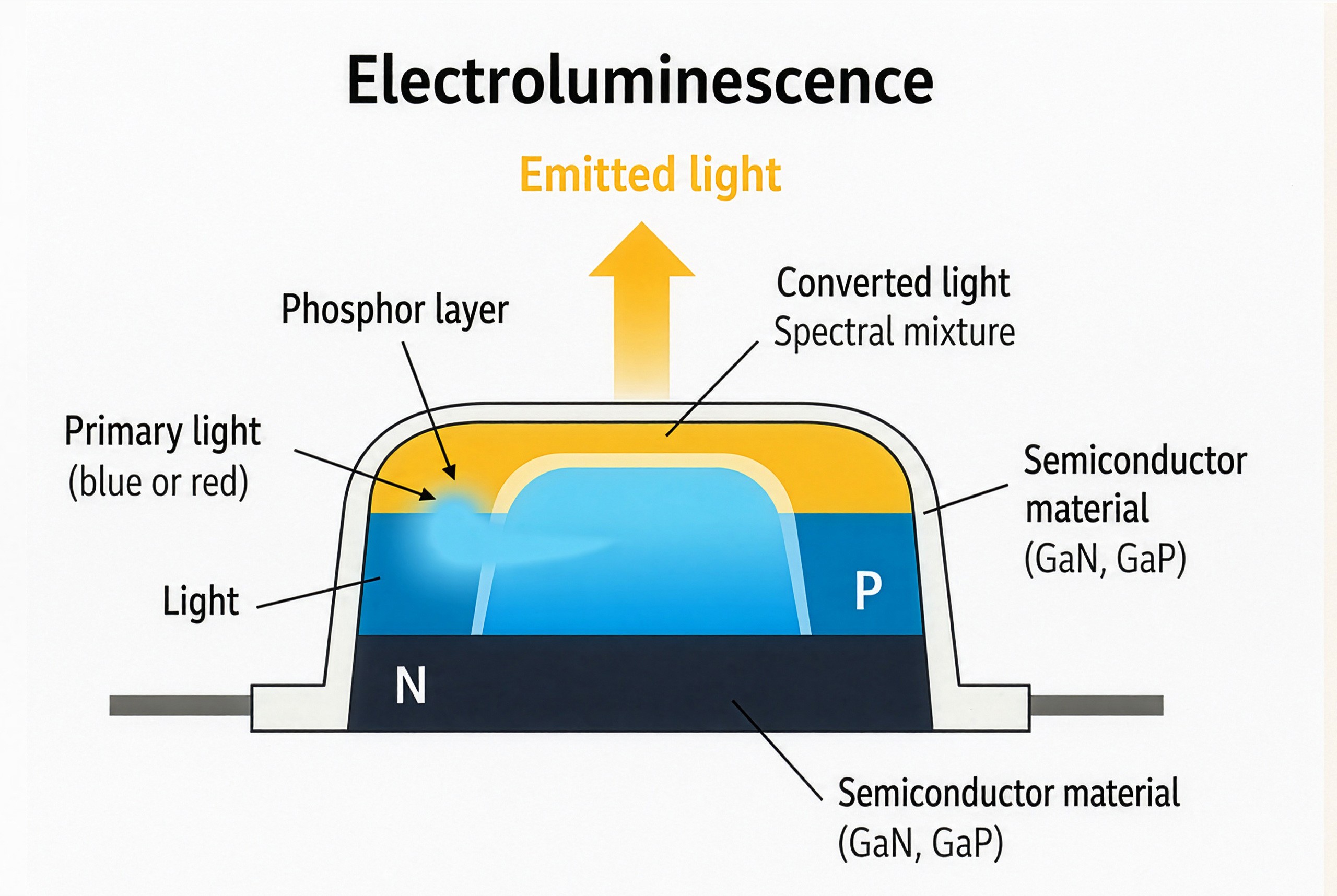
The page also explores the functioning of LED sources, the spectral and perceptual implications of solid-state light, the evolution of color rendering criteria, and the growing role of light as an informational and perceptual system, capable of influencing behavior, comfort, and the quality of spatial experience.
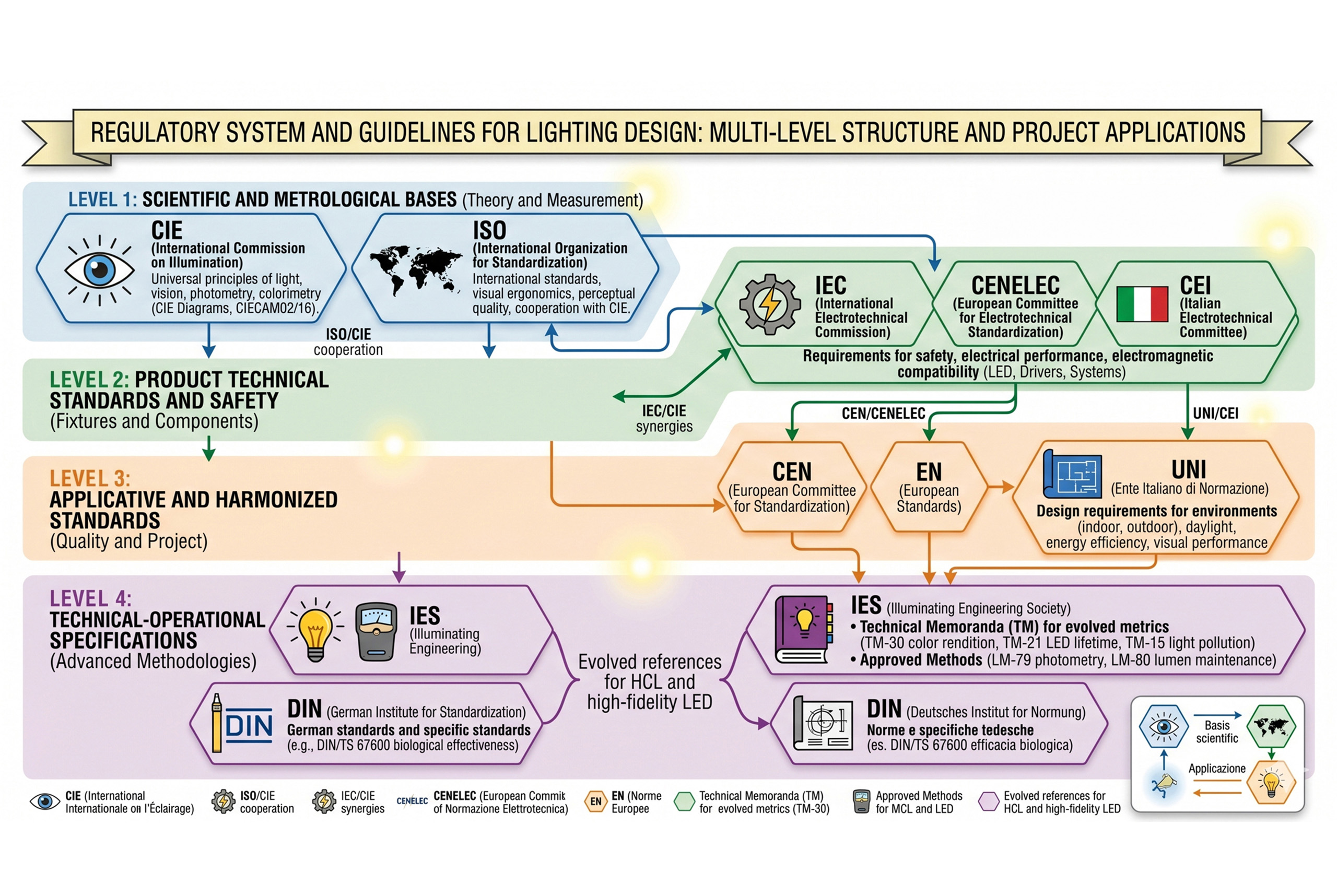
Ample space is dedicated to the relevant regulatory and technical framework, international standards, sustainability protocols, and control systems, understood as essential tools for rigorous, measurable, and consistent design.
Overall, the section provides a vision of the theory of light as the cultural and operational basis of lighting design, in which scientific knowledge, perceptual awareness, and design method converge to guide the lighting designer in the construction of balanced, legible, and qualitatively significant spaces.
This section brings together a comprehensive body of theoretical, scientific, and design insights into the theory of light applied to lighting design, systematically addressing the complex relationship between light, visual perception, and spatial design. The content develops the physical foundations of light, an understanding of the mechanisms of human vision, the differences between photopic and melanopic illuminance, and the biological impact of artificial light, integrating advanced metrics and contemporary interpretation criteria.
The page also explores the functioning of LED sources, the spectral and perceptual implications of solid-state light, the evolution of color rendering criteria, and the growing role of light as an informational and perceptual system, capable of influencing behavior, comfort, and the quality of spatial experience.
Ample space is dedicated to the relevant regulatory and technical framework, international standards, sustainability protocols, and control systems, understood as essential tools for rigorous, measurable, and consistent design.
Overall, the section provides a vision of the theory of light as the cultural and operational basis of lighting design, in which scientific knowledge, perceptual awareness, and design method converge to guide the lighting designer in the construction of balanced, legible, and qualitatively significant spaces.