IES Standard Lighting Measurements (LM): Codes, Structure, and Design Implications

Technical guide to LM standards for measuring the photometric, chromatic, and electrical performance of LEDs, modules, and luminaires.

After having illustrated the function of the Technical Memoranda (TM) of the Illuminating Engineering Society (IES) as technical support tools oriented towards innovation and the definition of emerging guidelines, it is essential to introduce another central regulatory category into the IES system: the documents marked with the acronym LM (Lighting Measurements).

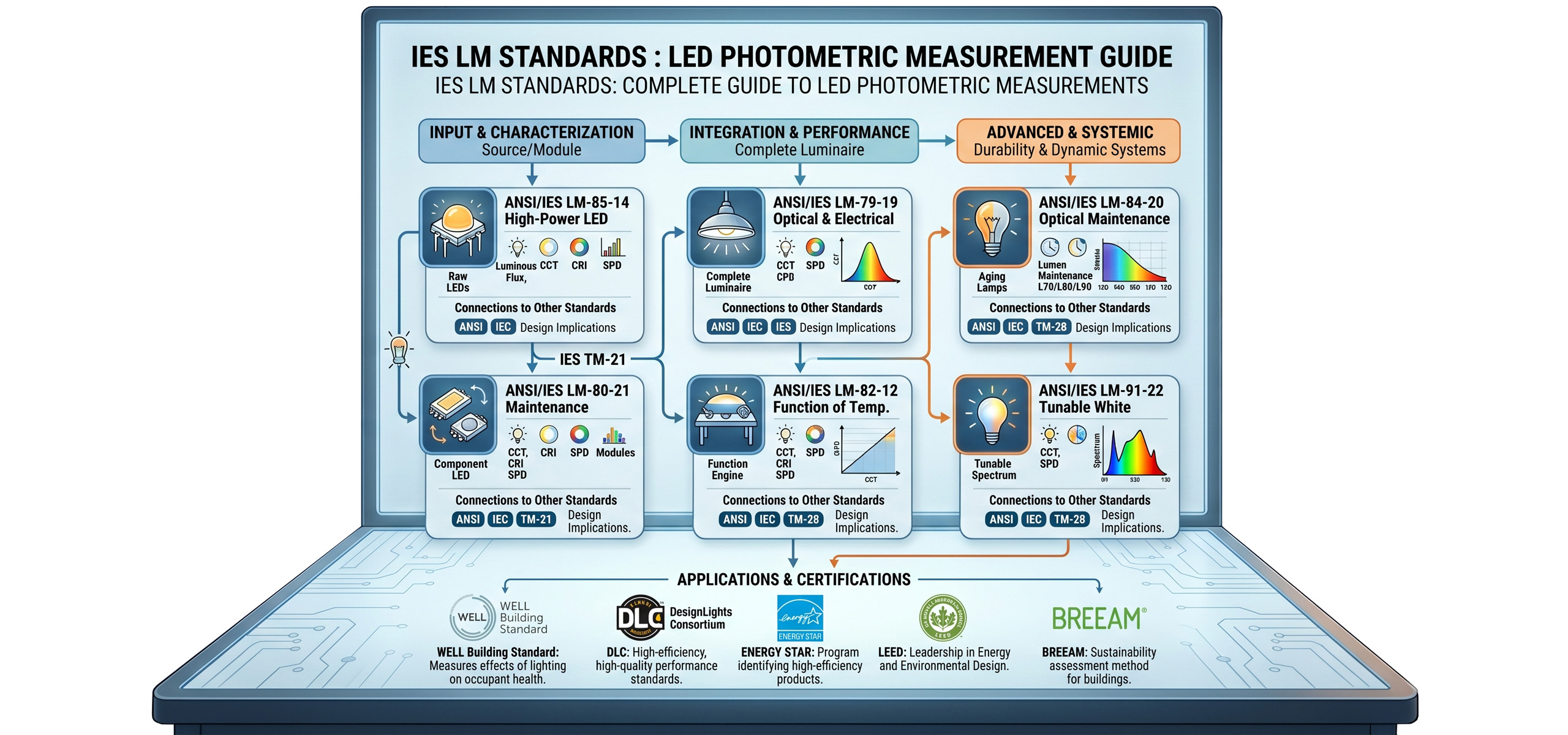
These standards belong to the broader class of Approved Methods, or methods officially approved by the IES for measuring optics, electric, photometrics and chromatic of light sources and lighting fixtures. These are highly scientific documents that define rigorous and reproducible protocols for the determination of key performance parameters, like the total luminous flux, l’ luminous efficiency, the spectral distribution of the emitted power, the flow maintenance over time and the dynamic performance of the latest generation LED systems, including the versions tunable white and variable spectrum. Thanks to the high degree of methodological reliability, the standard LM are widely recognized as an international reference. Their adoption is foreseen in the main programs energy and environmental certification, come ENERGY STAR, DesignLights Consortium (DLC) and WELL Building Standard, as well as in the technical specifications of public and private tenders, also in the LEED and BREEAM fields.

In the operational field, the application of LMs allows the lighting designer, eat producers and to the certification bodies to work on a shared and verifiable regulatory basis. This guarantees consistency in technical data, transparency in performance declarations, and above all regulatory compliance, facilitating the integration of products into certifiable and traceable lighting projects. This study continues with a detailed analysis of the main LM documents currently in force, structured according to three complementary reading axes: the objective and scope of application of the standard, its connections with other regulatory references (including ANSI, CIE, ISO and other IES documents), and finally the design implications, with particular attention to the technical and operational consequences for lighting design and the performance evaluation of luminaires and systems.
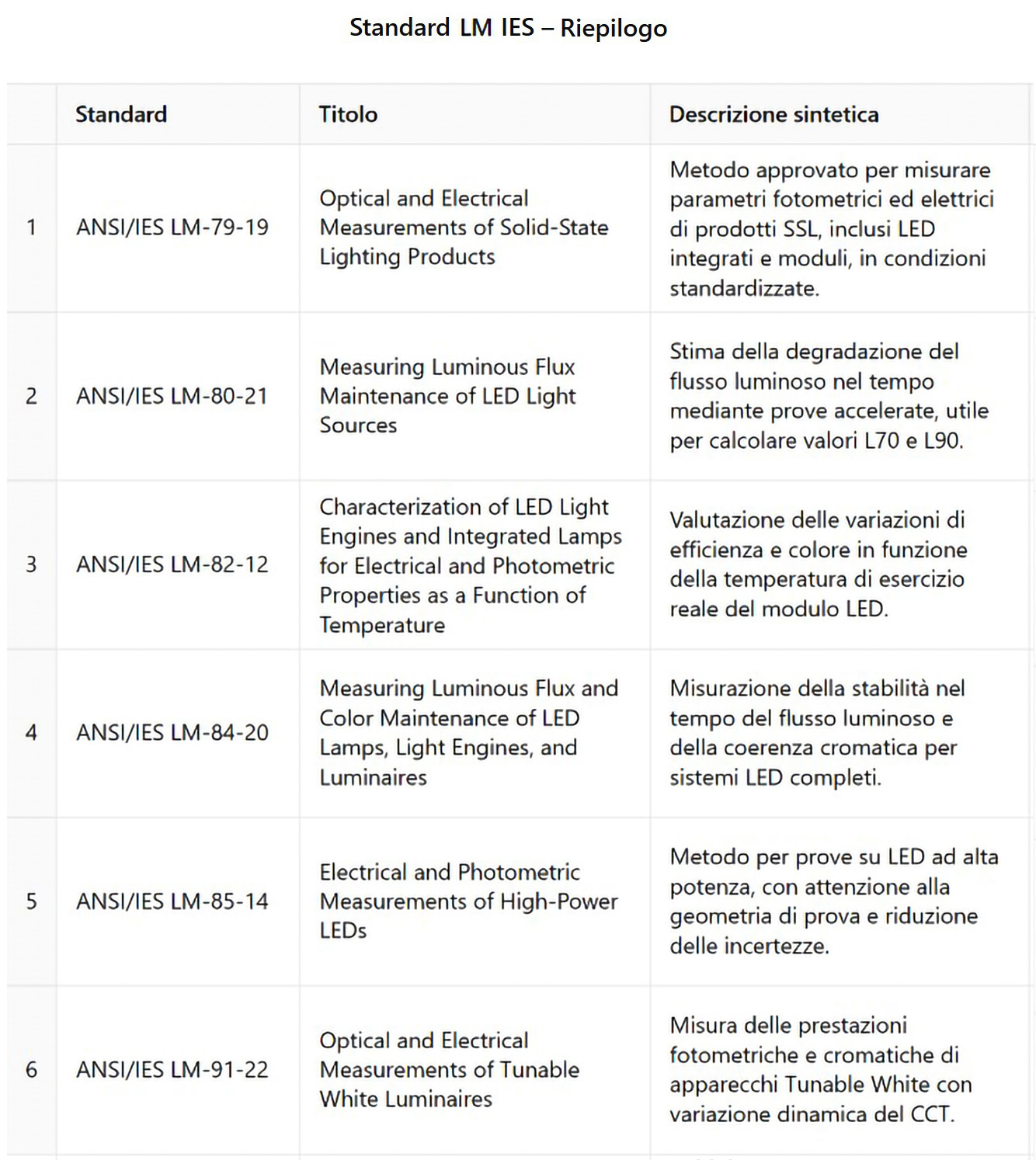
ANSI/IES LM-79-19 – Approved Method: Optical And Electrical Measurements Of Solid‑State Lighting Products

  • Goal and scope - The standard ANSI/IES LM-79-19 establishes the approved methods for the photometric and electrical measurement of lighting products solid state (Solid-State Lighting, SSL), inclusi integrated LED fixtures, LED modules and complete SSL lamps the document provides a standardized methodology for determining absolute values of fundamental quantities such as the total luminous flux, luminous efficiency, the correlated color temperature (CCT), color rendering index (CRI) according to the CIE definition, the absorbed active power, the power factor, and the spectral power distribution (Spectral Power Distribution, SPD). Unlike other methods based on relative measurements, LM-79 is based on measurements absolute carried out on samples under real operating conditions (operating conditions), making it a crucial tool for the characterization of complete LED products. The current edition, dated 2019, replaces previous versions and introduces significant updates to take into account the technological evolution of LEDs, particularly with regard to thermal stabilization methods, the management of integrated optical systems, and the interaction between control electronics and light characteristics. The scope of application is limited to products directly powered by the grid or through dedicated power supplies, excluding non-standalone components such as individual LEDs or non-integrated LED strips.
  • Connection with other standards - LM-79 is closely related to a series of IEC and IES standards which complete the metrological framework of SSL systems. In particular, it integrates with IEC 62722-2-1 for the evaluation of the performance of lighting fixtures, with IEC 62612 for LED lamps, and with ANSI/IES LM-80 for the analysis of the flow decay over time. It is also technically compatible with the specifications of CIE S 025/E:2015, which represents the international equivalent for LED photometry. The results of the measurements conducted according to LM-79 are explicitly required by international certification programs come ENERGY STAR, DesignLights Consortium (DLC), WELL Building Standard and, indirectly, in rating systems LEED and BREEAM, as they constitute the objective basis for performance declarations. In Europe, LM-79 measurements are commonly accepted as technical reference methodology also in the specifications documents and in the performance requirements of public tenders.
  • Design implications - For the lighting designer, LM-79 represents an essential tool for the objective comparative analysis of photometric and electrical performance of LED products on the market. It provides a solid and verifiable foundation for the selection of equipment, allowing for the comparison of consistent data measured according to an internationally recognized protocol. This is particularly relevant in projects subject to regulatory regulation, in the public procurement, in contexts such as high performance complexity (such as museums, premium commercial spaces, healthcare and sustainable offices), and in all cases where the verifiability of the declared performance constitutes a compliance requirement. The use of LM-79 data also allows for reduce the margin of uncertainty in lighting simulation, since the photometric curves and calculation files (IES or LDT) derive from traceable measurements, improving the consistency between virtual design and real result. Consequently, LM-79 not only promotes the design precision, but also the transparency in communication with clients, helping to consolidate confidence in the technical choices and in the quality of the lighting project.

ANSI/IES LM-80-21 – Approved Method: Measuring Maintenance Of Light Output Characteristics Of Solid‑State Light Sources

  • Goal and scope - The standard ANSI/IES LM-80-21 defines the approved methods for measuring luminous flux maintenance from the solid-state light sources (SSL), in particular of the LED modules, matrices and LED packages without secondary optics and integrated control devices. The aim is to provide a measurable basis for estimating the behavior of the sources over time, in terms of progressive light decay, expressible through useful life indicators such as L70, L80 the L90, corresponding to the maintenance of the 70%, 80% the 90% of the initial flow. The edition 2021 replaces the previous versions (LM-80-15 and -08), introducing fundamental methodological clarifications on the uniform thermal application, on the choice of measuring points (TS – welding temperature), and on the use of active thermal stabilization techniques To ensure the repeatability and comparability of results. The standard requires accelerated test cycles (typically 6,000 or 10,000 hours) under controlled conditions, but does not directly provide a life projection: this extrapolation is instead entrusted to other related standards.
  • Connections with other standards - It standard LM-80 is closely integrated with ANSI/IES TM-21, which constitutes the statistical projection method based on data collected according to LM-80. In this report, LM-80 provides the empirical basis and TM-21 applies a logarithmic function to estimate the luminous behavior over longer periods (up to 6 times the tested duration), allowing to define a declarable useful life according to shared criteria. In the regulatory and application fields, LM-80 is explicitly required by the ENERGY STAR, DLC (DesignLights Consortium) programs and by many technical specifications for products intended for sustainable construction. Furthermore, it is commonly recognized in project performance specifications LEED, WELL e BREEAM, for its ability to provide a verifiable measure of luminous reliability over time. Although not applicable to complete luminaires, LM-80 represents the reference standard for the evaluation of LED components integrated into optical systems.
  • Design implications - For the lighting designer, the data obtained according to LM-80 constitute a key element in evaluating the durability and reliability of LED sources, since they allow us to predict the functional useful life before the reduction in luminous flux compromises the minimum required illumination conditions. This is particularly relevant in contexts where the maintenance is complex or expensive, as in the case of installations in tall buildings, museum spaces, industrial areas the public lighting systems the use of sources tested according to LM-80 is often a necessary condition in public specifications, both to ensure the transparency in the declaration of performance, both to encourage the selection of products with a longer life cycle, in line with the criteria of environmental sustainability and reduction of operating costs the correct interpretation of the LM-80 data, together with the TM-21 predictive analysis, also allows to estimate maintenance intervals and replacement times in the lighting design and systems management phase.

ANSI/IES LM-82-12 – Approved Method: Characterization of LED Light Engines and LED Lamps as a Function of Temperature

  • Objective and scope - It standard ANSI/IES LM-82-12defines the approved methods for the characterization of photometric and electrical performance of the LED light engines (LLE) and of the integrated LED lamps, as the operating temperature. Unlike the LM-79, which provides performance data at stabilized room temperature and under standard conditions, LM-82 introduces an experimental methodology that allows to evaluate the variations in luminous flux, color temperature (CCT) and color rendering index (CRI) depending on the real thermal conditions which the module is subject to within a device. The document is primarily addressed to LED module manufacturers and appliance manufacturers which need to verify the thermal sensitivity of the sources, simulating the typical operating conditions of a real application, both in terms of dissipation and constant thermal regime. LM-82 therefore represents an important correlation tool between laboratory and field, useful to characterize the light performance as a function of junction temperature (Tj) or surface temperature (Tc).
  • Connections with other standards - LM-82 is located at a key point in the IES regulatory document chain which deal with thelifespan and performance stability of LEDs. In particular, it integrates data from LM-80 (decay of luminous flux over time) and interfaces with the TM-21 projections, allowing for more accurate modeling of performance if thermal conditions vary from standard test conditions. From a regulatory standpoint, LM-82 is compliant with the requirements of IEC 62717 standard (for LED modules) andI EC 62722-2-1 (for complete appliances), which require compliance with declared performances within specific temperature ranges. Furthermore, LM-82 is used as a technical verification tool in qualification processes for ENERGY STAR, DLC and environmental programs such as WELL, which require consistency between declared data and operating behavior.
  • Design implications - For the lighting designer, LM-82 represents a fundamental reference when designing devices with complex geometries or critical environmental conditions, where the thermal dissipation management directly affects theluminous and chromatic stability of the system. Using LM-82 data allows you to optimize the thermal synergy between source and dissipating body, improving not only the source durability, but also the consistency of color rendering over time in highly technical design contexts — such as museum environments, high-end retail settings, high-temperature medical or industrial applications — LM-82 provides an objective basis for predicting the actual behavior of light over the life cycle of the fixture. This enables more informed and technically justified choices when selecting LED modules, drivers, and optical-thermal configurations.

ANSI/IES LM-84-20 – Approved Method: Measuring Optical Radiation Maintenance of LED Lamps, Light Engines, and Luminaires

  • Objective and scope - The standard ANSI/IES LM-84-20 defines the approved methods for measuring luminous flux maintenance and spectral characteristics in the time of integrated LED lamps, moduli LED (light engines and complete lighting fixtures. Unlike the LM-80, which applies to isolated LED components and does not consider the influence of the thermal and optical environment of the device, LM-84 evaluates the performance of the entire system under realistic operating conditions, including the effects of heat sink, from the secondary optics and of the electronic control the edition 2020, currently in force, broadens the scope of the previous methods by integrating the spectral stability measurement, from the correlated color temperature (CCT) and of the color rendering index (CRI) throughout the product life cycle. Tests are conducted over a minimum recommended duration of 9000 hours, in controlled environments, according to on/off and thermal stress protocols consistent with typical operating conditions. LM-84 is therefore the reference standard for systematically evaluating the maintenance of optical performance over time, overcoming the limitations of modular approaches and allowing a representative analysis of the actual perceived light quality.
  • Connections with other standards - LM-84 fits logically into the chain of IES standards dedicated to durability of SSL (Solid-State Lighting) products. In particular, it provides the basic data for the application of the standard ANSI/IES TM-28, which establishes the method of luminous flux maintenance projection per complete systems, extending over time the measurements performed according to LM-84. Compared to LM-80 (oriented to the behavior of the LED package only) and LM-79 (initial measurement in stabilized conditions), LM-84 is set as intermediate and complementary instrument, focused on the overall system performance over time. It is also consistent with international standards IEC 62722-2-1 (LED fixtures) and IEC 62717 (LED modules), and represents a criterion increasingly adopted in the specifications of high-performance supplies, particularly in contexts ENERGY STAR, DLC and WELL. In the European context, LM-84 also finds application in the technical and environmental validation processes associated with LEED, BREEAM and CAM Construction.
  • Design implications - From a design point of view, LM-84-20 provides a reliable tool for assessing the stability of photometric and chromatic behavior of LED fixtures over time, a critical factor in contexts where the coherence of light it is a mandatory performance requirement. Environments such as museums, exhibition areas, high-end retail spaces and health facilities in fact they require that the color of light and the color rendering quality remain stable for long periods, without perceptible deviations or functional degradation. The adoption of products tested according to LM-84 allows the lighting designer to predict and control the optical aging of the system, offering certified quality guarantees towards the clients and contributing to the reduction of risks of early replacement o in perceptual inconsistencies in long-term architectural projects. In regulated or standardized contexts, LM-84 data also represent a validating technical value in the technical-economic offers, ensuring transparency and traceability of the declared data.

ANSI/IES LM-85-14 – Approved Method: Measurement of High‑Power LED Source Electrical and Photometric Parameters

  • Objective and scope - The standard ANSI/IES LM-85-14establishes the metrological criteria for the measurement of the photometric and electrical characteristics of high-power LEDs (high-power LED), considerati as discrete components, and not as modules, light engines or complete devices. The main objective is to ensure that the measures are reproducible, reliable and traceable, even in the presence of critical variables such as the geometric orientation of the sample, the thermal stabilization and the power supply accuracy the document is intended to be used in the LED component characterization, typically in the initial development or testing process, prior to integration into a system. Unlike the LM-79, which applies to complete products in operating conditions,LM-85 focuses on the single LEDin a controlled laboratory environment, paying particular attention to minimizing uncertainties to the extent of luminous flux, from the spectral power distribution, of the CCT, of the CRI and of the  absorbed electrical power.
  • Connections with other standards - LM-85 was born astechnical and methodological extension of the LM-79 standard, but with radically different purposes: while LM-79 is oriented towards final product evaluation, LM-85 applies in phase preliminary development and selection of the single high-power LEDs, and is therefore more similar to contexts of electronic design and optoelectronic integration it is a tool mainly adopted in the sectorautomotive, aerospace, and in the high-performance electronics industryi, where it is essential to obtain an accurate characterization of the behavior of the LED chip, also as a function of parameters such as the junction temperature (Tj), the forward voltage (Vf) and the controlled current driving conditions. Although LM-85 is not directly used in the programs of commercial certification (such as ENERGY STAR or DLC), the data generated by it constitutes a primary source of internal validation for producers, as well as technical support for the subsequent testing phases according to LM-80, LM-82 the LM-84, depending on the degree of integration of the product.
  • Design implications - From a design point of view, LM-85 takes on particular relevance in the high-precision engineering contexts, where it is necessary to establish a reliable correlation between the light performance of the single LED and the real operating conditions that will occur once integrated into a optical module, in a custom reflector one in one thermally constrained geometry device. In progress prototyping, the LM-85 data allow to build thermal-photometric models extremely accurate predictive tools, which support both the optimization of the optical system and the choice of thedriverand of thecontrol strategies ths is essential in high-performance projects, such as LED car headlights, industrial lighting in extreme environments, outdoor projectors with high flux values, and in general where the reliability of the single component determines the performance of the entire system. Although less widespread in the context of architectural lighting design, LM-85 constitutes a advanced technical tool for designing custom solutions, especially in areas where the basic LED metrological quality it is strategic for obtaining a controlled, stable and traceable light output over time.

ANSI/IES LM-91-22 – Approved Method: Characterization of Tunable-White Solid-State Luminaires

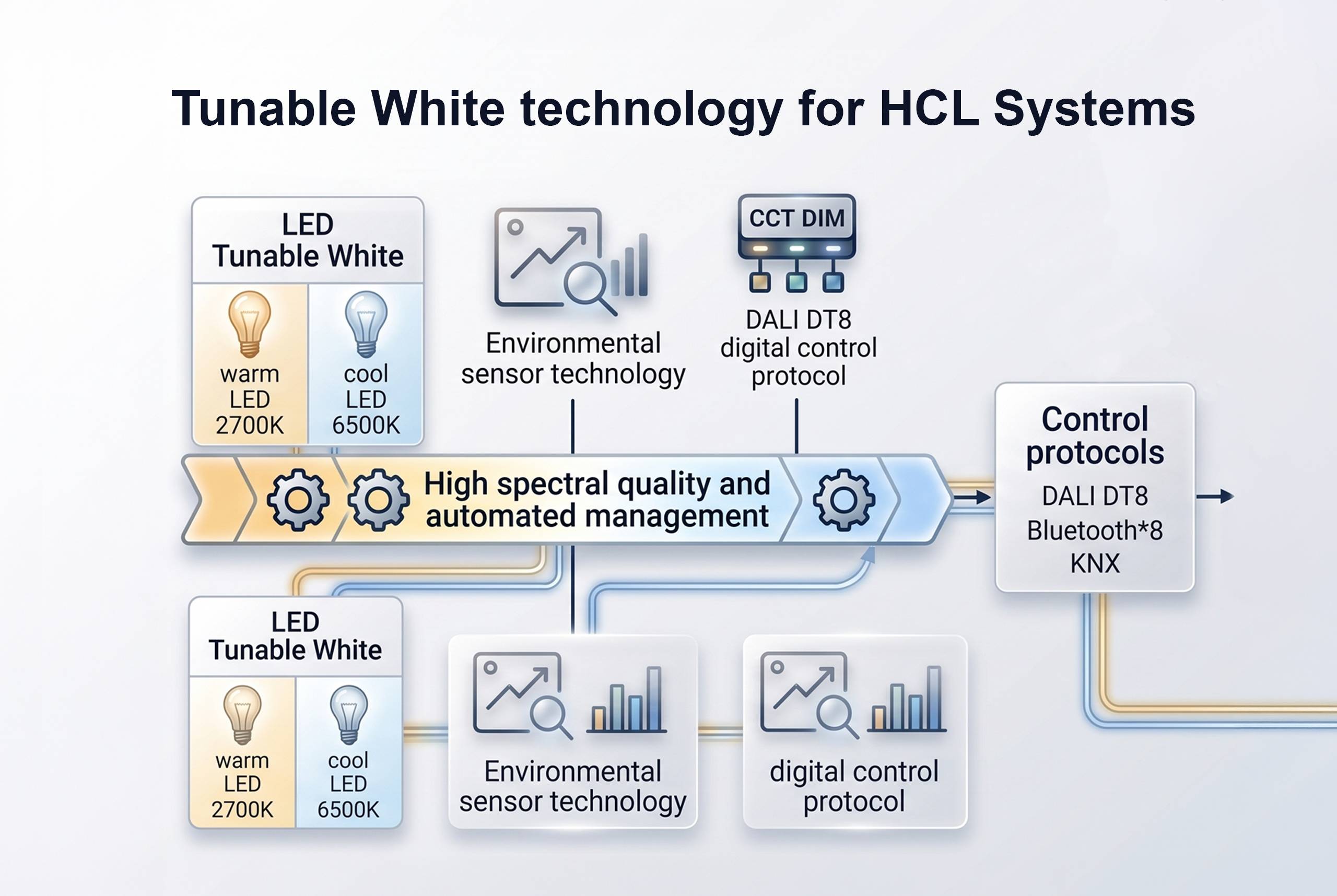
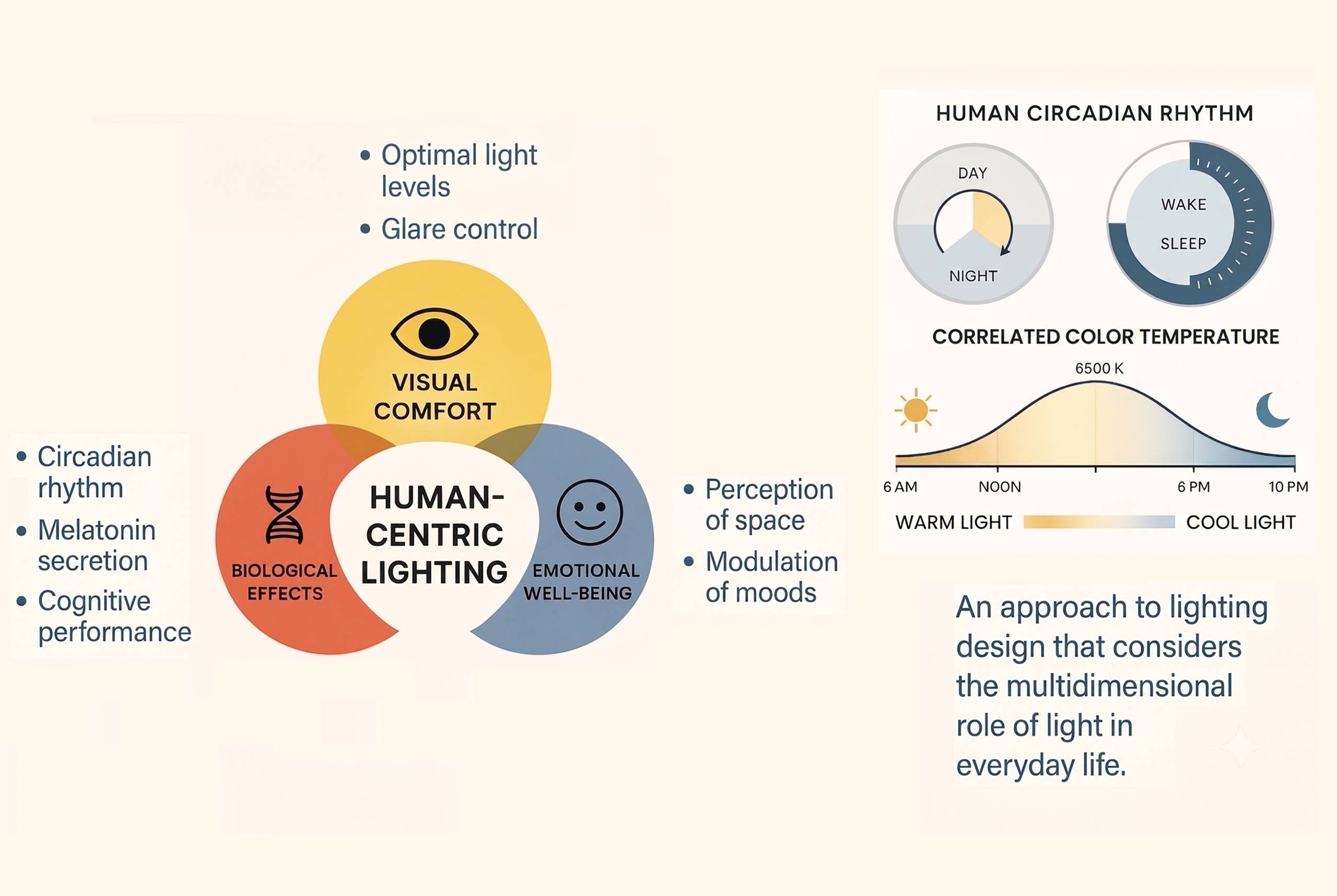
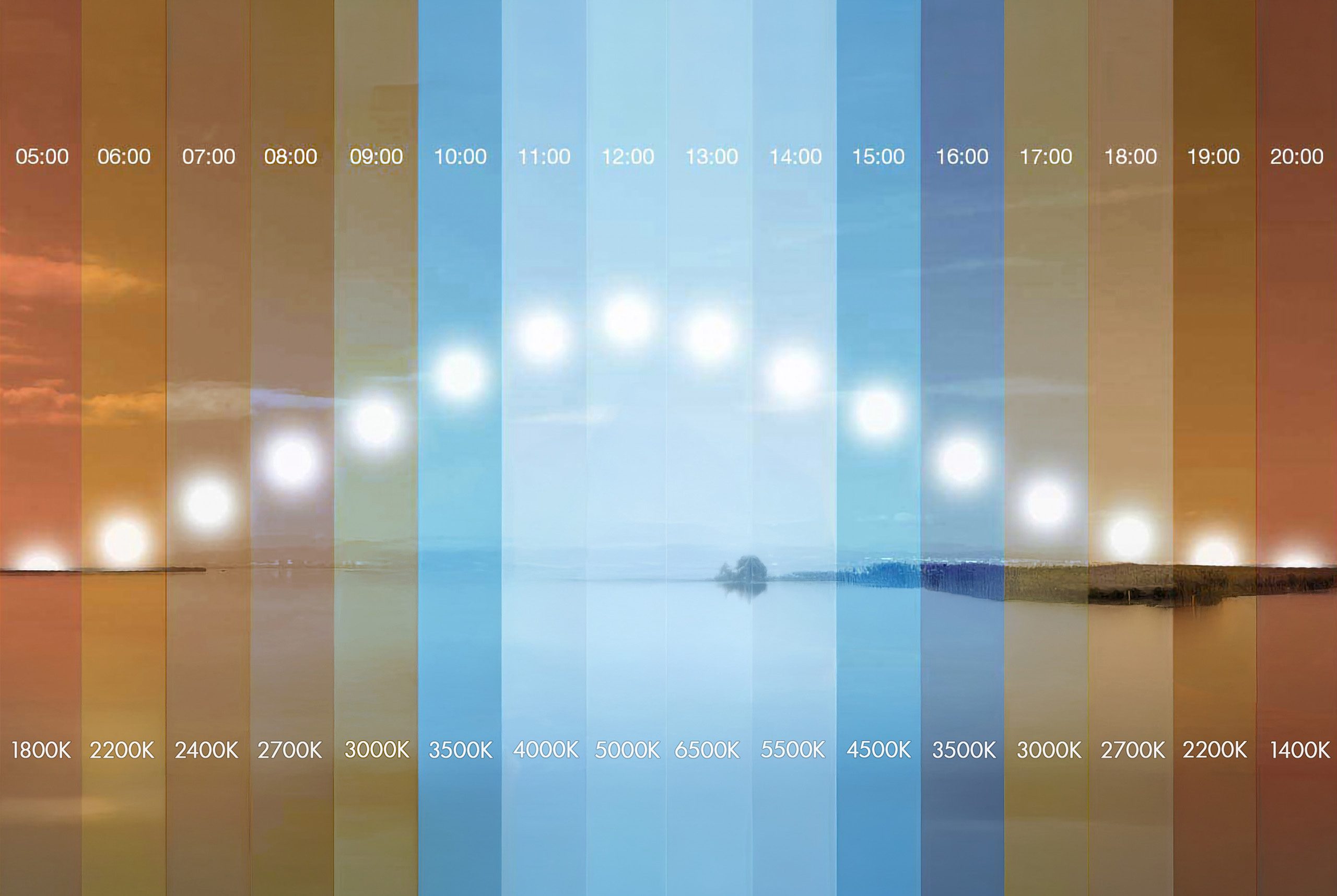
  • Objective and scope - The standard ANSI/IES LM-91-22, published in 2022, defines the Approved methods for characterizing the photometric and chromatic performance of tunable color temperature LED lighting systems, known as tunable white luminaires this is the first IES normative document explicitly designed to describe the dynamic behavior of devices capable of varying the CCT (Correlated Color Temperature) along a predefined curve, while maintaining visual stability, color coherence and spectral continuity. LM-91 introduces a methodology for measuring the performance of the entire system– including electronic control – in one series of points along the adjustment range, evaluating fundamental parameters such as the color fidelity (CRI, TM-30), the variation of luminous efficacy, the maintained flow, the SPD (Spectral Power Distribution) behavior and the dimming uniformity its scope extends to both luminaires dinamici destinati a Human-Centric Lighting (HCL), we a high value-added architectural systems where precise control of adjustable white light in time or space is required.
  • Connections with other standards- LM-91 is included in the IES corpus as LM-79 Advanced Complement, which is limited to evaluating the initial performance in static conditions, and LM-80, which deals with the maintenance of the flow over time at controlled temperature. However, LM-91 represents a conceptual evolution: it is the first standard of the LM series introducing a multidimensional and dynamic evaluation, or along the entire CCT tuning curve, providing a complete picture of the system's behavior in real-world conditions of use. From a regulatory point of view, LM-91 is perfectly aligned with the metrics required by certification protocols such as the WELL Building Standard v2, especially in the chapters L04 (Visual Lighting Design) and L07 (Circadian Lighting Design). Furthermore, its procedures are consistent with the indications of the CIE S 026:2018, relative to the equivalent melanopic illuminance (AVERAGE), and with the dynamic metrics developed for circadian lighting, come EML (Equivalent Melanopic Lux) e CS (Circadian Stimulus).
  • Design implications - From an application point of view, LM-91-22 represents an essential tool for the lighting designer which deals with highly complex dynamic solutions, particularly in the field of Human-Centered Lighting (HCL) scenarios, educational environments, sanitary spaces, high-performance offices and luxury residences the document allows you to ensure that the entire dynamic range of the system maintains visual consistency, color fidelity, and photometric consistency, even in the presence of frequent changes in color temperature. LM-91 also allows for a more reliable predictive design, reducing the risks associated with unwanted changes in perceived light quality during the usage cycle. This is essential to ensure visual comfort, circadian biological support, and consistency of light identity in sensitive environments. Furthermore, the use of luminaires rated according to LM-91 facilitates the compliance with environmental and well-being certification protocols, constituting a distinctive element in innovative projects with a high design content.

IES Standard Lighting Measurements (LM): Codes, Structure, and Design Implications

Technical guide to LM standards for measuring the photometric, chromatic, and electrical performance of LEDs, modules, and luminaires.

After having illustrated the function of the Technical Memoranda (TM) of the Illuminating Engineering Society (IES) as technical support tools oriented towards innovation and the definition of emerging guidelines, it is essential to introduce another central regulatory category into the IES system: the documents marked with the acronym LM (Lighting Measurements).

These standards belong to the broader class of Approved Methods, or methods officially approved by the IES for measuring optics, electric, photometrics and chromatic of light sources and lighting fixtures. These are highly scientific documents that define rigorous and reproducible protocols for the determination of key performance parameters, like the total luminous flux, l’ luminous efficiency, the spectral distribution of the emitted power, the flow maintenance over time and the dynamic performance of the latest generation LED systems, including the versions tunable white and variable spectrum. Thanks to the high degree of methodological reliability, the standard LM are widely recognized as an international reference. Their adoption is foreseen in the main programs energy and environmental certification, come ENERGY STAR, DesignLights Consortium (DLC) and WELL Building Standard, as well as in the technical specifications of public and private tenders, also in the LEED and BREEAM fields.

In the operational field, the application of LMs allows the lighting designer, eat producers and to the certification bodies to work on a shared and verifiable regulatory basis. This guarantees consistency in technical data, transparency in performance declarations, and above all regulatory compliance, facilitating the integration of products into certifiable and traceable lighting projects. This study continues with a detailed analysis of the main LM documents currently in force, structured according to three complementary reading axes: the objective and scope of application of the standard, its connections with other regulatory references (including ANSI, CIE, ISO and other IES documents), and finally the design implications, with particular attention to the technical and operational consequences for lighting design and the performance evaluation of luminaires and systems.

ANSI/IES LM-79-19 – Approved Method: Optical And Electrical Measurements Of Solid‑State Lighting Products

  • Goal and scope - The standard ANSI/IES LM-79-19 establishes the approved methods for the photometric and electrical measurement of lighting products solid state (Solid-State Lighting, SSL), inclusi integrated LED fixtures, LED modules and complete SSL lamps the document provides a standardized methodology for determining absolute values of fundamental quantities such as the total luminous flux, luminous efficiency, the correlated color temperature (CCT), color rendering index (CRI) according to the CIE definition, the absorbed active power, the power factor, and the spectral power distribution (Spectral Power Distribution, SPD). Unlike other methods based on relative measurements, LM-79 is based on measurements absolute carried out on samples under real operating conditions (operating conditions), making it a crucial tool for the characterization of complete LED products. The current edition, dated 2019, replaces previous versions and introduces significant updates to take into account the technological evolution of LEDs, particularly with regard to thermal stabilization methods, the management of integrated optical systems, and the interaction between control electronics and light characteristics. The scope of application is limited to products directly powered by the grid or through dedicated power supplies, excluding non-standalone components such as individual LEDs or non-integrated LED strips.
  • Connection with other standards - LM-79 is closely related to a series of IEC and IES standards which complete the metrological framework of SSL systems. In particular, it integrates with IEC 62722-2-1 for the evaluation of the performance of lighting fixtures, with IEC 62612 for LED lamps, and with ANSI/IES LM-80 for the analysis of the flow decay over time. It is also technically compatible with the specifications of CIE S 025/E:2015, which represents the international equivalent for LED photometry. The results of the measurements conducted according to LM-79 are explicitly required by international certification programs come ENERGY STAR, DesignLights Consortium (DLC), WELL Building Standard and, indirectly, in rating systems LEED and BREEAM, as they constitute the objective basis for performance declarations. In Europe, LM-79 measurements are commonly accepted as technical reference methodology also in the specifications documents and in the performance requirements of public tenders.
  • Design implications - For the lighting designer, LM-79 represents an essential tool for the objective comparative analysis of photometric and electrical performance of LED products on the market. It provides a solid and verifiable foundation for the selection of equipment, allowing for the comparison of consistent data measured according to an internationally recognized protocol. This is particularly relevant in projects subject to regulatory regulation, in the public procurement, in contexts such as high performance complexity (such as museums, premium commercial spaces, healthcare and sustainable offices), and in all cases where the verifiability of the declared performance constitutes a compliance requirement. The use of LM-79 data also allows for reduce the margin of uncertainty in lighting simulation, since the photometric curves and calculation files (IES or LDT) derive from traceable measurements, improving the consistency between virtual design and real result. Consequently, LM-79 not only promotes the design precision, but also the transparency in communication with clients, helping to consolidate confidence in the technical choices and in the quality of the lighting project.

ANSI/IES LM-80-21 – Approved Method: Measuring Maintenance Of Light Output Characteristics Of Solid‑State Light Sources

  • Goal and scope - The standard ANSI/IES LM-80-21 defines the approved methods for measuring luminous flux maintenance from the solid-state light sources (SSL), in particular of the LED modules, matrices and LED packages without secondary optics and integrated control devices. The aim is to provide a measurable basis for estimating the behavior of the sources over time, in terms of progressive light decay, expressible through useful life indicators such as L70, L80 the L90, corresponding to the maintenance of the 70%, 80% the 90% of the initial flow. The edition 2021 replaces the previous versions (LM-80-15 and -08), introducing fundamental methodological clarifications on the uniform thermal application, on the choice of measuring points (TS – welding temperature), and on the use of active thermal stabilization techniques To ensure the repeatability and comparability of results. The standard requires accelerated test cycles (typically 6,000 or 10,000 hours) under controlled conditions, but does not directly provide a life projection: this extrapolation is instead entrusted to other related standards.
  • Connections with other standards - It standard LM-80 is closely integrated with ANSI/IES TM-21, which constitutes the statistical projection method based on data collected according to LM-80. In this report, LM-80 provides the empirical basis and TM-21 applies a logarithmic function to estimate the luminous behavior over longer periods (up to 6 times the tested duration), allowing to define a declarable useful life according to shared criteria. In the regulatory and application fields, LM-80 is explicitly required by the ENERGY STAR, DLC (DesignLights Consortium) programs and by many technical specifications for products intended for sustainable construction. Furthermore, it is commonly recognized in project performance specifications LEED, WELL e BREEAM, for its ability to provide a verifiable measure of luminous reliability over time. Although not applicable to complete luminaires, LM-80 represents the reference standard for the evaluation of LED components integrated into optical systems.
  • Design implications - For the lighting designer, the data obtained according to LM-80 constitute a key element in evaluating the durability and reliability of LED sources, since they allow us to predict the functional useful life before the reduction in luminous flux compromises the minimum required illumination conditions. This is particularly relevant in contexts where the maintenance is complex or expensive, as in the case of installations in tall buildings, museum spaces, industrial areas the public lighting systems the use of sources tested according to LM-80 is often a necessary condition in public specifications, both to ensure the transparency in the declaration of performance, both to encourage the selection of products with a longer life cycle, in line with the criteria of environmental sustainability and reduction of operating costs the correct interpretation of the LM-80 data, together with the TM-21 predictive analysis, also allows to estimate maintenance intervals and replacement times in the lighting design and systems management phase.

ANSI/IES LM-82-12 – Approved Method: Characterization of LED Light Engines and LED Lamps as a Function of Temperature

  • Objective and scope - It standard ANSI/IES LM-82-12defines the approved methods for the characterization of photometric and electrical performance of the LED light engines (LLE) and of the integrated LED lamps, as the operating temperature. Unlike the LM-79, which provides performance data at stabilized room temperature and under standard conditions, LM-82 introduces an experimental methodology that allows to evaluate the variations in luminous flux, color temperature (CCT) and color rendering index (CRI) depending on the real thermal conditions which the module is subject to within a device. The document is primarily addressed to LED module manufacturers and appliance manufacturers which need to verify the thermal sensitivity of the sources, simulating the typical operating conditions of a real application, both in terms of dissipation and constant thermal regime. LM-82 therefore represents an important correlation tool between laboratory and field, useful to characterize the light performance as a function of junction temperature (Tj) or surface temperature (Tc).
  • Connections with other standards - LM-82 is located at a key point in the IES regulatory document chain which deal with thelifespan and performance stability of LEDs. In particular, it integrates data from LM-80 (decay of luminous flux over time) and interfaces with the TM-21 projections, allowing for more accurate modeling of performance if thermal conditions vary from standard test conditions. From a regulatory standpoint, LM-82 is compliant with the requirements of IEC 62717 standard (for LED modules) andI EC 62722-2-1 (for complete appliances), which require compliance with declared performances within specific temperature ranges. Furthermore, LM-82 is used as a technical verification tool in qualification processes for ENERGY STAR, DLC and environmental programs such as WELL, which require consistency between declared data and operating behavior.
  • Design implications - For the lighting designer, LM-82 represents a fundamental reference when designing devices with complex geometries or critical environmental conditions, where the thermal dissipation management directly affects theluminous and chromatic stability of the system. Using LM-82 data allows you to optimize the thermal synergy between source and dissipating body, improving not only the source durability, but also the consistency of color rendering over time in highly technical design contexts — such as museum environments, high-end retail settings, high-temperature medical or industrial applications — LM-82 provides an objective basis for predicting the actual behavior of light over the life cycle of the fixture. This enables more informed and technically justified choices when selecting LED modules, drivers, and optical-thermal configurations.

ANSI/IES LM-84-20 – Approved Method: Measuring Optical Radiation Maintenance of LED Lamps, Light Engines, and Luminaires

  • Objective and scope - The standard ANSI/IES LM-84-20 defines the approved methods for measuring luminous flux maintenance and spectral characteristics in the time of integrated LED lamps, moduli LED (light engines and complete lighting fixtures. Unlike the LM-80, which applies to isolated LED components and does not consider the influence of the thermal and optical environment of the device, LM-84 evaluates the performance of the entire system under realistic operating conditions, including the effects of heat sink, from the secondary optics and of the electronic control the edition 2020, currently in force, broadens the scope of the previous methods by integrating the spectral stability measurement, from the correlated color temperature (CCT) and of the color rendering index (CRI) throughout the product life cycle. Tests are conducted over a minimum recommended duration of 9000 hours, in controlled environments, according to on/off and thermal stress protocols consistent with typical operating conditions. LM-84 is therefore the reference standard for systematically evaluating the maintenance of optical performance over time, overcoming the limitations of modular approaches and allowing a representative analysis of the actual perceived light quality.
  • Connections with other standards - LM-84 fits logically into the chain of IES standards dedicated to durability of SSL (Solid-State Lighting) products. In particular, it provides the basic data for the application of the standard ANSI/IES TM-28, which establishes the method of luminous flux maintenance projection per complete systems, extending over time the measurements performed according to LM-84. Compared to LM-80 (oriented to the behavior of the LED package only) and LM-79 (initial measurement in stabilized conditions), LM-84 is set as intermediate and complementary instrument, focused on the overall system performance over time. It is also consistent with international standards IEC 62722-2-1 (LED fixtures) and IEC 62717 (LED modules), and represents a criterion increasingly adopted in the specifications of high-performance supplies, particularly in contexts ENERGY STAR, DLC and WELL. In the European context, LM-84 also finds application in the technical and environmental validation processes associated with LEED, BREEAM and CAM Construction.
  • Design implications - From a design point of view, LM-84-20 provides a reliable tool for assessing the stability of photometric and chromatic behavior of LED fixtures over time, a critical factor in contexts where the coherence of light it is a mandatory performance requirement. Environments such as museums, exhibition areas, high-end retail spaces and health facilities in fact they require that the color of light and the color rendering quality remain stable for long periods, without perceptible deviations or functional degradation. The adoption of products tested according to LM-84 allows the lighting designer to predict and control the optical aging of the system, offering certified quality guarantees towards the clients and contributing to the reduction of risks of early replacement o in perceptual inconsistencies in long-term architectural projects. In regulated or standardized contexts, LM-84 data also represent a validating technical value in the technical-economic offers, ensuring transparency and traceability of the declared data.

ANSI/IES LM-85-14 – Approved Method: Measurement of High‑Power LED Source Electrical and Photometric Parameters

  • Objective and scope - The standard ANSI/IES LM-85-14establishes the metrological criteria for the measurement of the photometric and electrical characteristics of high-power LEDs (high-power LED), considerati as discrete components, and not as modules, light engines or complete devices. The main objective is to ensure that the measures are reproducible, reliable and traceable, even in the presence of critical variables such as the geometric orientation of the sample, the thermal stabilization and the power supply accuracy the document is intended to be used in the LED component characterization, typically in the initial development or testing process, prior to integration into a system. Unlike the LM-79, which applies to complete products in operating conditions,LM-85 focuses on the single LEDin a controlled laboratory environment, paying particular attention to minimizing uncertainties to the extent of luminous flux, from the spectral power distribution, of the CCT, of the CRI and of the  absorbed electrical power.
  • Connections with other standards - LM-85 was born astechnical and methodological extension of the LM-79 standard, but with radically different purposes: while LM-79 is oriented towards final product evaluation, LM-85 applies in phase preliminary development and selection of the single high-power LEDs, and is therefore more similar to contexts of electronic design and optoelectronic integration it is a tool mainly adopted in the sectorautomotive, aerospace, and in the high-performance electronics industryi, where it is essential to obtain an accurate characterization of the behavior of the LED chip, also as a function of parameters such as the junction temperature (Tj), the forward voltage (Vf) and the controlled current driving conditions. Although LM-85 is not directly used in the programs of commercial certification (such as ENERGY STAR or DLC), the data generated by it constitutes a primary source of internal validation for producers, as well as technical support for the subsequent testing phases according to LM-80, LM-82 the LM-84, depending on the degree of integration of the product.
  • Design implications - From a design point of view, LM-85 takes on particular relevance in the high-precision engineering contexts, where it is necessary to establish a reliable correlation between the light performance of the single LED and the real operating conditions that will occur once integrated into a optical module, in a custom reflector one in one thermally constrained geometry device. In progress prototyping, the LM-85 data allow to build thermal-photometric models extremely accurate predictive tools, which support both the optimization of the optical system and the choice of thedriverand of thecontrol strategies ths is essential in high-performance projects, such as LED car headlights, industrial lighting in extreme environments, outdoor projectors with high flux values, and in general where the reliability of the single component determines the performance of the entire system. Although less widespread in the context of architectural lighting design, LM-85 constitutes a advanced technical tool for designing custom solutions, especially in areas where the basic LED metrological quality it is strategic for obtaining a controlled, stable and traceable light output over time.

ANSI/IES LM-91-22 – Approved Method: Characterization of Tunable-White Solid-State Luminaires

  • Objective and scope - The standard ANSI/IES LM-91-22, published in 2022, defines the Approved methods for characterizing the photometric and chromatic performance of tunable color temperature LED lighting systems, known as tunable white luminaires this is the first IES normative document explicitly designed to describe the dynamic behavior of devices capable of varying the CCT (Correlated Color Temperature) along a predefined curve, while maintaining visual stability, color coherence and spectral continuity. LM-91 introduces a methodology for measuring the performance of the entire system– including electronic control – in one series of points along the adjustment range, evaluating fundamental parameters such as the color fidelity (CRI, TM-30), the variation of luminous efficacy, the maintained flow, the SPD (Spectral Power Distribution) behavior and the dimming uniformity its scope extends to both luminaires dinamici destinati a Human-Centric Lighting (HCL), we a high value-added architectural systems where precise control of adjustable white light in time or space is required.
  • Connections with other standards- LM-91 is included in the IES corpus as LM-79 Advanced Complement, which is limited to evaluating the initial performance in static conditions, and LM-80, which deals with the maintenance of the flow over time at controlled temperature. However, LM-91 represents a conceptual evolution: it is the first standard of the LM series introducing a multidimensional and dynamic evaluation, or along the entire CCT tuning curve, providing a complete picture of the system's behavior in real-world conditions of use. From a regulatory point of view, LM-91 is perfectly aligned with the metrics required by certification protocols such as the WELL Building Standard v2, especially in the chapters L04 (Visual Lighting Design) and L07 (Circadian Lighting Design). Furthermore, its procedures are consistent with the indications of the CIE S 026:2018, relative to the equivalent melanopic illuminance (AVERAGE), and with the dynamic metrics developed for circadian lighting, come EML (Equivalent Melanopic Lux) e CS (Circadian Stimulus).
  • Design implications - From an application point of view, LM-91-22 represents an essential tool for the lighting designer which deals with highly complex dynamic solutions, particularly in the field of Human-Centered Lighting (HCL) scenarios, educational environments, sanitary spaces, high-performance offices and luxury residences the document allows you to ensure that the entire dynamic range of the system maintains visual consistency, color fidelity, and photometric consistency, even in the presence of frequent changes in color temperature. LM-91 also allows for a more reliable predictive design, reducing the risks associated with unwanted changes in perceived light quality during the usage cycle. This is essential to ensure visual comfort, circadian biological support, and consistency of light identity in sensitive environments. Furthermore, the use of luminaires rated according to LM-91 facilitates the compliance with environmental and well-being certification protocols, constituting a distinctive element in innovative projects with a high design content.
Other Lighting Post

Other Lighting Post

This section brings together a comprehensive body of theoretical, scientific, and design insights into the theory of light applied to lighting design, systematically addressing the complex relationship between light, visual perception, and spatial design. The content develops the physical foundations of light, an understanding of the mechanisms of human vision, the differences between photopic and melanopic illuminance, and the biological impact of artificial light, integrating advanced metrics and contemporary interpretation criteria.

The page also explores the functioning of LED sources, the spectral and perceptual implications of solid-state light, the evolution of color rendering criteria, and the growing role of light as an informational and perceptual system, capable of influencing behavior, comfort, and the quality of spatial experience.

Ample space is dedicated to the relevant regulatory and technical framework, international standards, sustainability protocols, and control systems, understood as essential tools for rigorous, measurable, and consistent design.

Overall, the section provides a vision of the theory of light as the cultural and operational basis of lighting design, in which scientific knowledge, perceptual awareness, and design method converge to guide the lighting designer in the construction of balanced, legible, and qualitatively significant spaces.

This section brings together a comprehensive body of theoretical, scientific, and design insights into the theory of light applied to lighting design, systematically addressing the complex relationship between light, visual perception, and spatial design. The content develops the physical foundations of light, an understanding of the mechanisms of human vision, the differences between photopic and melanopic illuminance, and the biological impact of artificial light, integrating advanced metrics and contemporary interpretation criteria.

The page also explores the functioning of LED sources, the spectral and perceptual implications of solid-state light, the evolution of color rendering criteria, and the growing role of light as an informational and perceptual system, capable of influencing behavior, comfort, and the quality of spatial experience.

Ample space is dedicated to the relevant regulatory and technical framework, international standards, sustainability protocols, and control systems, understood as essential tools for rigorous, measurable, and consistent design.

Overall, the section provides a vision of the theory of light as the cultural and operational basis of lighting design, in which scientific knowledge, perceptual awareness, and design method converge to guide the lighting designer in the construction of balanced, legible, and qualitatively significant spaces.

Fundamental Electrical Quantities: Understanding the Relationship between Electrical Energy and Light Emission From Ohm's Law to LENI: How Current, Voltage, Resistance and Power Influence the Performance of a Lighting System To fully understand the criteria for assessing the energy performance of lighting systems, as in the case of the LENI indicator  defined by  the EN 15193-1:2017+A1:2021 standard, it is necessary to dwell on the physical and electrical bases that regulate the production of artificial light. In fact, each lighting system…
Grandezze Elettriche Fondamentali Comprendere la Relazione tra Energia Elettrica e Emissione Luminosa-Copertina
LENI and Energy Efficiency in Lighting Design From EPBD to EN 15193-1, integration with LEED, WELL and BREEAM To complete the framework outlined by  the LEED, WELL and BREEAM protocols  – voluntary tools aimed at promoting well-being, sustainability and internal environmental quality – it is necessary to consider the evolution of the mandatory legislation on the energy efficiency of buildings, which directly affects the design of lighting systems. The regulatory evolution on energy efficiency is in fact constantly changing. Following…
BREEAM-Standard-Struttura-a-Crediti-e-Requisiti-Illuminotecnici-copertina
BREEAM: Standards, Credit Structure and Lighting Requirements How to set up a compliant lighting project: daylighting, controls, efficiency and reduction of light pollution. The BREEAM (Building Research Establishment Environmental Assessment Method), developed in the United Kingdom by  the Building Research Establishment (BRE) and introduced in 1990, represents the world's first system for assessing the sustainability of buildings. It is now internationally recognized as a reference standard and is applied in millions of projects around the world, with a particular diffusion…
WEEL-Building-Standard-v2-il-ruolo-della-luce-tra-salute-comfort-e-prestazioni-copertina
WELL Building Standard v2: The Role of Light in Health, Comfort and Performance From the compulsory prerequisites L01–L02 to the L03–L09 credits, lighting design becomes a central tool for well-being in WELL certified spaces The WELL Building Standard v2 is an international certification protocol that assesses the quality of built environments based on their impact on people's health and well-being. Structured in ten key concepts – including air, water, nutrition, movement and materials – the protocol dedicates a central role…
Protocollo-LEED-Efficienza-Energetica-e-Ambientale-degli-Edifici-copertina
LEED Protocol: Energy and Environmental Efficiency of Buildings Analysis of LEED Categories and Regulations to Reduce Light Pollution through Lighting Design LEED (Leadership in Energy and Environmental Design) is the leading international environmental certification system for buildings, developed by the U.S. Green Building Council (USGBC). It applies to a wide range of projects, from new buildings to renovations, from interiors to existing buildings and neighborhoods (via BD+C, ID+C, O+M, ND, Homes). Each system assesses the environmental impact of the project…
LEED,-WELL-e-BREEAM-Standard-protocolli-e-certificazioni-per-la-progettazione-della-luce-copertina
LEED, WELL and BREEAM: Standards, Protocols and Certifications for Light Design Guidelines and design requirements for integrating natural light, visual comfort and biological effects into environmental sustainability protocols Human-Centered Lighting (HCL) represents an advanced design paradigm that integrates the classic criteria of lighting technology (visibility, energy efficiency, aesthetics) with the most recent knowledge on the non-visual effects of light, in particular on the human circadian system. The growing attention to psychophysical well-being in built environments has led to the development…
Progettare-con-la-luce-circadiana-il-potenziale-del-Tunable-White-nellHCL-copertina (1)
Designing with circadian light: the potential of Tunable White in HCL Technology, intelligent control and perceptual layout for adaptive lighting that follows biological rhythms The regulatory evolution on energy efficiency in buildings is constantly evolving. The practical implementation of an HCL project requires the use of advanced lighting technologies and adherence to specific design strategies dictated by regulations and guidelines. Tunable White technology represents one of the fundamental innovations in dynamic lighting, allowing the continuous and flexible adjustment  of the…
Human-Centric-Lighting-HCL-I-tre-pilastri-Visivo-Emozionale-e-Biologico-Copertina (1)
Human-Centric Lighting (HCL): The Three Pillars, Visual, Emotional, and Biological Visual Comfort, Emotional Impact and Biological Synchronization: The New Frontier of Man-Centered Light From the understanding of the circadian effects of light, the need to overcome a reductive and functionalist vision of lighting emerges strongly. Scientific evidence, clinical data and regulatory developments clearly show how light, in addition to shaping space and influencing visual perception, is an active physiological agent, capable of modulating metabolism, mood, sleep and cognitive functions. In…
Lighting and Circadian Rhythm: Scientific Discoveries and Advanced Technologies Health-oriented lighting design between science, norm and perception After analyzing the color rendering as a key element for the perceptive and sensory quality of light, it is evident that contemporary lighting design can no longer be limited to the visual representation of objects alone. Light, in fact, is not only a vehicle of visual information, but acts in depth on human biology, modulating fundamental physiological processes. In this context, a new…
Beyond the CRI: The New Era of Colour Rendering in Architectural Light How Rf and Rg redefine color rendering for a light designed on the visual experience Continuing the analysis of the perceptive quality of light, it is evident that colour rendering, understood in the broadest and most up-to-date sense of the term, represents an essential dimension for conscious lighting design. If the color temperature establishes the emotional and biological tone of the light, it is the color rendering that…
Dalla-Percezione-alla-Funzione-L’Influenza-della-Temperatura-di-Colore-sullo-Spazio-Illuminato-copertina
From Perception to Function: The Influence of Color Temperature on Illuminated Space Color temperature as a perceptual language: designing atmospheres, guiding vision and shaping space After exploring the scientific bases, regulatory references and advanced tools to describe light – from  the electromagnetic spectrum to melanopic parameters, from CIE diagrams to IES Technical Memoranda, up to solid-state lighting (SSL) – we focused on both the comparative analysis between traditional LEDs and μPLS as new digital light engine, and on the emerging…
La-luce-che-informa-rivoluzione-o-rischio-per-il-futuro-dell’illuminazione-copertina-eng
The Light That Informs: Revolution or Risk for the Future of Lighting? μPLS and microLED between innovation and danger of visual excess Historically, we are used to thinking of artificial light as something that just illuminates. A street lamp allows us to see, a car headlight illuminates the way, but does not convey messages or information in itself. This is changing: with the advent of digitally controllable LEDs, lighting can also become  an optical means of communication. A simple everyday…
Differences Between Traditional LEDs and μPLS by Nichia: From the Car to the City, the Path of the Digital Light Engine From road safety to smart city: μPLS and high-resolution microLEDs In recent decades, lighting technology has progressed very rapidly, moving from incandescent and halogen lamps to the more efficient and long-lived LED (Light Emitting Diodes) lights. Traditional LEDs, based on semiconductor diodes, have revolutionized lighting thanks to their high luminous efficiency and reliability, gradually supplanting conventional sources in many…
The Silent Revolution of LEDs: The Crisis of Seeing in the Age of Solid-State Lighting From Daylight to Electrical Simulation, Digital Lighting Redefines Perception, Dissolving the Link Between Visual Experience and Real Understanding In our imagination, lighting is often a banal, automatic gesture, devoid of complexity: a switch, a light that turns on, a room that reveals itself. But this apparently simple gesture conceals one of the most profound and least perceived transformations of modernity: the progressive digitization of the…
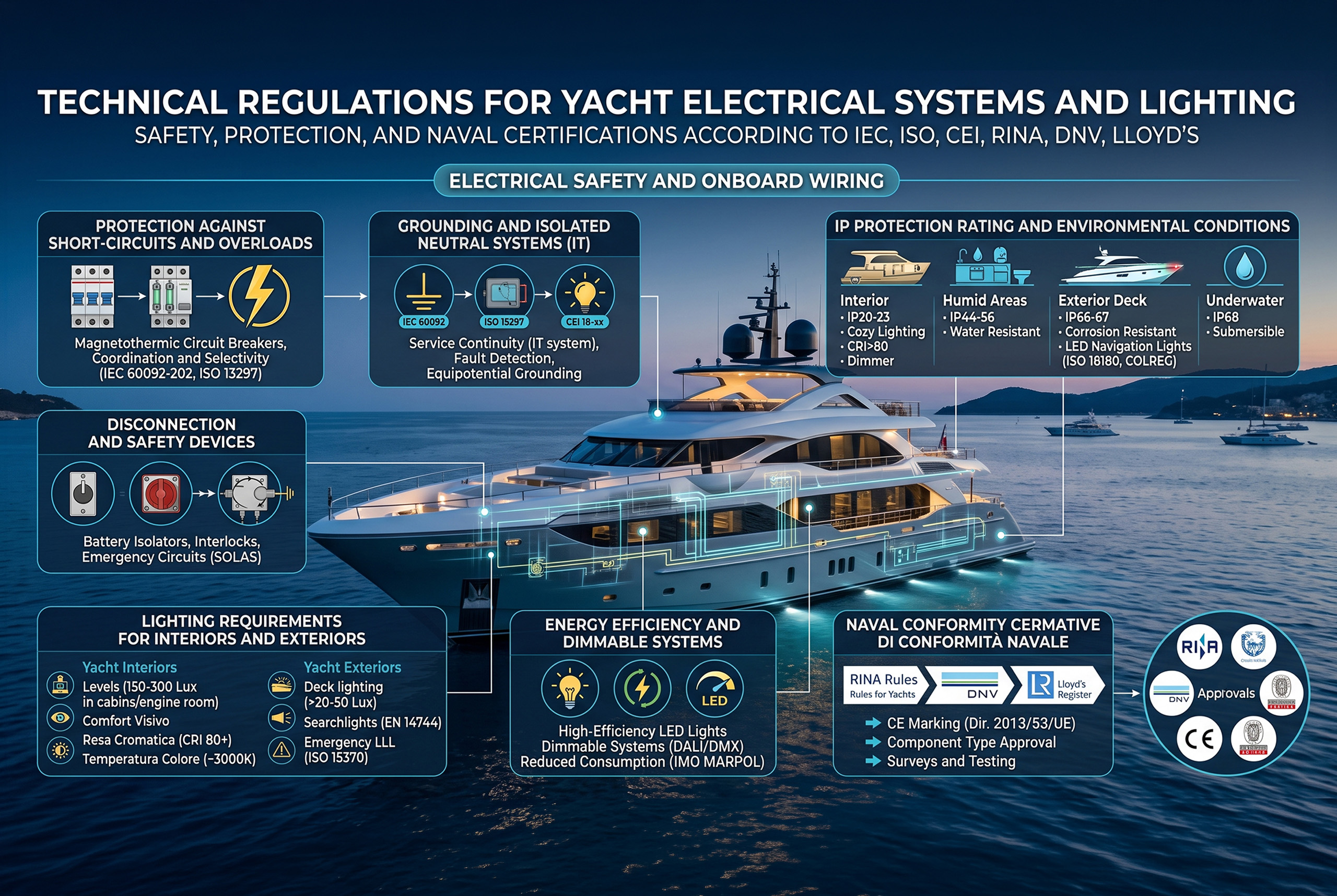
Technical Regulations for Electrical Systems and Lighting in Yachts Electrical safety, visual comfort and ship compliance according to IEC, ISO, CEI, RINA and DNV standards. Electrical Safety and Wiring in On-Board Systems The electrical systems on board yachts must meet strict international regulations to ensure safety against electrocution, fire and breakdowns. The IEC 60092 series  (adopted in Italy as **CEI 18-**xx) is the main reference for naval installations, providing general design requirements and protection criteria in line with international conventions…
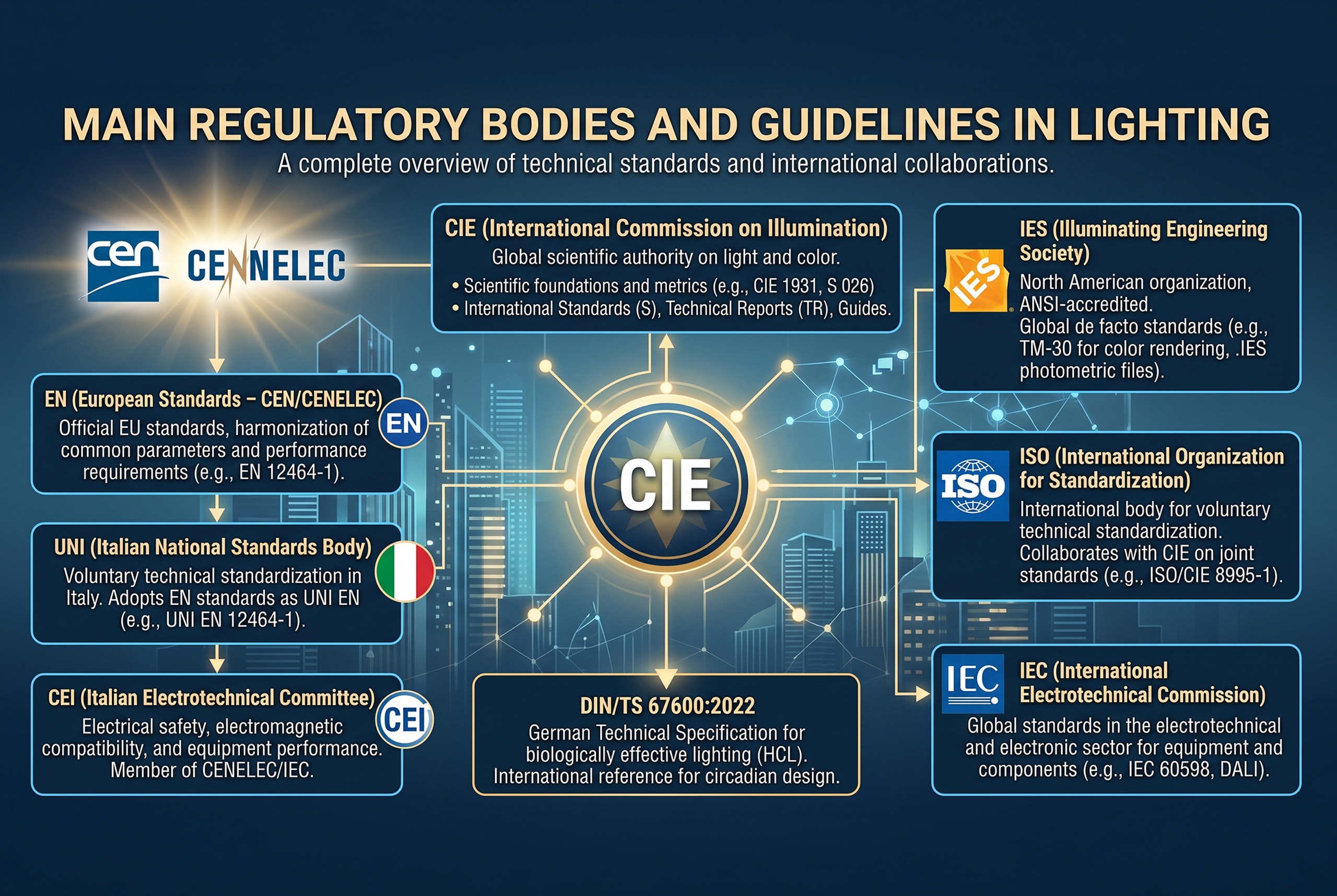
Main Regulatory Bodies and Guidelines in Lighting Technology A comprehensive framework on technical standards, international collaborations and key documents for designing light according to scientific and performance criteria. CIE (International Commission on Enlightenment) Regulatory role and authority - The CIE (Commission Internationale de l'Éclairage) is recognized as the leading international scientific authority in the field of light, color and lighting. Founded in 1913, it is an independent, non-governmental, non-profit organization that operates as a global reference body for the definition…
Standard-Technical-Memoranda-(TM)-dell’IES-Codici,-Struttura-e-Implicazioni-Progettuali_Copertina-eng
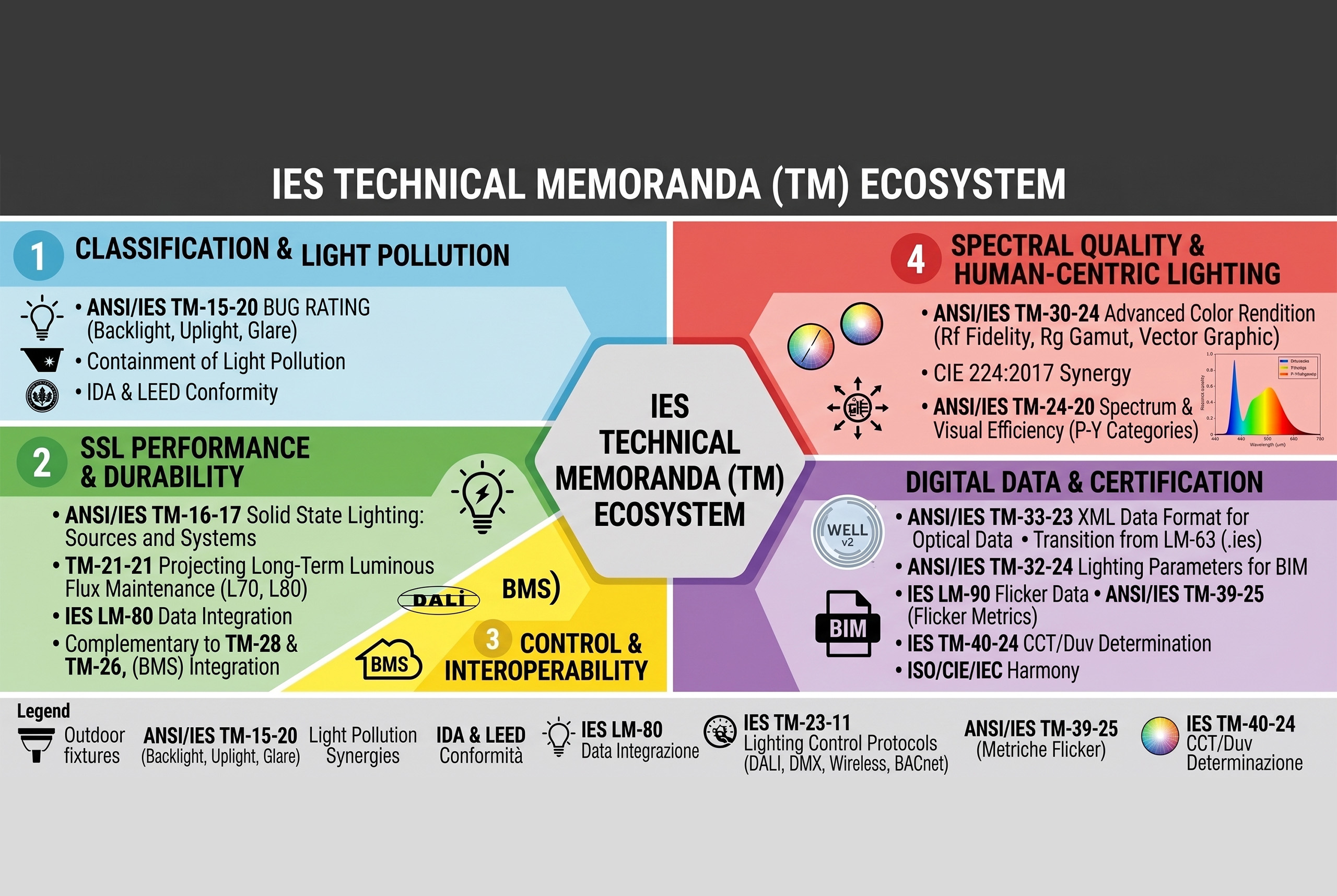
IES Standard Technical Memoranda (TM): Codes, Structure, and Design Implications A technical guide to the use and interpretation of TM documents in lighting design The following insight is dedicated to the Technical Memoranda (TM) published by Illuminating Engineering Society (IES), a collection of technical documents that define methodologies, evaluation criteria and operational guidelines on specific and emerging issues in the field of lighting technology each document is identified by a unique code in the format ANSI/IES TM-##-YY, in which the…
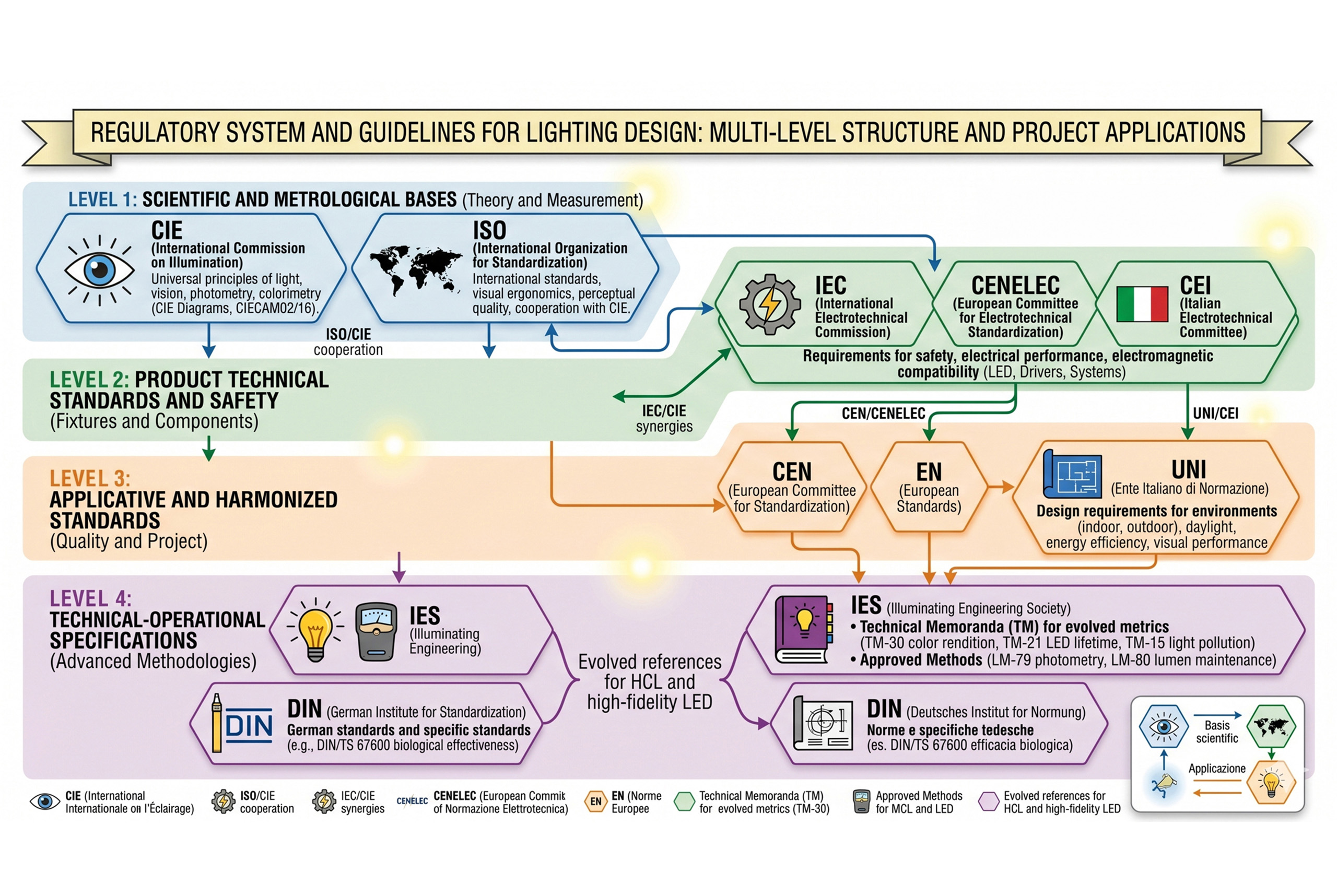
Authoritative Standards and Guidelines in Lighting Technology: Multilevel Structure and Design Applications A complex regulatory system for designing light with technical rigor and application coherence The evolution of light sources – in particular the capillary diffusion of composite spectrum LEDs – has brought about a radical transformation in the way of design, evaluate and regulate the light. As highlighted in the discussion on CIE diagram 1931, the traditional chromatic instruments, while retaining a role historical and regulatory, are revealed today…
With the advent of LED sources, can we define the 1931 CIE diagram as obsolete? Formally no, but practically yes, in many application contexts. Now that we have understood how the spectral distribution of light influences the color rendering, visual perception and biological effects of light radiation, it is necessary to introduce a fundamental tool to represent and quantify the color of light: the chromaticity diagram. To fully understand the color perception in lighting design, it is of fundamental importance…
digital light and perceived thresholds - cover
Digital Lighting and Visual Perception: the Dissolution of the See/Understand Relationship How electric light is changing the relationship between seeing, experiencing, and understanding the world In today's era of digital enlightenment, characterized by bright screens, sensors and omnipresent LED sources, a crisis is emerging in the traditional paradigm according to which seeing is equivalent to understanding. For centuries, the light It has been a privileged metaphor for truth and knowledge (the "lights" of reason, spiritual enlightenment): "light presents itself as…
Electroluminescence Process in LED Semiconductor Devices
How LEDs Work: Electroluminescence, Materials, and the Light Spectrum From semiconductor structure to color rendering: how LED light takes shape Visible light, although perceived as a continuous and unified phenomenon, is actually composed of a multiplicity of wavelengths, each corresponding to a specific stimulation of the visual system. The ability of a light source to ensure natural vision and accurate color rendering depends on its spectral distribution, namely on how luminous energy is distributed within the visible spectrum, ranging approximately…
Fundamental Properties of Electromagnetic-Waves Amplitude and Wavelength
Visible Light and the Electromagnetic Spectrum: Physical Principles for Lighting Design How wavelengths influence perception, color, and light design After examining how the human eye adapts to different illumination levels through photopic, scotopic, and mesopic visual modes, and after exploring the non-visual effects of light on the melanopic system and circadian balance, it is now necessary to take a step back in order to understand the physical nature of light. To design light correctly, in fact, it is not enough…
Visual Signal Transmission Pathway in the Human Retina
Photopic vs Melanopic Illuminance: Definition and Spectral Sensitivity MEDI, EML, and CS. Three essential indicators for measuring the circadian impact of artificial light The perception of light varies according to illumination levels and activates different visual mechanisms. Depending on ambient luminance, the human eye enters a state of photopic, scotopic, or mesopic vision, each mediated by specific photoreceptors and characterized by different perceptual responses. Understanding which visual dominance prevails within a given context is essential for designing coherent lighting scenarios,…
Light Perception Human Eye Capabilities and Limitations
Light Perception: Capabilities and Limits of the Human Eye Understanding how the human eye works is the first step toward designing light with awareness  The human eye is a highly evolved organ, capable of adapting to extreme lighting conditions, distinguishing details with remarkable precision, perceiving a wide chromatic range, and detecting movement with great sensitivity. However, it also presents physiological limitations, such as slow adaptation to darkness, loss of color perception under low-light conditions, sensitivity to glare, and reduced sharpness…
Lighting-Design-e-Teoria-della-Luce
Lighting Design and Light Theory Complexity in the relationship between light, perception, and design   How does a lighting designer develop a lighting project? Which disciplines should a rigorous lighting design study rely upon? How can lighting design improve visual comfort, reduce energy consumption, and enhance the value of a space? Why is it essential for light to be designed in relation to the different activities and functions taking place within an environment? To address these questions, understanding only the…
MENU