Light Perception - Capabilities and Limits of the Human Eye

Light Perception: Capabilities and Limits of the Human Eye

Understanding how the human eye works is the first step toward designing light with awareness 

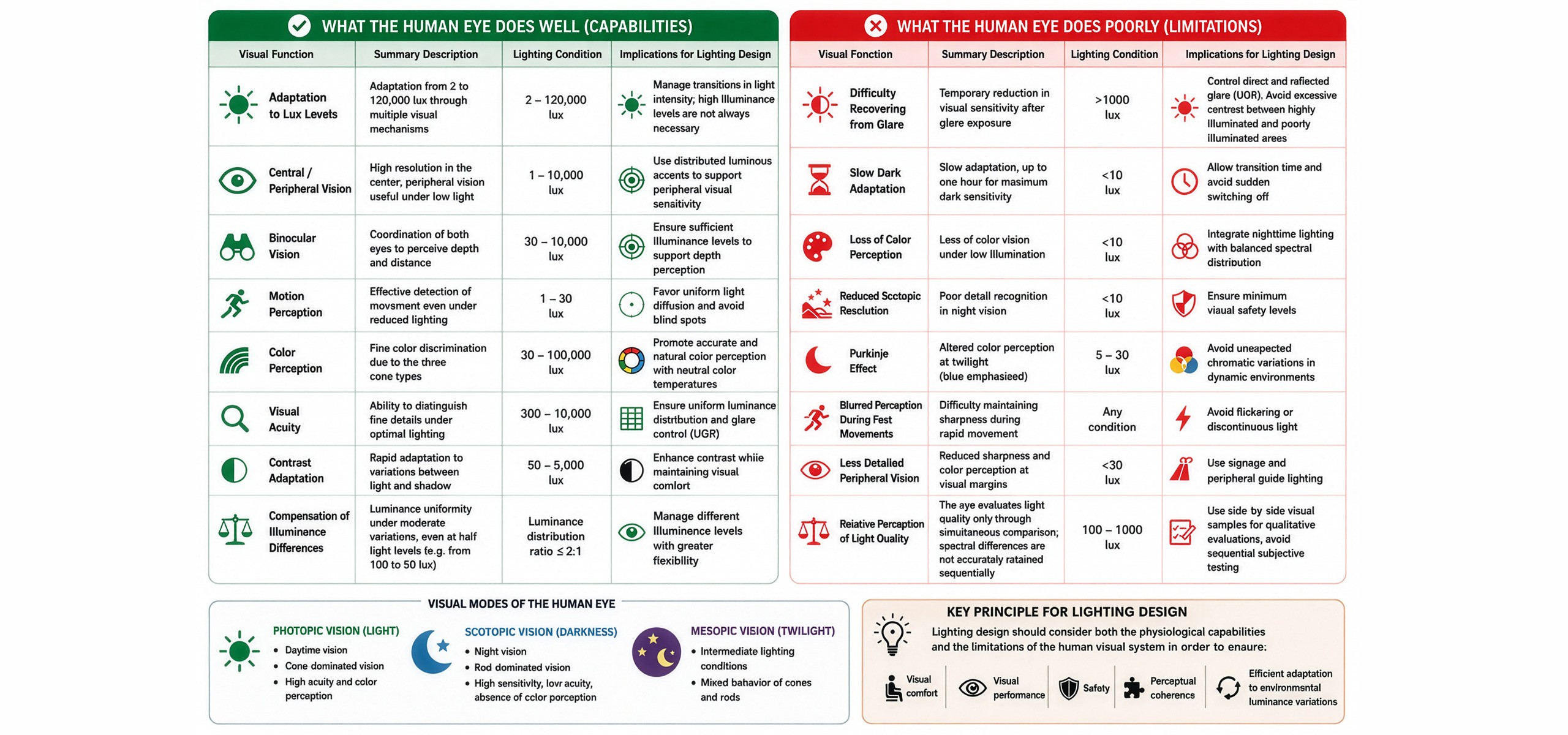
The human eye is a highly evolved organ, capable of adapting to extreme lighting conditions, distinguishing details with remarkable precision, perceiving a wide chromatic range, and detecting movement with great sensitivity. However, it also presents physiological limitations, such as slow adaptation to darkness, loss of color perception under low-light conditions, sensitivity to glare, and reduced sharpness in peripheral and night vision.

These characteristics highlight the importance of designing environments with optimal lighting conditions, balancing natural and artificial light in order to ensure maximum visual comfort and perceptual well-being. Among the functions that the eye performs with particular efficiency are:

Wide adaptation capability to illuminance levels: the eye is able to operate under extremely variable illuminance conditions, ranging from approximately 2 lux (illumination produced by a full moon on a clear night) up to 120,000 lux (direct sunlight under clear sky conditions at midday). This adaptation is made possible through three main visual mechanisms.

The first is pupillary regulation, which occurs through the iris and determines the contraction (miosis) or dilation (mydriasis) of the pupil, modulating the amount of light entering the retina. However, this regulation is limited to a factor of approximately 16:1, which is why two additional processes become necessary.

The second mechanism is retinal adaptation, which regulates the sensitivity of photoreceptors by modifying the concentration and regeneration cycle of visual pigments in cones and rods.

The third and more sophisticated level of adaptation is neurological, allowing the brain to process and enhance image contrast and details under variable lighting conditions.

Thanks to this combination of processes, the human eye can adapt to brightness variations exceeding a ratio of 100,000:1, ensuring effective visual perception across extremely diverse environments.

Binocular vision and depth perception: the ability to coordinate both eyes enables three-dimensional vision, allowing accurate perception of object distance and depth. This is essential for everyday activities such as grasping objects, driving, or evaluating movement speed.

Dynamic perception and motion detection: thanks to the action of rods, the eye is highly sensitive to movement within the environment, even under low-light conditions. This evolutionary advantage allows rapid detection of moving objects or people, improving reflexes and responsiveness.

Wide chromatic range and color perception: due to the presence of three types of cones sensitive to specific wavelengths (red, green, and blue), the human eye can perceive millions of color shades. Furthermore, it is particularly sensitive to yellow-green wavelengths (~550 nm), which are perceived with maximum intensity.

Visual acuity and the ability to distinguish detail: under optimal lighting conditions, the human eye can distinguish details down to 1 arc minute (that is, the ability to resolve two points separated by only 0.017° of visual angle). This is fundamental for activities such as reading or observing distant objects.

Ability to adapt to contrast variations: the human eye can rapidly adapt to changes in contrast between light and shadow, improving the perception of object shape and structure even under non-optimal lighting conditions.

Ability to compensate for moderate illuminance differences within the visual field: thanks to sophisticated retinal adaptation mechanisms and perceptual-cortical integration. This allows the observer to perceive as uniform a luminous distribution that actually presents significant gradients. For example, a central area illuminated at 100 lux and a peripheral area at 50 lux may still be visually interpreted as homogeneous.

This capability makes it possible to design environments with luminous distributions that are not perfectly uniform — even with ratios up to 2:1 — without compromising visual comfort, since the perceptual system compensates for these discontinuities and reconstructs a coherent and continuous visual scene.
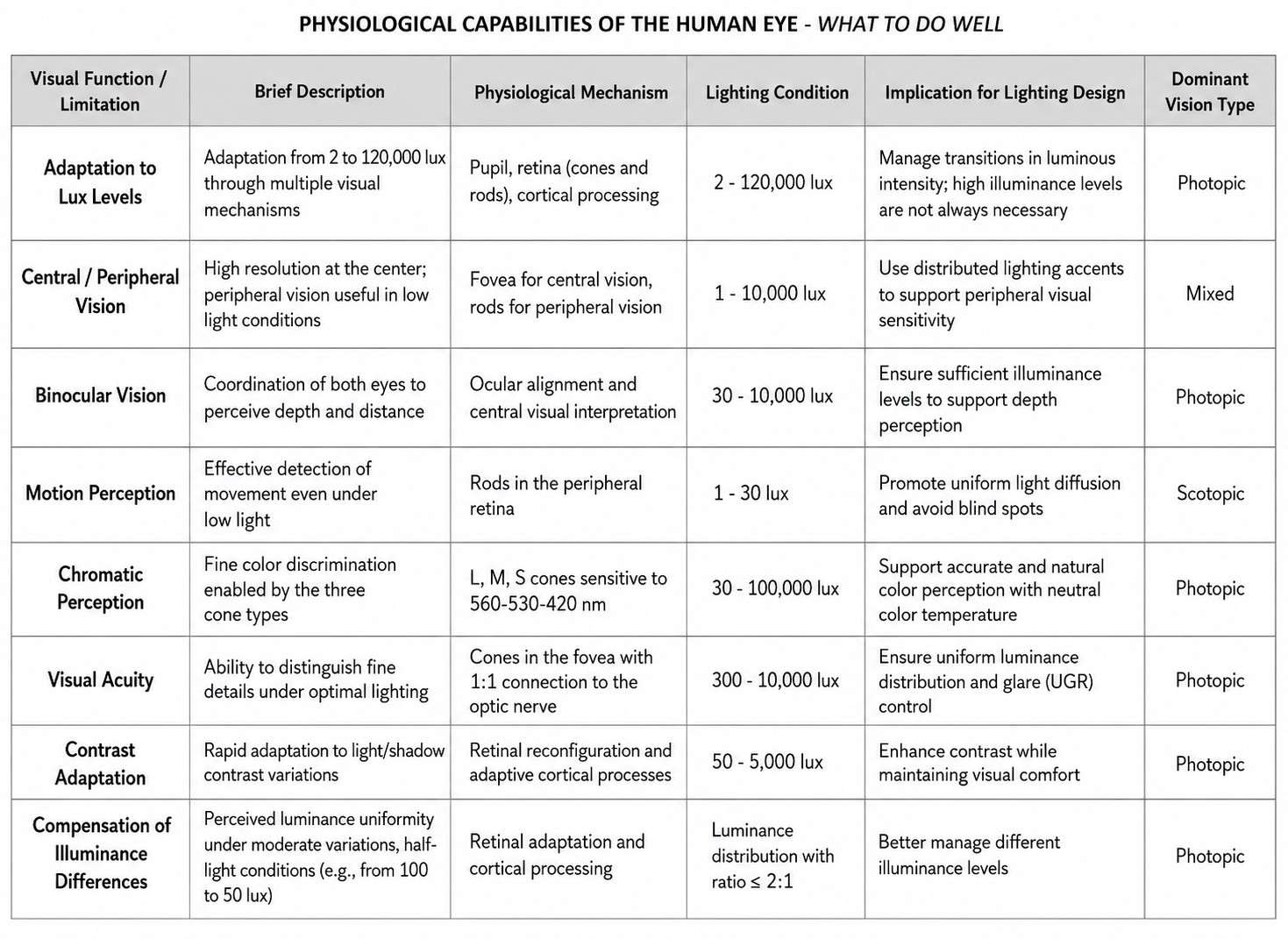
Capabilities of the Human Eye (eng)

Despite these extraordinary capabilities, the human eye also presents certain difficulties in specific situations, which may influence the quality of vision:

Difficulty in rapid dark adaptation: while adaptation to bright light is very fast (only a few seconds thanks to neurological mechanisms), adaptation to darkness requires considerably more time. Cones adapt in approximately 7 minutes, whereas rods, responsible for night vision, may require up to one hour to reach maximum sensitivity.

Loss of color perception under low-light conditions: in poorly illuminated environments, cones cease functioning effectively, leaving vision to the rods, which cannot distinguish colors. This results in the typical black-and-white perception associated with night vision.

Difficulty recovering from glare: sudden exposure to intense light (such as car headlights at night) can temporarily saturate retinal receptors, reducing visual capacity for several seconds. The eye requires a variable amount of time to readapt to normal luminance conditions.

Reduced spatial resolution in scotopic vision: during night vision, the eye cannot distinguish fine details with the same precision as in daylight conditions. This is because rods, located primarily in the retinal periphery, do not have a direct 1:1 connection with the optic nerve as cones do, but instead transmit grouped signals, reducing image sharpness.

Purkinje effect and altered color perception at twilight: under intermediate lighting levels, visual sensitivity shifts toward shorter wavelengths. This means that blue appears more intense than red at dawn and dusk, altering the natural perception of colors.

Difficulty maintaining a stable image during rapid movement: although the eye is highly effective at tracking moving objects, under conditions of extremely rapid motion visual perception may become blurred or distorted.

Peripheral vision with lower detail resolution: while the central part of the retina (the fovea) is highly specialized for detailed vision, peripheral vision is less sharp and less sensitive to colors. This explains why, under low-light conditions, it is often more effective to detect an object using peripheral vision rather than looking directly at it.

Adaptation difficulties under artificial light with limited spectral distribution: the eye is optimized for natural light, which possesses a continuous and balanced spectrum. Under monochromatic artificial lighting or light sources with reduced spectral components, both color perception and visual comfort may be compromised.

Difficulty in accurately evaluating light quality (in terms of spectrum, color rendering, or color temperature) without a direct and simultaneous comparison between two light sources: the visual mechanisms responsible for chromatic perception operate primarily in a comparative mode. The observer can distinguish qualitative differences only when light sources are positioned side by side within the visual field, enabling immediate comparison.

If, on the contrary, two light sources are observed sequentially (one after the other), the visual system does not retain the spectral characteristics of the first source with sufficient precision, making subjective evaluation unreliable. Nevertheless, the eye can perceive certain differences in a rough manner — for example between warm and cool light, or between flat and more brilliant light. These distinctions are possible only when the variation is sufficiently pronounced, but they do not allow the observer to fully perceive more refined aspects such as color fidelity, hue saturation, or the coherence of the emitted spectrum.
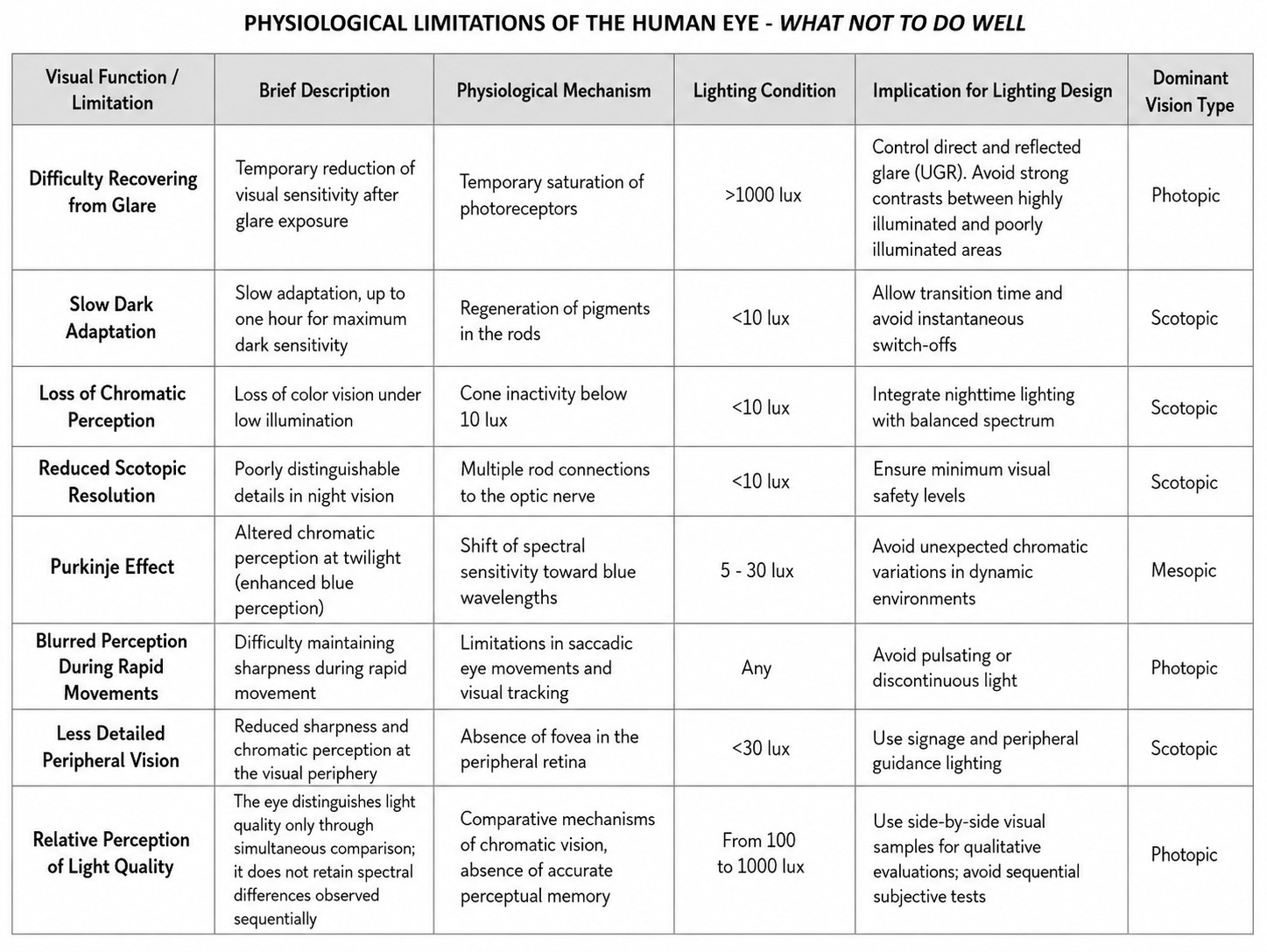

Limits of the Human Eye (eng)

Light Perception - Capabilities and Limits of the Human Eye

Light Perception: Capabilities and Limits of the Human Eye

Understanding how the human eye works is the first step toward designing light with awareness 

The human eye is a highly evolved organ, capable of adapting to extreme lighting conditions, distinguishing details with remarkable precision, perceiving a wide chromatic range, and detecting movement with great sensitivity. However, it also presents physiological limitations, such as slow adaptation to darkness, loss of color perception under low-light conditions, sensitivity to glare, and reduced sharpness in peripheral and night vision.

These characteristics highlight the importance of designing environments with optimal lighting conditions, balancing natural and artificial light in order to ensure maximum visual comfort and perceptual well-being. Among the functions that the eye performs with particular efficiency are:

Wide adaptation capability to illuminance levels: the eye is able to operate under extremely variable illuminance conditions, ranging from approximately 2 lux (illumination produced by a full moon on a clear night) up to 120,000 lux (direct sunlight under clear sky conditions at midday). This adaptation is made possible through three main visual mechanisms.

The first is pupillary regulation, which occurs through the iris and determines the contraction (miosis) or dilation (mydriasis) of the pupil, modulating the amount of light entering the retina. However, this regulation is limited to a factor of approximately 16:1, which is why two additional processes become necessary.

The second mechanism is retinal adaptation, which regulates the sensitivity of photoreceptors by modifying the concentration and regeneration cycle of visual pigments in cones and rods.

The third and more sophisticated level of adaptation is neurological, allowing the brain to process and enhance image contrast and details under variable lighting conditions.

Thanks to this combination of processes, the human eye can adapt to brightness variations exceeding a ratio of 100,000:1, ensuring effective visual perception across extremely diverse environments.

Binocular vision and depth perception: the ability to coordinate both eyes enables three-dimensional vision, allowing accurate perception of object distance and depth. This is essential for everyday activities such as grasping objects, driving, or evaluating movement speed.

Dynamic perception and motion detection: thanks to the action of rods, the eye is highly sensitive to movement within the environment, even under low-light conditions. This evolutionary advantage allows rapid detection of moving objects or people, improving reflexes and responsiveness.

Wide chromatic range and color perception: due to the presence of three types of cones sensitive to specific wavelengths (red, green, and blue), the human eye can perceive millions of color shades. Furthermore, it is particularly sensitive to yellow-green wavelengths (~550 nm), which are perceived with maximum intensity.

Visual acuity and the ability to distinguish detail: under optimal lighting conditions, the human eye can distinguish details down to 1 arc minute (that is, the ability to resolve two points separated by only 0.017° of visual angle). This is fundamental for activities such as reading or observing distant objects.

Ability to adapt to contrast variations: the human eye can rapidly adapt to changes in contrast between light and shadow, improving the perception of object shape and structure even under non-optimal lighting conditions.

Ability to compensate for moderate illuminance differences within the visual field: thanks to sophisticated retinal adaptation mechanisms and perceptual-cortical integration. This allows the observer to perceive as uniform a luminous distribution that actually presents significant gradients. For example, a central area illuminated at 100 lux and a peripheral area at 50 lux may still be visually interpreted as homogeneous.

This capability makes it possible to design environments with luminous distributions that are not perfectly uniform — even with ratios up to 2:1 — without compromising visual comfort, since the perceptual system compensates for these discontinuities and reconstructs a coherent and continuous visual scene.

Capabilities of the Human Eye (eng)

Despite these extraordinary capabilities, the human eye also presents certain difficulties in specific situations, which may influence the quality of vision:

Difficulty in rapid dark adaptation: while adaptation to bright light is very fast (only a few seconds thanks to neurological mechanisms), adaptation to darkness requires considerably more time. Cones adapt in approximately 7 minutes, whereas rods, responsible for night vision, may require up to one hour to reach maximum sensitivity.

Loss of color perception under low-light conditions: in poorly illuminated environments, cones cease functioning effectively, leaving vision to the rods, which cannot distinguish colors. This results in the typical black-and-white perception associated with night vision.

Difficulty recovering from glare: sudden exposure to intense light (such as car headlights at night) can temporarily saturate retinal receptors, reducing visual capacity for several seconds. The eye requires a variable amount of time to readapt to normal luminance conditions.

Reduced spatial resolution in scotopic vision: during night vision, the eye cannot distinguish fine details with the same precision as in daylight conditions. This is because rods, located primarily in the retinal periphery, do not have a direct 1:1 connection with the optic nerve as cones do, but instead transmit grouped signals, reducing image sharpness.

Purkinje effect and altered color perception at twilight: under intermediate lighting levels, visual sensitivity shifts toward shorter wavelengths. This means that blue appears more intense than red at dawn and dusk, altering the natural perception of colors.

Difficulty maintaining a stable image during rapid movement: although the eye is highly effective at tracking moving objects, under conditions of extremely rapid motion visual perception may become blurred or distorted.

Peripheral vision with lower detail resolution: while the central part of the retina (the fovea) is highly specialized for detailed vision, peripheral vision is less sharp and less sensitive to colors. This explains why, under low-light conditions, it is often more effective to detect an object using peripheral vision rather than looking directly at it.

Adaptation difficulties under artificial light with limited spectral distribution: the eye is optimized for natural light, which possesses a continuous and balanced spectrum. Under monochromatic artificial lighting or light sources with reduced spectral components, both color perception and visual comfort may be compromised.

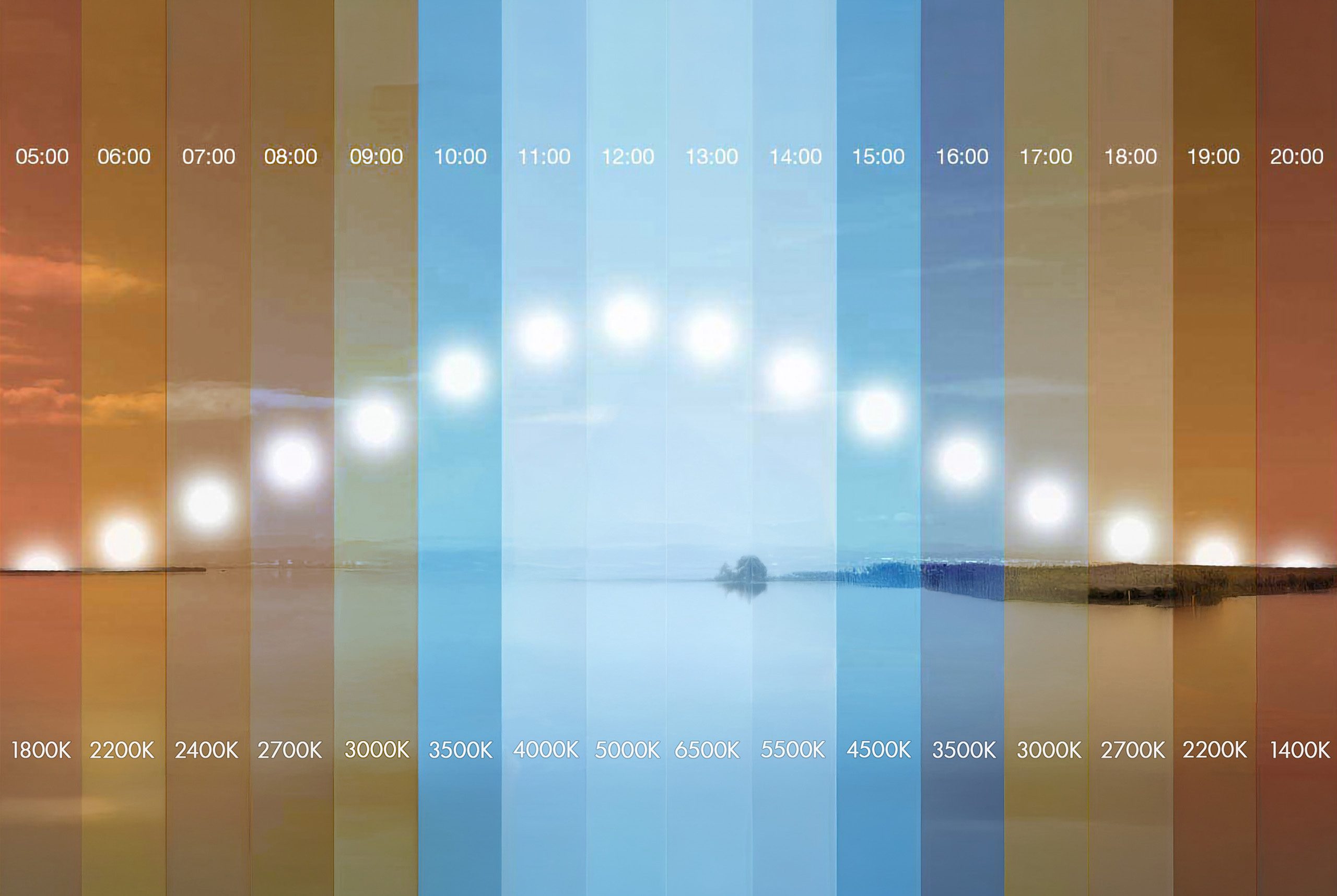
Difficulty in accurately evaluating light quality (in terms of spectrum, color rendering, or color temperature) without a direct and simultaneous comparison between two light sources: the visual mechanisms responsible for chromatic perception operate primarily in a comparative mode. The observer can distinguish qualitative differences only when light sources are positioned side by side within the visual field, enabling immediate comparison.

If, on the contrary, two light sources are observed sequentially (one after the other), the visual system does not retain the spectral characteristics of the first source with sufficient precision, making subjective evaluation unreliable. Nevertheless, the eye can perceive certain differences in a rough manner — for example between warm and cool light, or between flat and more brilliant light. These distinctions are possible only when the variation is sufficiently pronounced, but they do not allow the observer to fully perceive more refined aspects such as color fidelity, hue saturation, or the coherence of the emitted spectrum.
Limits of the Human Eye (eng)

Other Lighting Post

Other Lighting Post

This section brings together a comprehensive body of theoretical, scientific, and design insights into the theory of light applied to lighting design, systematically addressing the complex relationship between light, visual perception, and spatial design. The content develops the physical foundations of light, an understanding of the mechanisms of human vision, the differences between photopic and melanopic illuminance, and the biological impact of artificial light, integrating advanced metrics and contemporary interpretation criteria.

The page also explores the functioning of LED sources, the spectral and perceptual implications of solid-state light, the evolution of color rendering criteria, and the growing role of light as an informational and perceptual system, capable of influencing behavior, comfort, and the quality of spatial experience.

Ample space is dedicated to the relevant regulatory and technical framework, international standards, sustainability protocols, and control systems, understood as essential tools for rigorous, measurable, and consistent design.

Overall, the section provides a vision of the theory of light as the cultural and operational basis of lighting design, in which scientific knowledge, perceptual awareness, and design method converge to guide the lighting designer in the construction of balanced, legible, and qualitatively significant spaces.

This section brings together a comprehensive body of theoretical, scientific, and design insights into the theory of light applied to lighting design, systematically addressing the complex relationship between light, visual perception, and spatial design. The content develops the physical foundations of light, an understanding of the mechanisms of human vision, the differences between photopic and melanopic illuminance, and the biological impact of artificial light, integrating advanced metrics and contemporary interpretation criteria.

The page also explores the functioning of LED sources, the spectral and perceptual implications of solid-state light, the evolution of color rendering criteria, and the growing role of light as an informational and perceptual system, capable of influencing behavior, comfort, and the quality of spatial experience.

Ample space is dedicated to the relevant regulatory and technical framework, international standards, sustainability protocols, and control systems, understood as essential tools for rigorous, measurable, and consistent design.

Overall, the section provides a vision of the theory of light as the cultural and operational basis of lighting design, in which scientific knowledge, perceptual awareness, and design method converge to guide the lighting designer in the construction of balanced, legible, and qualitatively significant spaces.

Beyond the CRI: The New Era of Colour Rendering in Architectural Light How Rf and Rg redefine color rendering for a light designed on the visual experience Continuing the analysis…
Dalla-Percezione-alla-Funzione-L’Influenza-della-Temperatura-di-Colore-sullo-Spazio-Illuminato-copertina
From Perception to Function: The Influence of Color Temperature on Illuminated Space Color temperature as a perceptual language: designing atmospheres, guiding vision and shaping space After exploring the scientific bases,…
La-luce-che-informa-rivoluzione-o-rischio-per-il-futuro-dell’illuminazione-copertina-eng
The Light That Informs: Revolution or Risk for the Future of Lighting? μPLS and microLED between innovation and danger of visual excess Historically, we are used to thinking of artificial…
Differences Between Traditional LEDs and μPLS by Nichia: From the Car to the City, the Path of the Digital Light Engine From road safety to smart city: μPLS and high-resolution…
The Silent Revolution of LEDs: The Crisis of Seeing in the Age of Solid-State Lighting From Daylight to Electrical Simulation, Digital Lighting Redefines Perception, Dissolving the Link Between Visual Experience…
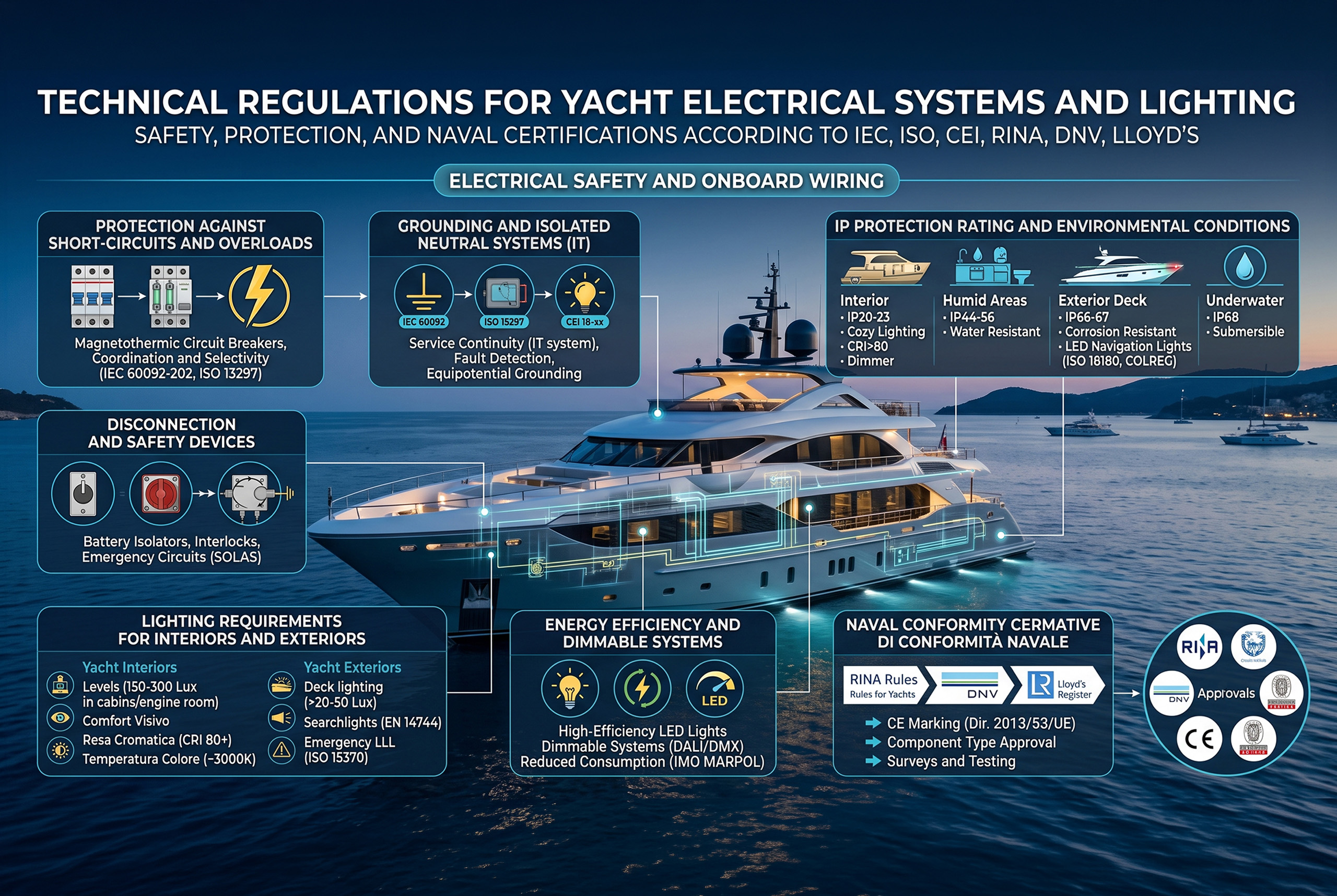
Technical Regulations for Electrical Systems and Lighting in Yachts Electrical safety, visual comfort and ship compliance according to IEC, ISO, CEI, RINA and DNV standards. Electrical Safety and Wiring in…
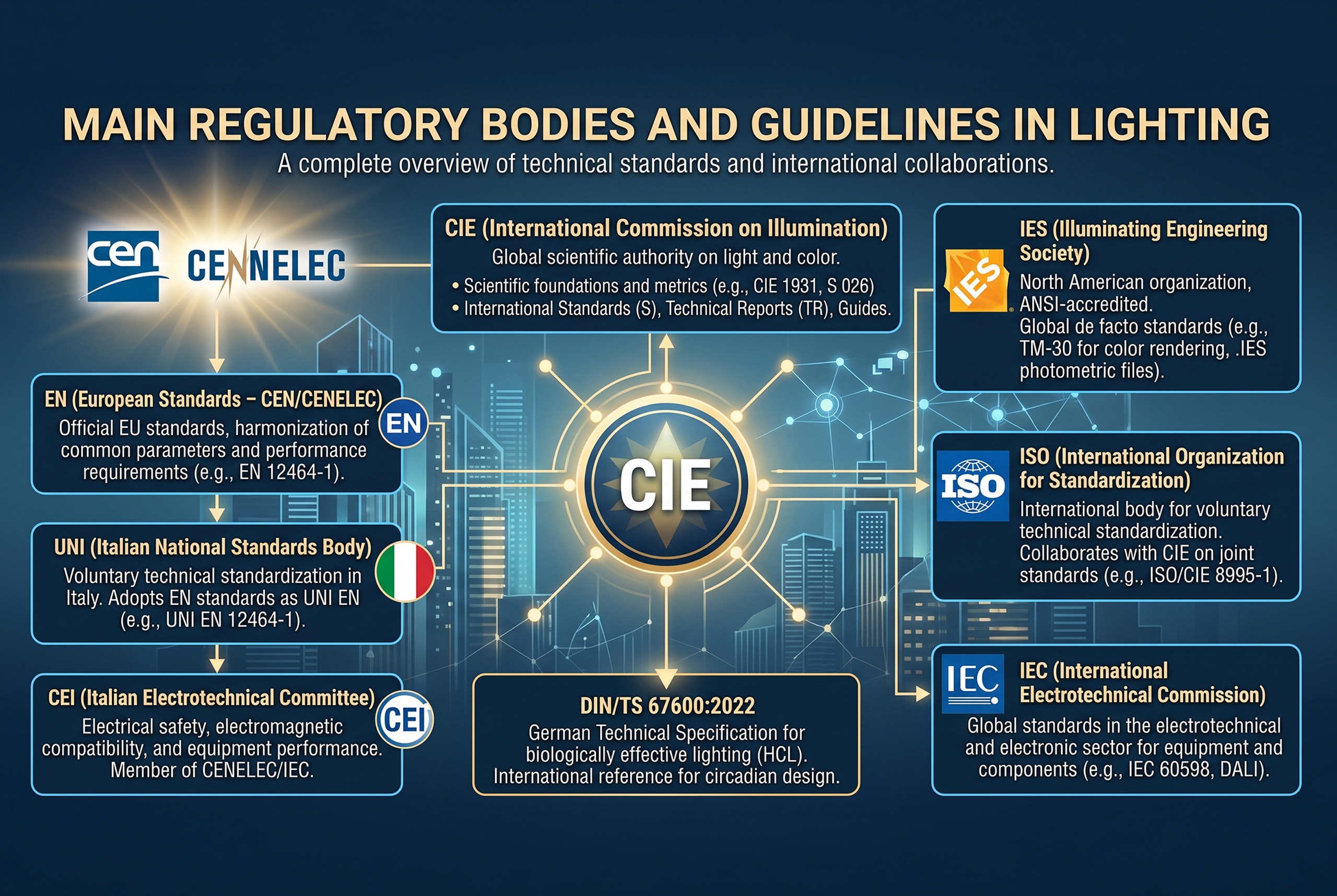
Main Regulatory Bodies and Guidelines in Lighting Technology A comprehensive framework on technical standards, international collaborations and key documents for designing light according to scientific and performance criteria. CIE (International…
Standard-Lighting-Measurements-(LM)-dell’IES-Codici,-Struttura-e-Implicazioni-Progettuali_Copertina-eng
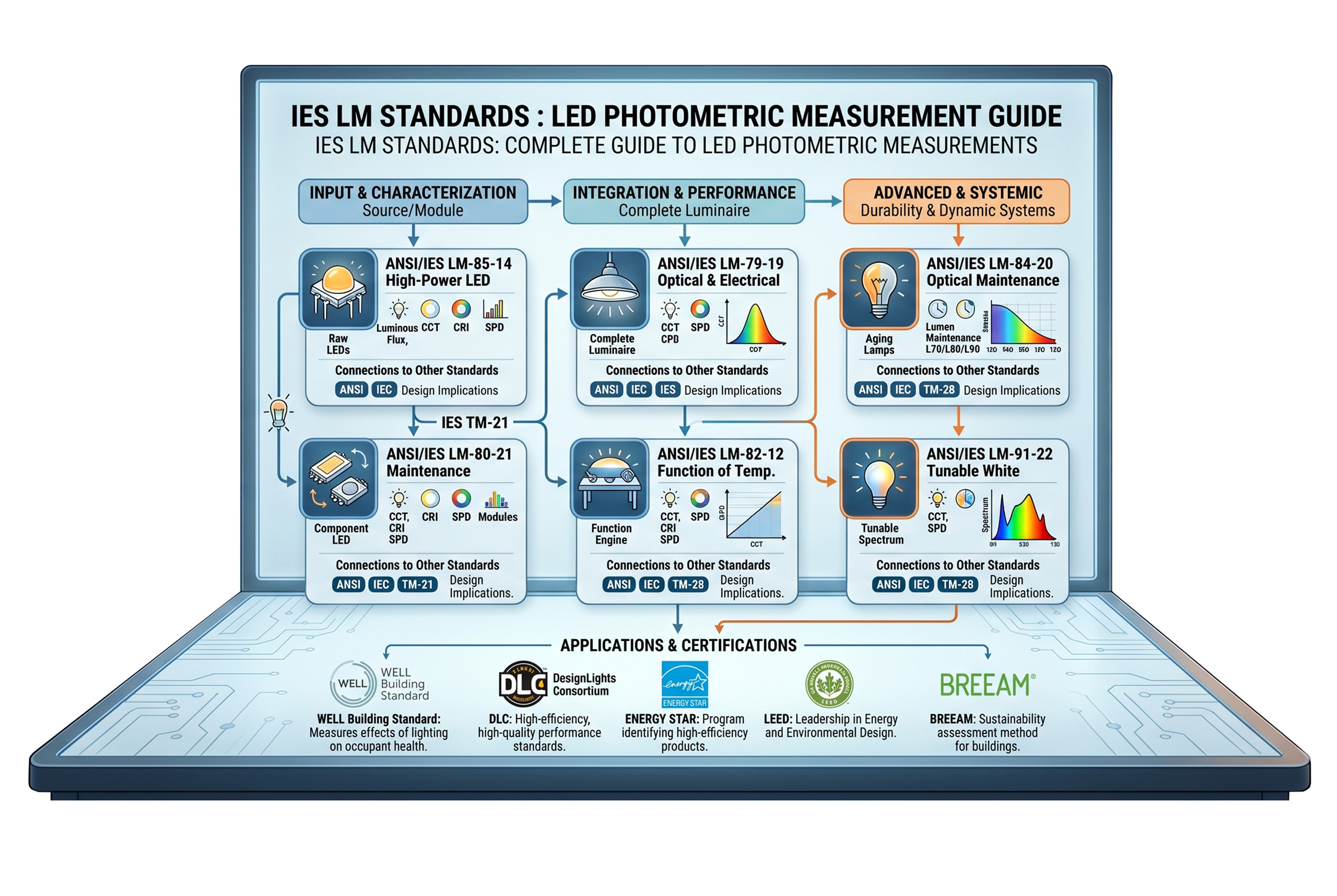
IES Standard Lighting Measurements (LM): Codes, Structure, and Design Implications Technical guide to LM standards for measuring the photometric, chromatic, and electrical performance of LEDs, modules, and luminaires. After having…
Standard-Technical-Memoranda-(TM)-dell’IES-Codici,-Struttura-e-Implicazioni-Progettuali_Copertina-eng
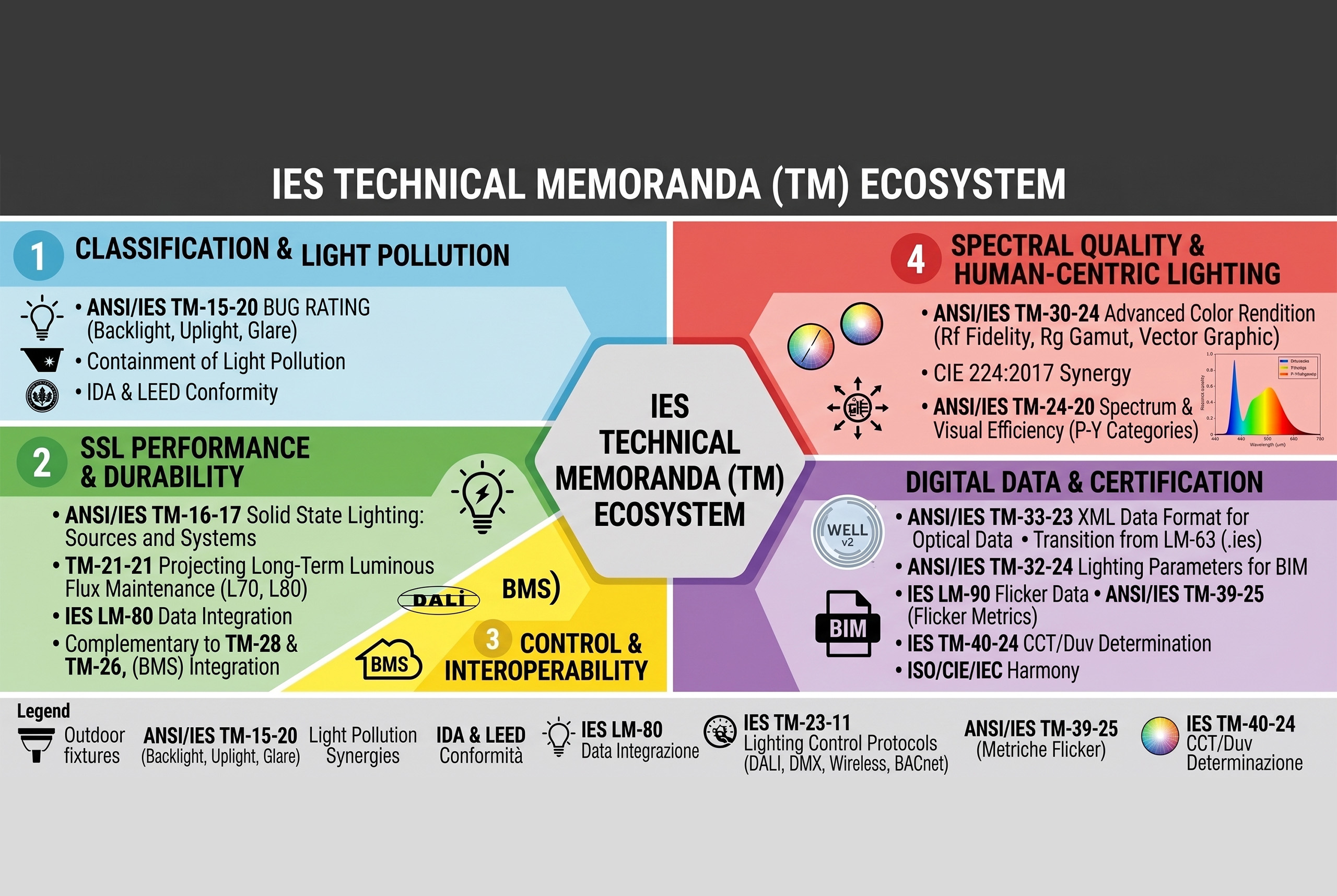
IES Standard Technical Memoranda (TM): Codes, Structure, and Design Implications A technical guide to the use and interpretation of TM documents in lighting design The following insight is dedicated to…
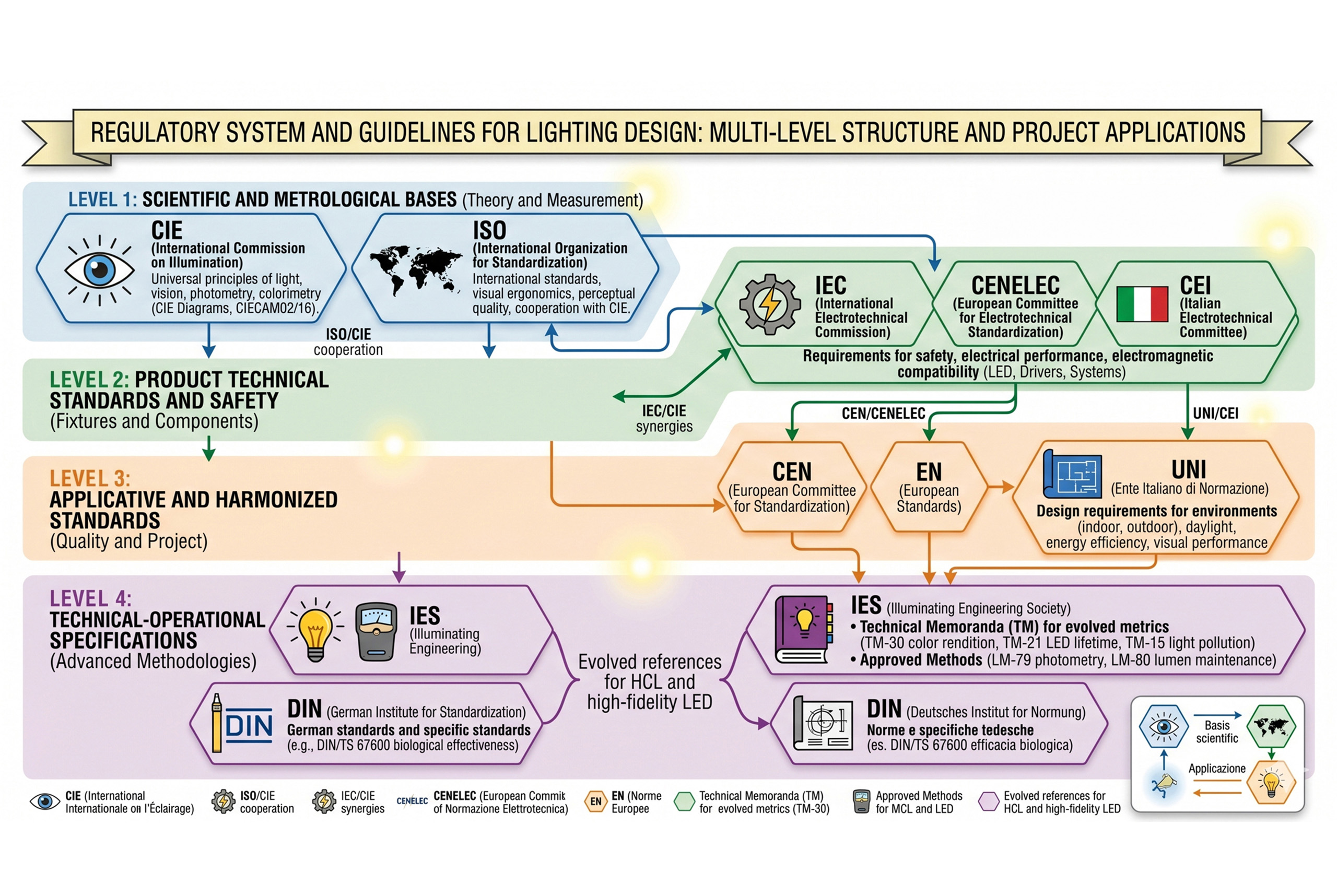
Authoritative Standards and Guidelines in Lighting Technology: Multilevel Structure and Design Applications A complex regulatory system for designing light with technical rigor and application coherence The evolution of light sources…
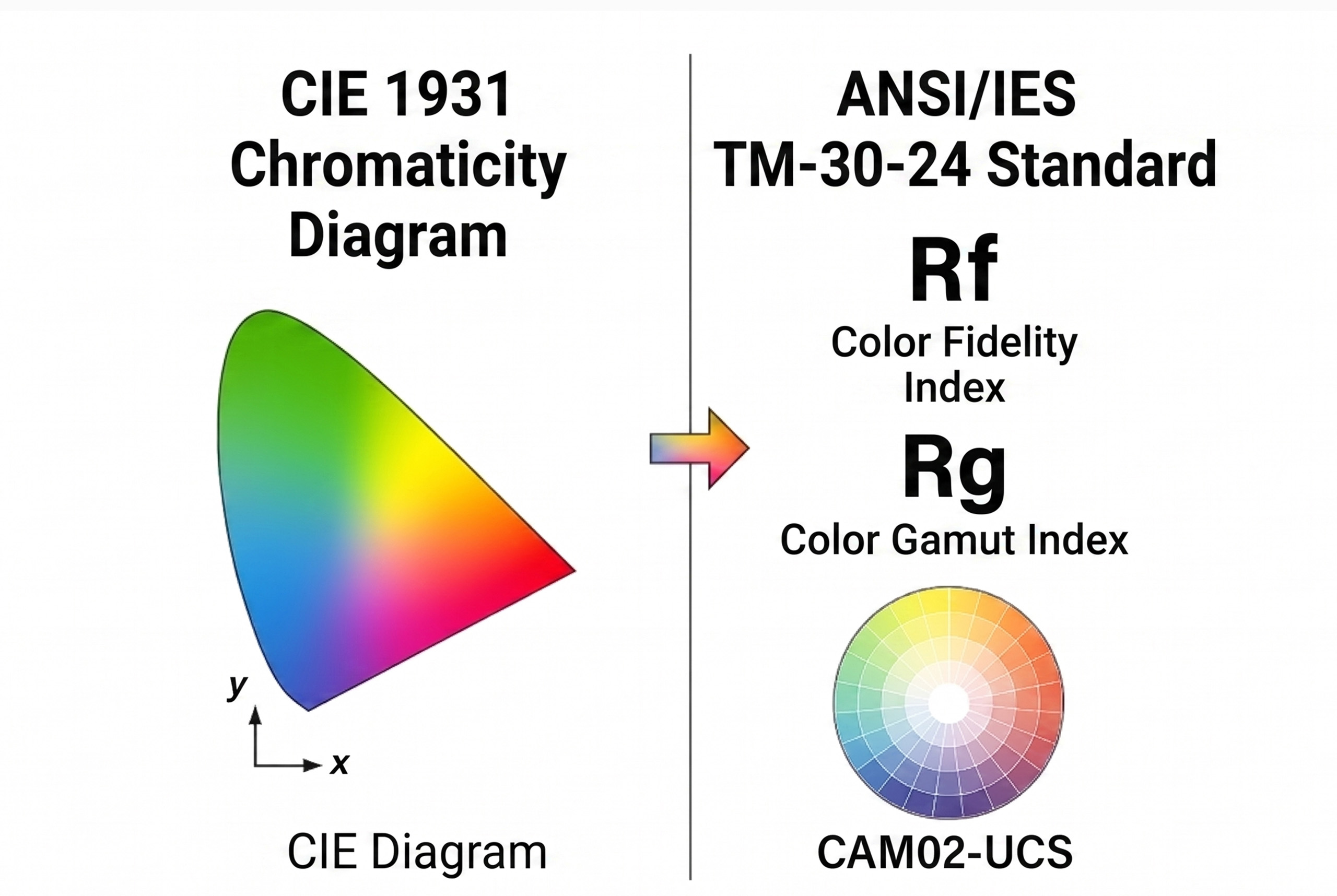
With the advent of LED sources, can we define the 1931 CIE diagram as obsolete? Formally no, but practically yes, in many application contexts. Now that we have understood how…
digital light and perceived thresholds - cover
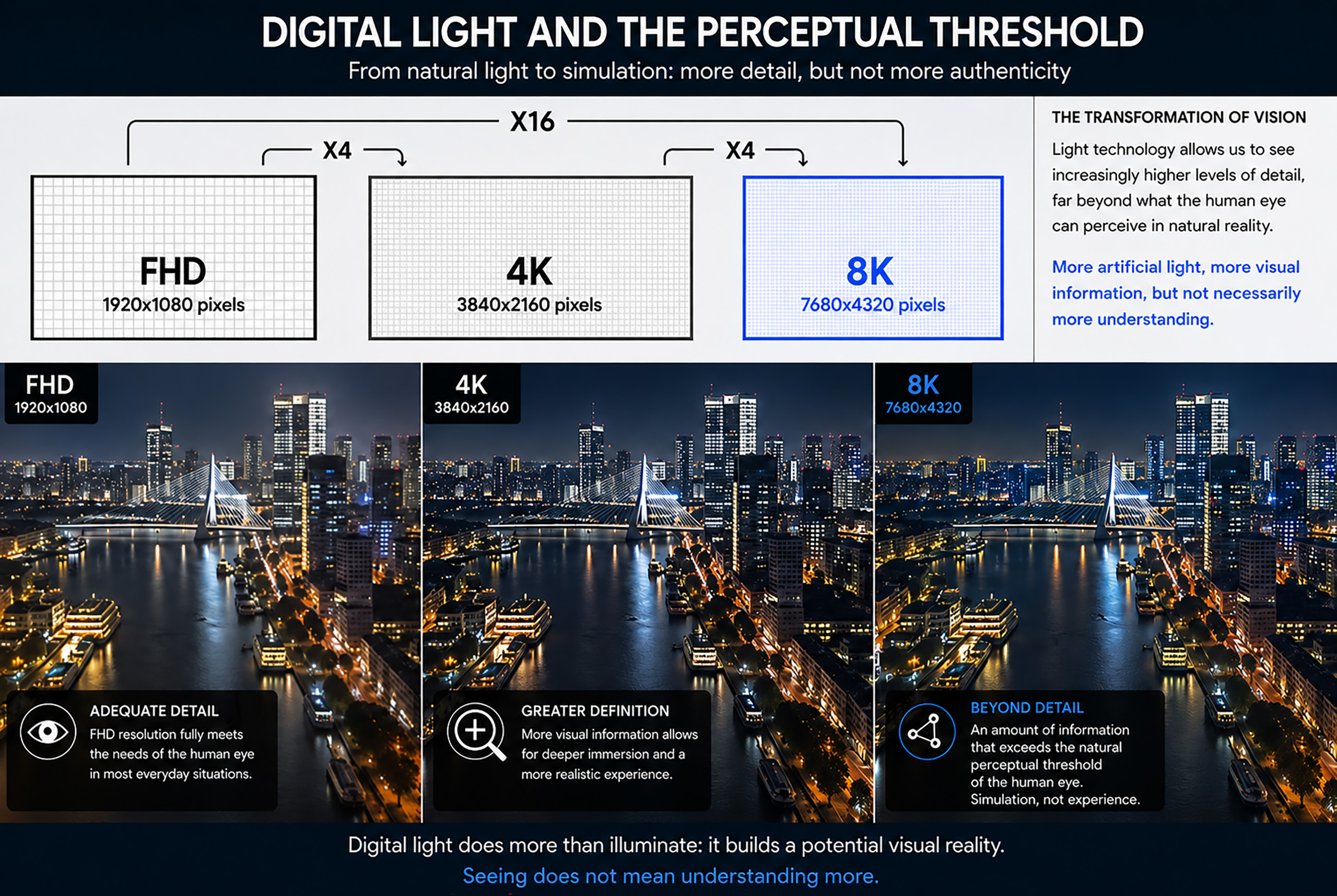
Digital Lighting and Visual Perception: the Dissolution of the See/Understand Relationship How electric light is changing the relationship between seeing, experiencing, and understanding the world In today's era of digital…
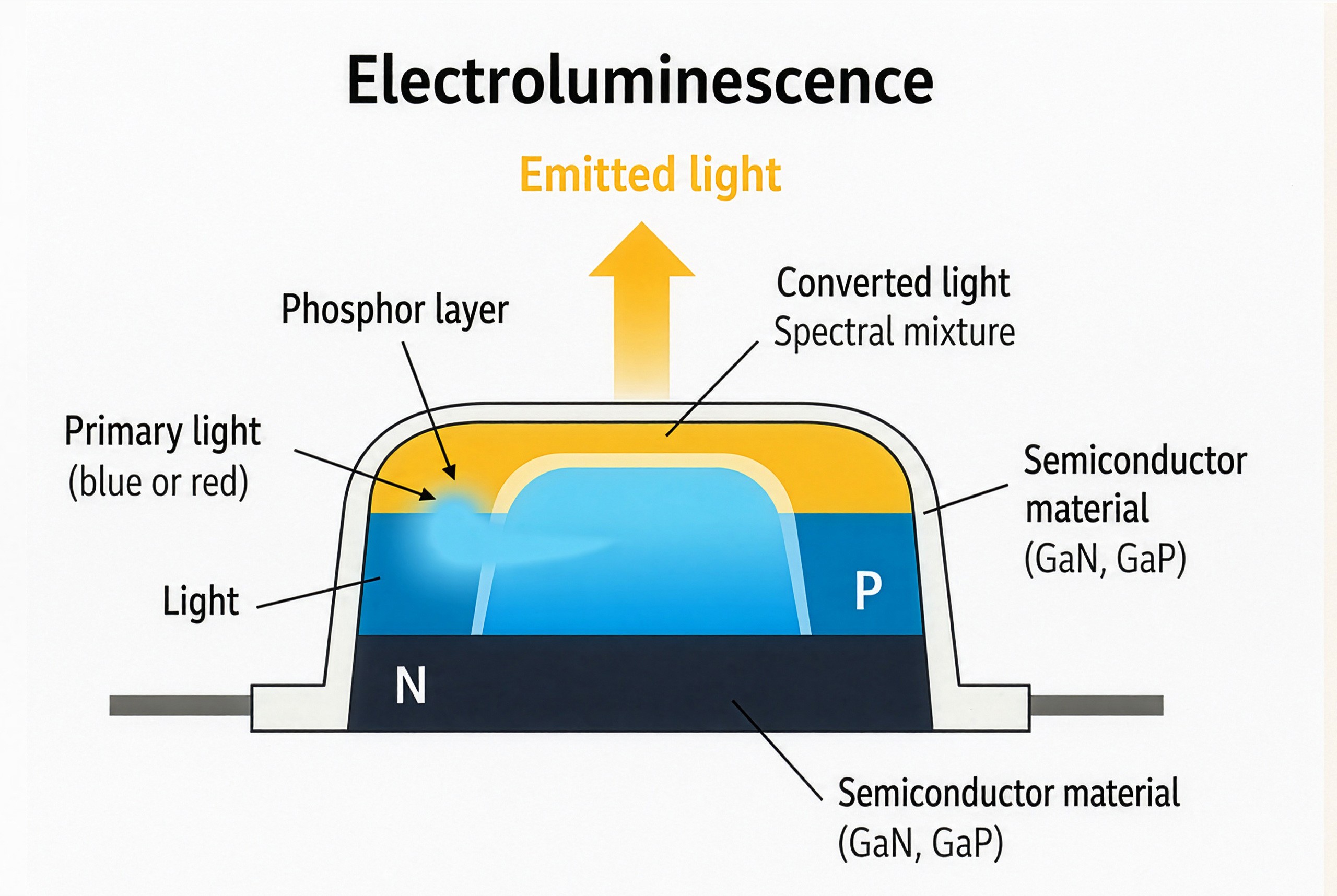
Electroluminescence Process in LED Semiconductor Devices
How LEDs Work: Electroluminescence, Materials, and the Light Spectrum From semiconductor structure to color rendering: how LED light takes shape Visible light, although perceived as a continuous and unified phenomenon,…
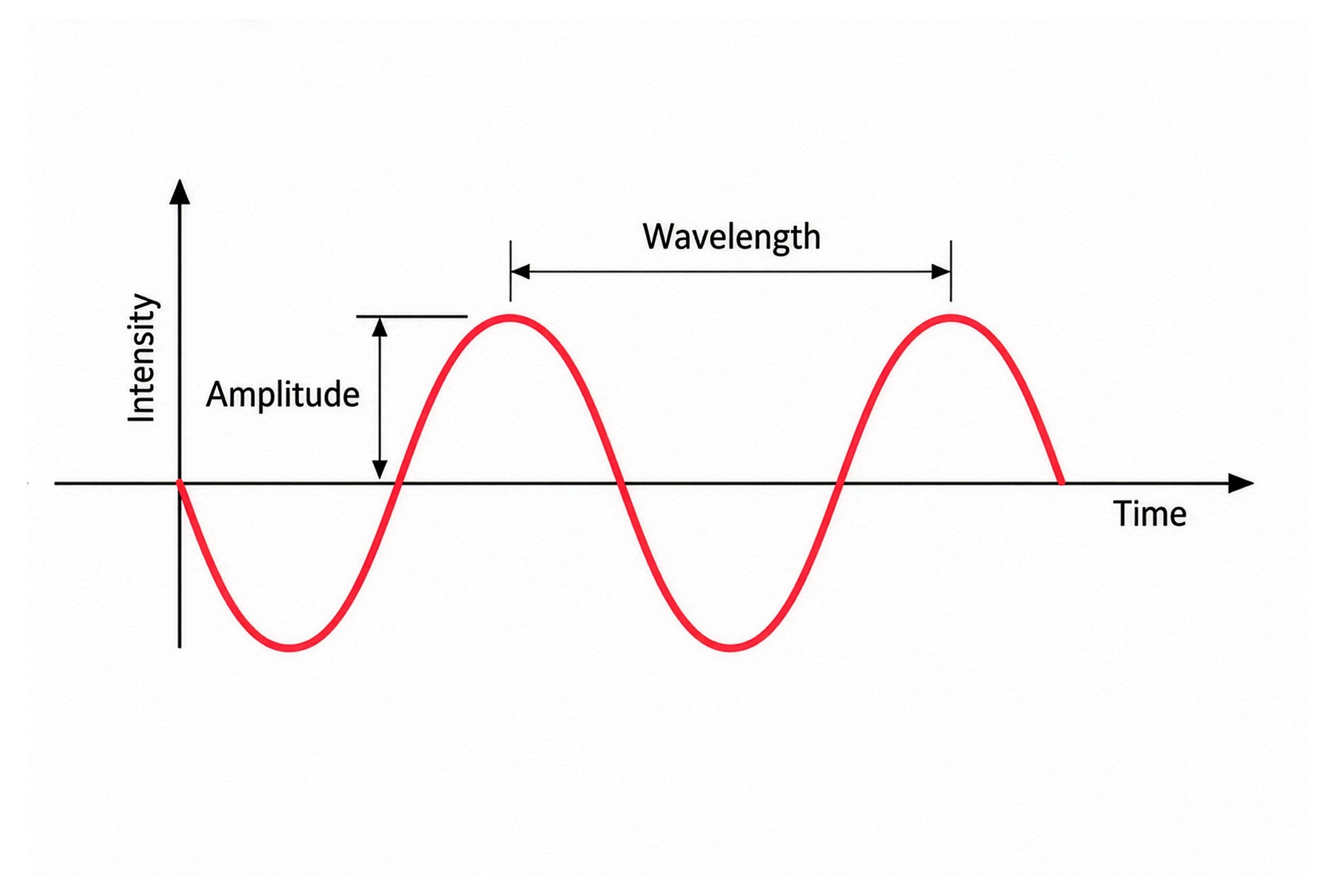
Fundamental Properties of Electromagnetic-Waves Amplitude and Wavelength
Visible Light and the Electromagnetic Spectrum: Physical Principles for Lighting Design How wavelengths influence perception, color, and light design After examining how the human eye adapts to different illumination levels…
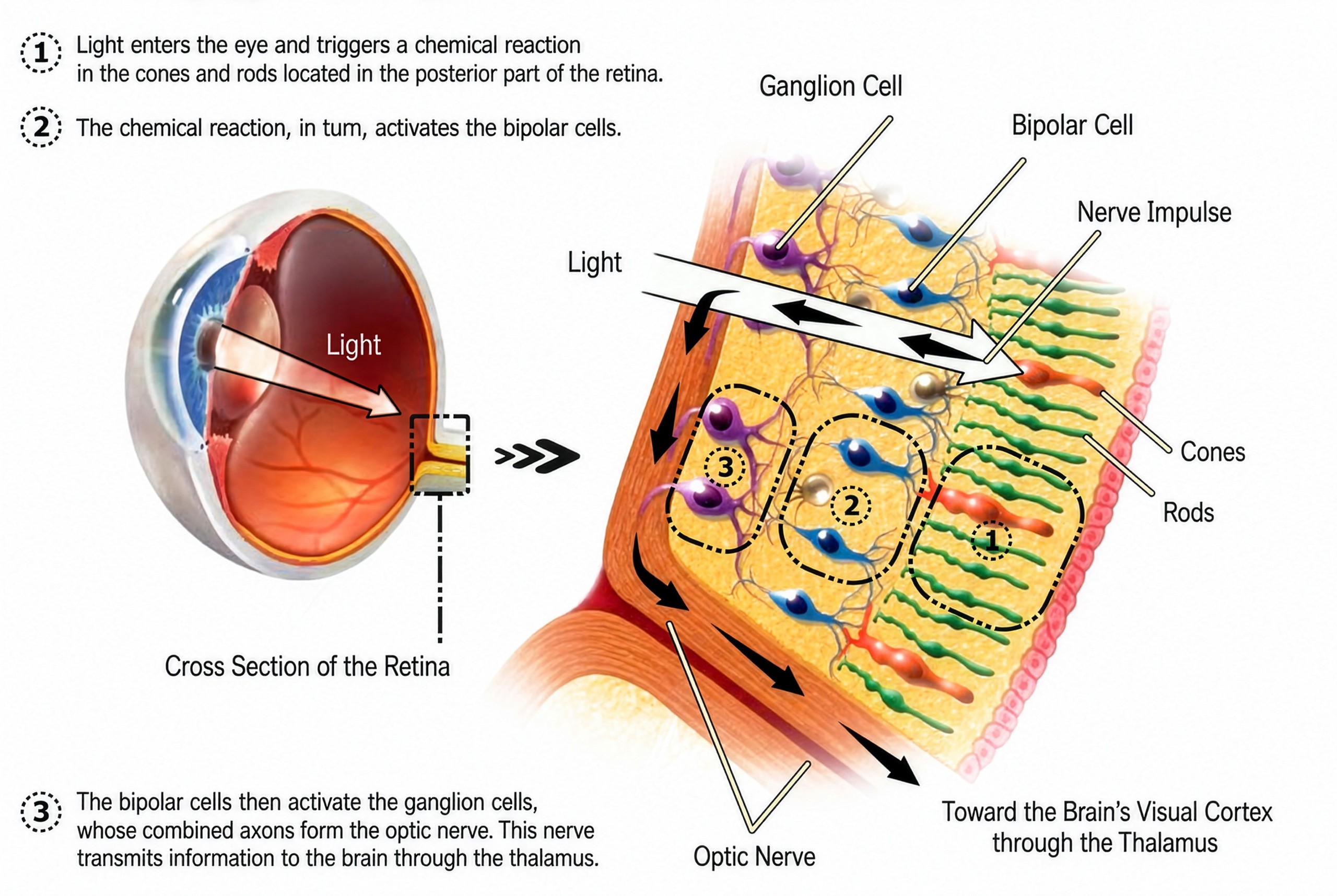
Visual Signal Transmission Pathway in the Human Retina
Photopic vs Melanopic Illuminance: Definition and Spectral Sensitivity MEDI, EML, and CS. Three essential indicators for measuring the circadian impact of artificial light The perception of light varies according to…
Lighting-Design-e-Teoria-della-Luce
Lighting Design and Light Theory Complexity in the relationship between light, perception, and design   How does a lighting designer develop a lighting project? Which disciplines should a rigorous lighting…
MENU