La-luce-che-informa-rivoluzione-o-rischio-per-il-futuro-dell’illuminazione-slide-eng

The Light That Informs: Revolution or Risk for the Future of Lighting?

μPLS and microLED between innovation and danger of visual excess

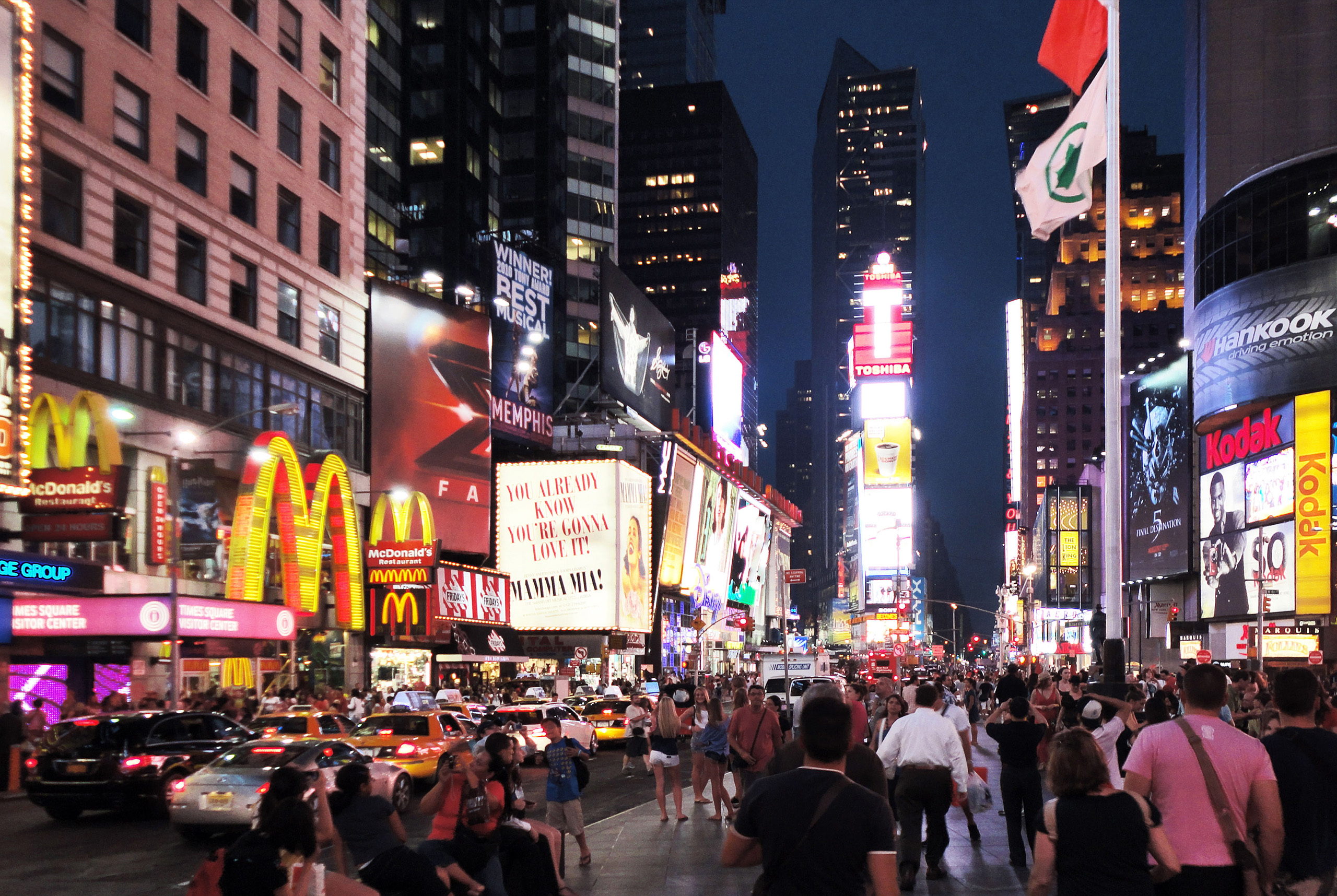
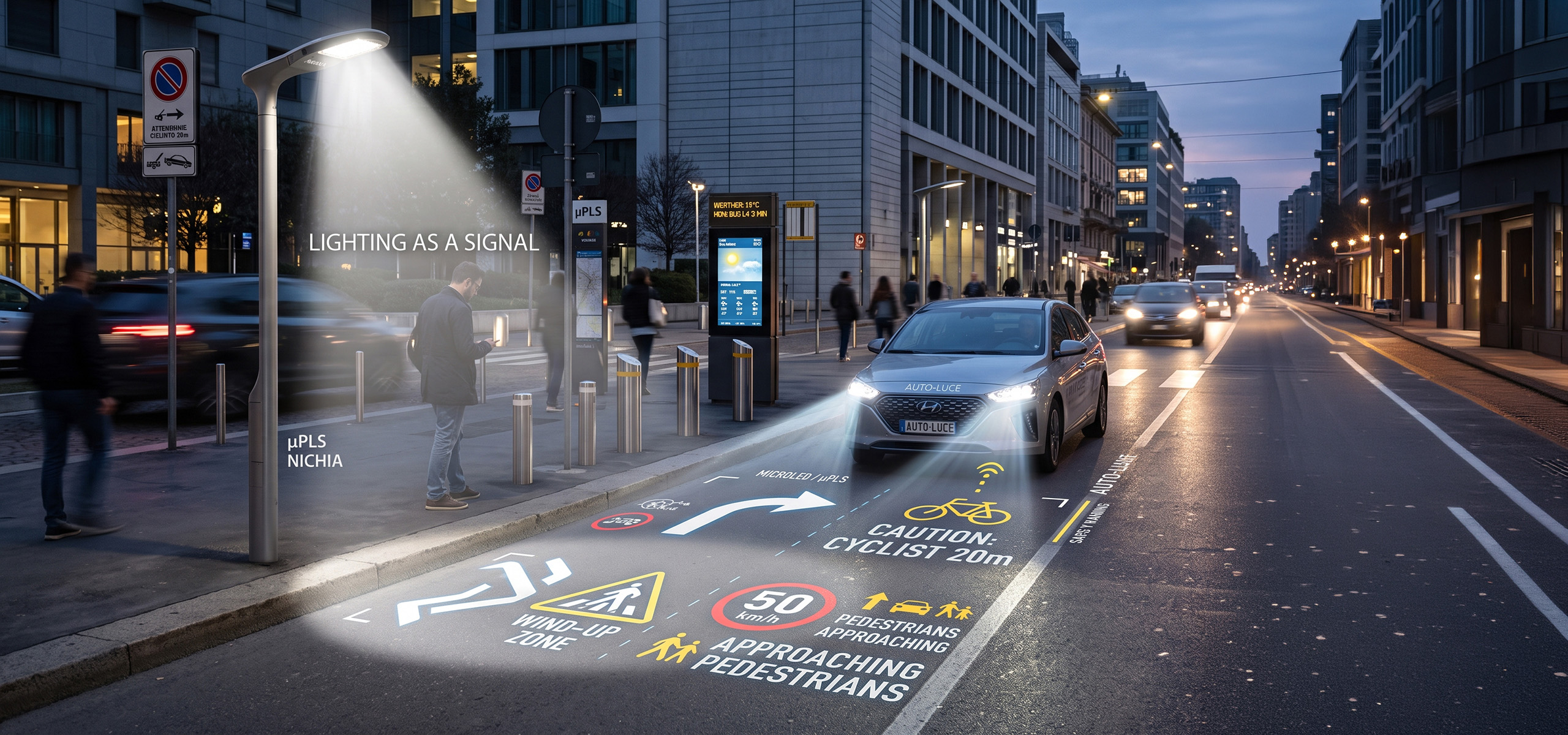
Historically, we are used to thinking of artificial light as something that just illuminates. A street lamp allows us to see, a car headlight illuminates the way, but does not convey messages or information in itself. This is changing: with the advent of digitally controllable LEDs, lighting can also become  an optical means of communication. A simple everyday example is LED billboards: huge luminous displays that inform (showing texts, images, videos) as well as illuminating the surrounding area. Similarly, new technologies such as μPLS converge the illuminating and informative functions. Already today, LED headlights enable a certain amount of communication, such as rapid flashes or light patterns to transmit signals. An automotive expert pointed out that one of the advantages of LEDs over halogens is precisely the "freedom for designers to create headlights that communicate with other cars", increasing safety and predictability on the road. μPLS headlamps take this vision to another level: by being able to project complex symbols onto the asphalt, they transform the road into a screen on which the vehicle can write contextual visual information (warning signs, navigation indications, etc.). In fact, the light emitted by the headlight is no longer just neutral lighting, but becomes the bearer of content.

The concept of "light that informs" can be extended beyond car headlights. Think of smart cities: connected streetlights equipped with addressable LEDs could communicate in visual code with pedestrians (for example, a streetlight that flashes or changes color to indicate the arrival of a nearby emergency vehicle). Or, inside buildings, you could have lighting that signals safety indications (escape routes, alarms) by projecting them directly on the floors or walls, instead of relying only on static signs. In the retail sector, shop windows made of LED panels can show variable multimedia content, attracting the attention of passers-by with dynamic informational light. Another interesting field is Li-Fi (Light Fidelity), an emerging technology that uses LEDs to transmit data to devices (e.g. providing Internet connectivity through fast modulations of light invisible to the human eye). In that case, literally, the light in addition to illuminating informs by exchanging data packets with our smartphones or computers.

It is worth reflecting on how the distinction between lighting and display will tend to blur in the future. If we make a clear distinction between a lamp (which makes diffused light) and a screen (which displays images) today, the new high-power pixelated solutions such as μPLS are somewhere in between: they are lights that illuminate selectively, producing complex light patterns like a display would, but powerful enough to fulfill the lighting task. We could imagine that in the future the facades of buildings will be designed with LED matrices that regulate the indoor/outdoor ambient light during the day and show images or texts at night (transforming the skyscraper into a huge digital billboard). Or the same lights in the house could, through soft projections, provide us with information (the time, notifications, weather) on the walls, merging lighting and user interface.

Of course, a light that informs must be designed wisely: the risk is to overload the environment with visual stimuli or create distractions. In the automotive case, regulations will have to evolve to regulate which symbols can be projected on the road surface and with what intensity, avoiding abuses (e.g. advertising projected on the road, potentially dangerous). Already, some jurisdictions place limits on LED billboards so as not to dazzle drivers. It will be important to strike a balance between the informational utility of light and its primary function as comfortable lighting.

Ultimately, the direction appears marked: thanks to technologies such as Nichia's μPLS we are entering an era in which "light is also information". From simple passive light sources, we move on to active and intelligent systems, capable of interacting with the environment and users. The traditional light bulb that simply shines could one day be replaced (in many contexts) by lighting devices capable of adapting, communicating and making spaces not only more illuminated, but also more connected and rich in information.

The evolution from traditional LEDs to μPLS technology represents a significant leap in the way we conceive of artificial light. We looked at how a standard LED works and why it supplanted the old halogen and incandescent sources, and then explored Nichia's innovative solution that pushes the concept to the extreme, integrating thousands of micro-LEDs and control circuits into a single micro-projector. This transformation brings tangible benefits to applications such as automotive headlights – increased safety, glare-free visibility, new signalling functions – but also poses new production and economic challenges. Compared to previous technologies, the μPLS shows advantages in energy efficiency and compactness, ushering in a new generation of digital lighting.

Market prospects indicate that high-resolution pixelated lighting is set to become more and more widespread as costs fall and automakers reap the competitive advantages. At the same time, the idea of using light as a vector of information is gaining ground: from the car headlight that communicates with the environment to urban LED panels that enrich cities with visual data, we are witnessing a convergence between lighting and communication. In the future, the "light that informs" could improve safety, efficiency and quality of life in many areas, if implemented intelligently.

In conclusion, the contrast between light that illuminates and light that informs will become less and less clear-cut. Technologies such as Nichia's μPLS are a clear example of this, serving as both a high-performance light source and an information projection platform. It is a fascinating field in rapid evolution: continuing to "search for a brighter world" – as Nichia's motto says – today means not only increasing lumens, but also increasing the bits of information carried by light, creating a future in which each photon will be able to illuminate and inform at the same time.

La-luce-che-informa-rivoluzione-o-rischio-per-il-futuro-dell’illuminazione-slide-eng

The Light That Informs: Revolution or Risk for the Future of Lighting?

μPLS and microLED between innovation and danger of visual excess

Historically, we are used to thinking of artificial light as something that just illuminates. A street lamp allows us to see, a car headlight illuminates the way, but does not convey messages or information in itself. This is changing: with the advent of digitally controllable LEDs, lighting can also become  an optical means of communication. A simple everyday example is LED billboards: huge luminous displays that inform (showing texts, images, videos) as well as illuminating the surrounding area. Similarly, new technologies such as μPLS converge the illuminating and informative functions. Already today, LED headlights enable a certain amount of communication, such as rapid flashes or light patterns to transmit signals. An automotive expert pointed out that one of the advantages of LEDs over halogens is precisely the "freedom for designers to create headlights that communicate with other cars", increasing safety and predictability on the road. μPLS headlamps take this vision to another level: by being able to project complex symbols onto the asphalt, they transform the road into a screen on which the vehicle can write contextual visual information (warning signs, navigation indications, etc.). In fact, the light emitted by the headlight is no longer just neutral lighting, but becomes the bearer of content.

The concept of "light that informs" can be extended beyond car headlights. Think of smart cities: connected streetlights equipped with addressable LEDs could communicate in visual code with pedestrians (for example, a streetlight that flashes or changes color to indicate the arrival of a nearby emergency vehicle). Or, inside buildings, you could have lighting that signals safety indications (escape routes, alarms) by projecting them directly on the floors or walls, instead of relying only on static signs. In the retail sector, shop windows made of LED panels can show variable multimedia content, attracting the attention of passers-by with dynamic informational light. Another interesting field is Li-Fi (Light Fidelity), an emerging technology that uses LEDs to transmit data to devices (e.g. providing Internet connectivity through fast modulations of light invisible to the human eye). In that case, literally, the light in addition to illuminating informs by exchanging data packets with our smartphones or computers.

It is worth reflecting on how the distinction between lighting and display will tend to blur in the future. If we make a clear distinction between a lamp (which makes diffused light) and a screen (which displays images) today, the new high-power pixelated solutions such as μPLS are somewhere in between: they are lights that illuminate selectively, producing complex light patterns like a display would, but powerful enough to fulfill the lighting task. We could imagine that in the future the facades of buildings will be designed with LED matrices that regulate the indoor/outdoor ambient light during the day and show images or texts at night (transforming the skyscraper into a huge digital billboard). Or the same lights in the house could, through soft projections, provide us with information (the time, notifications, weather) on the walls, merging lighting and user interface.

Of course, a light that informs must be designed wisely: the risk is to overload the environment with visual stimuli or create distractions. In the automotive case, regulations will have to evolve to regulate which symbols can be projected on the road surface and with what intensity, avoiding abuses (e.g. advertising projected on the road, potentially dangerous). Already, some jurisdictions place limits on LED billboards so as not to dazzle drivers. It will be important to strike a balance between the informational utility of light and its primary function as comfortable lighting.

Ultimately, the direction appears marked: thanks to technologies such as Nichia's μPLS we are entering an era in which "light is also information". From simple passive light sources, we move on to active and intelligent systems, capable of interacting with the environment and users. The traditional light bulb that simply shines could one day be replaced (in many contexts) by lighting devices capable of adapting, communicating and making spaces not only more illuminated, but also more connected and rich in information.

The evolution from traditional LEDs to μPLS technology represents a significant leap in the way we conceive of artificial light. We looked at how a standard LED works and why it supplanted the old halogen and incandescent sources, and then explored Nichia's innovative solution that pushes the concept to the extreme, integrating thousands of micro-LEDs and control circuits into a single micro-projector. This transformation brings tangible benefits to applications such as automotive headlights – increased safety, glare-free visibility, new signalling functions – but also poses new production and economic challenges. Compared to previous technologies, the μPLS shows advantages in energy efficiency and compactness, ushering in a new generation of digital lighting.

Market prospects indicate that high-resolution pixelated lighting is set to become more and more widespread as costs fall and automakers reap the competitive advantages. At the same time, the idea of using light as a vector of information is gaining ground: from the car headlight that communicates with the environment to urban LED panels that enrich cities with visual data, we are witnessing a convergence between lighting and communication. In the future, the "light that informs" could improve safety, efficiency and quality of life in many areas, if implemented intelligently.

In conclusion, the contrast between light that illuminates and light that informs will become less and less clear-cut. Technologies such as Nichia's μPLS are a clear example of this, serving as both a high-performance light source and an information projection platform. It is a fascinating field in rapid evolution: continuing to "search for a brighter world" – as Nichia's motto says – today means not only increasing lumens, but also increasing the bits of information carried by light, creating a future in which each photon will be able to illuminate and inform at the same time.
Other Lighting Post

Other Lighting Post

This section brings together a comprehensive body of theoretical, scientific, and design insights into the theory of light applied to lighting design, systematically addressing the complex relationship between light, visual perception, and spatial design. The content develops the physical foundations of light, an understanding of the mechanisms of human vision, the differences between photopic and melanopic illuminance, and the biological impact of artificial light, integrating advanced metrics and contemporary interpretation criteria.

The page also explores the functioning of LED sources, the spectral and perceptual implications of solid-state light, the evolution of color rendering criteria, and the growing role of light as an informational and perceptual system, capable of influencing behavior, comfort, and the quality of spatial experience.

Ample space is dedicated to the relevant regulatory and technical framework, international standards, sustainability protocols, and control systems, understood as essential tools for rigorous, measurable, and consistent design.

Overall, the section provides a vision of the theory of light as the cultural and operational basis of lighting design, in which scientific knowledge, perceptual awareness, and design method converge to guide the lighting designer in the construction of balanced, legible, and qualitatively significant spaces.

This section brings together a comprehensive body of theoretical, scientific, and design insights into the theory of light applied to lighting design, systematically addressing the complex relationship between light, visual perception, and spatial design. The content develops the physical foundations of light, an understanding of the mechanisms of human vision, the differences between photopic and melanopic illuminance, and the biological impact of artificial light, integrating advanced metrics and contemporary interpretation criteria.

The page also explores the functioning of LED sources, the spectral and perceptual implications of solid-state light, the evolution of color rendering criteria, and the growing role of light as an informational and perceptual system, capable of influencing behavior, comfort, and the quality of spatial experience.

Ample space is dedicated to the relevant regulatory and technical framework, international standards, sustainability protocols, and control systems, understood as essential tools for rigorous, measurable, and consistent design.

Overall, the section provides a vision of the theory of light as the cultural and operational basis of lighting design, in which scientific knowledge, perceptual awareness, and design method converge to guide the lighting designer in the construction of balanced, legible, and qualitatively significant spaces.

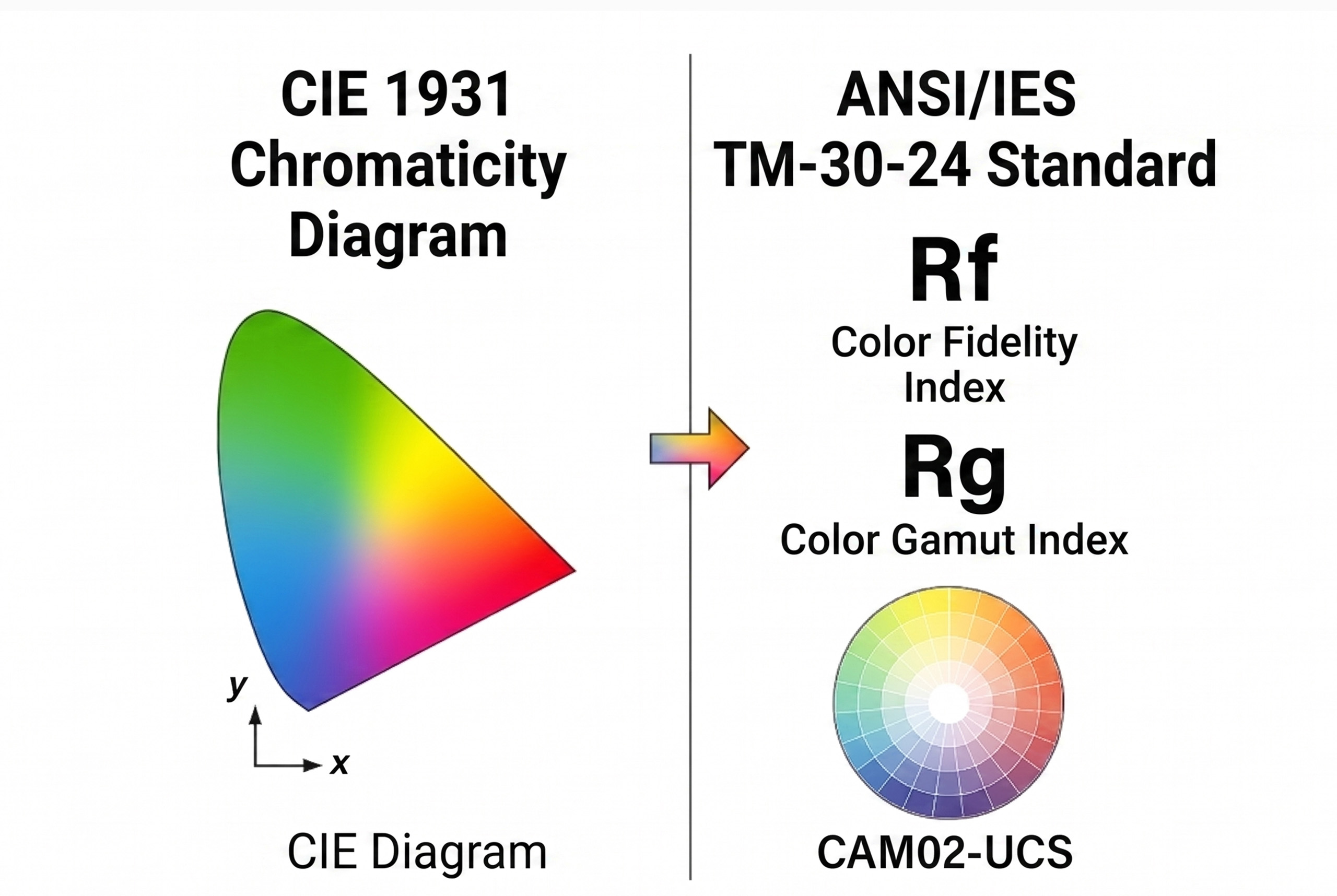
Beyond the CRI: The New Era of Colour Rendering in Architectural Light How Rf and Rg redefine color rendering for a light designed on the visual experience Continuing the analysis…
Dalla-Percezione-alla-Funzione-L’Influenza-della-Temperatura-di-Colore-sullo-Spazio-Illuminato-copertina
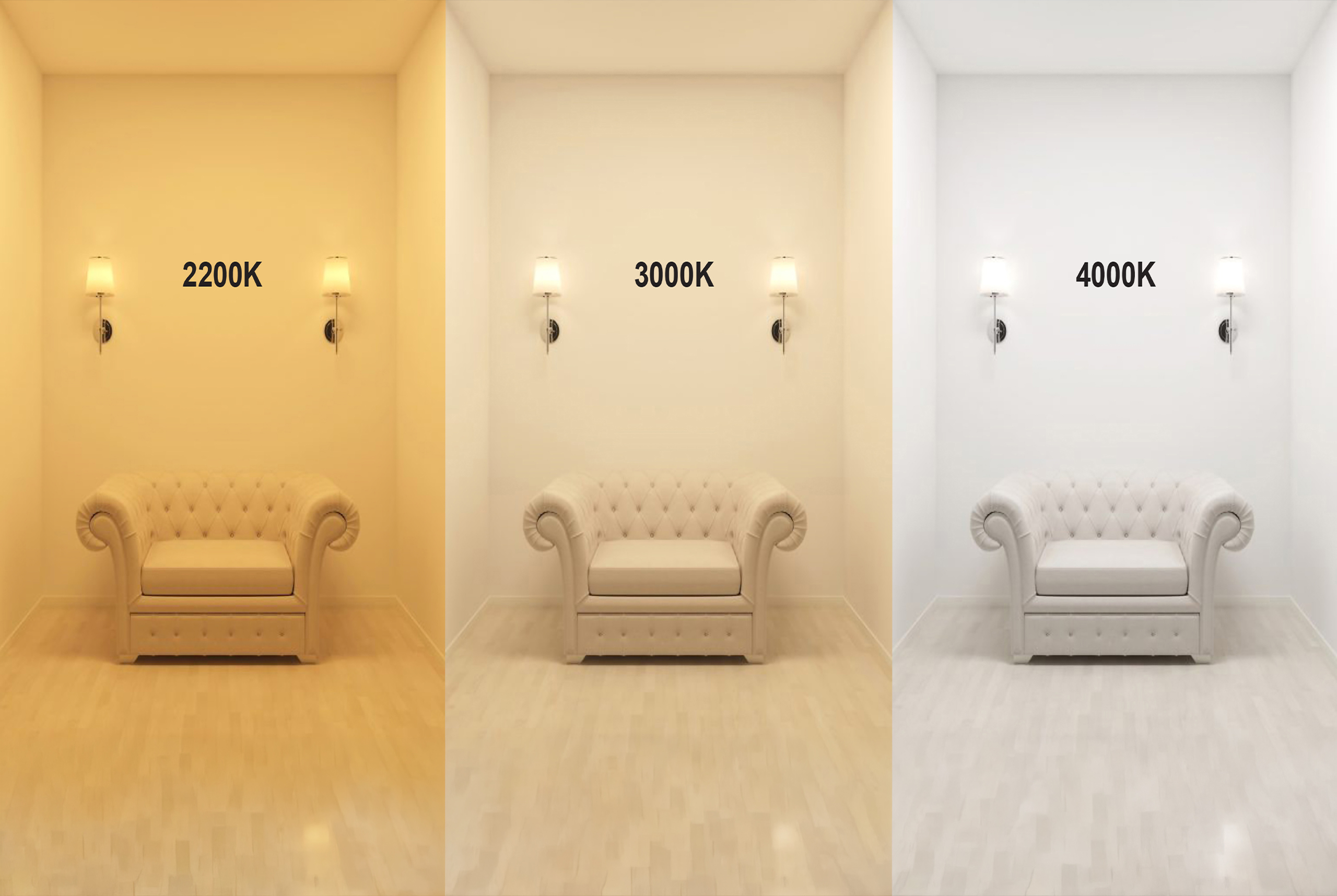
From Perception to Function: The Influence of Color Temperature on Illuminated Space Color temperature as a perceptual language: designing atmospheres, guiding vision and shaping space After exploring the scientific bases,…
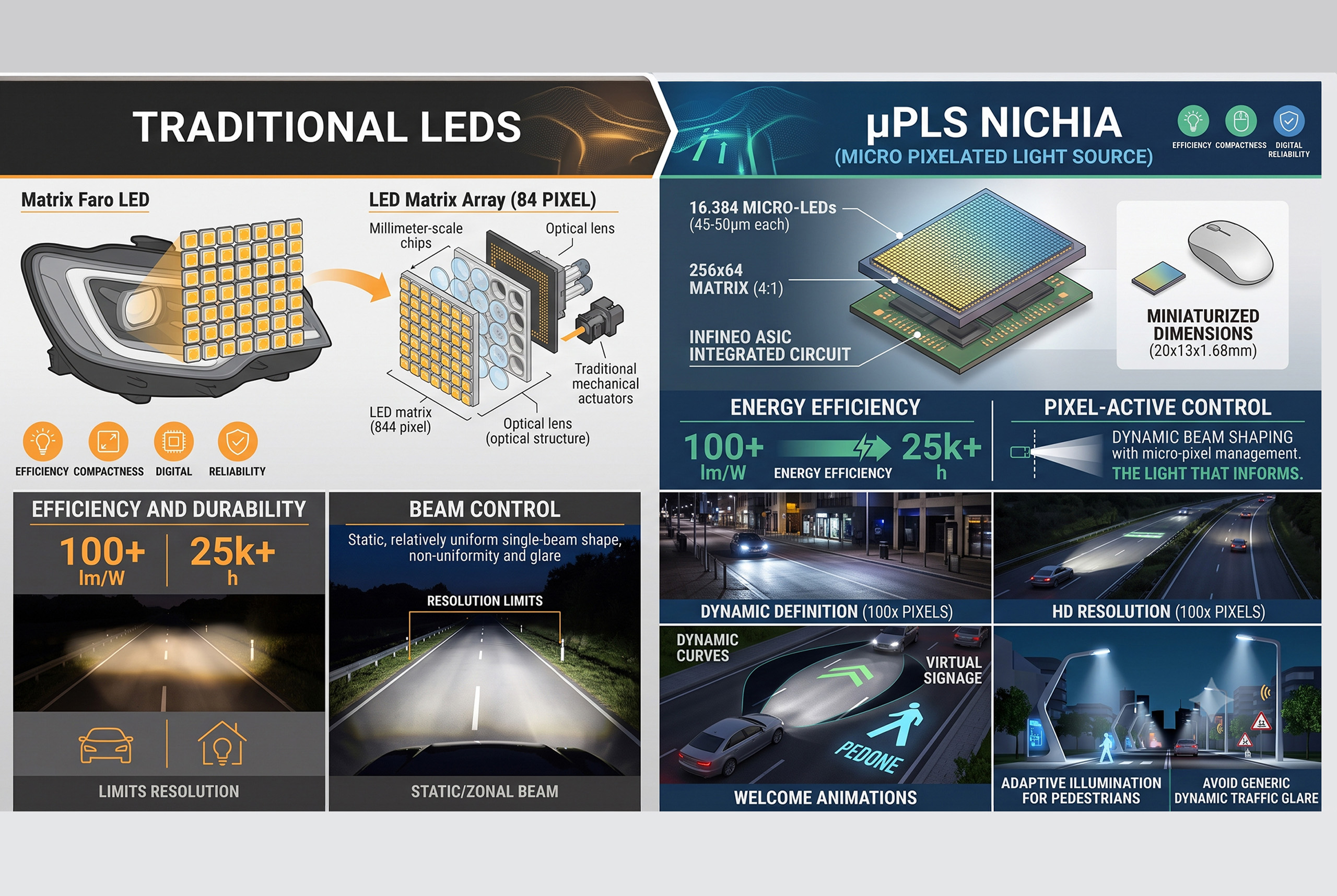
Differences Between Traditional LEDs and μPLS by Nichia: From the Car to the City, the Path of the Digital Light Engine From road safety to smart city: μPLS and high-resolution…
The Silent Revolution of LEDs: The Crisis of Seeing in the Age of Solid-State Lighting From Daylight to Electrical Simulation, Digital Lighting Redefines Perception, Dissolving the Link Between Visual Experience…
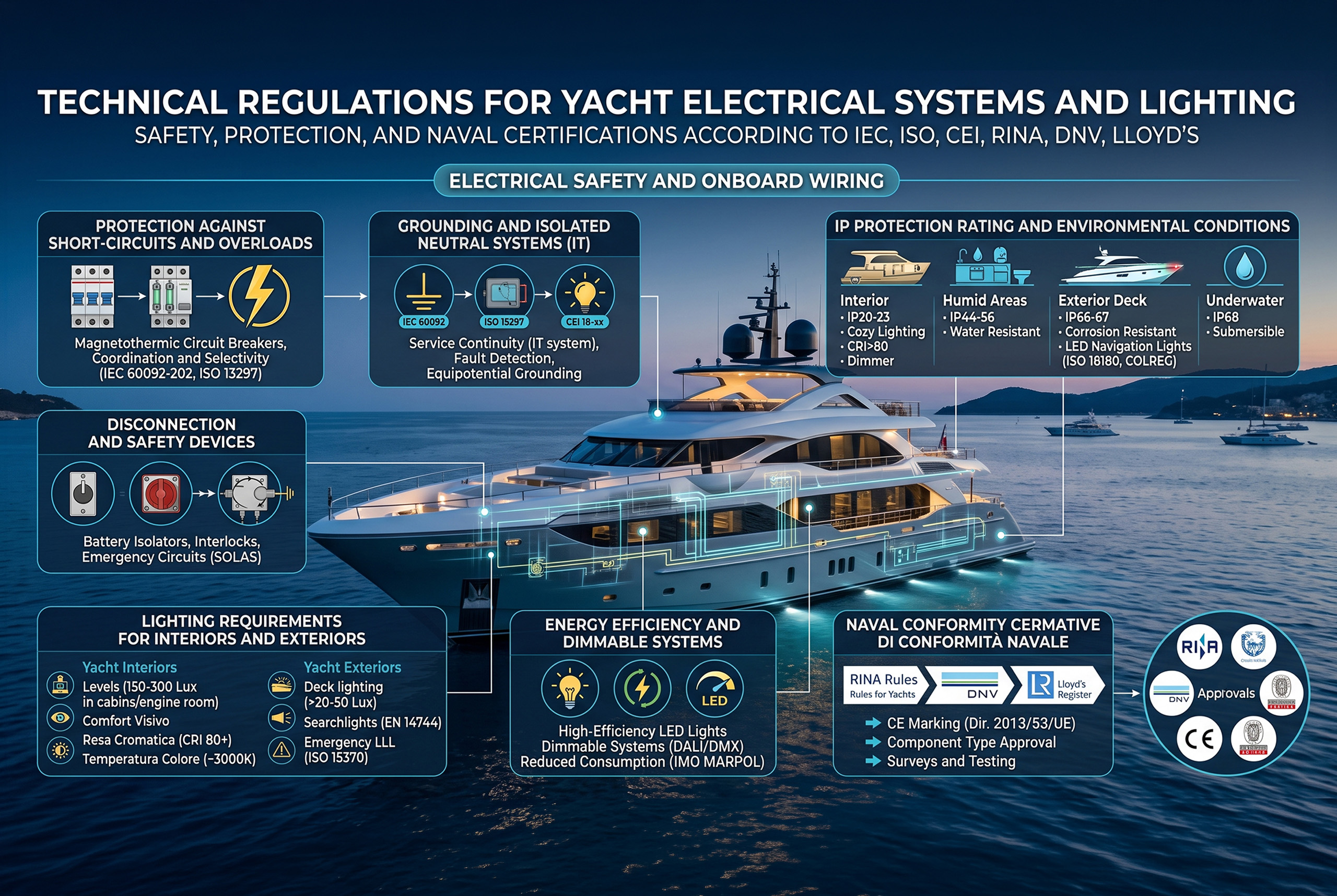
Technical Regulations for Electrical Systems and Lighting in Yachts Electrical safety, visual comfort and ship compliance according to IEC, ISO, CEI, RINA and DNV standards. Electrical Safety and Wiring in…
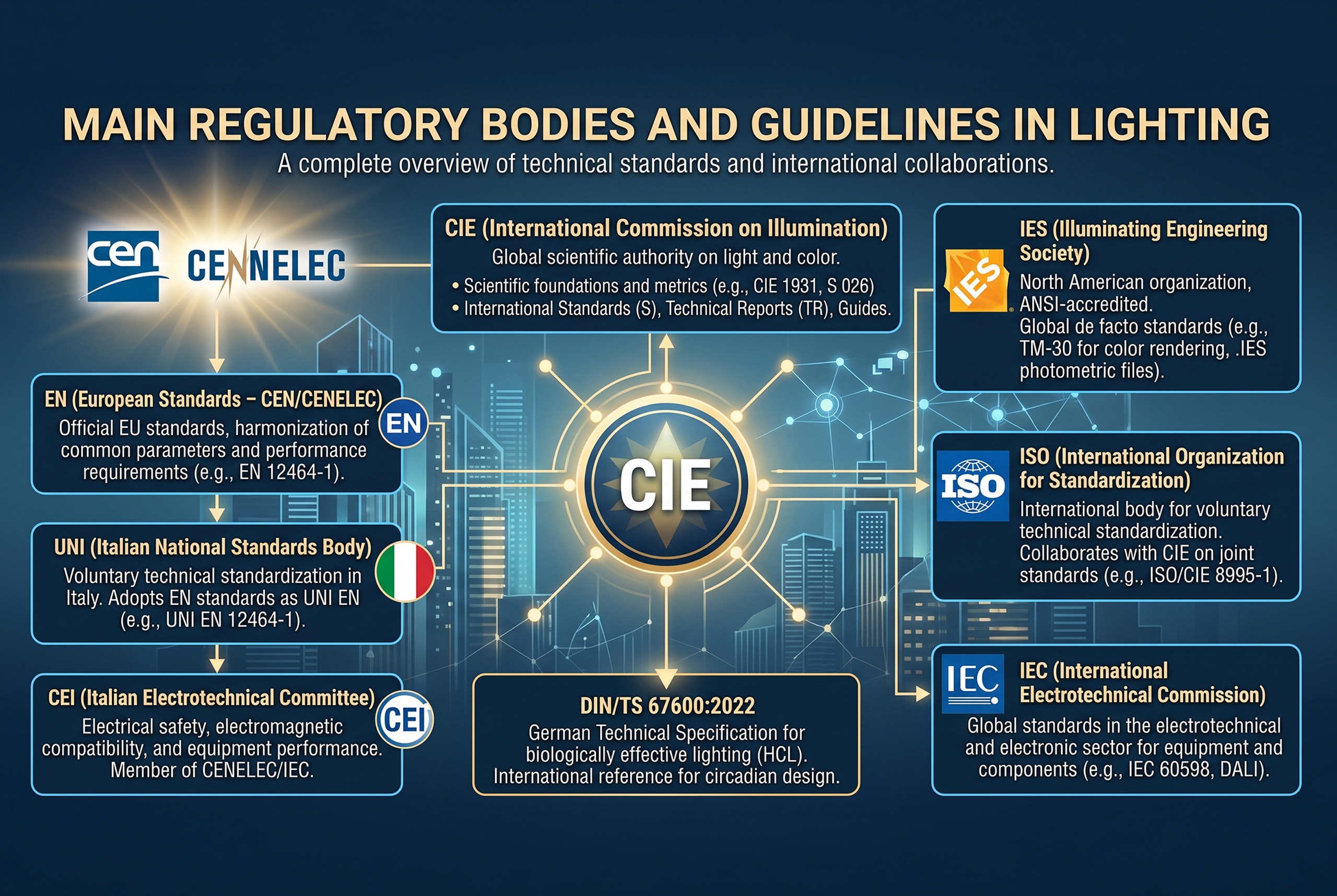
Main Regulatory Bodies and Guidelines in Lighting Technology A comprehensive framework on technical standards, international collaborations and key documents for designing light according to scientific and performance criteria. CIE (International…
Standard-Lighting-Measurements-(LM)-dell’IES-Codici,-Struttura-e-Implicazioni-Progettuali_Copertina-eng
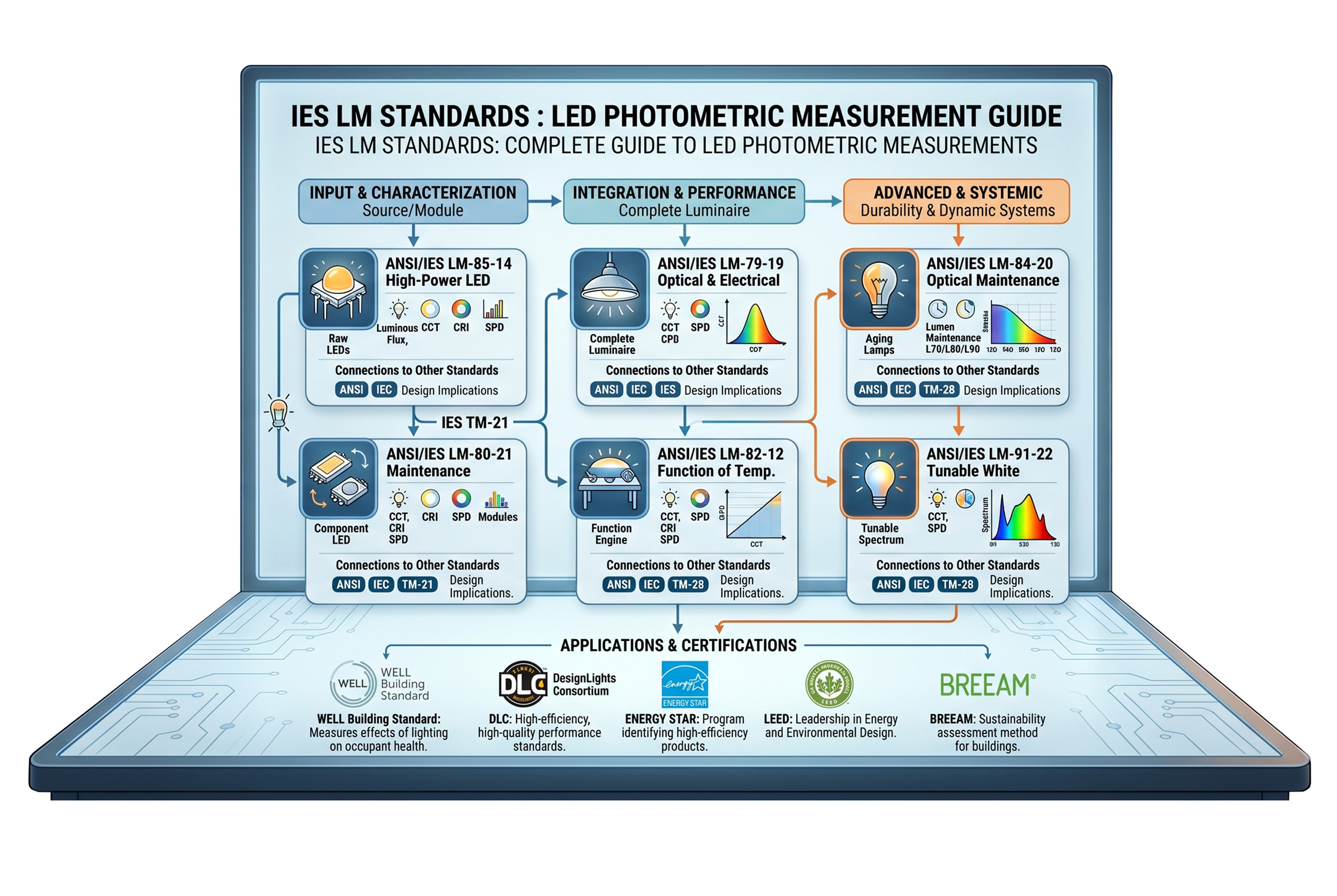
IES Standard Lighting Measurements (LM): Codes, Structure, and Design Implications Technical guide to LM standards for measuring the photometric, chromatic, and electrical performance of LEDs, modules, and luminaires. After having…
Standard-Technical-Memoranda-(TM)-dell’IES-Codici,-Struttura-e-Implicazioni-Progettuali_Copertina-eng
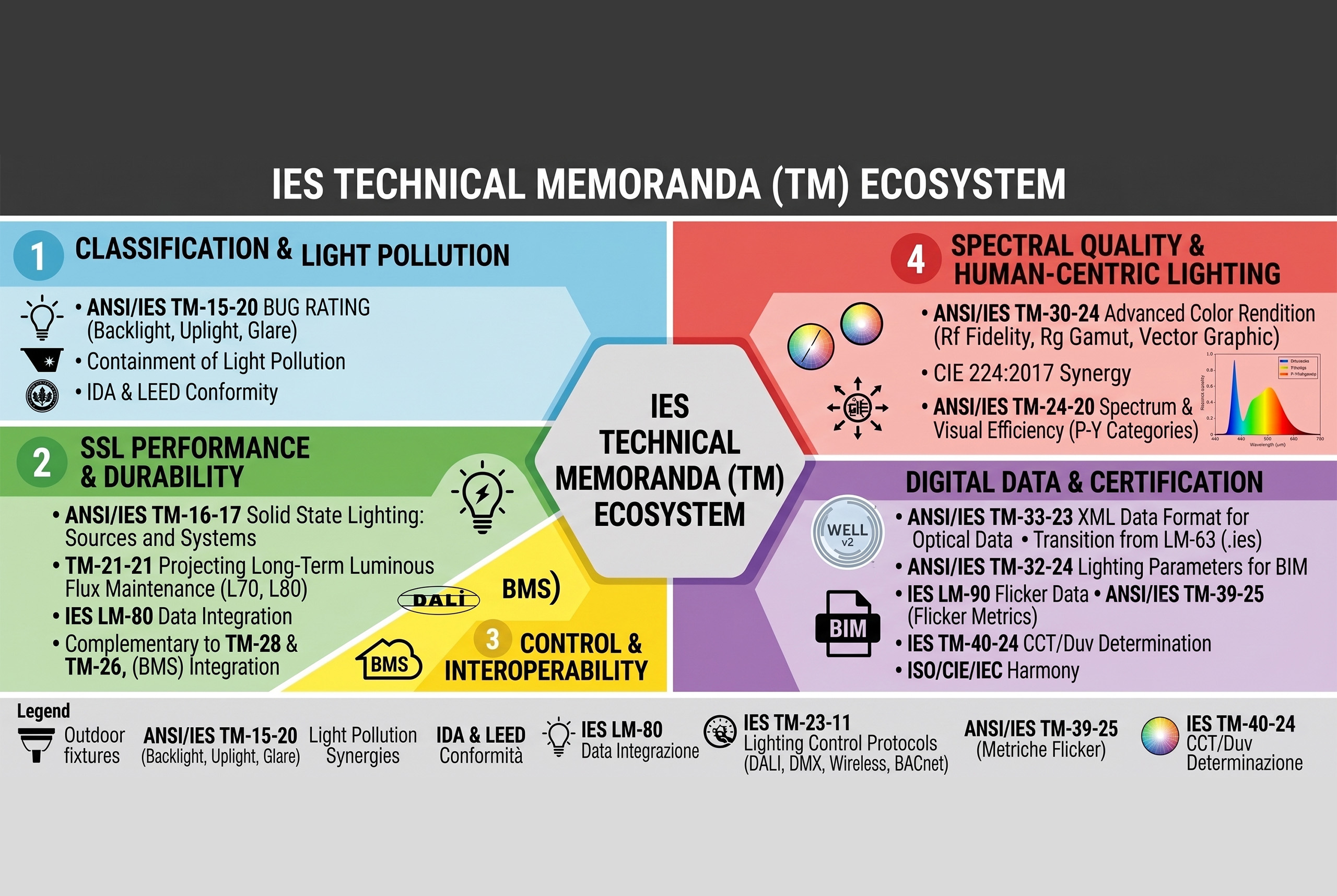
IES Standard Technical Memoranda (TM): Codes, Structure, and Design Implications A technical guide to the use and interpretation of TM documents in lighting design The following insight is dedicated to…
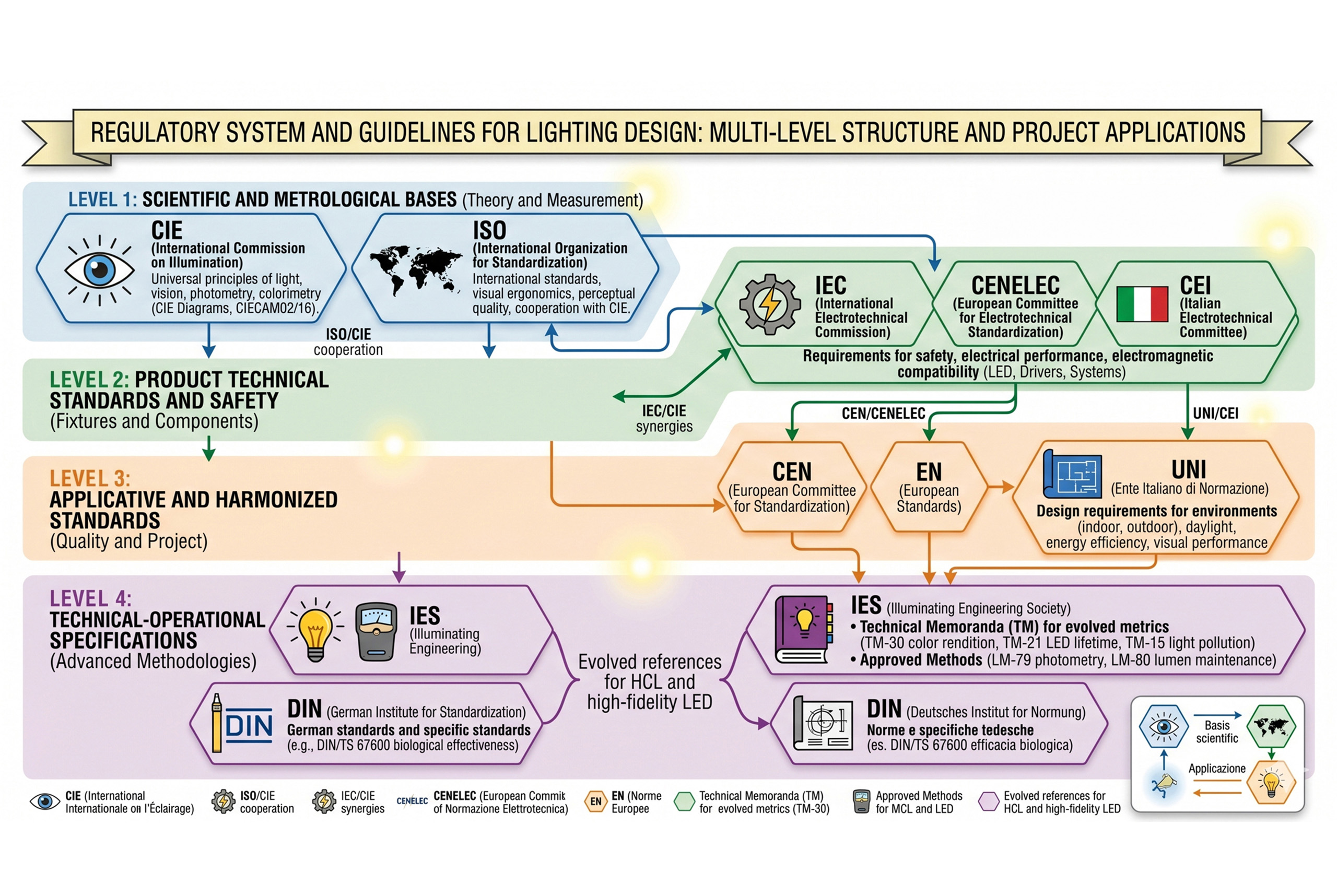
Authoritative Standards and Guidelines in Lighting Technology: Multilevel Structure and Design Applications A complex regulatory system for designing light with technical rigor and application coherence The evolution of light sources…
With the advent of LED sources, can we define the 1931 CIE diagram as obsolete? Formally no, but practically yes, in many application contexts. Now that we have understood how…
digital light and perceived thresholds - cover
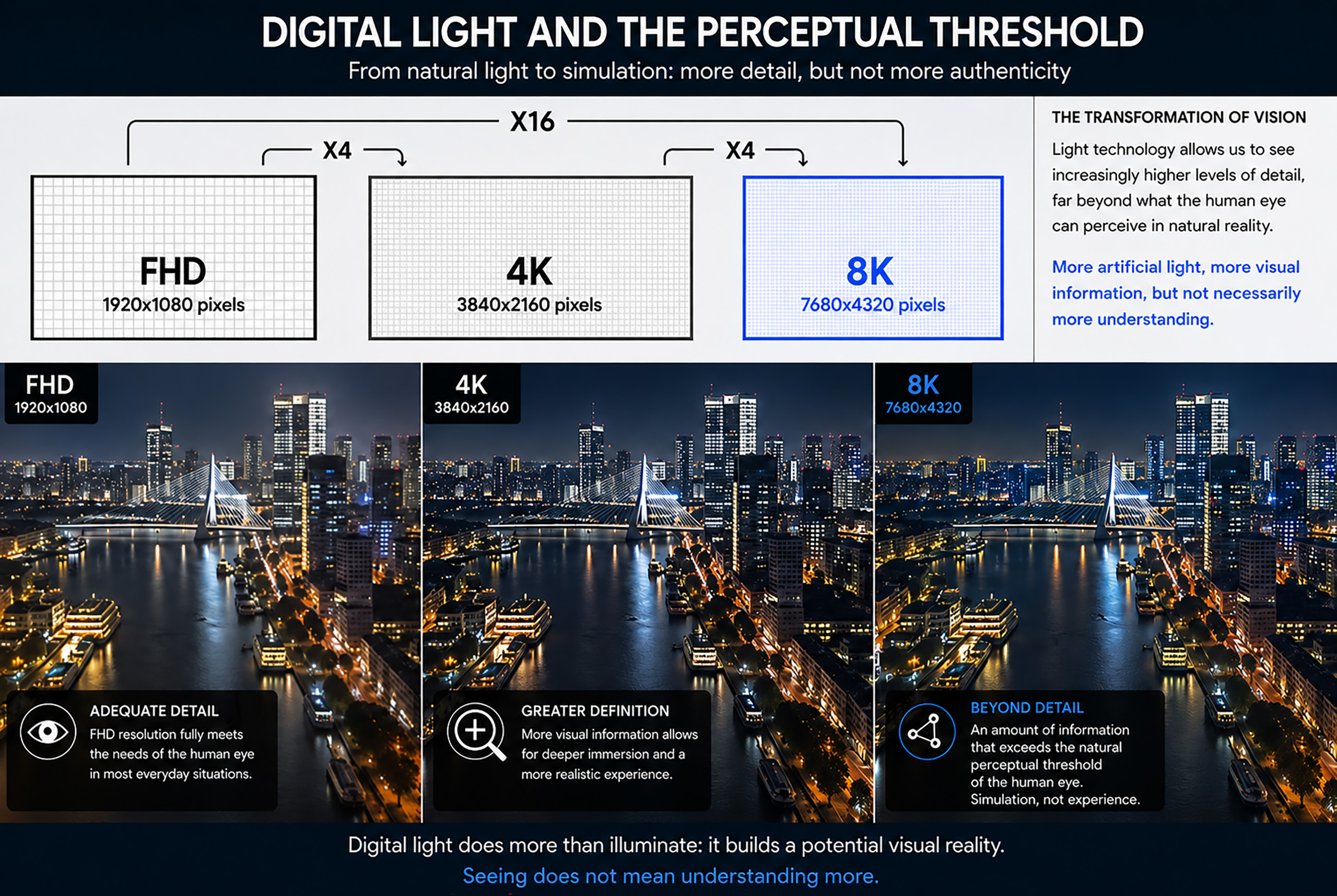
Digital Lighting and Visual Perception: the Dissolution of the See/Understand Relationship How electric light is changing the relationship between seeing, experiencing, and understanding the world In today's era of digital…
Electroluminescence Process in LED Semiconductor Devices
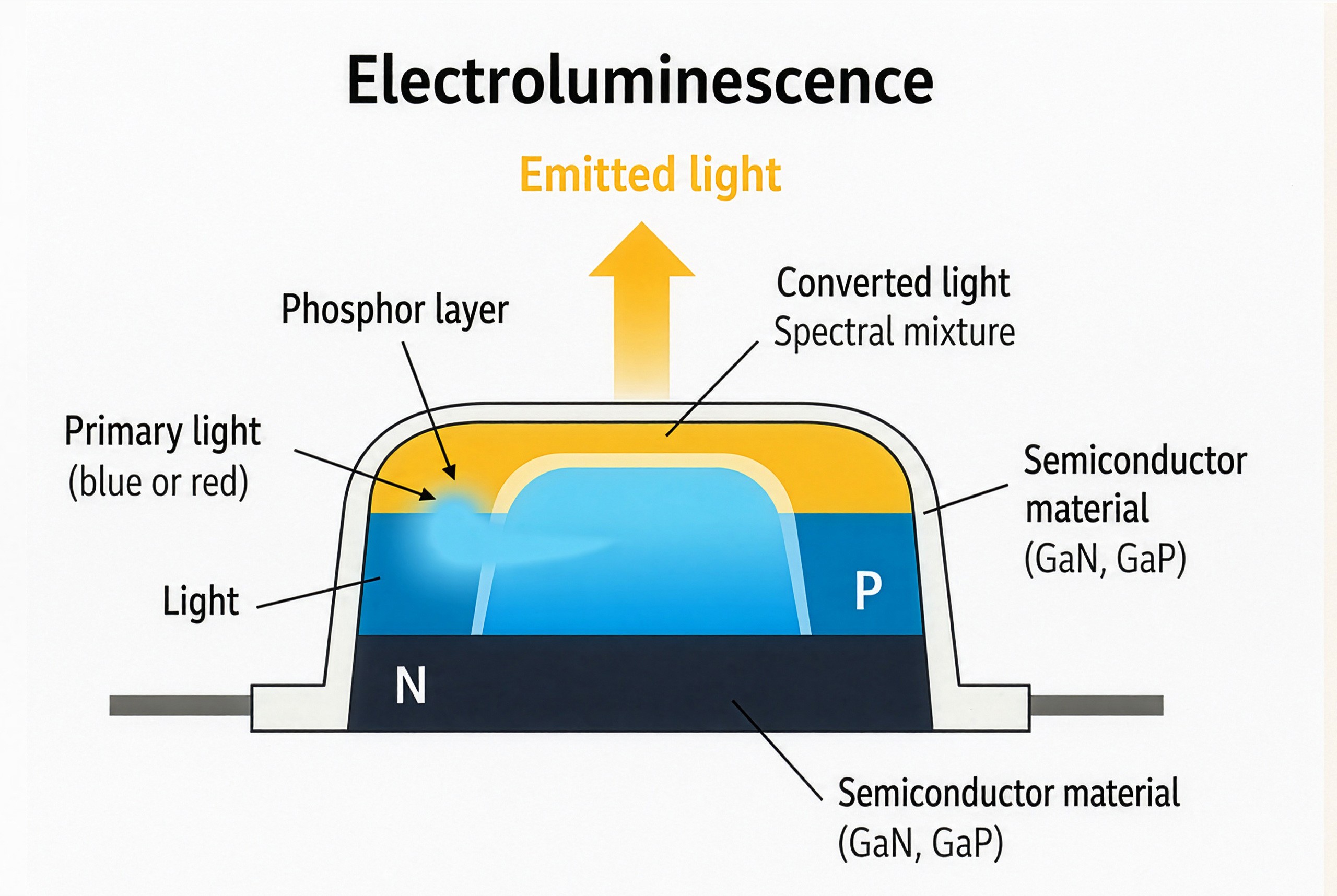
How LEDs Work: Electroluminescence, Materials, and the Light Spectrum From semiconductor structure to color rendering: how LED light takes shape Visible light, although perceived as a continuous and unified phenomenon,…
Fundamental Properties of Electromagnetic-Waves Amplitude and Wavelength
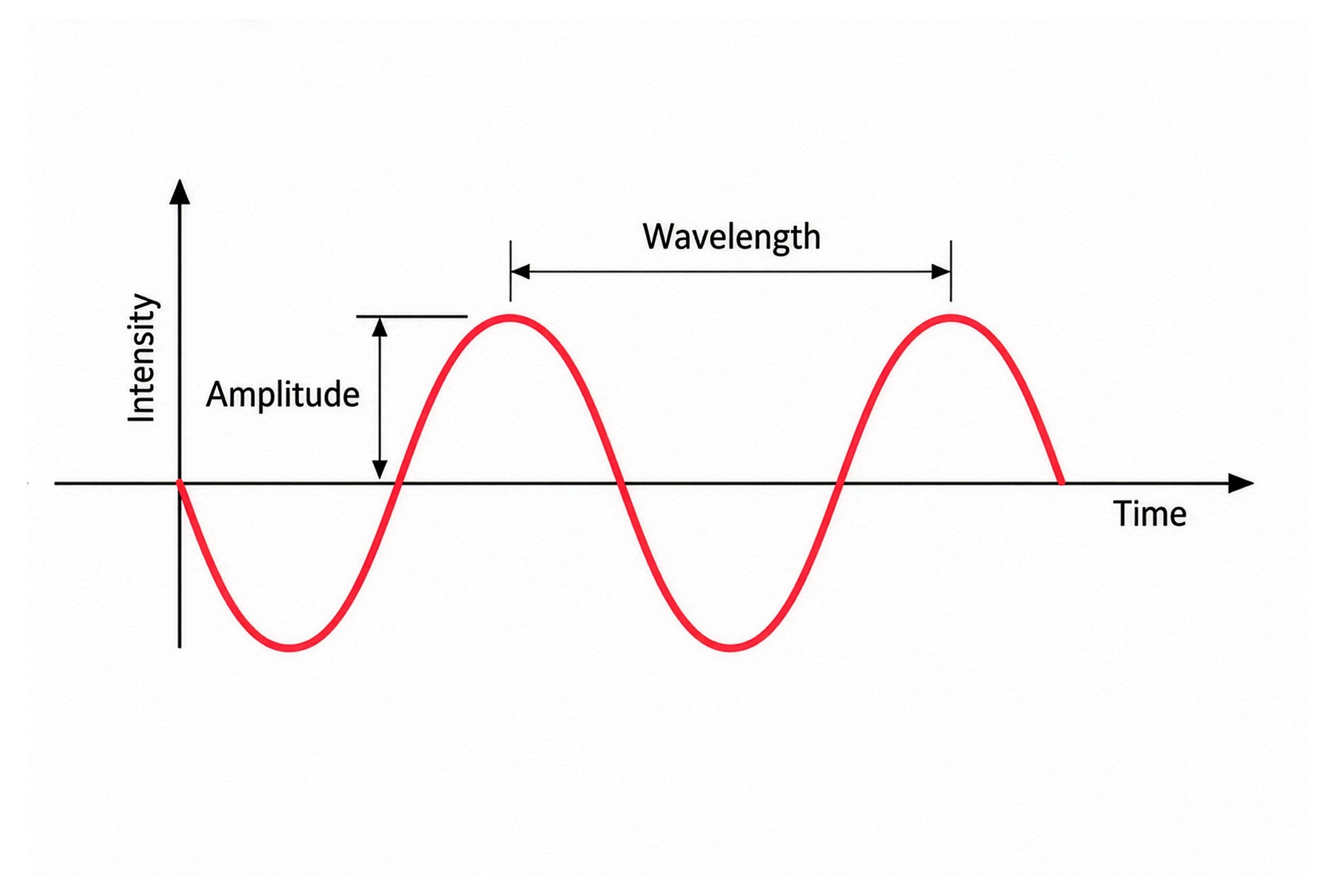
Visible Light and the Electromagnetic Spectrum: Physical Principles for Lighting Design How wavelengths influence perception, color, and light design After examining how the human eye adapts to different illumination levels…
Visual Signal Transmission Pathway in the Human Retina
Photopic vs Melanopic Illuminance: Definition and Spectral Sensitivity MEDI, EML, and CS. Three essential indicators for measuring the circadian impact of artificial light The perception of light varies according to…
Light Perception Human Eye Capabilities and Limitations
Light Perception: Capabilities and Limits of the Human Eye Understanding how the human eye works is the first step toward designing light with awareness  The human eye is a highly…
Lighting-Design-e-Teoria-della-Luce
Lighting Design and Light Theory Complexity in the relationship between light, perception, and design   How does a lighting designer develop a lighting project? Which disciplines should a rigorous lighting…
MENU