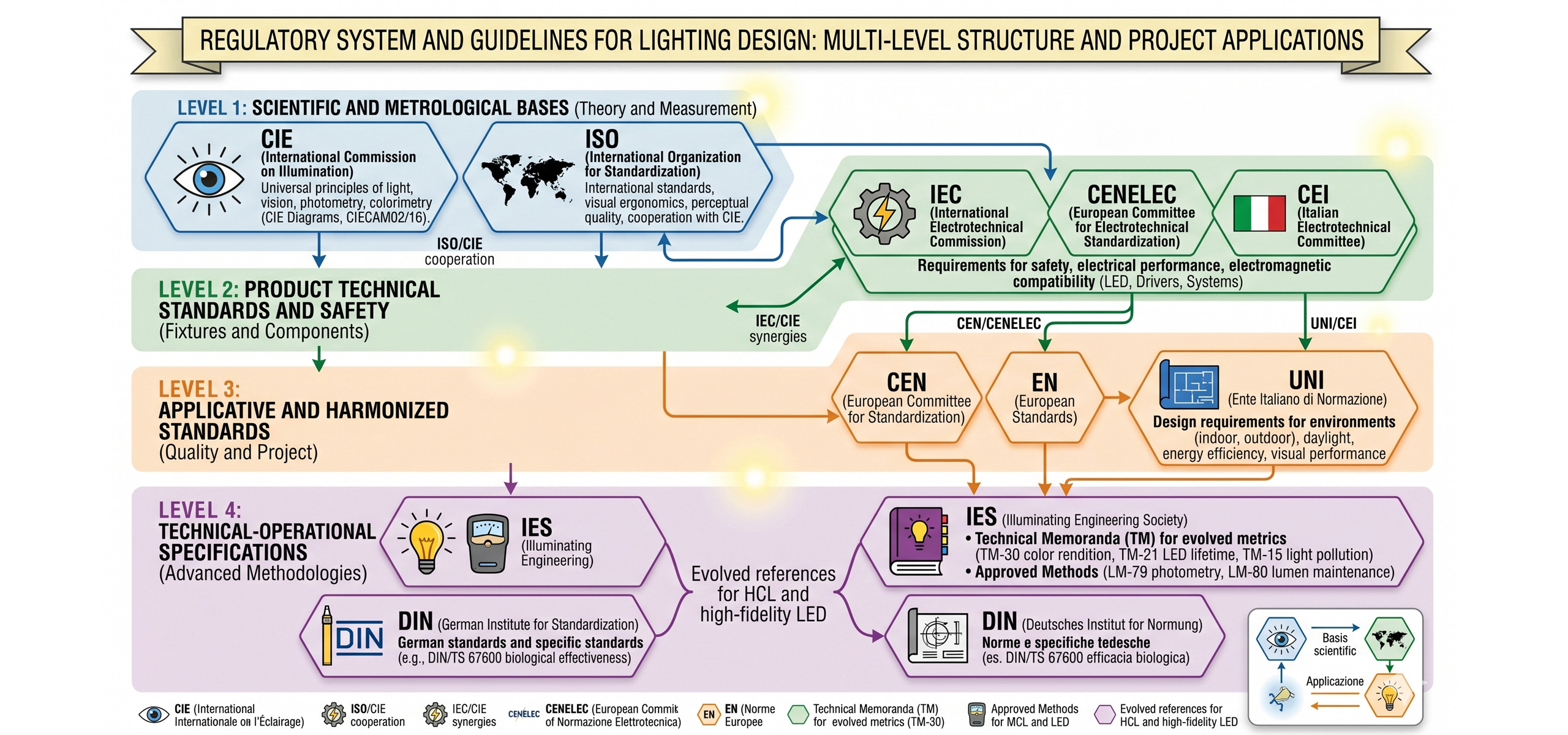
Authoritative Standards and Guidelines in Lighting Technology: Multilevel Structure and Design Applications
A complex regulatory system for designing light with technical rigor and application coherence
The evolution of light sources – in particular the capillary diffusion of composite spectrum LEDs – has brought about a radical transformation in the way of design, evaluate and regulate the light. As highlighted in the discussion on CIE diagram 1931, the traditional chromatic instruments, while retaining a role historical and regulatory, are revealed today insufficient to accurately represent the perceptual quality they biological effectsof lighting.
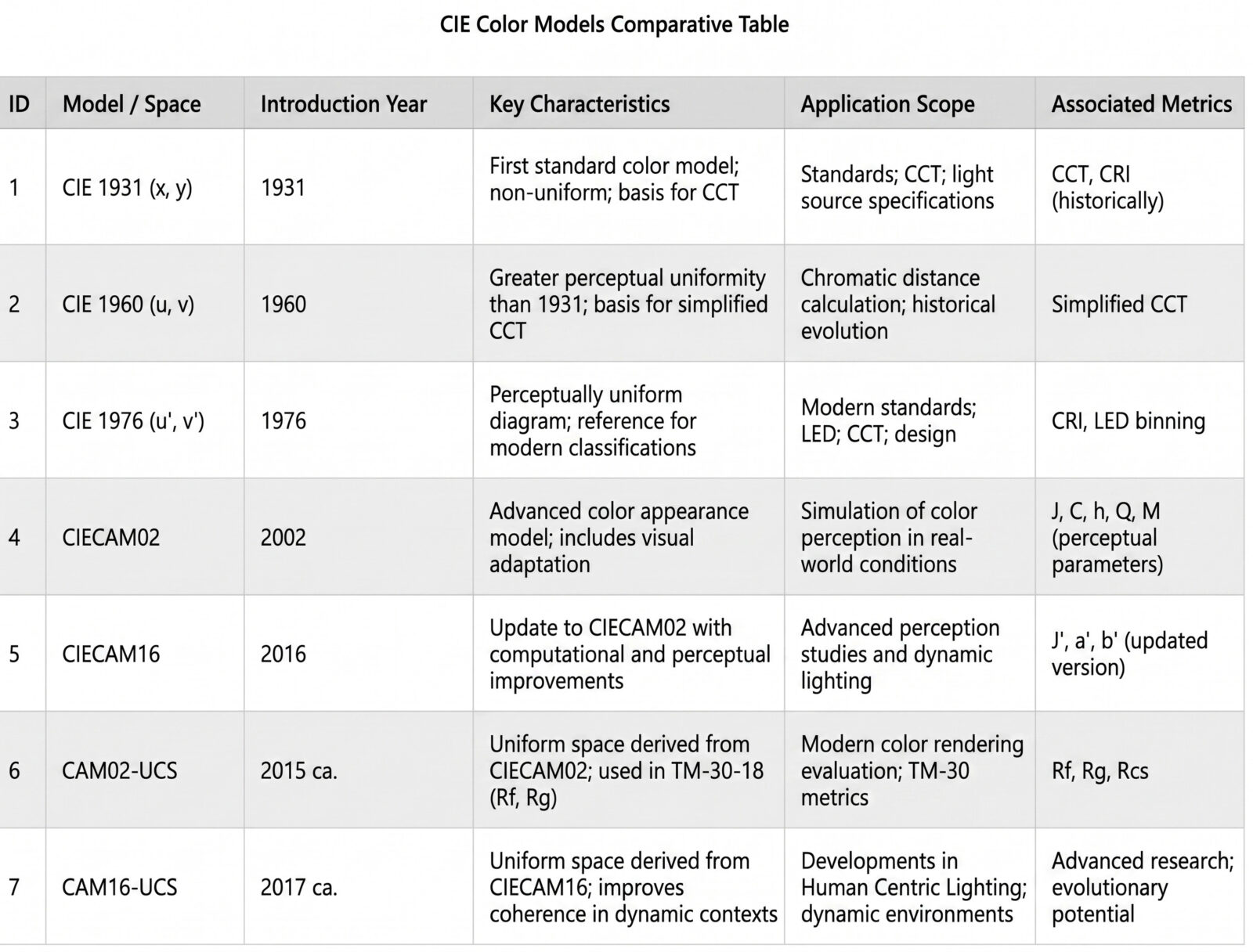
To meet these limitations, the CIE 1960 diagram (UCS) introduced a more uniform representation of the differences between perceived colors, laying the foundation for the processing of metrics more closely aligned with human visual perception. However, even this model, although more advanced, is not able to restore the spectral complexity of the New generation LEDs It is in this context that the CIE continued to develop more advanced systems, introducing the CIE 1976 diagram (UCS), today widely used for its better perceptual uniformity, and the basis for many current standards and metrics. At the same time, it was realized that a two-dimensional representation was no longer sufficient to realistically describe the appearance of color under different environmental conditions.
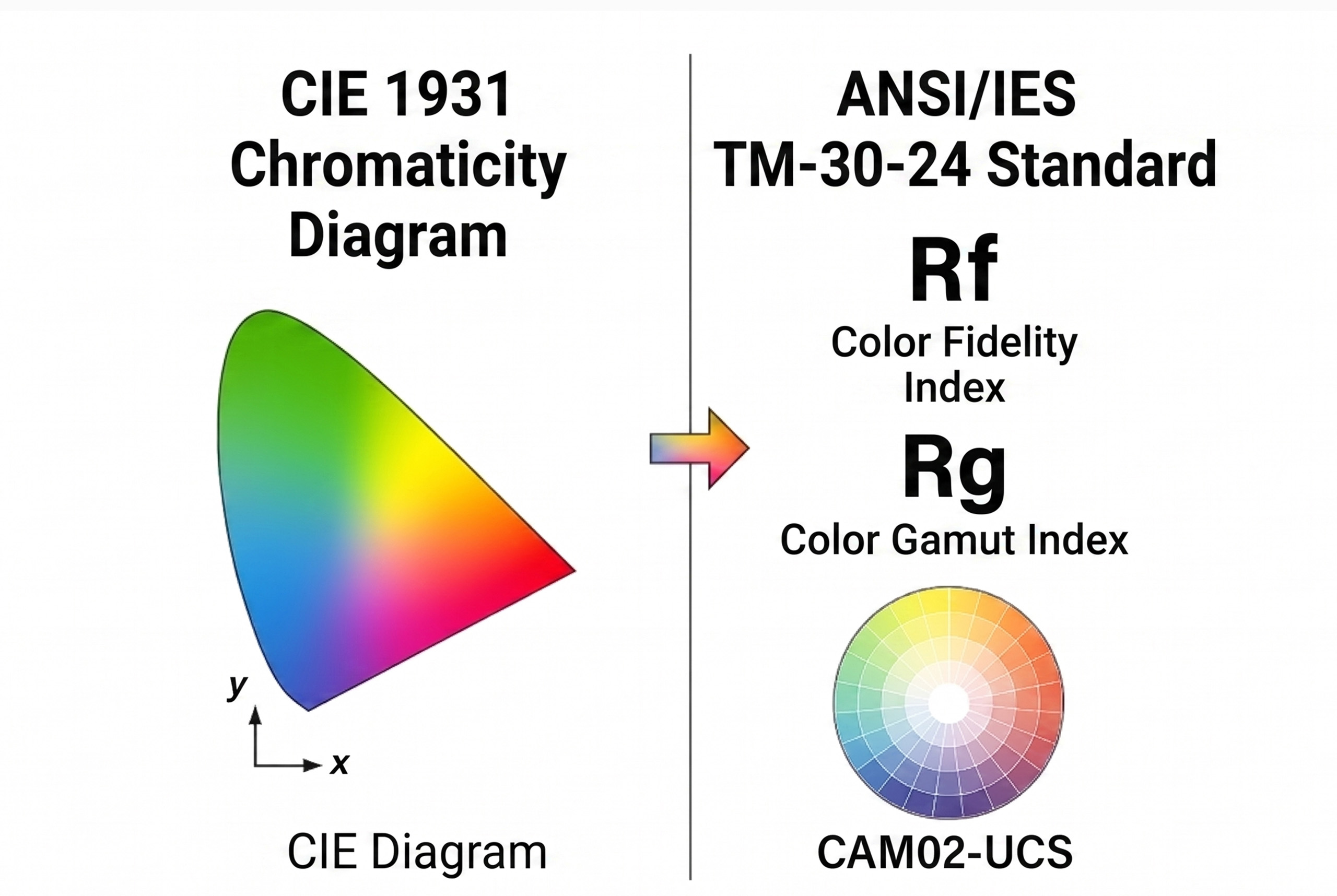
Starting from these considerations, the Commission has introduced more sophisticated models such as CIECAM02and the next one CIECAM16, capable of integrating fundamental variables such as the adaptation luminance, the visual field conditions, the brilliance of the context and the perceived tint these models allow for a more accurate description of the color experience, even under complex or dynamic conditions. From these models, uniform spaces are then derived such as CAM02-UCS and CAM16-UCS, which allow for more precise calculations the perceptual distances between colors and which have been adopted, for example, within the most recent metrics developed by the IES.
A relevant example of this convergence is the document CIE 224:2017, which introduces a new color fidelity index (Rf) based on the CAM02-UCS space, overcoming the simplifications of the CRI (Ra) and responding more effectively to the spectroscopic complexity of SSL sources. In this evolutionary scenario, the lighting designer is called to operate within a increasingly stratified body of legislation, which integrates scientific dimension, technical performanceandimpacts on humans.
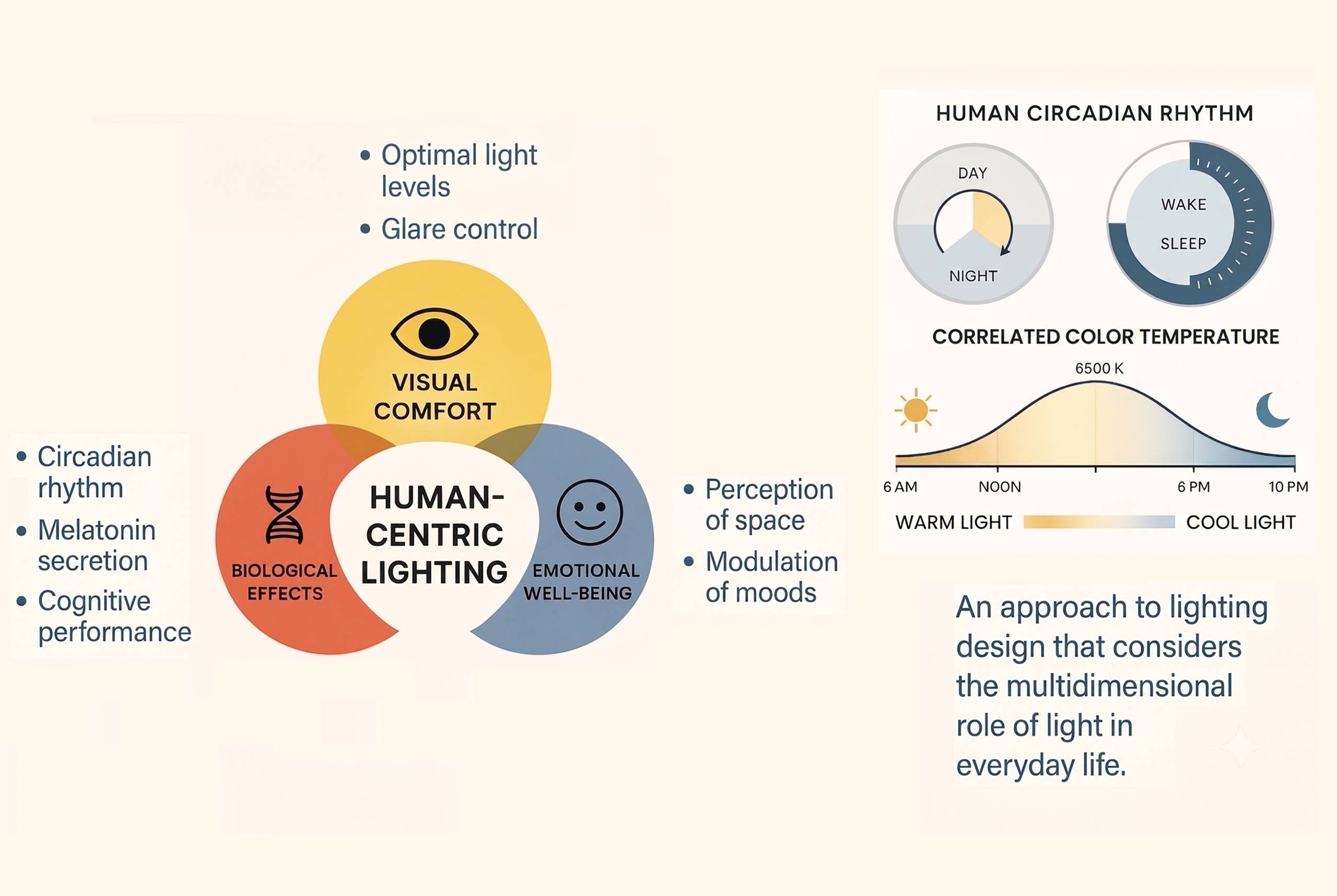
To ensure results consistent with the principles of visual effectiveness, technical compliance and environmental well-being, it is essential to have a in-depth knowledge of the main regulatory sources, ranging from photometric calculation at the color rendering, from the electromagnetic compatibility at the plant safety, up to the emerging metrics related to Human Centric Lighting.
The following section proposes a systematic map of the most authoritative references in the lighting field, organized according to roles, functions and application areas. The sector, in fact, is regulated by a complex system of standards, guidelines and technical documents, issued by national and international organizations, each with a specific but often interconnected function. Disciplinary complexity– which encompasses aspects photometric, electric, perceptive, organic, energetic and environmental– requires an integrated reading of the regulations to ensure quality, safety and compliance in the projects of lighting design.
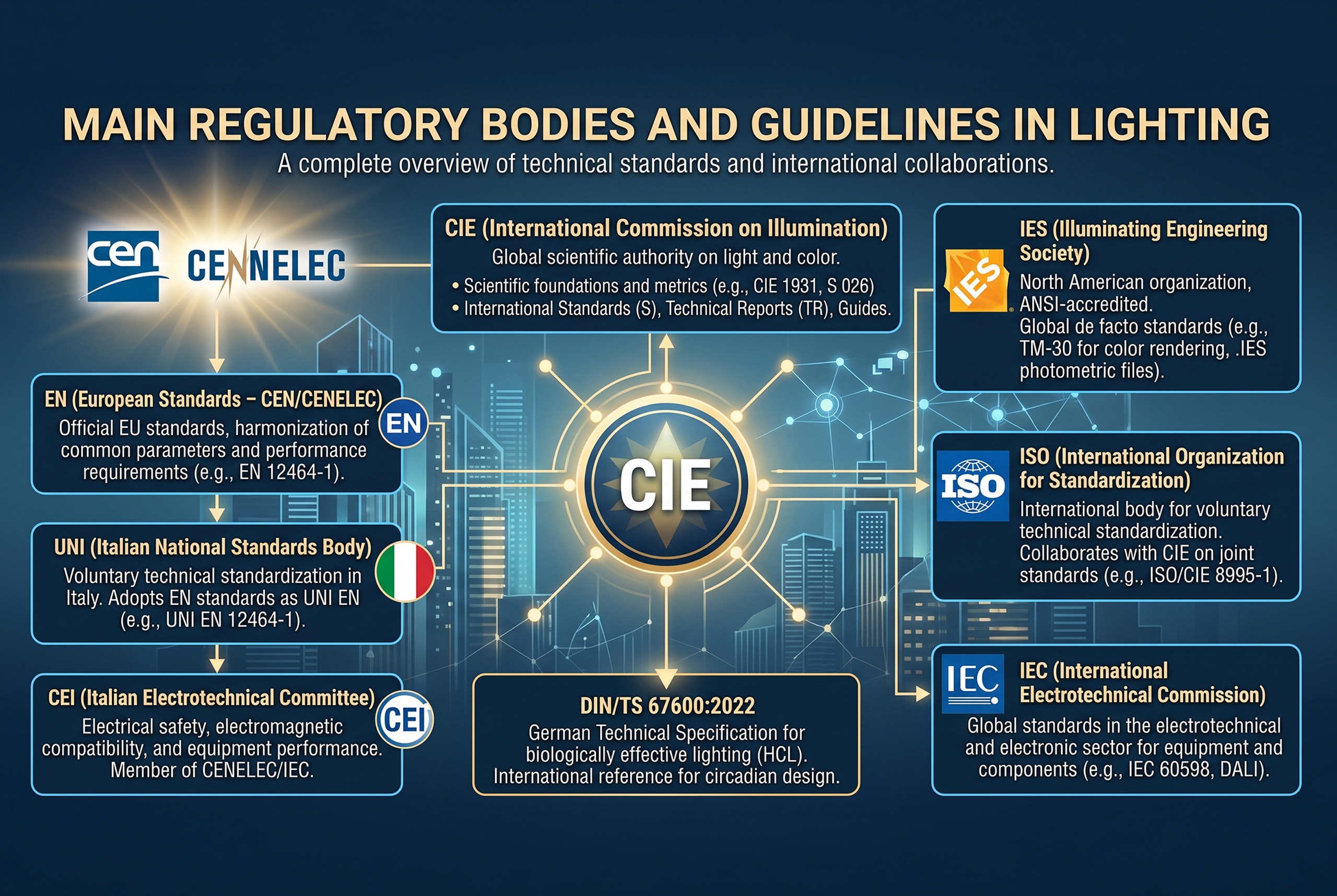
To improve understanding, the main references can be classified according to four operational functions, each of which contributes to a different level of lighting design:
1 - Scientific and metrological bodies – They provide the theoretical principles and universal measurement bases of light and vision:
- CIE: global authority on photometry, colorimetry, human and non-visual vision.
- ISO: develops international standards, including those on visual ergonomics, perceptual quality, colorimetry – often in synergy with the CIE.
2 - Technical product and safety bodies – They define the Technical specifications for appliances, LEDs, systems and electrical safety:
- IEC: international standards for sources, appliances, power supplies and electromagnetic compatibility.
- CENELEC: harmonization of technical requirements at European level.
- the: Italian implementation of IEC and CENELEC standards.
3 - System implementing and standardizing bodies – Focus on the use of light in built environments, on the visual and energy performance, and on the project quality:
- CEN: European regulations on interior lighting, daylight, and energy efficiency.
- IN: identifying acronym for harmonized European standards, mandatory in member countries.
- IT: implements and adapts European standards to the Italian context.
4 - Specialist and technical-operational bodies – They produce application documents, calculation methods, design recommendations, with strong operational impact:
- IES: US reference for TM specifications, color rendering, flicker, LED methods.
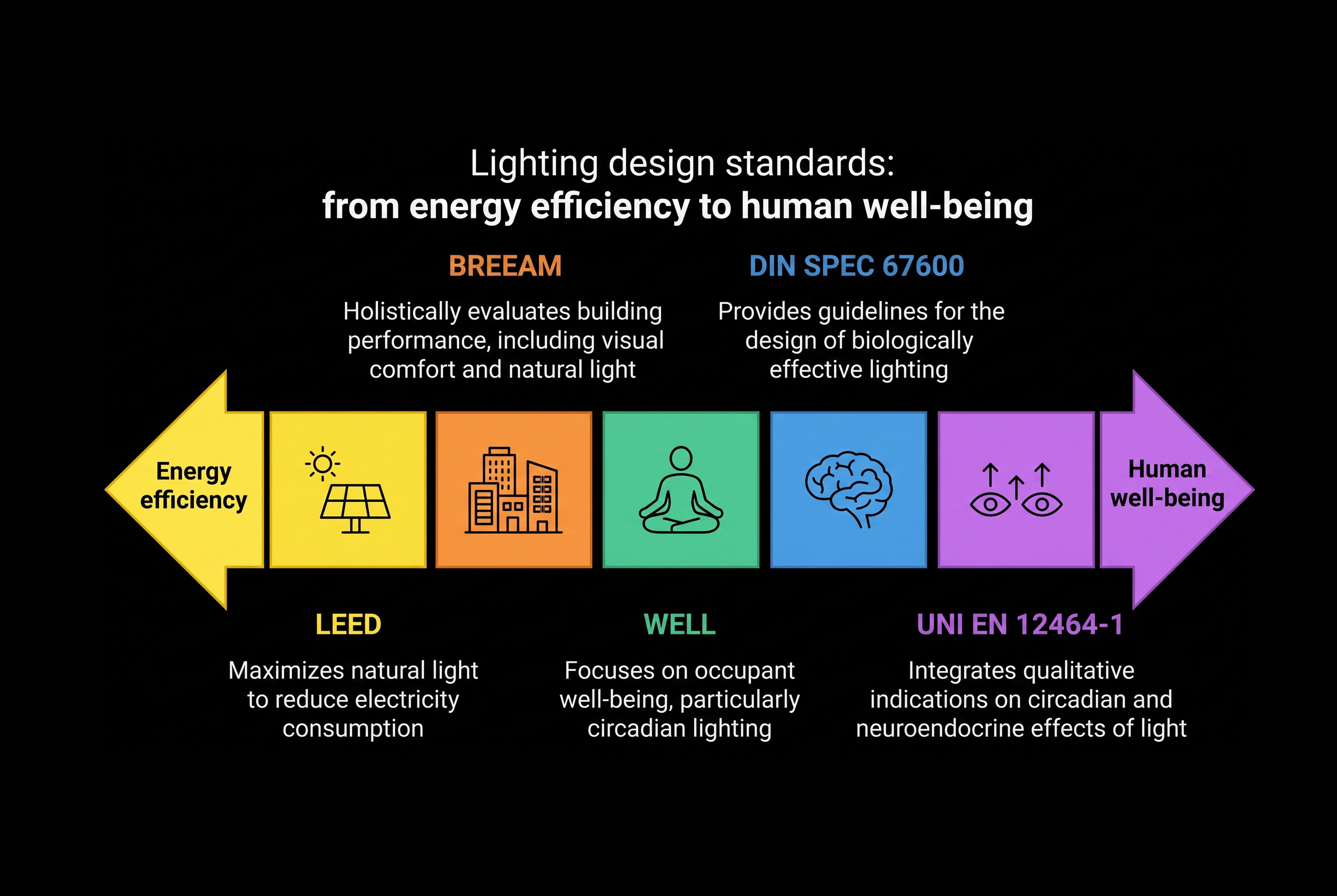
- FROM: German standards and technical specifications, including DIN/TS 67600 on the biological effectiveness of light.
These functions, although distinct, they overlap frequently: many standards arise from international collaborations (e.g. ISO/CIE, IEC/CIE), are harmonized in EN standards and then implemented in individual countries (e.g. UNI, CEI). The result is a multilevel system, which ensures consistency between scientific research, technical standards and design application.
To complete the overview, it is also useful to consider the functional structure that regulates the relationships between the different normative sources. Although there is no absolute legal hierarchy between the entities, it is possible to identify a logical and progressive sequence, which reflects the path through which scientific knowledge is translated into a binding standard or operational reference for design.
- The documents of theoretical-scientific basis (e.g. CIE, ISO) define the fundamental concepts and measurement methodologies.
- The standards technical-performance product (IEC, CENELEC, CEI) specify the safety, compatibility and performance requirements of the devices.
- The standard applicative and harmonized (CEN, EN, UNI) translate the principles into design requirements for environments, users and lighting performance.
- The specifications technical-operational (IES, DIN) provide advanced design tools, particularly relevant for advanced applications such as HCL or high color fidelity LEDs.
This multi-level overlap ensures that every phase of the design process—from defining the visual stimulus to selecting the device and configuring the system—is guided by reliable and consistent references. To further facilitate reading, a functional matrix which summarises the regulatory functions in relation to the phases of the design process:
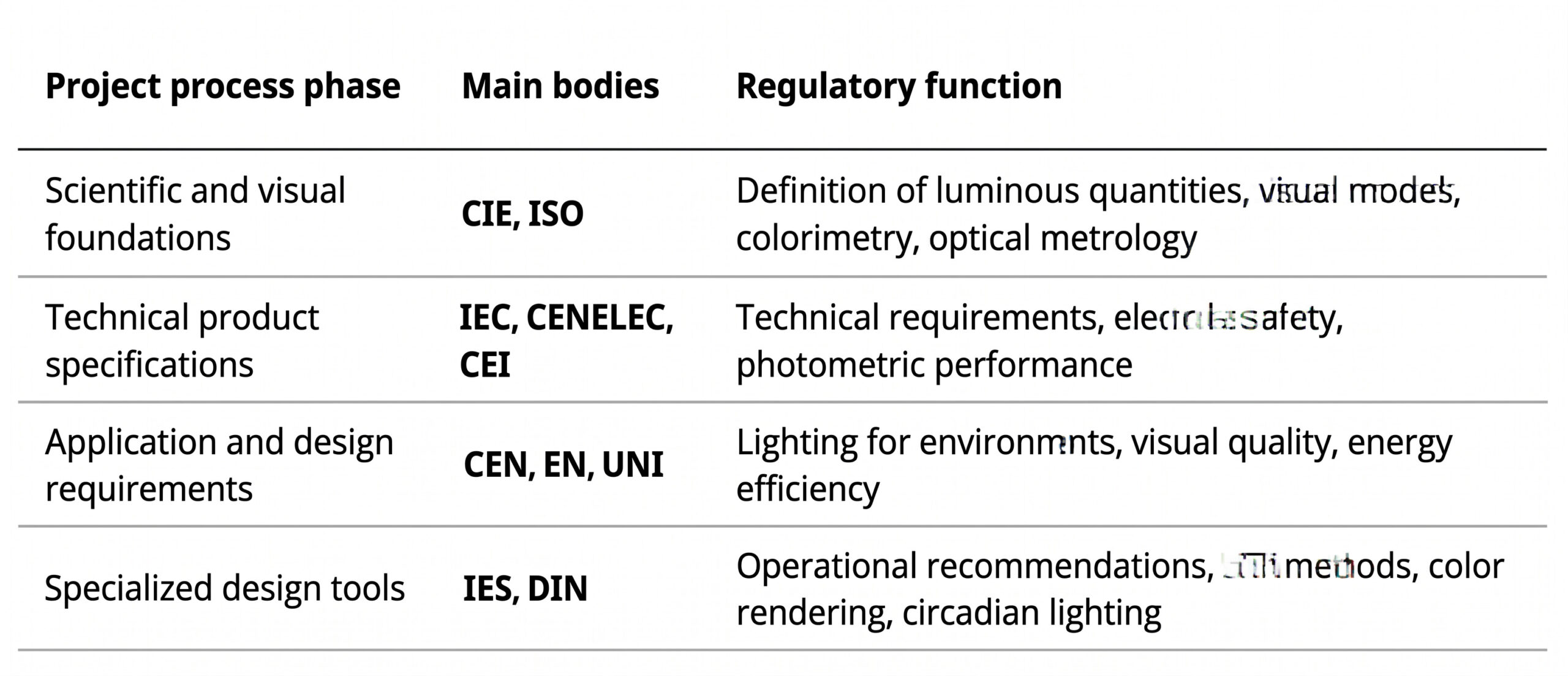
The matrix approach adopted allows for a transversal reading, useful to clarify who intervenes, with what role and at what stage of the lighting project, promoting a coherent integration of regulations to facilitate the consultation and practical use of the most relevant regulatory references, the main sector sources are presented, accompanied by comparative table that connect equivalenze operative, areas of application and interactions between standards.
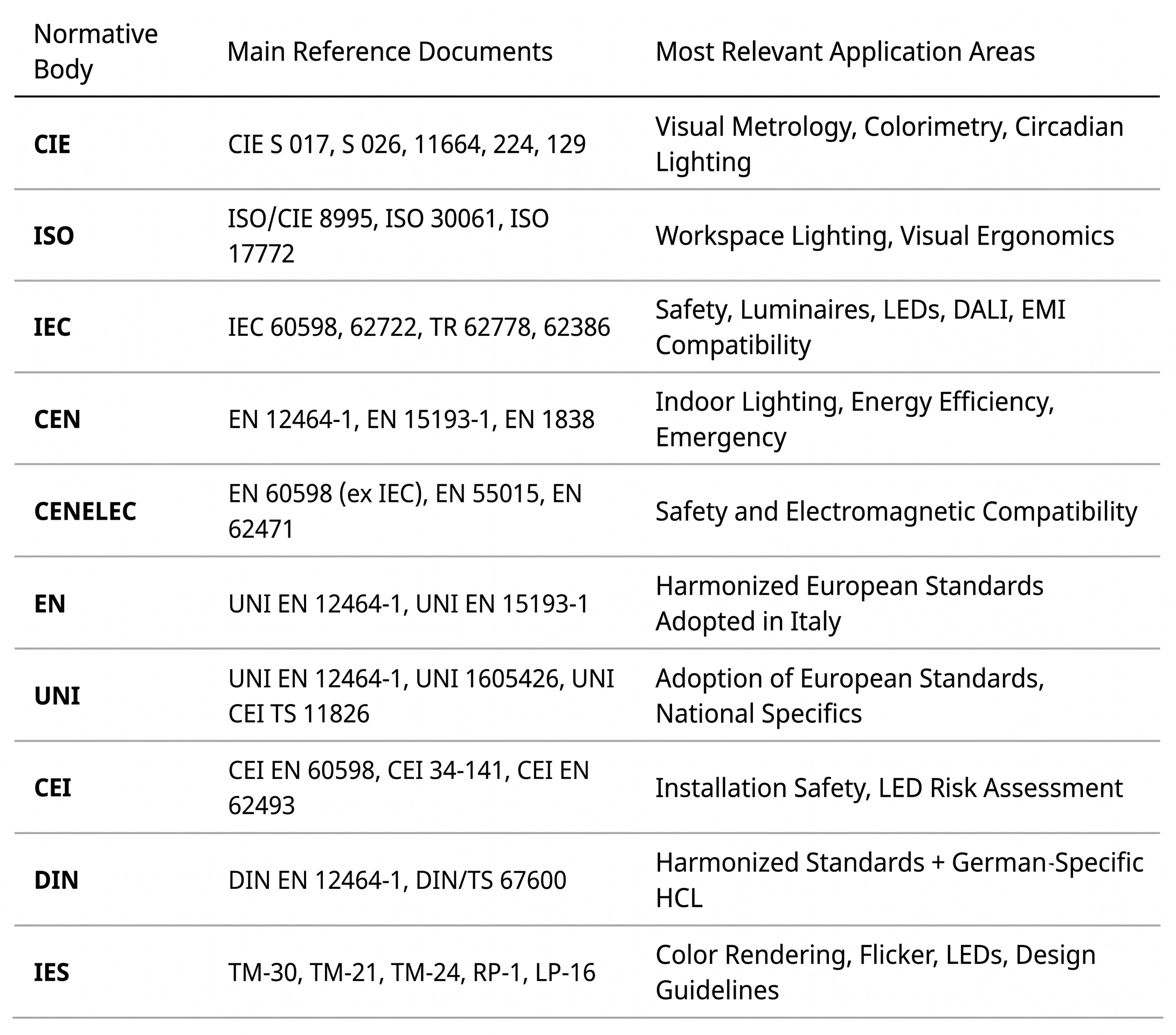
The in-depth analysis of the main normative sources and guidelines in lighting technology showed how the sector is now regulated by a multilevel system, in which scientific bodies (such as the CIE and the ISO), technical bodies (such as IEC, the, CENELEC), application standardization structures (such as IT ed IN), and specialized institutions (including IES and FROM) contribute to the definition of requirements, methods and parameters that guide each phase of the lighting project.
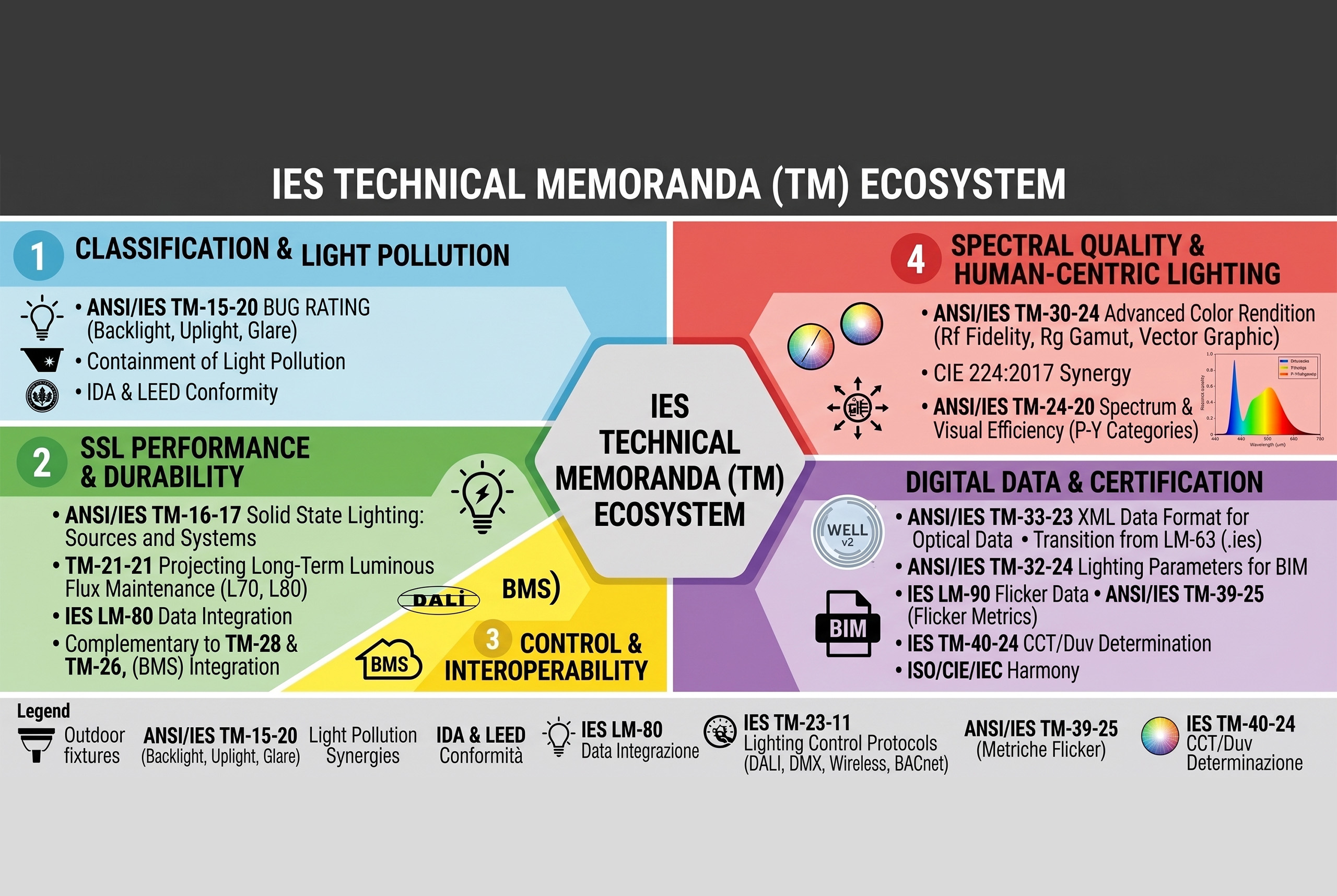
In particular, the large body of standards developed by the Illuminating Engineering Society (IES), through the publication of the Technical Memoranda (TM), has developed an advanced technical-regulatory system which has established itself as an operational reference also at an international level, often anticipating the directives of bodies such as CIE, ISO the IEC these documents, conceived with an applicative approach, provide updated tools for addressing complex lighting design issues with metrological precision, orientation towards visual quality and compatibility with the latest digital protocols the main areas covered include:
- Light pollution control – TM-15 (latest version: 2020)
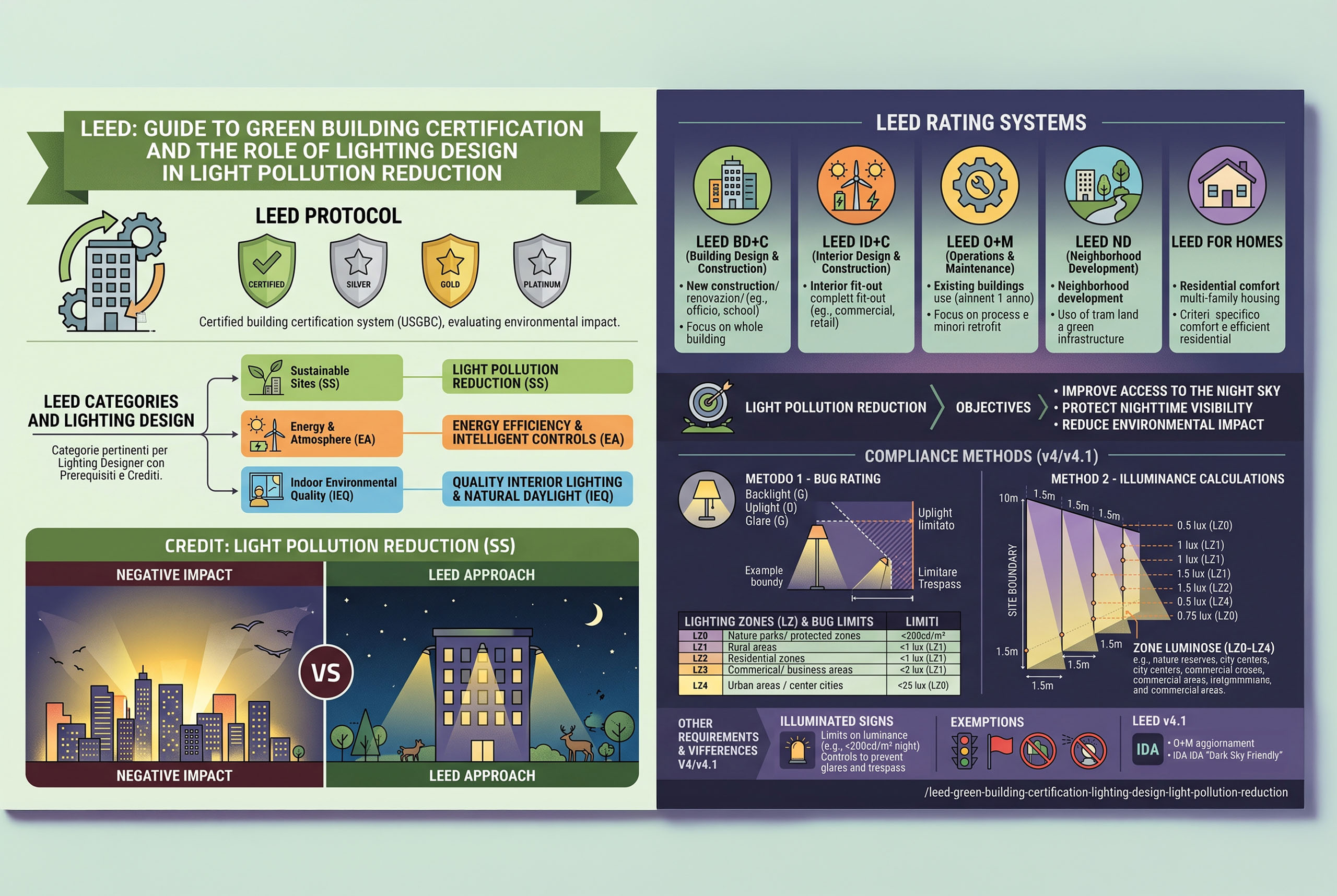
Defines the classification system BUG (Backlight, Uplight, Glare), now widely used in outdoor projects to contain upward emission and limit glare, also in compliance with regional and LEED regulations.
- Lifespan and reliability of LED sources – TM-21 (2011), TM-26 (2018), TM-28 (2019)
These three documents form a coherent suite: the TM-21 estimates the reduction in luminous flux over time (L70, L80, etc.); TM-26 assesses catastrophic failures at the LED package level; TM-28 extends the criteria to finished products, including drivers, dissipation and real-world operating conditions.
- Advanced color rendering – TM-30 (first edition: 2015, updated version: TM-30-20 and TM-30-24)
Introduces advanced metrics such as Rf (fidelity index), Rg (gamut index) and the Color Vector Graphic, based on 99 spectral samples and the color space CAM02-UCS, overcoming the limitations of the CRI and offering an evaluation much closer to human perception.
- Spectral optimization and visual performance – TM-24 (2020), TM-40 (2024)
The TM-24 proposes a correction coefficient to adapt the recommended illuminance based on the visual efficiency related to the spectrum of the source; TM-40 introduces a standardized method for calculating CCT and D<sub>uv</sub>, ensuring data consistency between manufacturers and software. The parameter D<sub>uv</sub> represents the vertical distance between the chromatic point of the light source and the black body locus, measured in the diagram CIE 1960 UCS.
- Control and interoperability of lighting systems – TM-23 (2011), TM-32 (2018), TM-33 (2019)
The TM-23 provides guidelines for the use and selection of control protocols such as DALI, DMX, 0–10V and wireless; TM-32 establishes the parameters to be included in the BIM models of lighting fixtures; TM-33 proposes a XML data formatf or the description of photometry, as an alternative to the classic .IES format, improving compatibility between software systems and manufacturers.
- Flicker, stroboscopy and visual comfort – TM-39 (2025)
Latest generation document that introduces quantitative metrics for the evaluation of the perceived flicker, of the effects stroboscopic and visual comfort in dimmable sources and digital systems. It includes parameters such as SVM (Stroboscopic Visibility Measure) and Pst<sub>LM</sub>, in line with the CIE TN 006 recommendations. The parameter Pst<sub>LM</sub> it's a standardized metric to evaluate the flicker visibility (flicker) in the short term generated by a light source modulated over time, as can occur in dimmable LEDs or digital PWM (Pulse Width Modulation) systems.
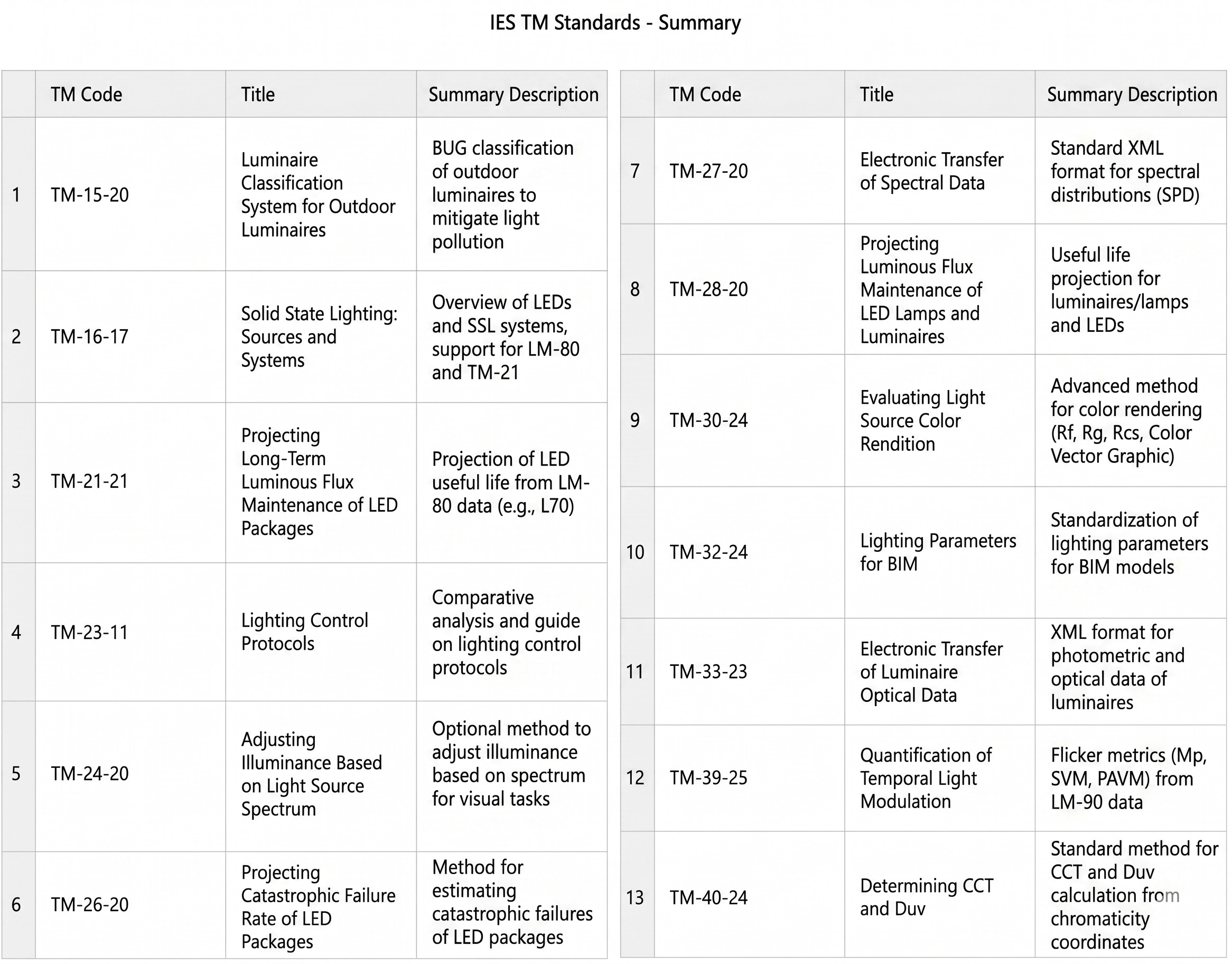
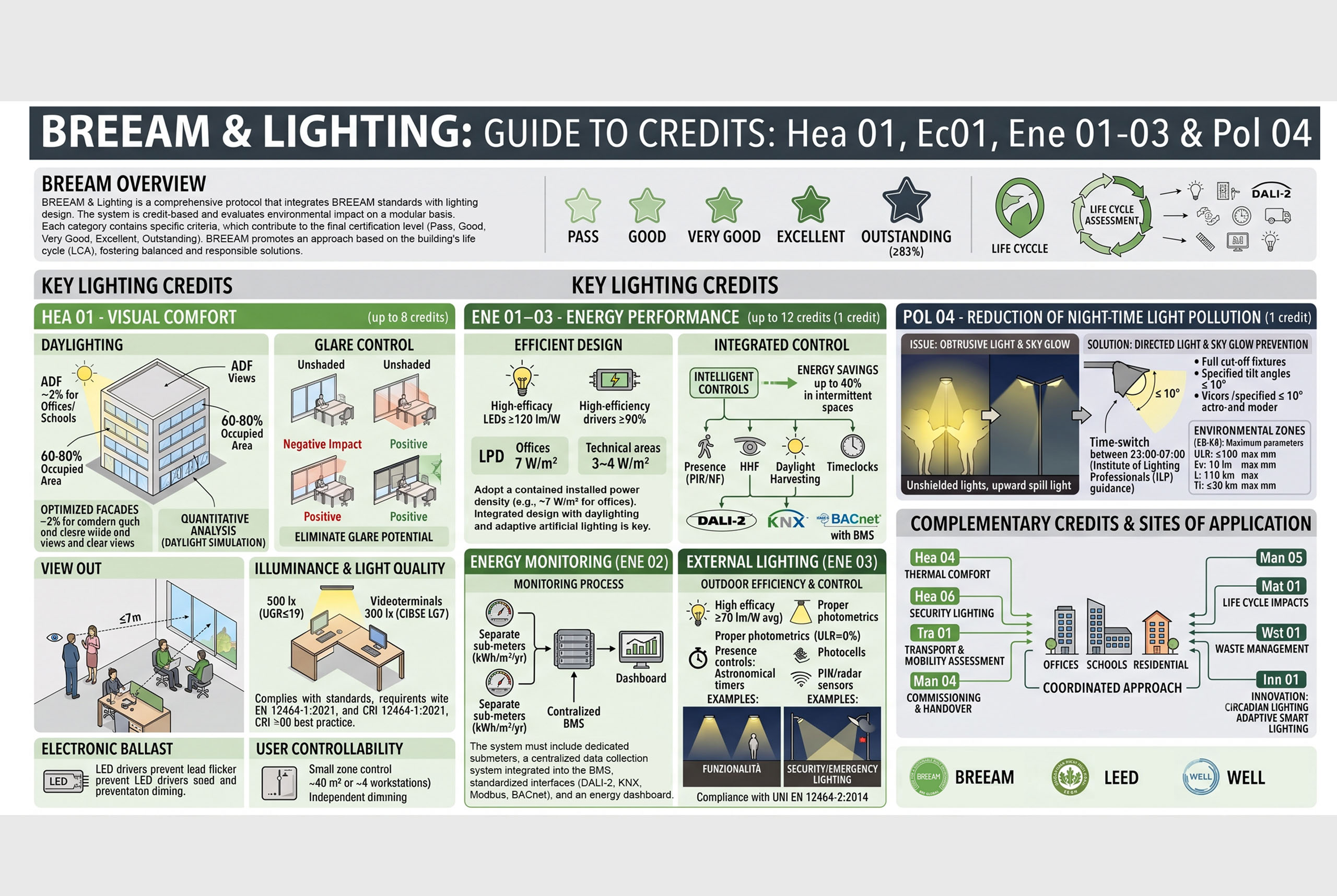
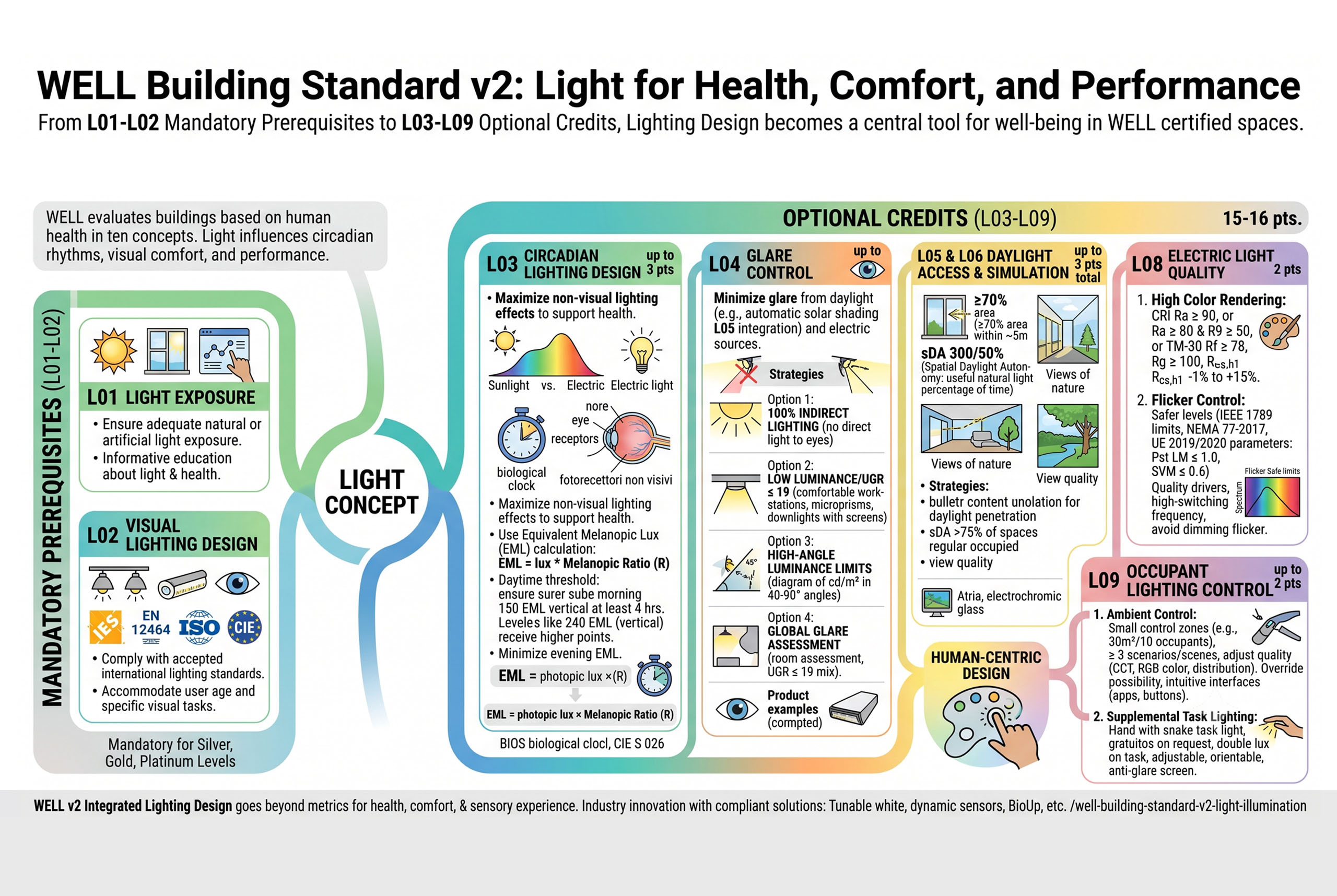
I Technical Memoranda dell’IES, although initially developed in the field North American regulations, I am today widely adopted also internationally, not only in the technical specifications and in the quality protocols (come WELL, ENERGY STAR and DLC), but also as design references in application areas such as high visual sensitivity, which museums, healthcare, hospitality, high-end retail, dynamic lighting and Human Centric Lighting.
Their value lies not only in their technical-scientific rigor or in their ability to anticipate approaches later adopted by bodies such as CIE, ISO and IEC, but above all in their concrete applicability: they offer to the designer advanced operational tools for the evaluation of real-world performance, perceptual performance, visual comfort and interoperability between systems in complex and multidisciplinary design contexts.
In the continuation of this work, we will analyse in detail the most significant individual TM documents, highlighting specific areas of application, methods, design implications and synergies with other international standards, thus offering professionals an operational tool for orienting themselves among the most advanced references in modern lighting technology.
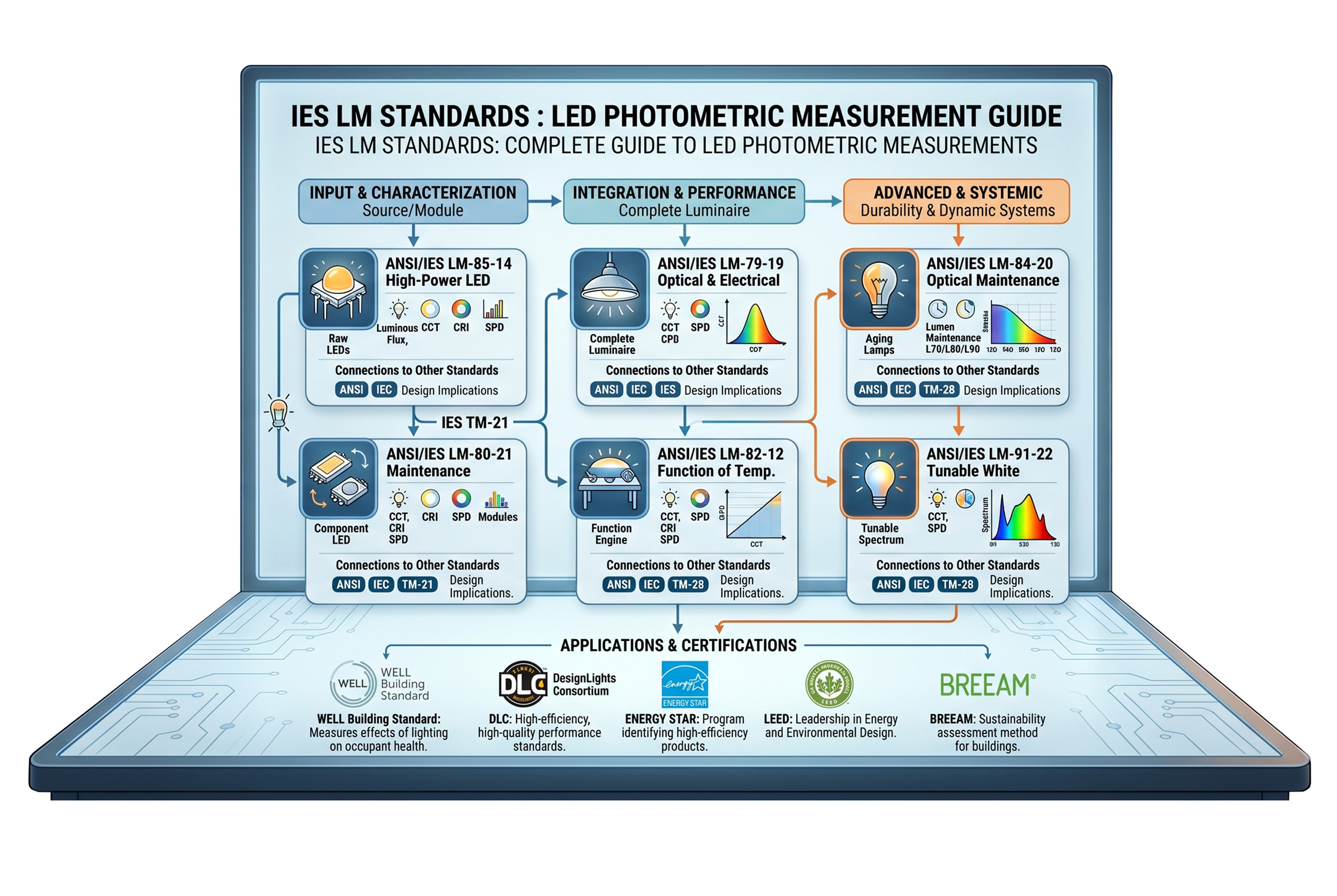
Next to the TMs, the Illuminating Engineering Society (IES) developed another fundamental corpus of technical documents: the LM – Lighting Measurements, or methods approved for the photometric, electrical and performance measurement of lighting products. Unlike TMs, which are mainly oriented towards design methodology and application classification, LMs provide codified experimental protocols to ensure the repeatability and traceability of the data provided by manufacturers and used by designers, laboratories and certification bodies.
These documents represent the main operational reference for the objective verification of the performance of LED systems, from measuring luminous flux to determining spectral stability and maintenance over time. Their adoption has become essential within voluntary protocols (such as DLC, ENERGY STAR, WELL), in harmonized international standards (e.g. IEC 62722-2-1) and in the technical specifications for public procurement, where the reliability and comparability of photometric data are essential requirements.
In the following paragraphs the main standards will be analyzed LM currently in force, with a description structured according to objective and scope, connections with other international standards and design implications, so as to outline a complete picture of the technical references that are essential today to operate competently in the sector of solid-state lighting (SSL).
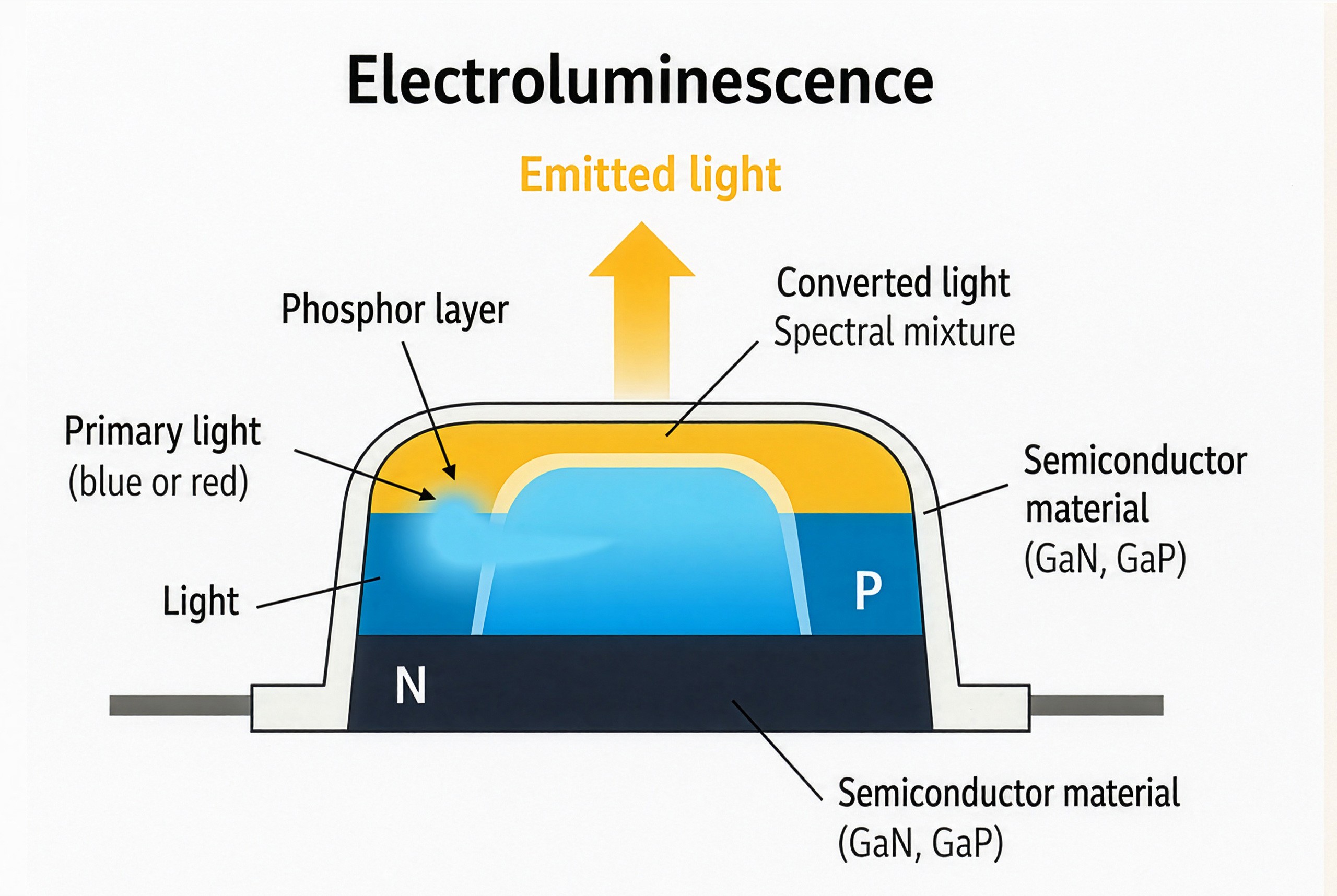
With the affirmation of technologies semiconductor-based light emission, lighting design has required increasingly precise tools to measure and certify the performance of new generation sources. This transformation has marked the transition towards the solid-state lighting (Solid-State Lighting, SSL), a technology that does not use incandescent filaments or ionized gases, but uses electronic components come i LED they YOU ARE, capable of generating light through phenomena electroluminescent inside semiconductor materials.
To meet the needs of rigorous measurement and objective certification of SSL-based products, the Illuminating Engineering Society (IES) introduced the Standard LM (Lighting Measurements): a collection of approved methods for the photometric, electrical and chromatic characterization of solid-state sources and devices, today a point of reference for manufacturers, designers and laboratories on an international level.
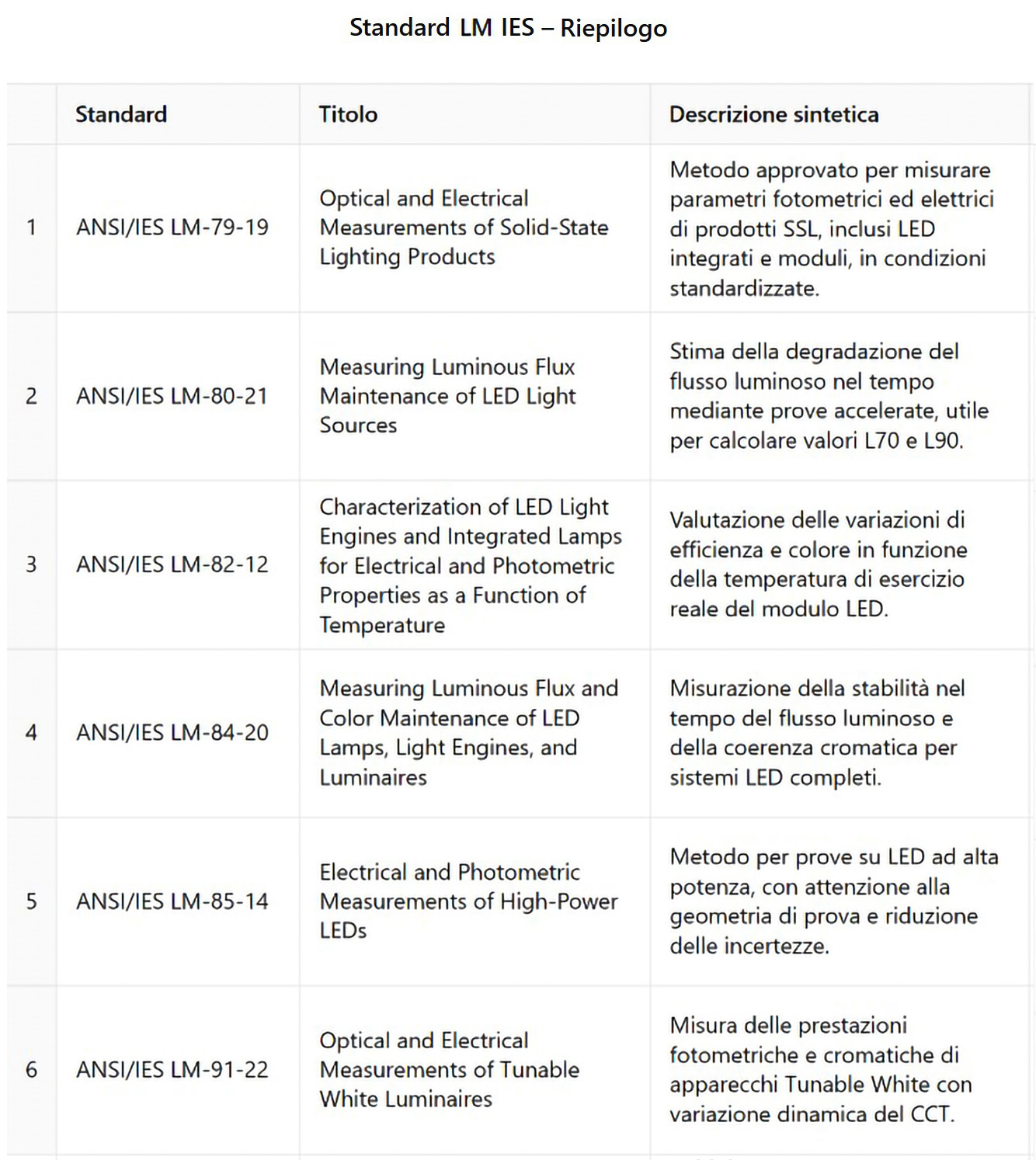
Below is a summary of the main IES LM Standards currently in force, selected for their design relevance and regulations. Each description delves into the scope of application, theconnections with other international standards and the operational implications, offering an updated and structured framework for orienting oneself among the fundamental metrics of contemporary lighting design:
- Photometric and Electrical Measurements – LM-79 (latest version: 2019)
Defines the approved methods for measuring photometric parameters (luminous flux, CCT, CRI, SPD) and electrical parameters (wattage, power factor, efficiency) of integrated LED fixtures and modules, using integrating spheres and goniometers. Essential for certification protocols such as ENERGY STAR, DLC, and WELL.
- Luminous Flux Maintenance – LM-80 (latest version: 2021)
Establishes test methods for evaluating the degradation of the luminous flux of LED sources over time. Provides experimental data as the basis for projected useful life (L70, L80, etc.) according to TM-21. Used by ENERGY STAR and other agencies for LED product qualification.
- Performance vs. Temperature – LM-82 (latest version: 2012)
Describes how to measure photometric and chromatic variations of integrated LED modules as a function of operating temperature. It allows you to predict actual performance under dynamic thermal conditions and size dissipation systems.
- Flux Maintenance and Color Stability – LM-84 (latest version: 2020)
Evaluates the behavior of lamps, modules, and complete LED fixtures over time, also considering the effects of the optical and thermal systems. Measures both luminous flux maintenance and color consistency (CCT shift, CRI stability).
- High Power LED Characterization – LM-85 (latest version: 2014)
It defines a protocol for highly precise measurement of the photometric and electrical performance of individual high-power LEDs. Relevant for manufacturers and laboratories developing and testing professional LED components.
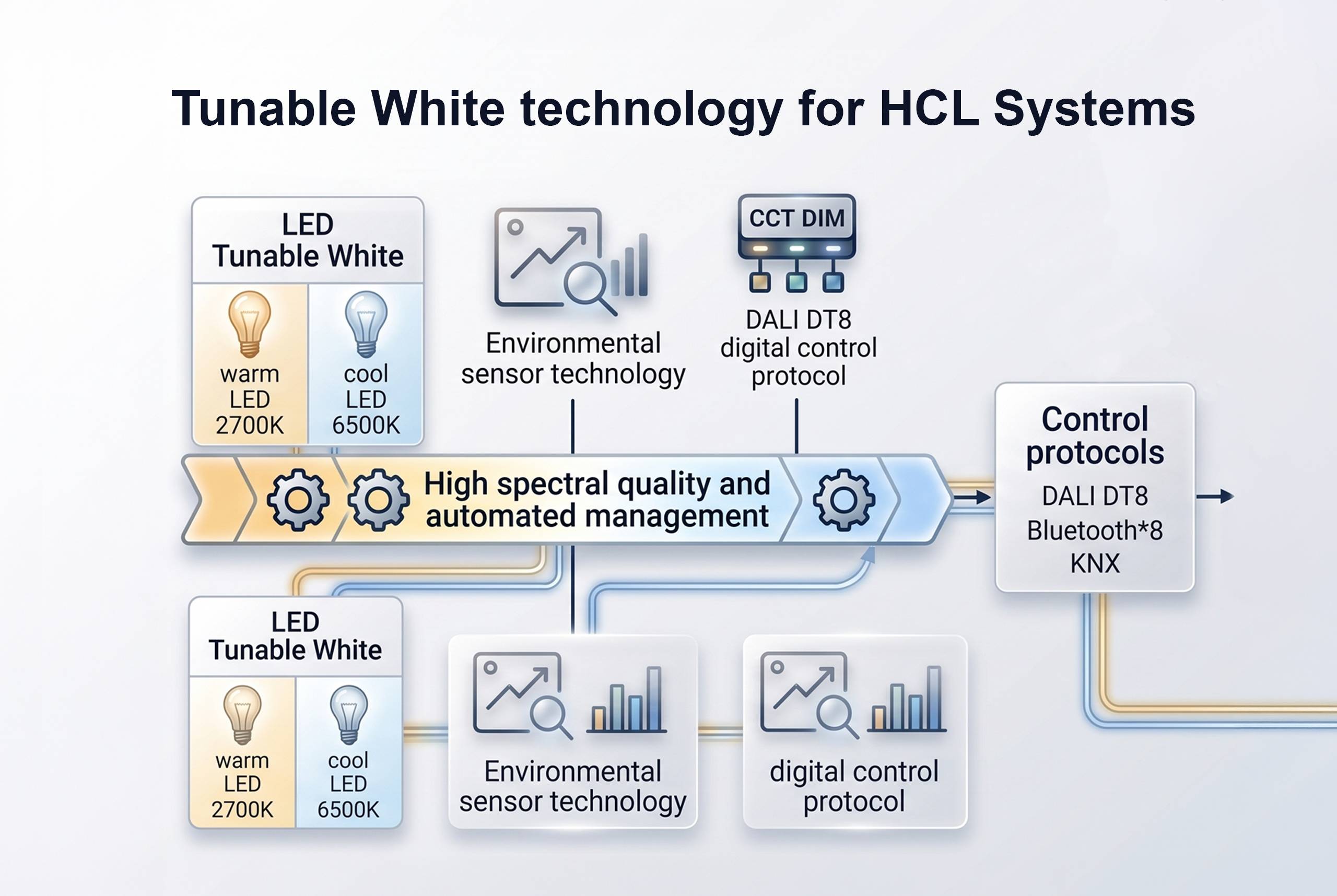
- Variable CCT (Tunable White) Systems – LM-91 (latest version: 2022)
Provides guidelines for measuring performance changes (CCT, CRI, efficiency, color consistency) in color-tunable LED systems. Essential for dynamic lighting design, human-centric lighting, and integration into WELL protocols.
These standards, combined with the TMs, provide a comprehensive framework: from initial efficiency and color data (LM-79), to projected useful life (LM-80/84) and operational behavior (LM-82), all the way to dynamic dimming (LM-91). Armed with these benchmarks, designers, manufacturers, and regulators can operate with greater safety, consistency, and quality in the era of solid-state lighting.