LEED,-WELL-e-BREEAM-Standard-protocolli-e-certificazioni-per-la-progettazione-della-luce-slide

LEED, WELL and BREEAM: Standards, Protocols and Certifications for Light Design

Guidelines and design requirements for integrating natural light, visual comfort and biological effects into environmental sustainability protocols

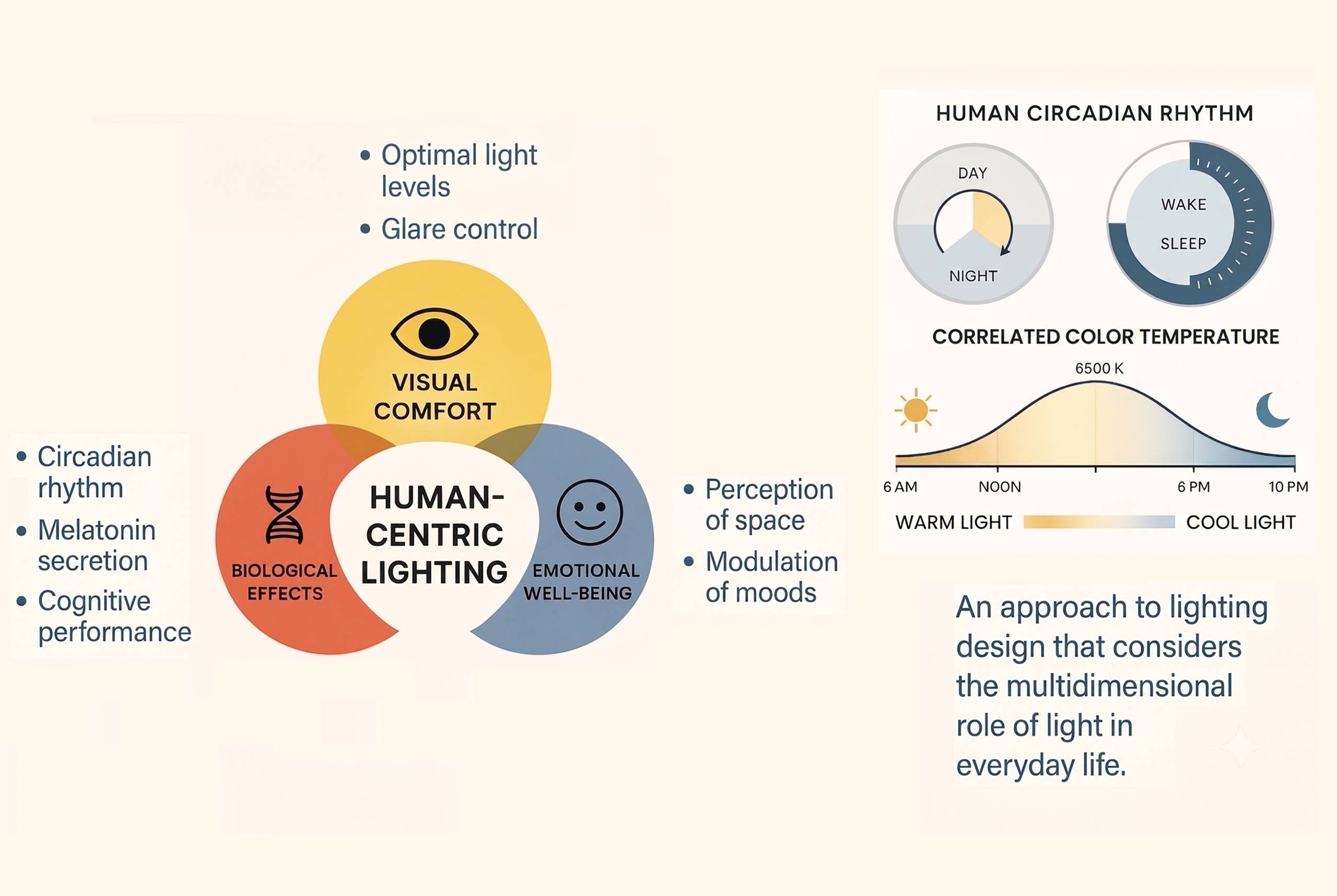
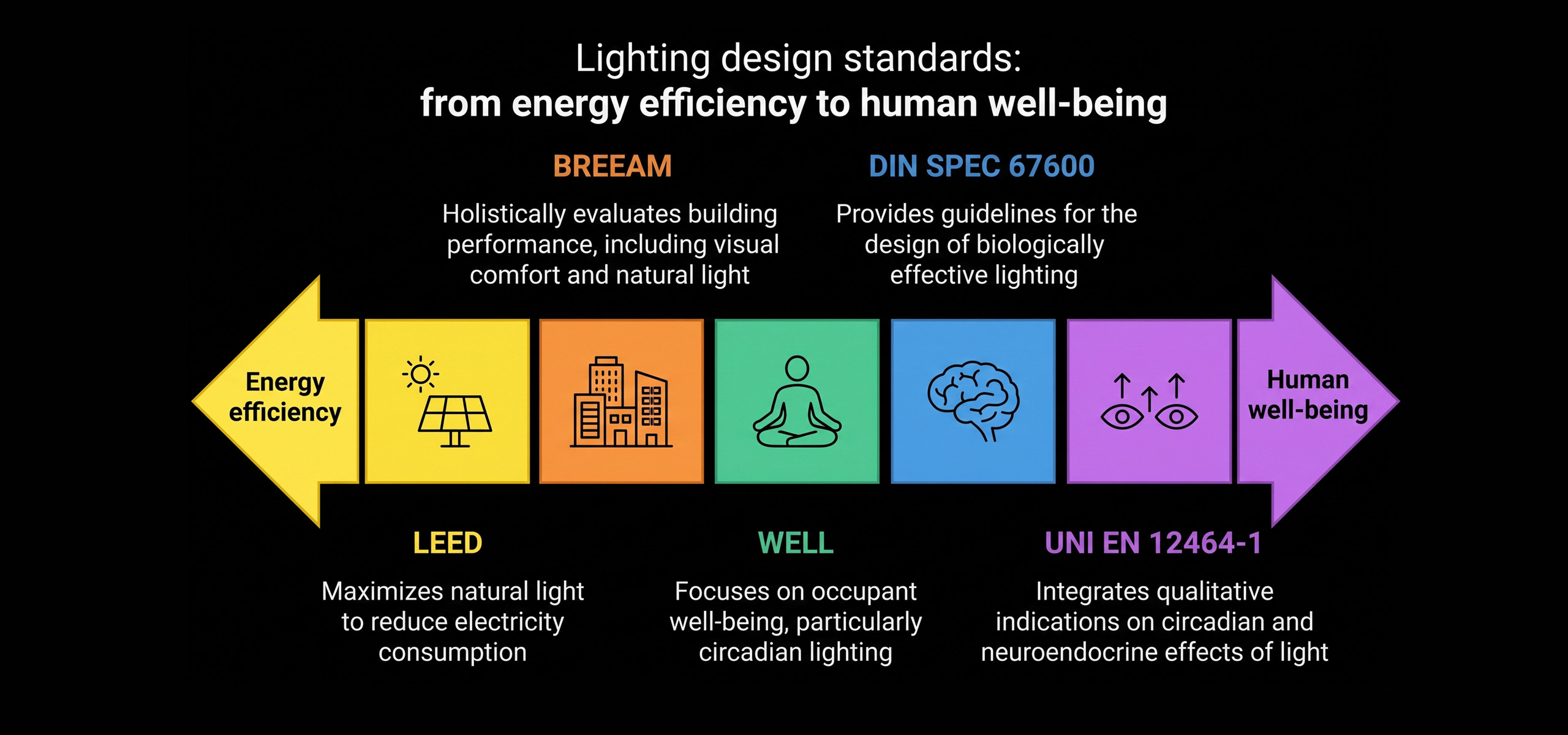
Human-Centered Lighting (HCL) represents an advanced design paradigm that integrates the classic criteria of lighting technology (visibility, energy efficiency, aesthetics) with the most recent knowledge on the non-visual effects of light, in particular on the human circadian system. The growing attention to psychophysical well-being in built environments has led to the development of technical standards and voluntary certifications that offer concrete tools to integrate these principles into design practice. At the regulatory and certification level, documents such as DIN/TS 67600, the WELL Building Standard, the LEED system  and the BREEAM protocol  now provide fundamental references for health-oriented lighting design. These tools define metrics, light exposure targets,  and design criteria to ensure that light – natural or artificial – actively supports circadian rhythm, visual functionality,  and environmental comfort.

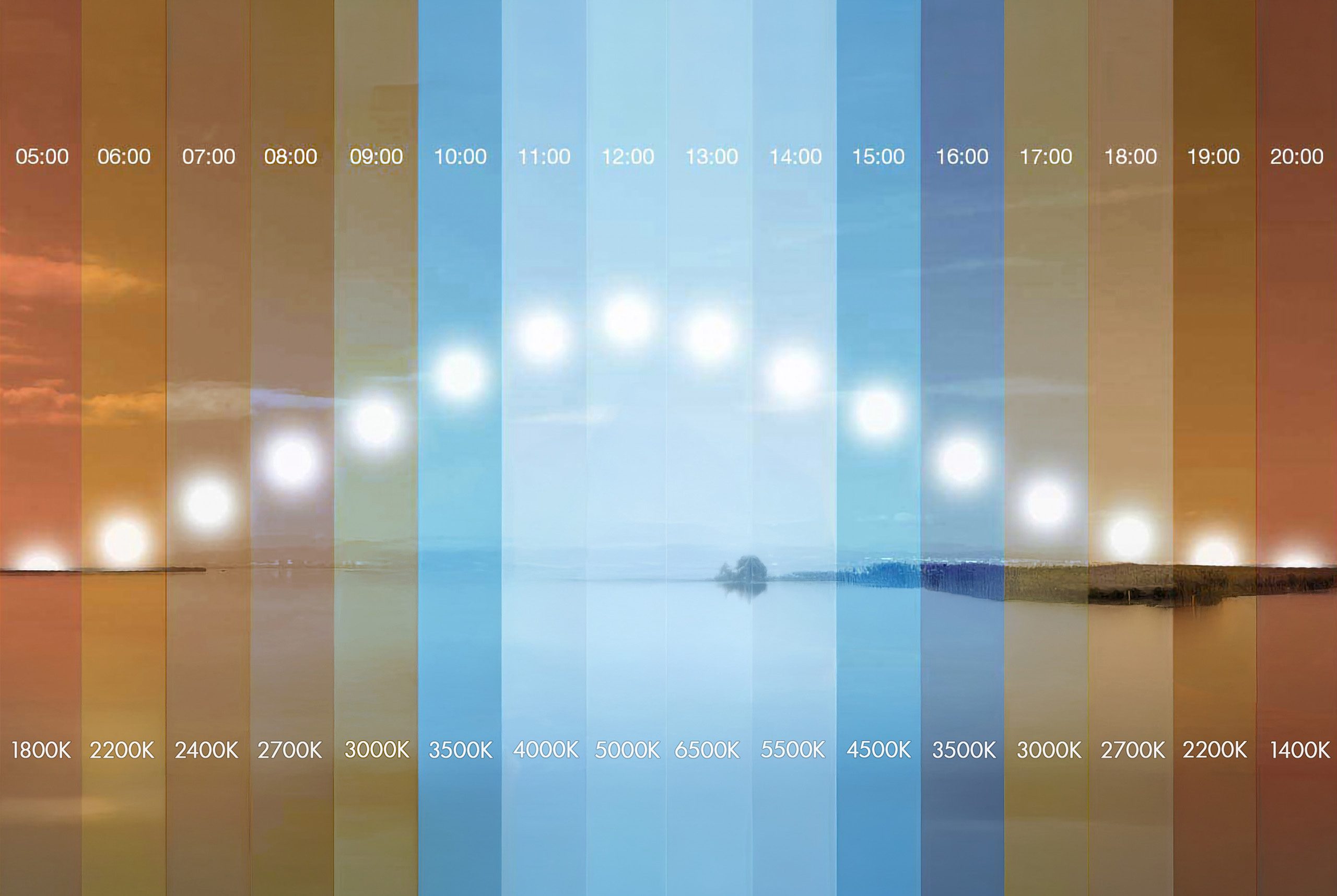
In the international arena, Germany was a pioneer with DIN SPEC 67600:2013, a technical specification that provides guidelines for the design of biologically effective lighting. This document (recently evolved into DIN/TS 67600:2022) suggests practical values and criteria: for example, it recommends ensuring a certain minimum level of vertical illuminance to the eye in the morning hours  to synchronize the circadian rhythm. In particular, a vertical illuminance ≥ 250 lux of daylight-equivalent light (at high color temperature, ~6500 - 8000 K) on the user's eye for at least 4 hours in the morning is indicated as a target. This level serves to almost completely suppress melatonin during the early hours of the day and to increase the level of "daytime" cortisol, so that people are awake and alert. These recommendations have influenced subsequent standards and international guidelines such as the WELL protocol. Although it is a voluntary specification and not a mandatory standard (as the acronym SPEC indicates), DIN 67600 is frequently cited as  an authoritative technical reference in Europe, in particular for design oriented towards the non-visual effects of light. The document also provides guidance for the rest of the day, suggesting bright, blue-rich light in the middle of the day, and a gradual decline in intensity and color temperature in the evening hours. For example, between 6:00 p.m. and 8:00 p.m., a relaxing light with about 200 lux on the eye and a CCT of no more than 3000 K is recommended. When designing according to these guidelines, it is essential not to neglect the visual requirements: DIN SPEC 67600 calls for compliance with current lighting standards such as DIN EN 12464-1, emphasizing that circadian light must be provided in addition to the minimum visual standards, and not as a substitute for them. This involves, for example, the integration of additional vertical lighting or the use of dimmable sources that offer both visual support and biological stimulation.

Although published in 2013, DIN SPEC 67600 anticipated many key concepts now integrated into documents from the CIE, the Lighting Research Center and the WELL Building Standard, and still remains a fundamental reference for Human-Centric design  in Europe.

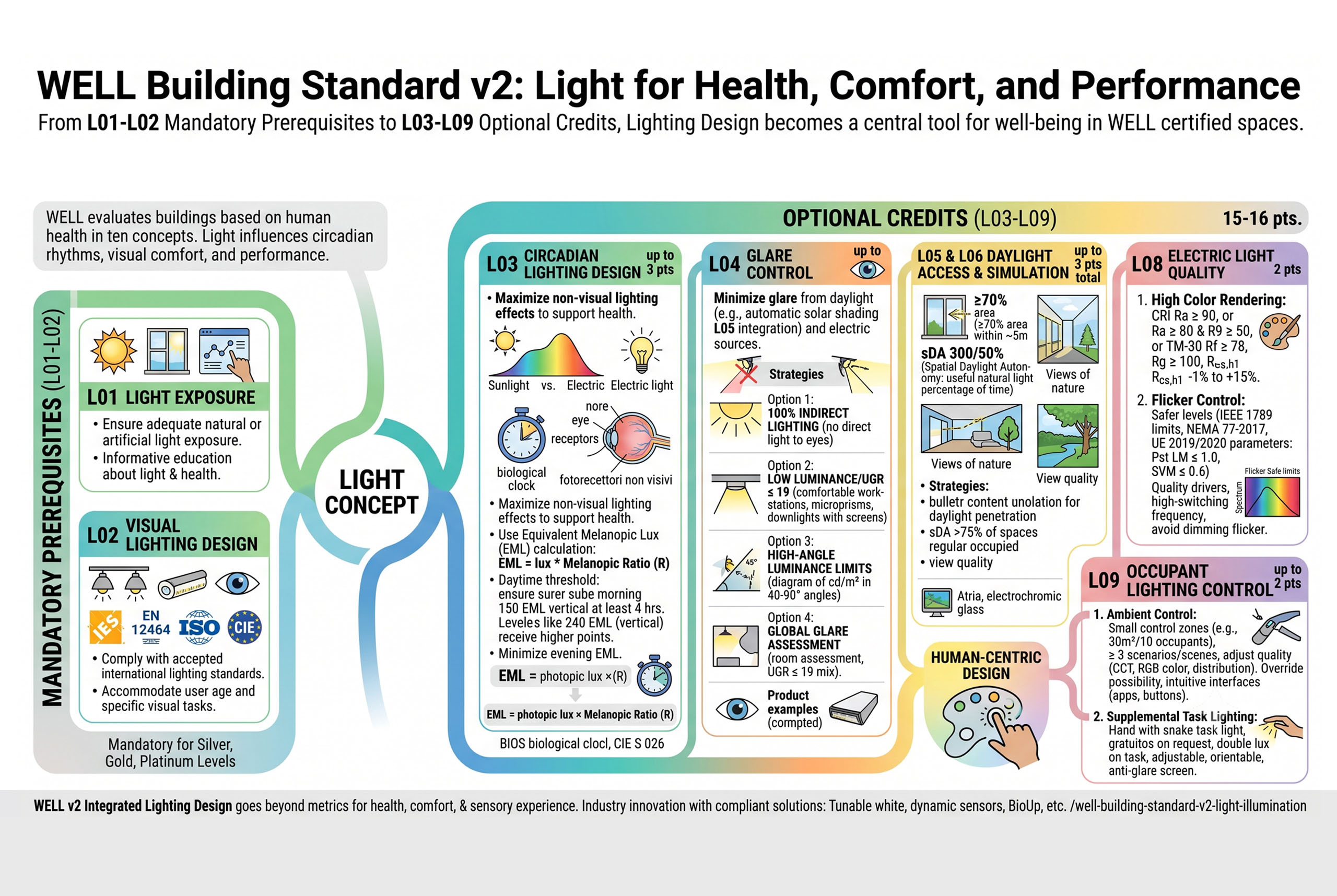
The WELL Building Standard (Light Concept) focuses on the well-being of the occupants, dedicating an entire area to lighting parameters. In addition to information on light quality (colour rendering, flicker, etc.) and glare control, WELL introduces pioneering requirements in the field of circadian lighting. In particular, Feature 54: Circadian Lighting Design requires that a sufficient level of effective light in the workplace is guaranteed on the circadian level. For example, at least 75% of workstations must receive ≥200 lux melanopic equivalent (EML) vertically at eye level, between 9:00 and 13:00 each day. This value (200 EML) is calculated by weighting the light spectrum according to the sensitivity of melanopsin, so it represents the biologically "active" component of light. At the same time, WELL requires limiting night light to low melanopic levels: for example, in bedrooms or residential environments, melanopic illuminance must not exceed 50 EML at night, so as not to interrupt sleep. In addition to circadian criteria, the WELL standard promotes natural light through specifications such as Right to Light (which requires a high percentage of occupants to sit near windows) and Daylight Modeling, prompting designers to optimize daylight intake in the design phase. The overall aim is to create indoor environments that reduce circadian disruption, improve sleep quality and mood, and increase users' visual comfort.
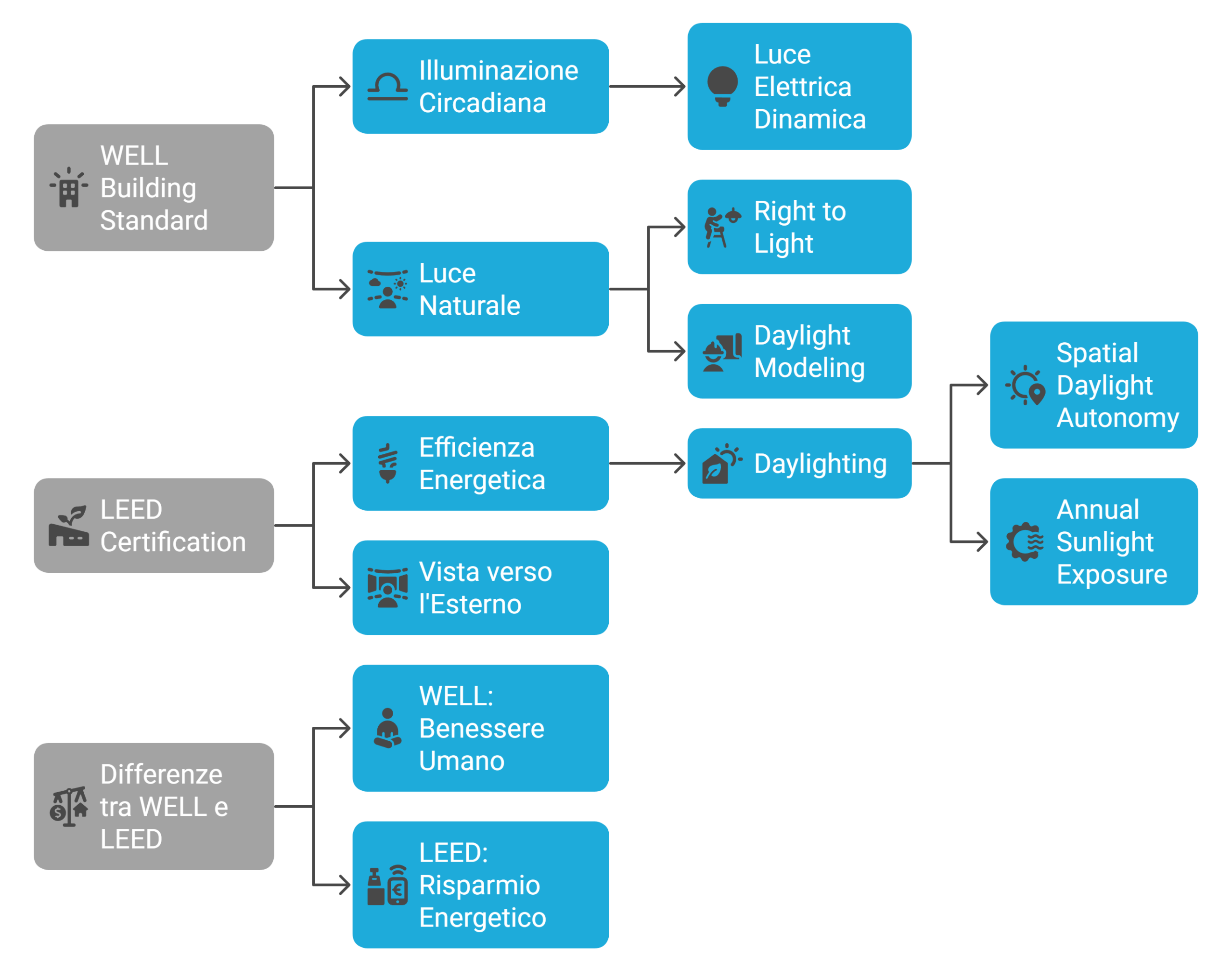
At the same time, LEED certification  (mainly oriented towards energy and environmental sustainability) does not yet include credits explicitly dedicated to circadian lighting, focusing more on energy efficiency and daylighting aspects (e.g. maximizing natural light to reduce electricity consumption).

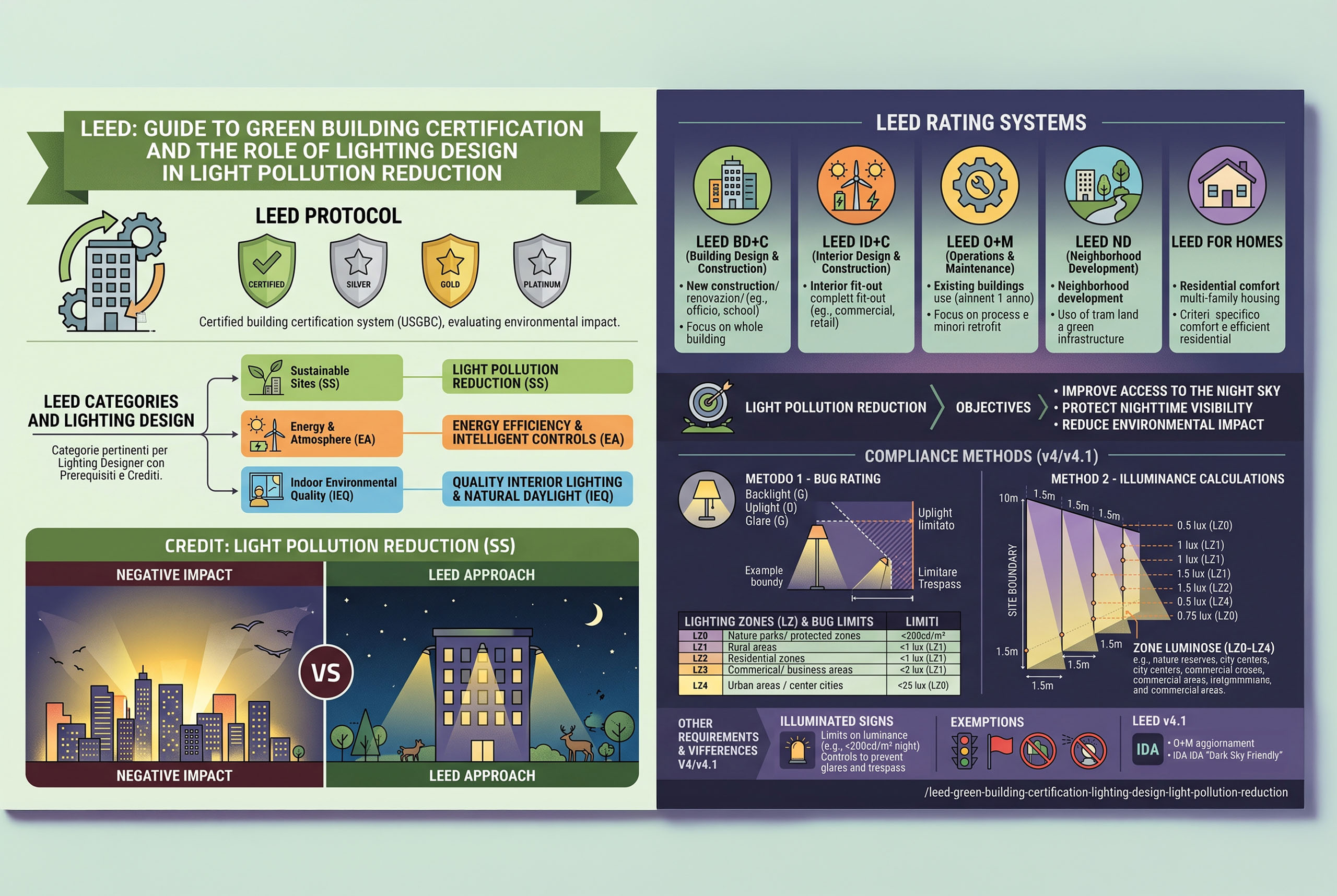
LEED (Leadership in Energy and Environmental Design) is a widespread environmental certification system that includes, in  the Indoor Environmental Quality category, credits dedicated to natural lighting and indoor light quality. The  LEED v4/v4.1 Daylight credit strongly encourages daylight design  with the aim of "connecting occupants with the outdoors, reinforcing circadian rhythms and reducing the use of electric lighting". LEED requires demonstrating, through annual simulations, that a significant portion of occupied spaces receive useful levels of natural illuminance. For example, to obtain 2 points, the project must achieve a Spatial Daylight Autonomy sDA300.50% of at least 55% (i.e. at least 55% of the occupied area enjoys ≥300 lux during the day for at least 50% of the annual hours of use), and up to 3 points if at least 75% is reached. At the same time, solar glare must be controlled: the Annual Sunlight Exposure criterion  limits to 10% the share of the area that can receive more than 1000 lux for over 250 hours/year, requiring solutions such as shading or solar control glass to mitigate excess direct sun. Alternatively, LEED allows an instrumental verification on two dates (September equinox at 9:00 and 15:00) by imposing that at those times all rooms have illuminances between 270 and 5,400 lux in the absence of artificial lights. In addition, it is mandatory to provide glare control systems  (screens, curtains, adjustable sunshades) for all windows in occupied spaces, ensuring visual comfort. LEED also considers the view to the outside (Quality Views credit) as a component of well-being: designing with large transparent glass surfaces and views of the landscape improves user satisfaction and health. Overall, the LEED requirements direct designers to buildings with extensive use of diffused natural light, interior layouts that bring daylight deep into the depths (e.g. atriums, skylights, interior glass walls) and devices to avoid both light deficiencies and glare excesses. The focus on circadian rhythms is explicit in the intent of the Daylight credit: this represents a recognition, in the field of sustainability, of the link between daylight, human well-being and performance.

The difference in approach between WELL and LEED is pointed out by experts: while LEED uses daylight as an energy-saving resource, WELL considers it above all to stimulate the human circadian rhythm; moreover, WELL encourages the use of dynamic electric light (tunable white) for health, an aspect not addressed by LEED. It is plausible that future versions of LEED will integrate human-centric lighting aspects as these practices become part of the design "mainstream". In the meantime, designers and clients interested in well-being can pursue dual certification, using HCL as a key element to obtain WELL points without contravening LEED requirements (e.g. by ensuring high circadian levels during the day but with efficient dimmable systems so as not to penalize consumption).

Unlike other certifications, such as LEED or WELL, which have a stronger focus on energy sustainability or user health, BREEAM offers a balanced approach, assessing a building's performance holistically.
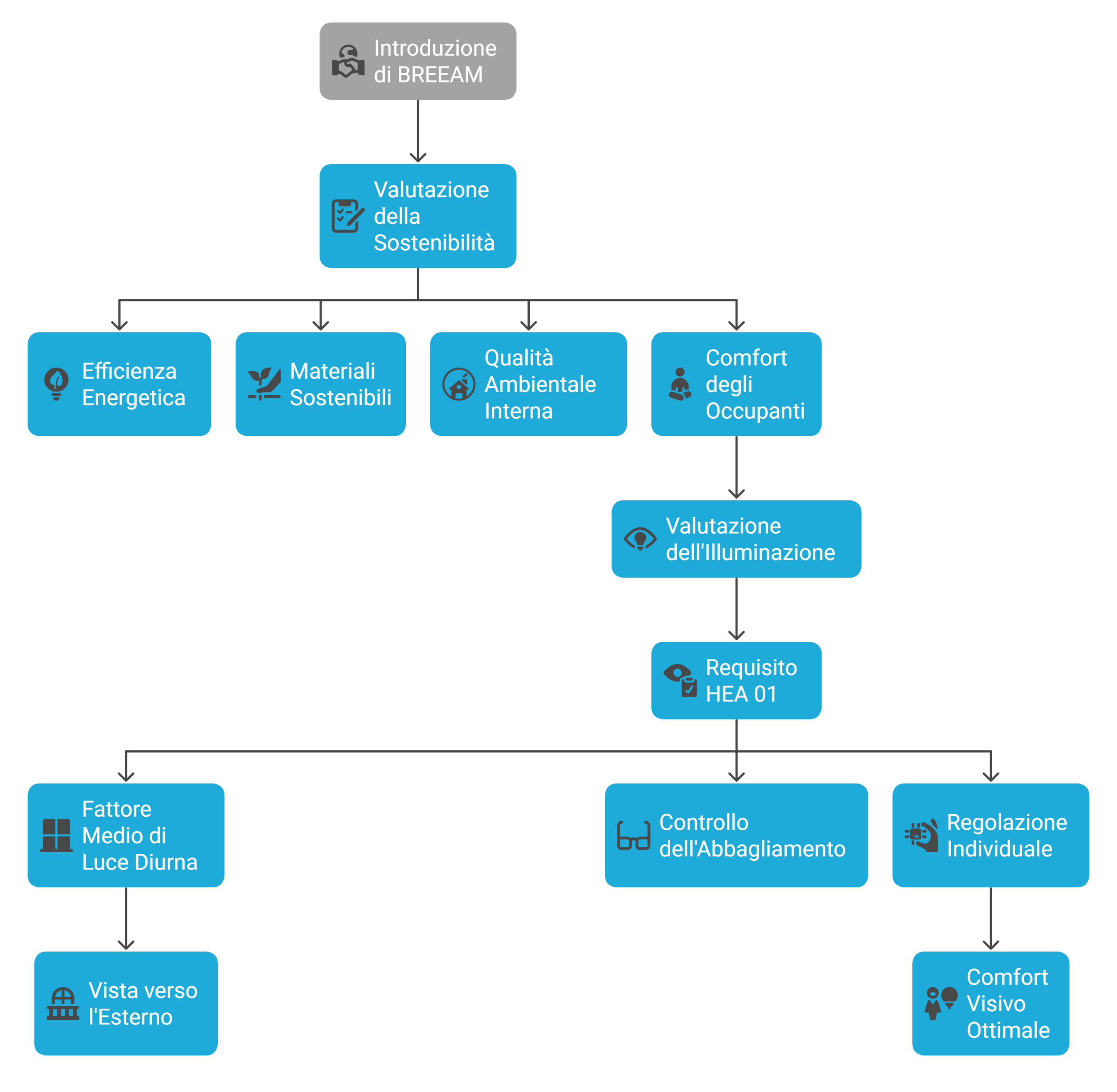
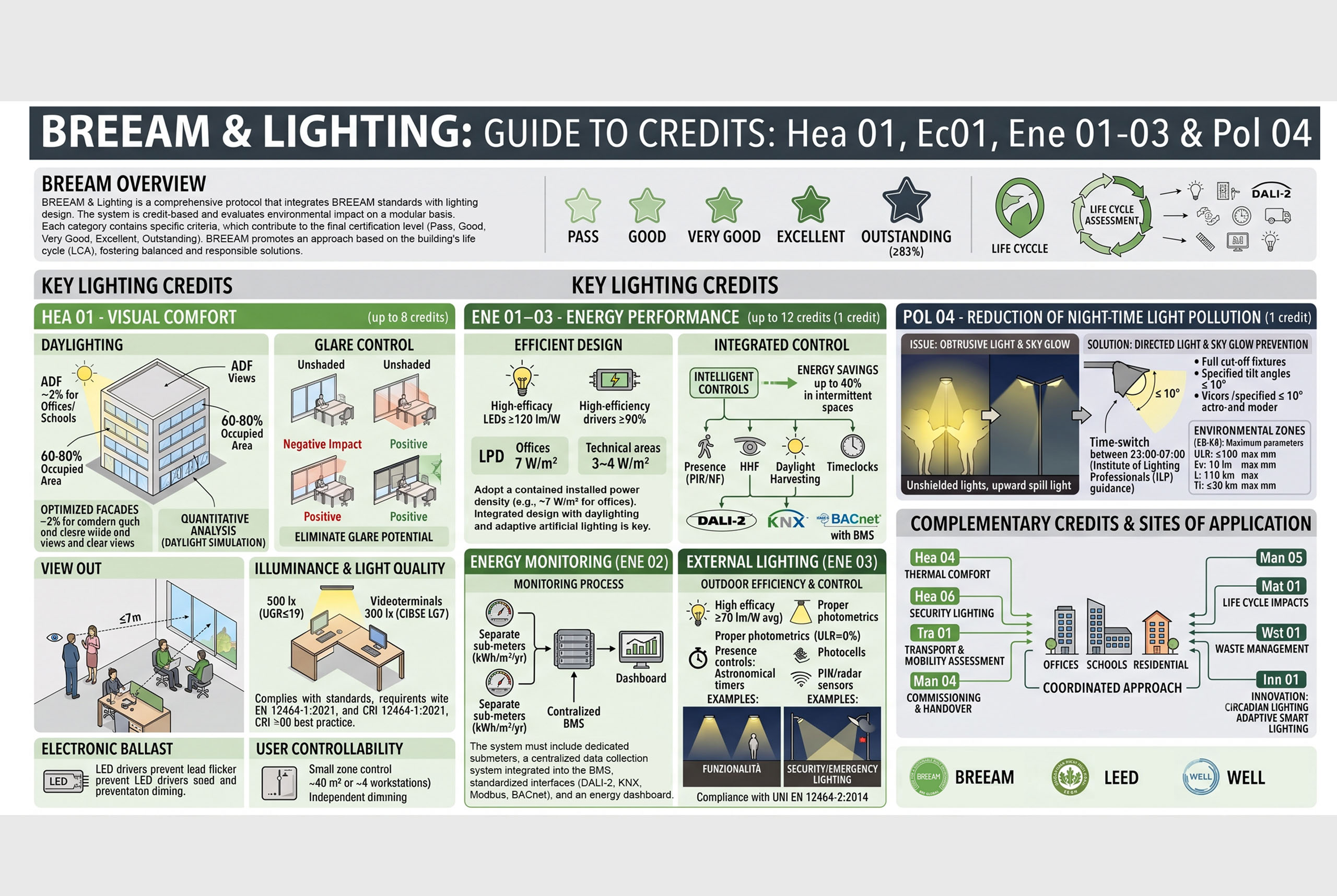
The BREEAM (Building Research Establishment Environmental Assessment Method) is one of the most widely used and recognised environmental certification systems for buildings at an international level. Introduced in 1990 by the BRE (Building Research Establishment) in the United Kingdom, BREEAM assesses and certifies the environmental sustainability of buildings according to rigorous and multidimensional criteria, covering aspects such as energy efficiency, the use of sustainable materials, indoor environmental quality and occupant comfort. Similar to LEED, BREEAM includes a Health & Wellbeing section  in which lighting plays a key role. The HEA 01 – Visual Comfort requirement  covers various aspects: illuminance, glare, external view and user control. With regard to natural light, BREEAM adopts the criterion of the average daylight factor (DF): to obtain full credit, it is required that at least 80% of the surface area of the occupied rooms has a daylight factor ≥2%. In other words, almost all the space used regularly must receive an amount of natural light equal to at least 2% of the diffused outdoor light (measured on an overcast sky). This target ensures that rooms are generally well lit during the day. (In residential settings, BREEAM prescribes similar values: e.g. kitchens with DF ≥2%, living rooms ≥1.5%). In addition to the level of natural lighting, BREEAM assesses the presence of  a view to the outside (e.g. at least 95% of the spaces must have a window with a view to the outside at a distance of within 7 m) and glare control measures  (fixed or mobile shading for windows exposed to direct sun). Individual adjustment is also rewarded: providing occupants with the possibility of adjusting the artificial lighting in their areas (dimmer, zone control) to adapt it to their needs. The goal is to ensure optimal visual comfort in all conditions: enough natural light to carry out activities during the day, while avoiding both dark areas and glare phenomena or excessive contrasts that strain the eyes.

The European standard UNI EN 12464-1:2021, which regulates the lighting requirements for indoor workplaces, has also introduced an important conceptual update in its most recent revision, explicitly recognizing the role of light not only for functional visual vision, but also for the regulation of biological rhythms and the influence on the psychophysical well-being of users. Although it remains a norm focused on minimum visual lighting requirements – such as average illuminance on the task, uniformity, controlled glare (UGR) and colour rendering (Ra) – it integrates for the first time qualitative and informative indications related to the circadian and neuroendocrine effects of light. Such effects, often referred to as non-visual effects or biological effects of light, depend mainly on the stimulation of melanopsin in light-sensitive retinal ganglion cells (ipRGCs), which are sensitive to light rich in blue–cyan components (about 460–490 nm). The standard does not introduce specific quantitative requirements, but encourages the designer to take a holistic and integrated approach, taking into account the temporal, spatial and spectral parameters of artificial lighting. In particular, EN 12464-1:2021 highlights how the total amount of light received by the eye, the angle of incidence, the correlated color temperature (CCT), the spectral distribution of the source and the time of light administration are all determining factors in generating an effective circadian response. The importance of increasing vertical illuminance on the eye, especially in the early hours of the day, to improve the synchronization of the internal biological clock,  is therefore emphasized.

This approach is conceptually close to what is proposed by DIN SPEC 67600 and the WELL protocols, while maintaining a more open and less prescriptive formulation. In addition, the standard invites to evaluate the combination of natural and artificial light, emphasizing how a well-designed lighting system must support not only visual performance, but also long-term psychophysiological well-being. This integration is also reflected in the quality of light distribution in space, in the balance between direct and indirect light, and in  the possibility of individual control of lighting by users, all of which are correlated with circadian efficacy and perceptual comfort. From an application point of view, EN 12464-1:2021 does not impose minimum thresholds of melanopic lux or other biological indices, but formally opens up the possibility that these parameters are considered in  the advanced design phase, especially in environments where comfort and vigilance are critical, such as schools, offices, hospitals or centers for the elderly. In this sense, the standard represents a cultural turning point: lighting is no longer seen as a mere technical tool to ensure visibility, but as an active component of the built environment, capable of modulating human behavior, mood and health. This orientation is consistent with the evolution taking place at an international level, in which dynamic light, Tunable White systems, circadian controls and biological metrics are progressively integrated into simulation software and competition specifications for the creation of high-performance indoor environments. Ultimately, EN 12464-1:2021, while not yet a binding tool in the circadian field, provides the lighting designer with an up-to-date technical and cultural framework, encouraging the transition to human-centered design, based on scientific data and real well-being goals, in line with the most advanced international standards.
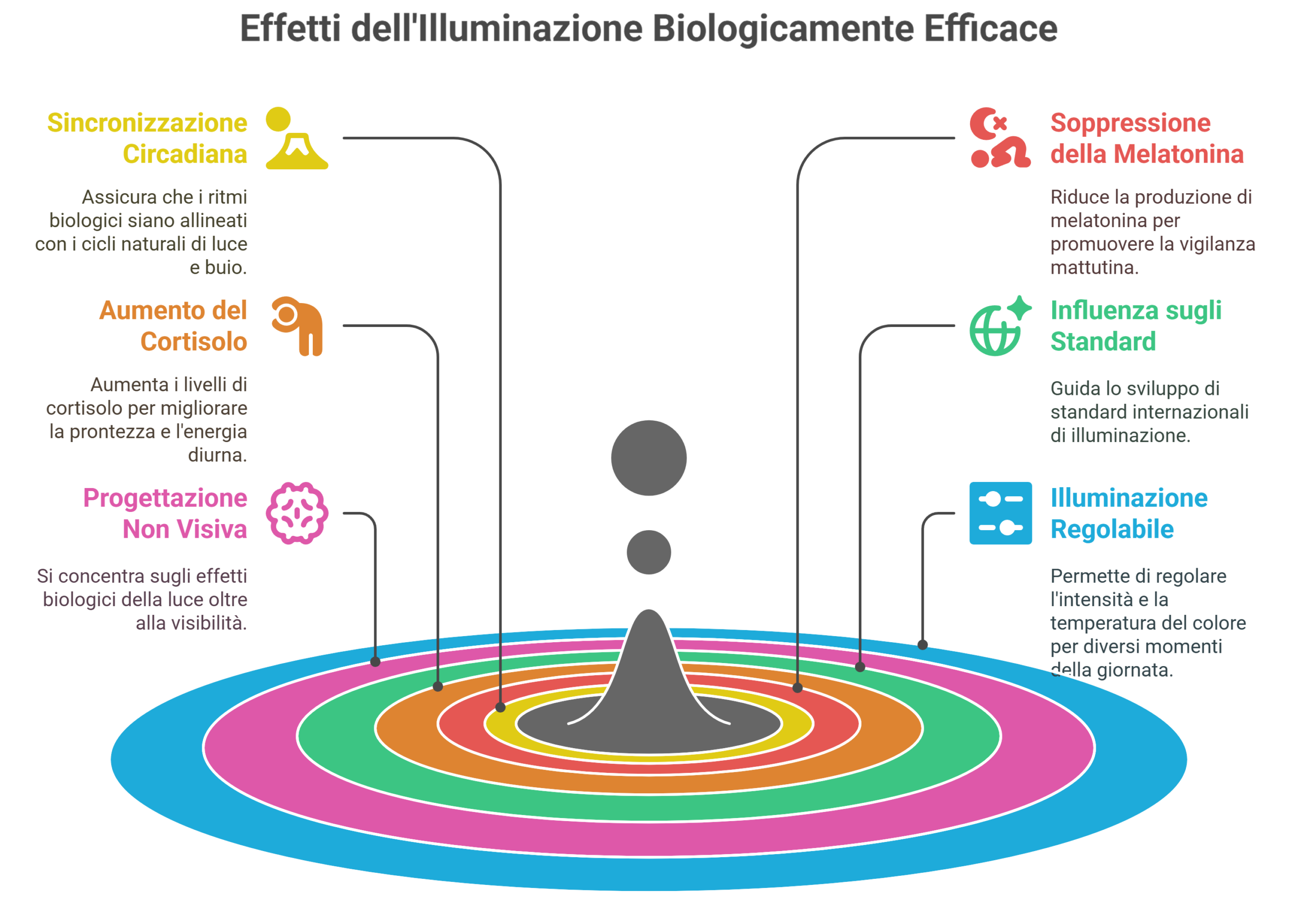
Finally, as already described in the previous chapters, scientific communities and professional associations (such as the CIE – Commission Internationale de l'Éclairage and the IESNA – Illuminating Engineering Society of North America) are contributing substantially to the development of specific metrics and guidelines to support a truly human-centered lighting design, based on neurophysiological and chronobiological evidence. Among the most relevant innovations that have emerged in recent years is CIE S 026:2018, which introduced a five-channel photometric system based on the spectral response of the main retinal photoreceptor populations: S, M, L cones, rods and intrinsically photosensitive ganglion cells (ipRGCs) containing melanopsin. This system allows to evaluate with scientific rigor the non-visual impact of light, in particular on the regulation of circadian rhythms. Within this regulatory context, two fundamental metrics have been defined:

EML – Equivalent Melanopic Lux, adopted by  the WELL Building Standard v2, calculated as the ratio between melanopic and photopic illuminance with reference to a standard source (D65). The EML metric, already incorporated into  the WELL Building Standard protocol, represents an operational value directly comparable with circadian performance thresholds, useful for calculating the efficacy of light in real environments through spectrophotometric data and simulation software;

MEDI – Melanopic Equivalent Daylight Illuminance, expressed in melanopic lux equivalents, which today represents the official metric recommended by the CIE for the evaluation of artificial light-induced circadian stimulation. The MEDIUM, on the other hand, offers a more advanced normalization: it expresses theequivalent illuminance in daylight (D65 spectrum) which would have the same stimulating effect on melanopsin as the source analyzed. This approach allows to establish a Unified and comparable reference for biological evaluations, freeing itself from the variability of artificial sources and offering a criterion consistent with the natural lighting conditions. The CIE recommends expressing circadian levels in MEDI, as it allows for a more rigorous and comparable application between projects, overcoming some ambiguities present in the direct use of melanopic lux equivalents.

Both metrics derive from a spectral weighting of photopic illuminance as a function of melanopsin sensitivity, a photopigment with peak absorption at about 480 nm, crucial for the neuroendocrine and chronobiological regulation  of the human body.

Alongside these two physical-photometric metrics, there is the CS – Circadian Stimulus parameter, proposed by  the Lighting Research Center (LRC). Unlike EML and MEDI, CS is based on a non-linear physiological model and describes the relative effect of melatonin suppression as a percentage of a maximum reference condition (generally 1000 lux of white light rich in blue component). The CS takes into account threshold, saturation and logarithmic response phenomena of the endocrine system, being particularly adherent to experimental chronobiology but more complex to calculate.

From a design point of view, the AVERAGE, EML and CS metrics  are now essential tools for the scientific evaluation of the non-visual effectiveness of a lighting scheme. These indicators allow lighting designers to  overcome the limitations of conventional approaches, which are still often based exclusively on parameters such as photopic lux, correlated color temperature (CCT) or color rendering index (Ra). On the contrary, the adoption of these metrics introduces an integrated view in which factors such as vertical illuminance on the eye, spectral composition of light, exposure time and directionality of luminous flux play a decisive role in ensuring effective circadian stimulation. The technical definition, the neurophysiological basis and the calculation criteria of each of these metrics are explored in depth in the chapter dedicated to "Fotopic vs Melanopic Illuminance: Definition and Spectral Sensitivity", which analyzes with scientific rigor the fundamentals, methodological differences and design implications. This theoretical framework is essential for the correct use of melanopic values within simulation software, certification protocols (such as the WELL Building Standard) and performance specifications of modern Human-Centric Lighting systems.

This new frontier of design, strongly supported by neuroscientific evidence, marks an important step forward towards built environments that are biologically synchronized with the natural rhythms of the human body, contributing to the improvement of alertness, mood, sleep quality and, in general, the well-being of users.

LEED,-WELL-e-BREEAM-Standard-protocolli-e-certificazioni-per-la-progettazione-della-luce-slide

LEED, WELL and BREEAM: Standards, Protocols and Certifications for Light Design

Guidelines and design requirements for integrating natural light, visual comfort and biological effects into environmental sustainability protocols

Human-Centered Lighting (HCL) represents an advanced design paradigm that integrates the classic criteria of lighting technology (visibility, energy efficiency, aesthetics) with the most recent knowledge on the non-visual effects of light, in particular on the human circadian system. The growing attention to psychophysical well-being in built environments has led to the development of technical standards and voluntary certifications that offer concrete tools to integrate these principles into design practice. At the regulatory and certification level, documents such as DIN/TS 67600, the WELL Building Standard, the LEED system  and the BREEAM protocol  now provide fundamental references for health-oriented lighting design. These tools define metrics, light exposure targets,  and design criteria to ensure that light – natural or artificial – actively supports circadian rhythm, visual functionality,  and environmental comfort.

In the international arena, Germany was a pioneer with DIN SPEC 67600:2013, a technical specification that provides guidelines for the design of biologically effective lighting. This document (recently evolved into DIN/TS 67600:2022) suggests practical values and criteria: for example, it recommends ensuring a certain minimum level of vertical illuminance to the eye in the morning hours  to synchronize the circadian rhythm. In particular, a vertical illuminance ≥ 250 lux of daylight-equivalent light (at high color temperature, ~6500 - 8000 K) on the user's eye for at least 4 hours in the morning is indicated as a target. This level serves to almost completely suppress melatonin during the early hours of the day and to increase the level of "daytime" cortisol, so that people are awake and alert. These recommendations have influenced subsequent standards and international guidelines such as the WELL protocol. Although it is a voluntary specification and not a mandatory standard (as the acronym SPEC indicates), DIN 67600 is frequently cited as  an authoritative technical reference in Europe, in particular for design oriented towards the non-visual effects of light. The document also provides guidance for the rest of the day, suggesting bright, blue-rich light in the middle of the day, and a gradual decline in intensity and color temperature in the evening hours. For example, between 6:00 p.m. and 8:00 p.m., a relaxing light with about 200 lux on the eye and a CCT of no more than 3000 K is recommended. When designing according to these guidelines, it is essential not to neglect the visual requirements: DIN SPEC 67600 calls for compliance with current lighting standards such as DIN EN 12464-1, emphasizing that circadian light must be provided in addition to the minimum visual standards, and not as a substitute for them. This involves, for example, the integration of additional vertical lighting or the use of dimmable sources that offer both visual support and biological stimulation.

Although published in 2013, DIN SPEC 67600 anticipated many key concepts now integrated into documents from the CIE, the Lighting Research Center and the WELL Building Standard, and still remains a fundamental reference for Human-Centric design  in Europe.

The WELL Building Standard (Light Concept) focuses on the well-being of the occupants, dedicating an entire area to lighting parameters. In addition to information on light quality (colour rendering, flicker, etc.) and glare control, WELL introduces pioneering requirements in the field of circadian lighting. In particular, Feature 54: Circadian Lighting Design requires that a sufficient level of effective light in the workplace is guaranteed on the circadian level. For example, at least 75% of workstations must receive ≥200 lux melanopic equivalent (EML) vertically at eye level, between 9:00 and 13:00 each day. This value (200 EML) is calculated by weighting the light spectrum according to the sensitivity of melanopsin, so it represents the biologically "active" component of light. At the same time, WELL requires limiting night light to low melanopic levels: for example, in bedrooms or residential environments, melanopic illuminance must not exceed 50 EML at night, so as not to interrupt sleep. In addition to circadian criteria, the WELL standard promotes natural light through specifications such as Right to Light (which requires a high percentage of occupants to sit near windows) and Daylight Modeling, prompting designers to optimize daylight intake in the design phase. The overall aim is to create indoor environments that reduce circadian disruption, improve sleep quality and mood, and increase users' visual comfort.

At the same time, LEED certification  (mainly oriented towards energy and environmental sustainability) does not yet include credits explicitly dedicated to circadian lighting, focusing more on energy efficiency and daylighting aspects (e.g. maximizing natural light to reduce electricity consumption).

LEED (Leadership in Energy and Environmental Design) is a widespread environmental certification system that includes, in  the Indoor Environmental Quality category, credits dedicated to natural lighting and indoor light quality. The  LEED v4/v4.1 Daylight credit strongly encourages daylight design  with the aim of "connecting occupants with the outdoors, reinforcing circadian rhythms and reducing the use of electric lighting". LEED requires demonstrating, through annual simulations, that a significant portion of occupied spaces receive useful levels of natural illuminance. For example, to obtain 2 points, the project must achieve a Spatial Daylight Autonomy sDA300.50% of at least 55% (i.e. at least 55% of the occupied area enjoys ≥300 lux during the day for at least 50% of the annual hours of use), and up to 3 points if at least 75% is reached. At the same time, solar glare must be controlled: the Annual Sunlight Exposure criterion  limits to 10% the share of the area that can receive more than 1000 lux for over 250 hours/year, requiring solutions such as shading or solar control glass to mitigate excess direct sun. Alternatively, LEED allows an instrumental verification on two dates (September equinox at 9:00 and 15:00) by imposing that at those times all rooms have illuminances between 270 and 5,400 lux in the absence of artificial lights. In addition, it is mandatory to provide glare control systems  (screens, curtains, adjustable sunshades) for all windows in occupied spaces, ensuring visual comfort. LEED also considers the view to the outside (Quality Views credit) as a component of well-being: designing with large transparent glass surfaces and views of the landscape improves user satisfaction and health. Overall, the LEED requirements direct designers to buildings with extensive use of diffused natural light, interior layouts that bring daylight deep into the depths (e.g. atriums, skylights, interior glass walls) and devices to avoid both light deficiencies and glare excesses. The focus on circadian rhythms is explicit in the intent of the Daylight credit: this represents a recognition, in the field of sustainability, of the link between daylight, human well-being and performance.

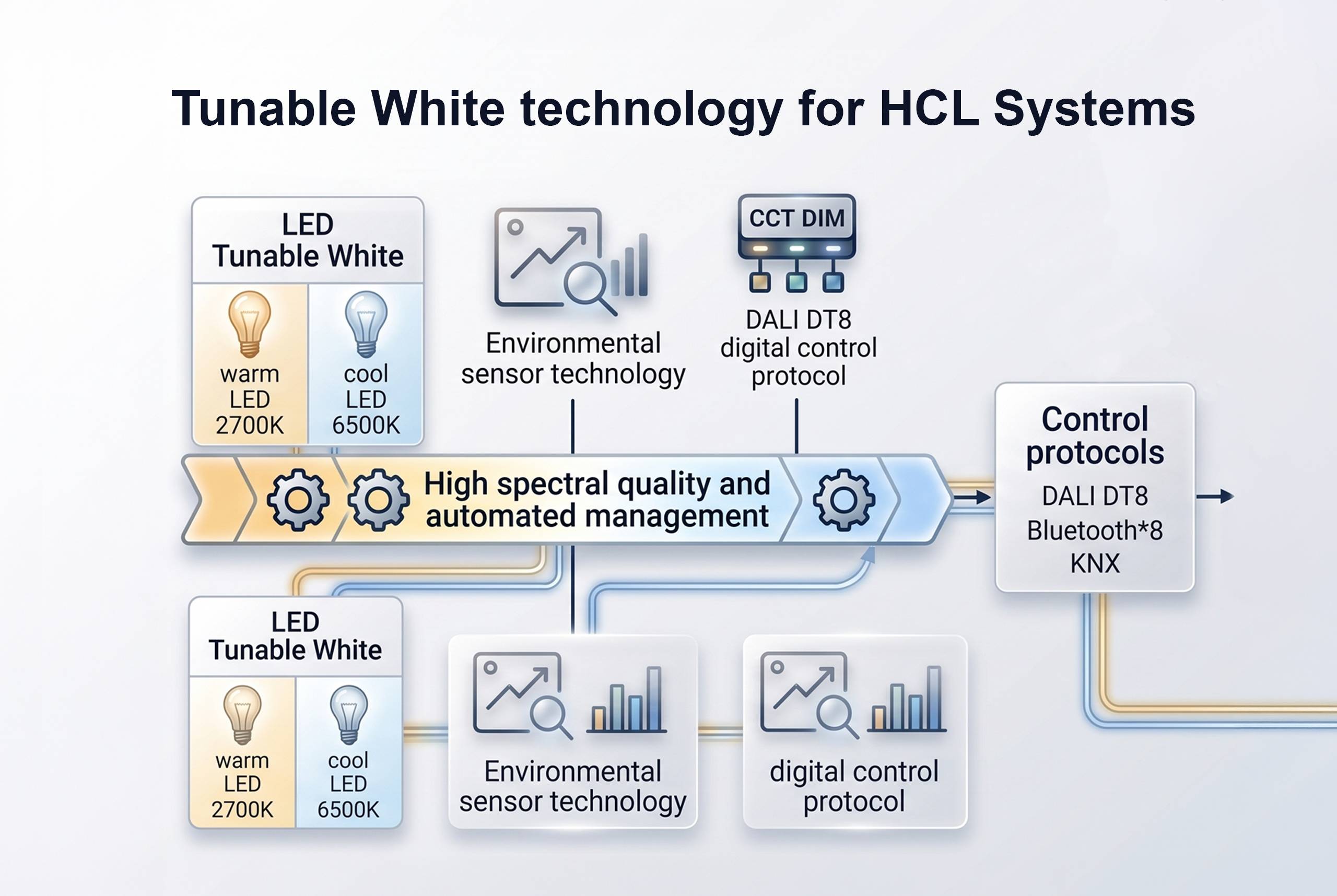
The difference in approach between WELL and LEED is pointed out by experts: while LEED uses daylight as an energy-saving resource, WELL considers it above all to stimulate the human circadian rhythm; moreover, WELL encourages the use of dynamic electric light (tunable white) for health, an aspect not addressed by LEED. It is plausible that future versions of LEED will integrate human-centric lighting aspects as these practices become part of the design "mainstream". In the meantime, designers and clients interested in well-being can pursue dual certification, using HCL as a key element to obtain WELL points without contravening LEED requirements (e.g. by ensuring high circadian levels during the day but with efficient dimmable systems so as not to penalize consumption).

Unlike other certifications, such as LEED or WELL, which have a stronger focus on energy sustainability or user health, BREEAM offers a balanced approach, assessing a building's performance holistically.

The BREEAM (Building Research Establishment Environmental Assessment Method) is one of the most widely used and recognised environmental certification systems for buildings at an international level. Introduced in 1990 by the BRE (Building Research Establishment) in the United Kingdom, BREEAM assesses and certifies the environmental sustainability of buildings according to rigorous and multidimensional criteria, covering aspects such as energy efficiency, the use of sustainable materials, indoor environmental quality and occupant comfort. Similar to LEED, BREEAM includes a Health & Wellbeing section  in which lighting plays a key role. The HEA 01 – Visual Comfort requirement  covers various aspects: illuminance, glare, external view and user control. With regard to natural light, BREEAM adopts the criterion of the average daylight factor (DF): to obtain full credit, it is required that at least 80% of the surface area of the occupied rooms has a daylight factor ≥2%. In other words, almost all the space used regularly must receive an amount of natural light equal to at least 2% of the diffused outdoor light (measured on an overcast sky). This target ensures that rooms are generally well lit during the day. (In residential settings, BREEAM prescribes similar values: e.g. kitchens with DF ≥2%, living rooms ≥1.5%). In addition to the level of natural lighting, BREEAM assesses the presence of  a view to the outside (e.g. at least 95% of the spaces must have a window with a view to the outside at a distance of within 7 m) and glare control measures  (fixed or mobile shading for windows exposed to direct sun). Individual adjustment is also rewarded: providing occupants with the possibility of adjusting the artificial lighting in their areas (dimmer, zone control) to adapt it to their needs. The goal is to ensure optimal visual comfort in all conditions: enough natural light to carry out activities during the day, while avoiding both dark areas and glare phenomena or excessive contrasts that strain the eyes.

The European standard UNI EN 12464-1:2021, which regulates the lighting requirements for indoor workplaces, has also introduced an important conceptual update in its most recent revision, explicitly recognizing the role of light not only for functional visual vision, but also for the regulation of biological rhythms and the influence on the psychophysical well-being of users. Although it remains a norm focused on minimum visual lighting requirements – such as average illuminance on the task, uniformity, controlled glare (UGR) and colour rendering (Ra) – it integrates for the first time qualitative and informative indications related to the circadian and neuroendocrine effects of light. Such effects, often referred to as non-visual effects or biological effects of light, depend mainly on the stimulation of melanopsin in light-sensitive retinal ganglion cells (ipRGCs), which are sensitive to light rich in blue–cyan components (about 460–490 nm). The standard does not introduce specific quantitative requirements, but encourages the designer to take a holistic and integrated approach, taking into account the temporal, spatial and spectral parameters of artificial lighting. In particular, EN 12464-1:2021 highlights how the total amount of light received by the eye, the angle of incidence, the correlated color temperature (CCT), the spectral distribution of the source and the time of light administration are all determining factors in generating an effective circadian response. The importance of increasing vertical illuminance on the eye, especially in the early hours of the day, to improve the synchronization of the internal biological clock,  is therefore emphasized.

This approach is conceptually close to what is proposed by DIN SPEC 67600 and the WELL protocols, while maintaining a more open and less prescriptive formulation. In addition, the standard invites to evaluate the combination of natural and artificial light, emphasizing how a well-designed lighting system must support not only visual performance, but also long-term psychophysiological well-being. This integration is also reflected in the quality of light distribution in space, in the balance between direct and indirect light, and in  the possibility of individual control of lighting by users, all of which are correlated with circadian efficacy and perceptual comfort. From an application point of view, EN 12464-1:2021 does not impose minimum thresholds of melanopic lux or other biological indices, but formally opens up the possibility that these parameters are considered in  the advanced design phase, especially in environments where comfort and vigilance are critical, such as schools, offices, hospitals or centers for the elderly. In this sense, the standard represents a cultural turning point: lighting is no longer seen as a mere technical tool to ensure visibility, but as an active component of the built environment, capable of modulating human behavior, mood and health. This orientation is consistent with the evolution taking place at an international level, in which dynamic light, Tunable White systems, circadian controls and biological metrics are progressively integrated into simulation software and competition specifications for the creation of high-performance indoor environments. Ultimately, EN 12464-1:2021, while not yet a binding tool in the circadian field, provides the lighting designer with an up-to-date technical and cultural framework, encouraging the transition to human-centered design, based on scientific data and real well-being goals, in line with the most advanced international standards.

Finally, as already described in the previous chapters, scientific communities and professional associations (such as the CIE – Commission Internationale de l'Éclairage and the IESNA – Illuminating Engineering Society of North America) are contributing substantially to the development of specific metrics and guidelines to support a truly human-centered lighting design, based on neurophysiological and chronobiological evidence. Among the most relevant innovations that have emerged in recent years is CIE S 026:2018, which introduced a five-channel photometric system based on the spectral response of the main retinal photoreceptor populations: S, M, L cones, rods and intrinsically photosensitive ganglion cells (ipRGCs) containing melanopsin. This system allows to evaluate with scientific rigor the non-visual impact of light, in particular on the regulation of circadian rhythms. Within this regulatory context, two fundamental metrics have been defined:

EML – Equivalent Melanopic Lux, adopted by  the WELL Building Standard v2, calculated as the ratio between melanopic and photopic illuminance with reference to a standard source (D65). The EML metric, already incorporated into  the WELL Building Standard protocol, represents an operational value directly comparable with circadian performance thresholds, useful for calculating the efficacy of light in real environments through spectrophotometric data and simulation software;

MEDI – Melanopic Equivalent Daylight Illuminance, expressed in melanopic lux equivalents, which today represents the official metric recommended by the CIE for the evaluation of artificial light-induced circadian stimulation. The MEDIUM, on the other hand, offers a more advanced normalization: it expresses theequivalent illuminance in daylight (D65 spectrum) which would have the same stimulating effect on melanopsin as the source analyzed. This approach allows to establish a Unified and comparable reference for biological evaluations, freeing itself from the variability of artificial sources and offering a criterion consistent with the natural lighting conditions. The CIE recommends expressing circadian levels in MEDI, as it allows for a more rigorous and comparable application between projects, overcoming some ambiguities present in the direct use of melanopic lux equivalents.

Both metrics derive from a spectral weighting of photopic illuminance as a function of melanopsin sensitivity, a photopigment with peak absorption at about 480 nm, crucial for the neuroendocrine and chronobiological regulation  of the human body.

Alongside these two physical-photometric metrics, there is the CS – Circadian Stimulus parameter, proposed by  the Lighting Research Center (LRC). Unlike EML and MEDI, CS is based on a non-linear physiological model and describes the relative effect of melatonin suppression as a percentage of a maximum reference condition (generally 1000 lux of white light rich in blue component). The CS takes into account threshold, saturation and logarithmic response phenomena of the endocrine system, being particularly adherent to experimental chronobiology but more complex to calculate.

From a design point of view, the AVERAGE, EML and CS metrics  are now essential tools for the scientific evaluation of the non-visual effectiveness of a lighting scheme. These indicators allow lighting designers to  overcome the limitations of conventional approaches, which are still often based exclusively on parameters such as photopic lux, correlated color temperature (CCT) or color rendering index (Ra). On the contrary, the adoption of these metrics introduces an integrated view in which factors such as vertical illuminance on the eye, spectral composition of light, exposure time and directionality of luminous flux play a decisive role in ensuring effective circadian stimulation. The technical definition, the neurophysiological basis and the calculation criteria of each of these metrics are explored in depth in the chapter dedicated to "Fotopic vs Melanopic Illuminance: Definition and Spectral Sensitivity", which analyzes with scientific rigor the fundamentals, methodological differences and design implications. This theoretical framework is essential for the correct use of melanopic values within simulation software, certification protocols (such as the WELL Building Standard) and performance specifications of modern Human-Centric Lighting systems.

This new frontier of design, strongly supported by neuroscientific evidence, marks an important step forward towards built environments that are biologically synchronized with the natural rhythms of the human body, contributing to the improvement of alertness, mood, sleep quality and, in general, the well-being of users.
Other Lighting Post

Other Lighting Post

This section brings together a comprehensive body of theoretical, scientific, and design insights into the theory of light applied to lighting design, systematically addressing the complex relationship between light, visual perception, and spatial design. The content develops the physical foundations of light, an understanding of the mechanisms of human vision, the differences between photopic and melanopic illuminance, and the biological impact of artificial light, integrating advanced metrics and contemporary interpretation criteria.

The page also explores the functioning of LED sources, the spectral and perceptual implications of solid-state light, the evolution of color rendering criteria, and the growing role of light as an informational and perceptual system, capable of influencing behavior, comfort, and the quality of spatial experience.

Ample space is dedicated to the relevant regulatory and technical framework, international standards, sustainability protocols, and control systems, understood as essential tools for rigorous, measurable, and consistent design.

Overall, the section provides a vision of the theory of light as the cultural and operational basis of lighting design, in which scientific knowledge, perceptual awareness, and design method converge to guide the lighting designer in the construction of balanced, legible, and qualitatively significant spaces.

This section brings together a comprehensive body of theoretical, scientific, and design insights into the theory of light applied to lighting design, systematically addressing the complex relationship between light, visual perception, and spatial design. The content develops the physical foundations of light, an understanding of the mechanisms of human vision, the differences between photopic and melanopic illuminance, and the biological impact of artificial light, integrating advanced metrics and contemporary interpretation criteria.

The page also explores the functioning of LED sources, the spectral and perceptual implications of solid-state light, the evolution of color rendering criteria, and the growing role of light as an informational and perceptual system, capable of influencing behavior, comfort, and the quality of spatial experience.

Ample space is dedicated to the relevant regulatory and technical framework, international standards, sustainability protocols, and control systems, understood as essential tools for rigorous, measurable, and consistent design.

Overall, the section provides a vision of the theory of light as the cultural and operational basis of lighting design, in which scientific knowledge, perceptual awareness, and design method converge to guide the lighting designer in the construction of balanced, legible, and qualitatively significant spaces.

BREEAM-Standard-Struttura-a-Crediti-e-Requisiti-Illuminotecnici-copertina
BREEAM: Standards, Credit Structure and Lighting Requirements How to set up a compliant lighting project: daylighting, controls, efficiency and reduction of light pollution. The BREEAM (Building Research Establishment Environmental Assessment Method), developed in the United Kingdom by  the Building Research Establishment (BRE) and introduced in 1990, represents the world's first system for assessing the sustainability of buildings. It is now internationally recognized as a reference standard and is applied in millions of projects around the world, with a particular diffusion…
WEEL-Building-Standard-v2-il-ruolo-della-luce-tra-salute-comfort-e-prestazioni-copertina
WELL Building Standard v2: The Role of Light in Health, Comfort and Performance From the compulsory prerequisites L01–L02 to the L03–L09 credits, lighting design becomes a central tool for well-being in WELL certified spaces The WELL Building Standard v2 is an international certification protocol that assesses the quality of built environments based on their impact on people's health and well-being. Structured in ten key concepts – including air, water, nutrition, movement and materials – the protocol dedicates a central role…
Protocollo-LEED-Efficienza-Energetica-e-Ambientale-degli-Edifici-copertina
LEED Protocol: Energy and Environmental Efficiency of Buildings Analysis of LEED Categories and Regulations to Reduce Light Pollution through Lighting Design LEED (Leadership in Energy and Environmental Design) is the leading international environmental certification system for buildings, developed by the U.S. Green Building Council (USGBC). It applies to a wide range of projects, from new buildings to renovations, from interiors to existing buildings and neighborhoods (via BD+C, ID+C, O+M, ND, Homes). Each system assesses the environmental impact of the project…
Progettare-con-la-luce-circadiana-il-potenziale-del-Tunable-White-nellHCL-copertina (1)
Designing with circadian light: the potential of Tunable White in HCL Technology, intelligent control and perceptual layout for adaptive lighting that follows biological rhythms The regulatory evolution on energy efficiency in buildings is constantly evolving. The practical implementation of an HCL project requires the use of advanced lighting technologies and adherence to specific design strategies dictated by regulations and guidelines. Tunable White technology represents one of the fundamental innovations in dynamic lighting, allowing the continuous and flexible adjustment  of the…
Human-Centric-Lighting-HCL-I-tre-pilastri-Visivo-Emozionale-e-Biologico-Copertina (1)
Human-Centric Lighting (HCL): The Three Pillars, Visual, Emotional, and Biological Visual Comfort, Emotional Impact and Biological Synchronization: The New Frontier of Man-Centered Light From the understanding of the circadian effects of light, the need to overcome a reductive and functionalist vision of lighting emerges strongly. Scientific evidence, clinical data and regulatory developments clearly show how light, in addition to shaping space and influencing visual perception, is an active physiological agent, capable of modulating metabolism, mood, sleep and cognitive functions. In…
Lighting and Circadian Rhythm: Scientific Discoveries and Advanced Technologies Health-oriented lighting design between science, norm and perception After analyzing the color rendering as a key element for the perceptive and sensory quality of light, it is evident that contemporary lighting design can no longer be limited to the visual representation of objects alone. Light, in fact, is not only a vehicle of visual information, but acts in depth on human biology, modulating fundamental physiological processes. In this context, a new…
Beyond the CRI: The New Era of Colour Rendering in Architectural Light How Rf and Rg redefine color rendering for a light designed on the visual experience Continuing the analysis of the perceptive quality of light, it is evident that colour rendering, understood in the broadest and most up-to-date sense of the term, represents an essential dimension for conscious lighting design. If the color temperature establishes the emotional and biological tone of the light, it is the color rendering that…
Dalla-Percezione-alla-Funzione-L’Influenza-della-Temperatura-di-Colore-sullo-Spazio-Illuminato-copertina
From Perception to Function: The Influence of Color Temperature on Illuminated Space Color temperature as a perceptual language: designing atmospheres, guiding vision and shaping space After exploring the scientific bases, regulatory references and advanced tools to describe light – from  the electromagnetic spectrum to melanopic parameters, from CIE diagrams to IES Technical Memoranda, up to solid-state lighting (SSL) – we focused on both the comparative analysis between traditional LEDs and μPLS as new digital light engine, and on the emerging…
La-luce-che-informa-rivoluzione-o-rischio-per-il-futuro-dell’illuminazione-copertina-eng
The Light That Informs: Revolution or Risk for the Future of Lighting? μPLS and microLED between innovation and danger of visual excess Historically, we are used to thinking of artificial light as something that just illuminates. A street lamp allows us to see, a car headlight illuminates the way, but does not convey messages or information in itself. This is changing: with the advent of digitally controllable LEDs, lighting can also become  an optical means of communication. A simple everyday…
Differences Between Traditional LEDs and μPLS by Nichia: From the Car to the City, the Path of the Digital Light Engine From road safety to smart city: μPLS and high-resolution microLEDs In recent decades, lighting technology has progressed very rapidly, moving from incandescent and halogen lamps to the more efficient and long-lived LED (Light Emitting Diodes) lights. Traditional LEDs, based on semiconductor diodes, have revolutionized lighting thanks to their high luminous efficiency and reliability, gradually supplanting conventional sources in many…
The Silent Revolution of LEDs: The Crisis of Seeing in the Age of Solid-State Lighting From Daylight to Electrical Simulation, Digital Lighting Redefines Perception, Dissolving the Link Between Visual Experience and Real Understanding In our imagination, lighting is often a banal, automatic gesture, devoid of complexity: a switch, a light that turns on, a room that reveals itself. But this apparently simple gesture conceals one of the most profound and least perceived transformations of modernity: the progressive digitization of the…
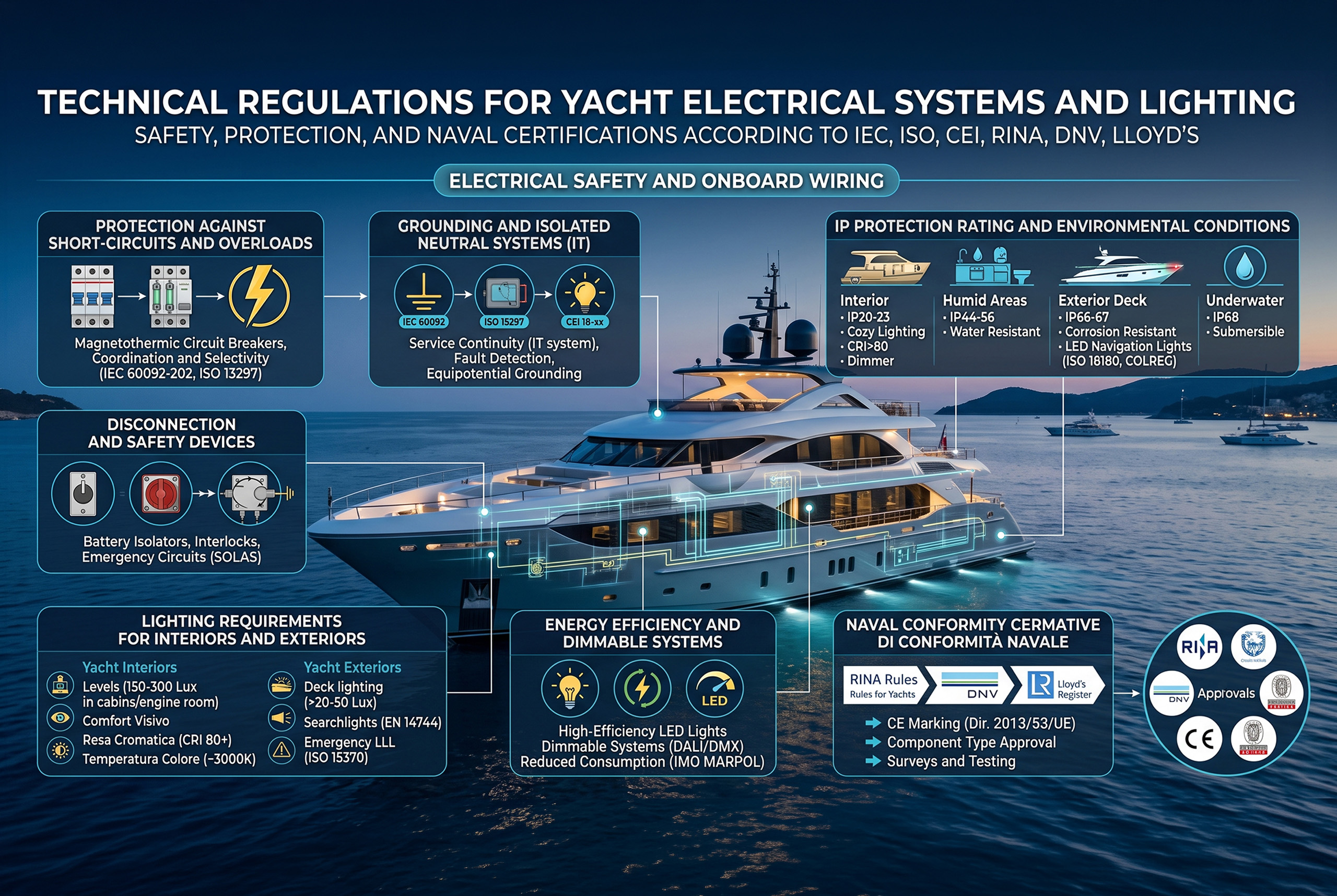
Technical Regulations for Electrical Systems and Lighting in Yachts Electrical safety, visual comfort and ship compliance according to IEC, ISO, CEI, RINA and DNV standards. Electrical Safety and Wiring in On-Board Systems The electrical systems on board yachts must meet strict international regulations to ensure safety against electrocution, fire and breakdowns. The IEC 60092 series  (adopted in Italy as **CEI 18-**xx) is the main reference for naval installations, providing general design requirements and protection criteria in line with international conventions…
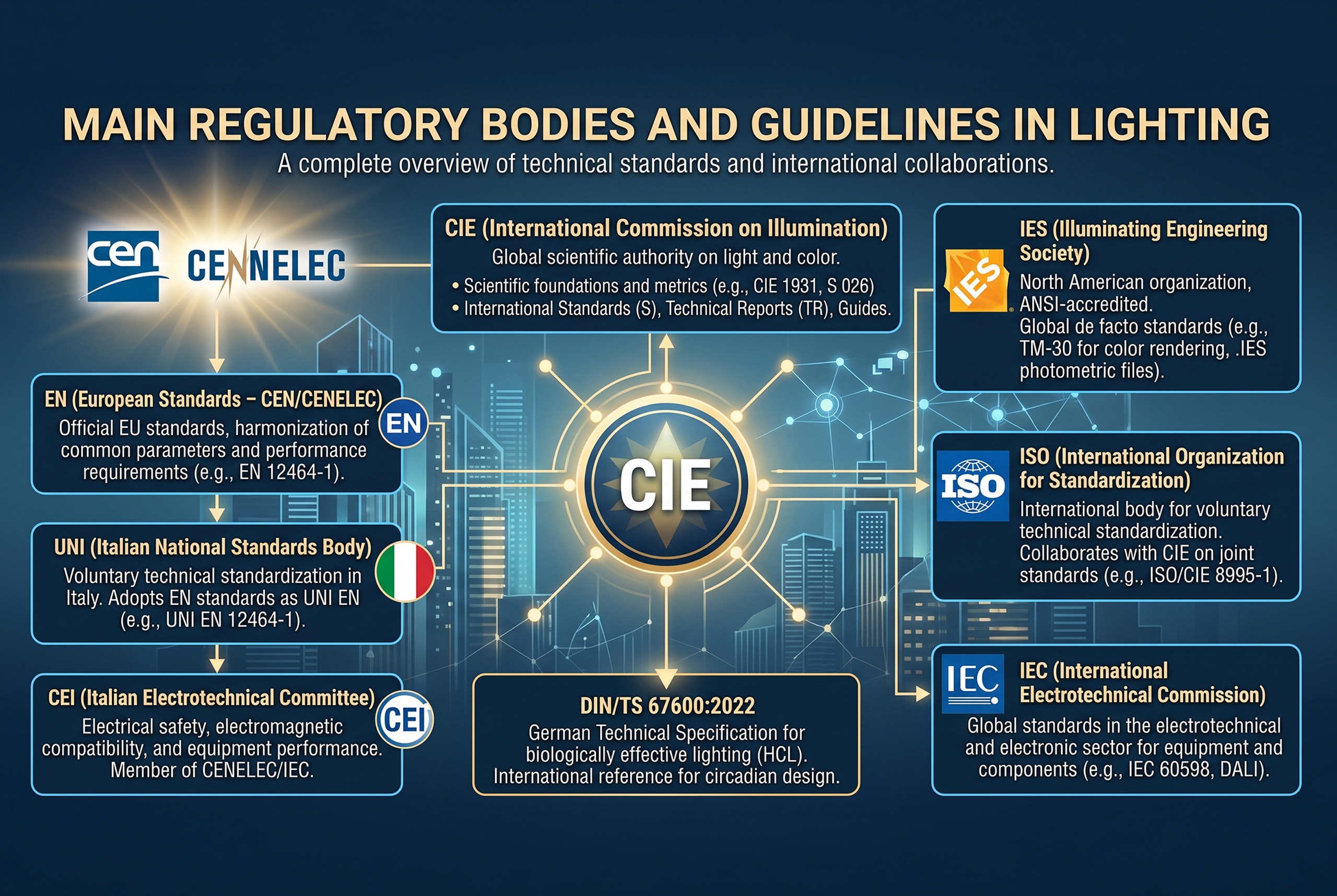
Main Regulatory Bodies and Guidelines in Lighting Technology A comprehensive framework on technical standards, international collaborations and key documents for designing light according to scientific and performance criteria. CIE (International Commission on Enlightenment) Regulatory role and authority - The CIE (Commission Internationale de l'Éclairage) is recognized as the leading international scientific authority in the field of light, color and lighting. Founded in 1913, it is an independent, non-governmental, non-profit organization that operates as a global reference body for the definition…
Standard-Lighting-Measurements-(LM)-dell’IES-Codici,-Struttura-e-Implicazioni-Progettuali_Copertina-eng
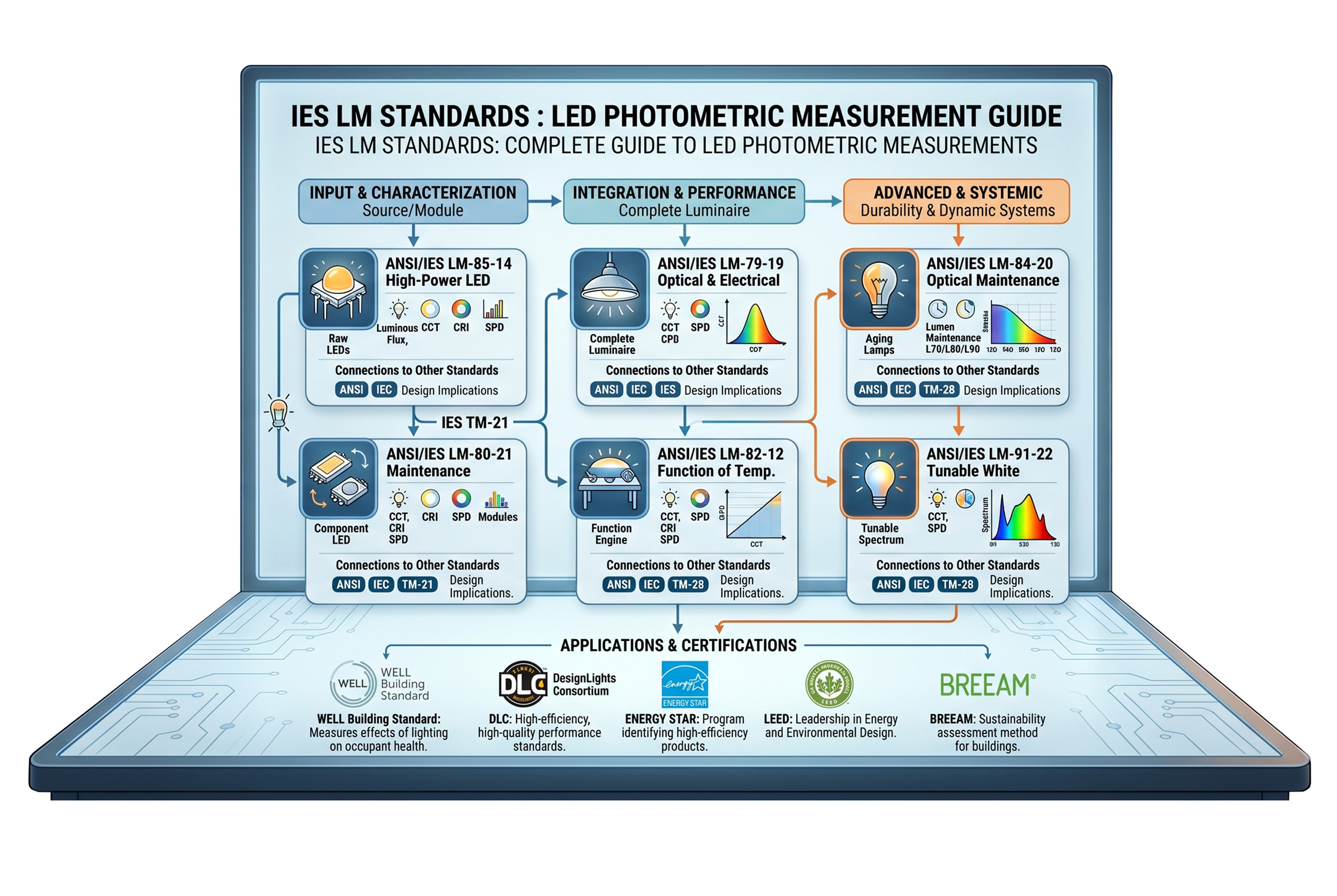
IES Standard Lighting Measurements (LM): Codes, Structure, and Design Implications Technical guide to LM standards for measuring the photometric, chromatic, and electrical performance of LEDs, modules, and luminaires. After having illustrated the function of the Technical Memoranda (TM) of the Illuminating Engineering Society (IES) as technical support tools oriented towards innovation and the definition of emerging guidelines, it is essential to introduce another central regulatory category into the IES system: the documents marked with the acronym LM (Lighting Measurements). These…
Standard-Technical-Memoranda-(TM)-dell’IES-Codici,-Struttura-e-Implicazioni-Progettuali_Copertina-eng
IES Standard Technical Memoranda (TM): Codes, Structure, and Design Implications A technical guide to the use and interpretation of TM documents in lighting design The following insight is dedicated to the Technical Memoranda (TM) published by Illuminating Engineering Society (IES), a collection of technical documents that define methodologies, evaluation criteria and operational guidelines on specific and emerging issues in the field of lighting technology each document is identified by a unique code in the format ANSI/IES TM-##-YY, in which the…
Authoritative Standards and Guidelines in Lighting Technology: Multilevel Structure and Design Applications A complex regulatory system for designing light with technical rigor and application coherence The evolution of light sources – in particular the capillary diffusion of composite spectrum LEDs – has brought about a radical transformation in the way of design, evaluate and regulate the light. As highlighted in the discussion on CIE diagram 1931, the traditional chromatic instruments, while retaining a role historical and regulatory, are revealed today…
With the advent of LED sources, can we define the 1931 CIE diagram as obsolete? Formally no, but practically yes, in many application contexts. Now that we have understood how the spectral distribution of light influences the color rendering, visual perception and biological effects of light radiation, it is necessary to introduce a fundamental tool to represent and quantify the color of light: the chromaticity diagram. To fully understand the color perception in lighting design, it is of fundamental importance…
digital light and perceived thresholds - cover
Digital Lighting and Visual Perception: the Dissolution of the See/Understand Relationship How electric light is changing the relationship between seeing, experiencing, and understanding the world In today's era of digital enlightenment, characterized by bright screens, sensors and omnipresent LED sources, a crisis is emerging in the traditional paradigm according to which seeing is equivalent to understanding. For centuries, the light It has been a privileged metaphor for truth and knowledge (the "lights" of reason, spiritual enlightenment): "light presents itself as…
Electroluminescence Process in LED Semiconductor Devices
How LEDs Work: Electroluminescence, Materials, and the Light Spectrum From semiconductor structure to color rendering: how LED light takes shape Visible light, although perceived as a continuous and unified phenomenon, is actually composed of a multiplicity of wavelengths, each corresponding to a specific stimulation of the visual system. The ability of a light source to ensure natural vision and accurate color rendering depends on its spectral distribution, namely on how luminous energy is distributed within the visible spectrum, ranging approximately…
Fundamental Properties of Electromagnetic-Waves Amplitude and Wavelength
Visible Light and the Electromagnetic Spectrum: Physical Principles for Lighting Design How wavelengths influence perception, color, and light design After examining how the human eye adapts to different illumination levels through photopic, scotopic, and mesopic visual modes, and after exploring the non-visual effects of light on the melanopic system and circadian balance, it is now necessary to take a step back in order to understand the physical nature of light. To design light correctly, in fact, it is not enough…
Visual Signal Transmission Pathway in the Human Retina
Photopic vs Melanopic Illuminance: Definition and Spectral Sensitivity MEDI, EML, and CS. Three essential indicators for measuring the circadian impact of artificial light The perception of light varies according to illumination levels and activates different visual mechanisms. Depending on ambient luminance, the human eye enters a state of photopic, scotopic, or mesopic vision, each mediated by specific photoreceptors and characterized by different perceptual responses. Understanding which visual dominance prevails within a given context is essential for designing coherent lighting scenarios,…
Light Perception Human Eye Capabilities and Limitations
Light Perception: Capabilities and Limits of the Human Eye Understanding how the human eye works is the first step toward designing light with awareness  The human eye is a highly evolved organ, capable of adapting to extreme lighting conditions, distinguishing details with remarkable precision, perceiving a wide chromatic range, and detecting movement with great sensitivity. However, it also presents physiological limitations, such as slow adaptation to darkness, loss of color perception under low-light conditions, sensitivity to glare, and reduced sharpness…
Lighting-Design-e-Teoria-della-Luce
Lighting Design and Light Theory Complexity in the relationship between light, perception, and design   How does a lighting designer develop a lighting project? Which disciplines should a rigorous lighting design study rely upon? How can lighting design improve visual comfort, reduce energy consumption, and enhance the value of a space? Why is it essential for light to be designed in relation to the different activities and functions taking place within an environment? To address these questions, understanding only the…
MENU