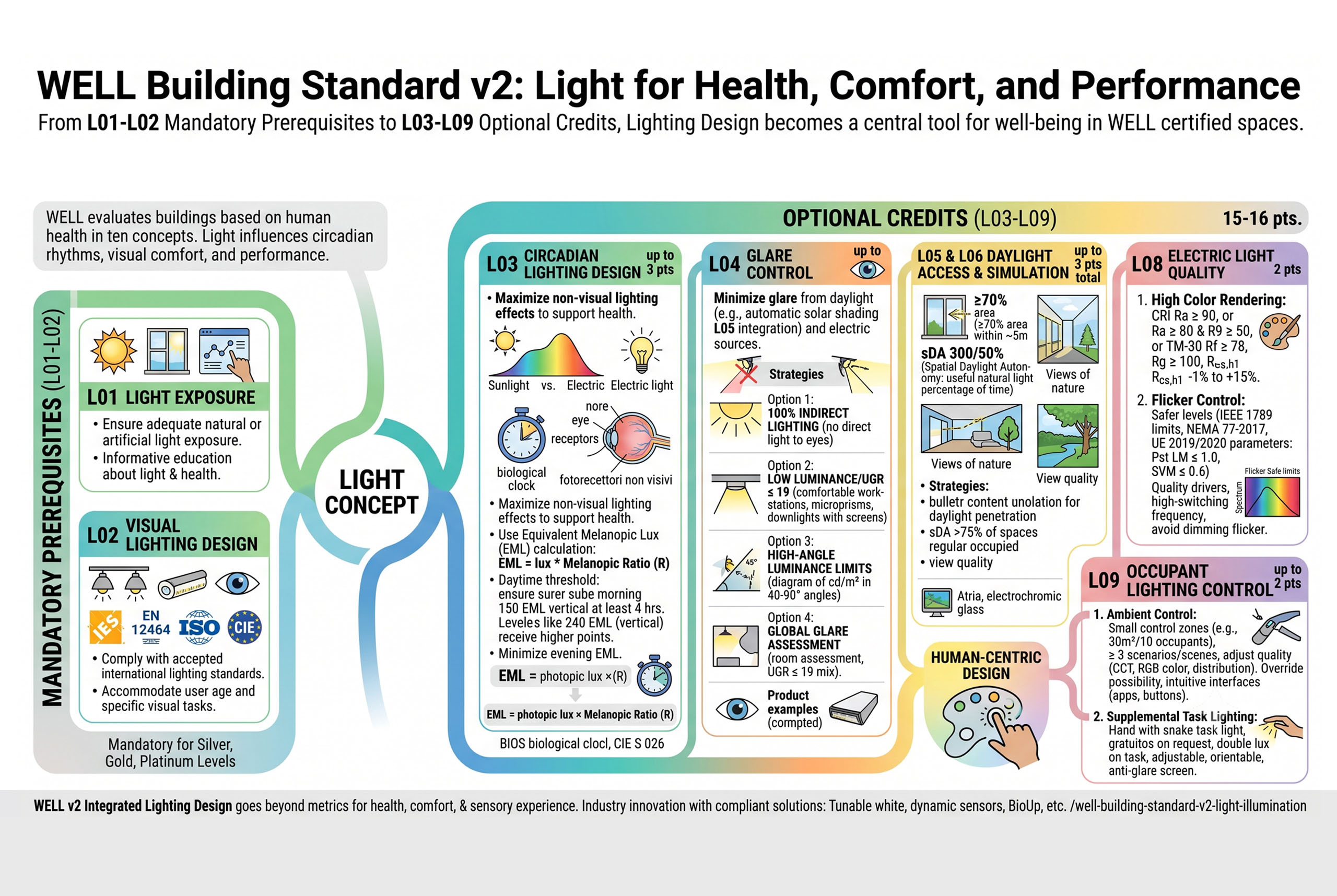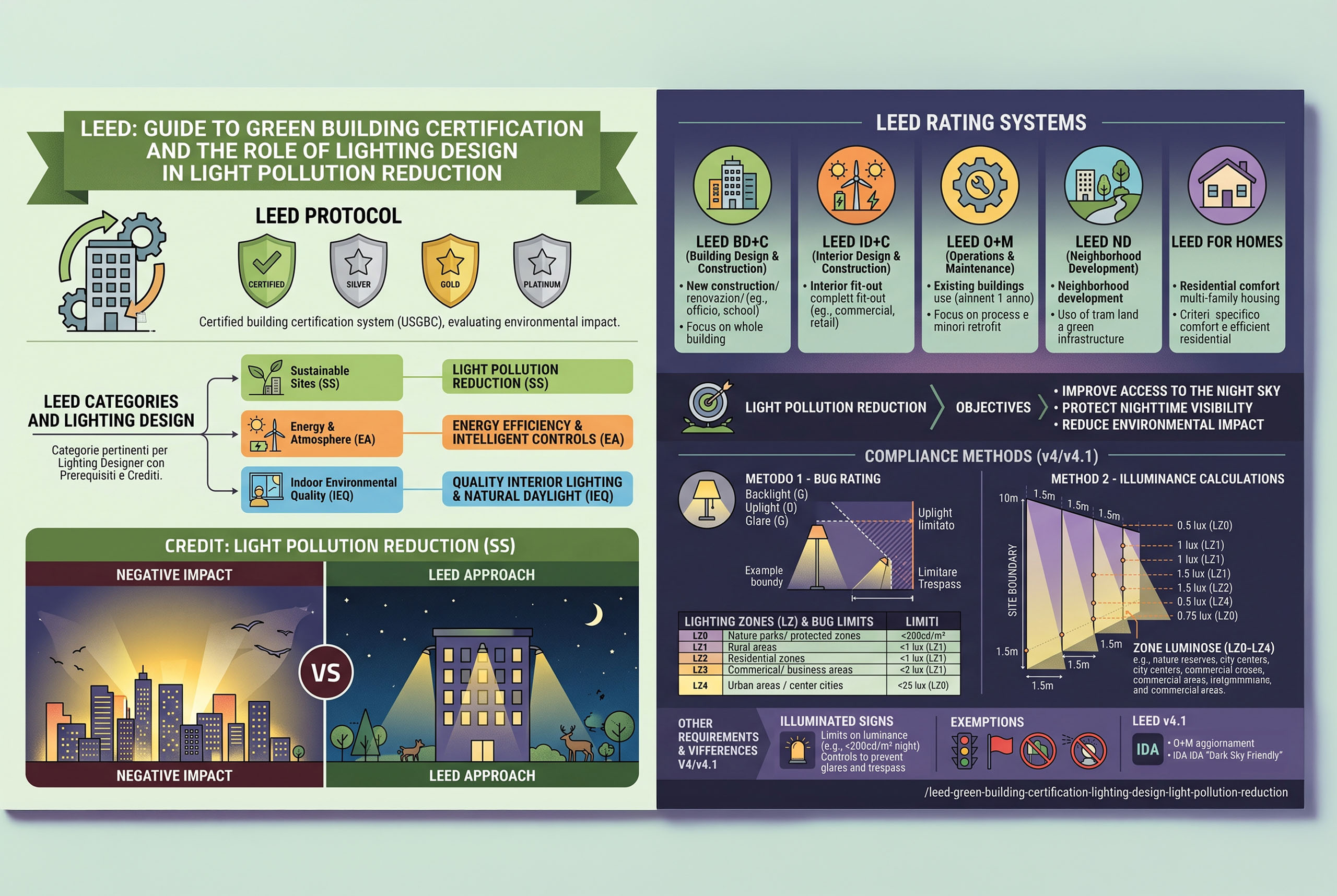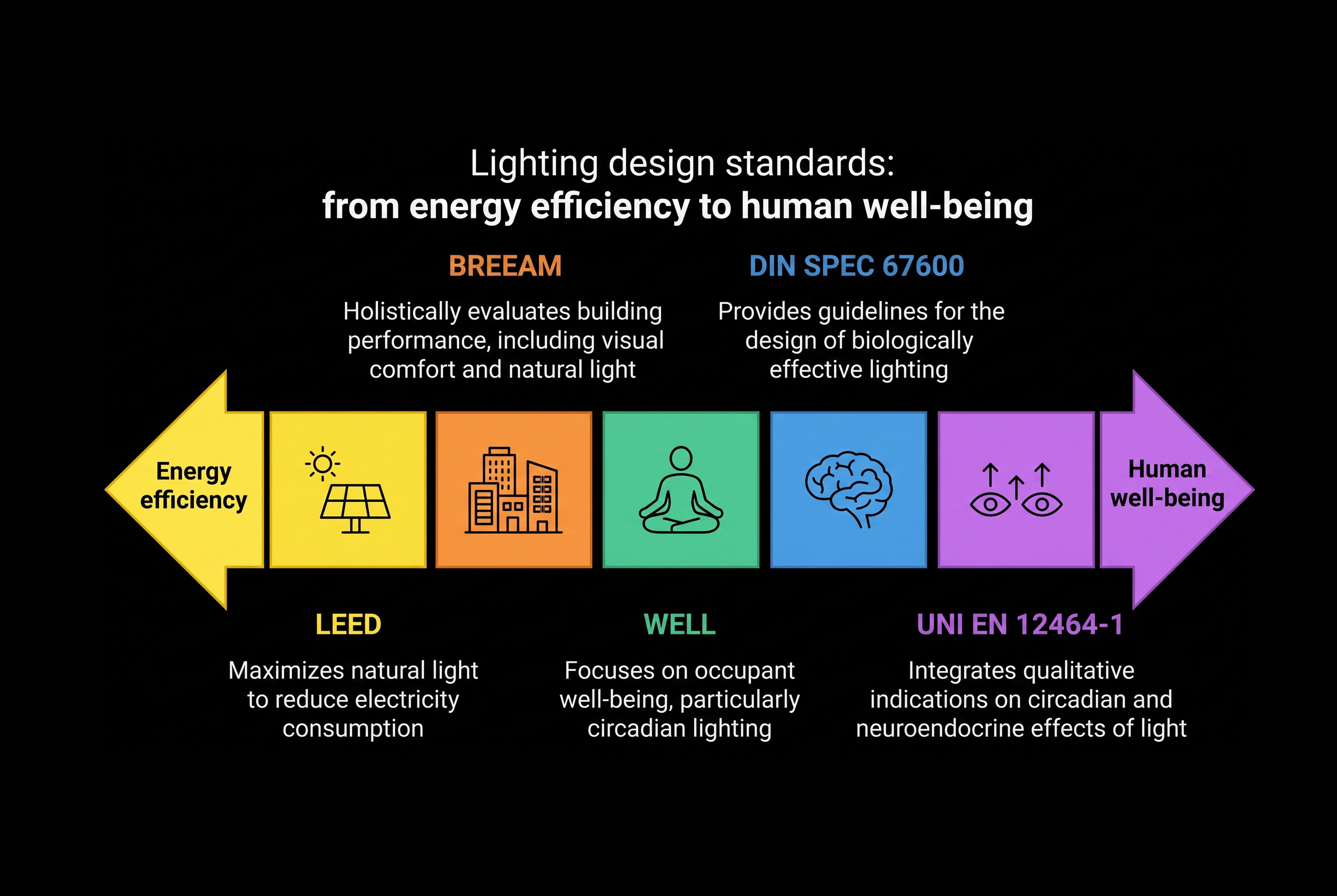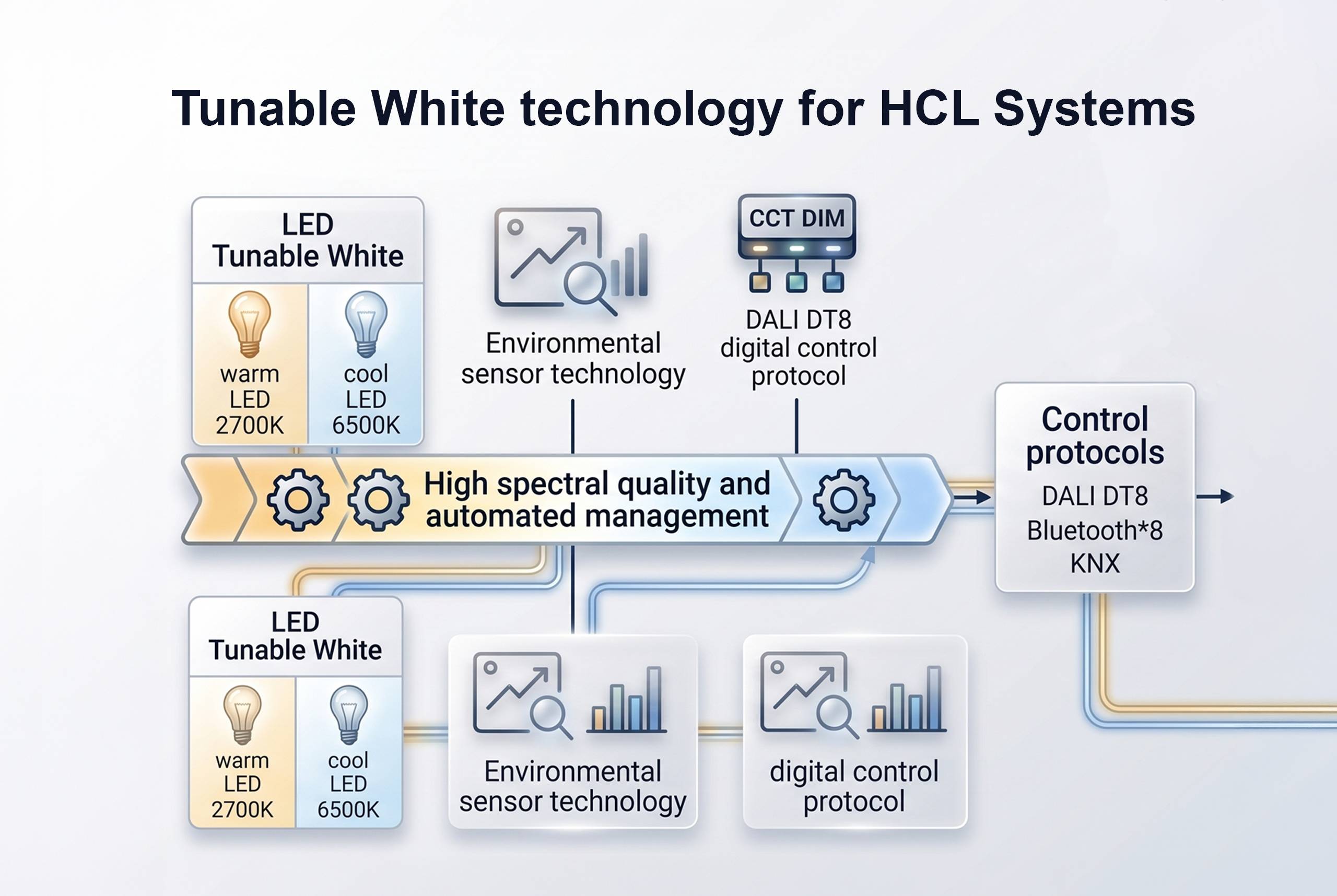
To complete the framework outlined by the LEED, WELL and BREEAM protocols – voluntary tools aimed at promoting well-being, sustainability and internal environmental quality – it is necessary to consider the evolution of the mandatory legislation on the energy efficiency of buildings, which directly affects the design of lighting systems.
The regulatory evolution on energy efficiency is in fact constantly changing. Following the international agreements signed with the Kyoto Protocol of 1997, the European Union adopted the Energy Performance of Buildings Directive (EPBD), which came into force in 2002 as a strategic framework for improving the energy performance of the European building stock. Subsequently updated with Directive 2010/31/EU and Directive 2018/844/EU, the EPBD laid the foundations for policies aimed at the decarbonisation of buildings and the promotion of passive and active technologies for efficiency. The most recent revision – Directive (EU) 2024/1275, which entered into force in 2024 – further strengthens these targets, imposing more stringent obligations on low-performing buildings and promoting the shift to nearly zero-emission buildings (NZEBs).
To support the implementation of these directives, CEN – European Committee for Standardization has defined a series of technical standards for the calculation of energy performance. Among these, EN 15193-1:2017, updated with Amendment A1 of 2021 (consolidated version EN 15193-1:2017+A1:2021), provides the official methodology for quantifying energy consumption due to artificial lighting. At the heart of this approach is the LENI parameter – Lighting Energy Numeric Indicator, expressed in kWh/m²/year, which represents the unique reference indicator for assessing the annual energy performance of lighting systems inside non-residential buildings.
The LENI applies to new, existing or renovated buildings, and is particularly relevant in the contexts of energy certification, performance audits and verification of compliance with the Construction CAM. Unlike voluntary protocols that introduce metrics related to perceptual or biological comfort (such as EML, CS, daylight factor or UGR), the LENI adopts a strict regulatory framework, aimed at ensuring an objective, transparent and comparable quantification of energy consumption due to artificial light.
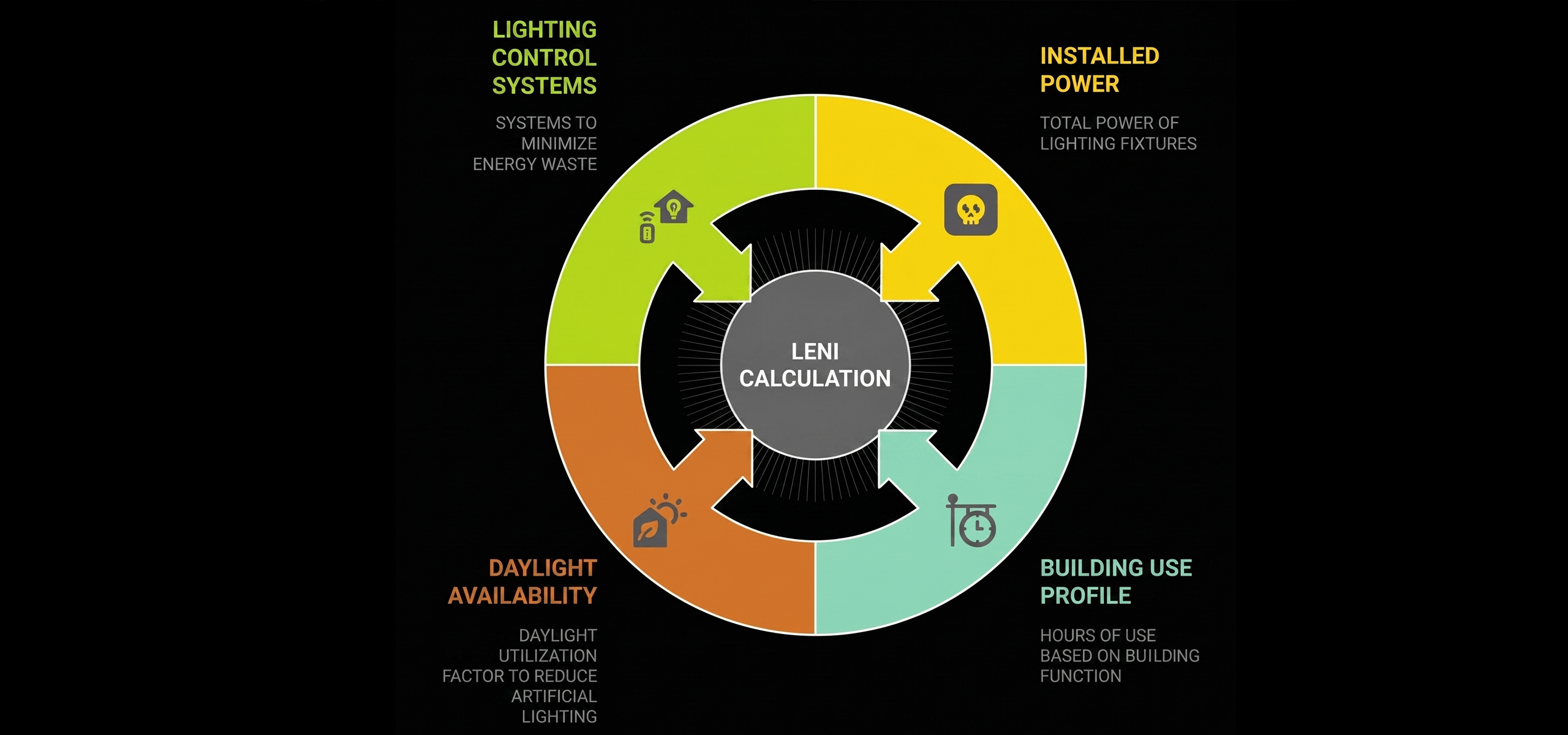
The LENI calculation methodology takes into account numerous interconnected factors. The first element concerns the installed power of the lighting system, which must be considered in its entirety, including the technical specifications of the luminaires, the efficiency of the sources, the electronic drivers, the emission optics and any losses. The second aspect is the use profile of the building, which defines the annual hours of use of each illuminated space on the basis of its function (e.g., offices, classrooms, medical clinics), according to regulatory tables reported in the appendix to the standard.
The amount of natural light available is treated by means of the so-called daylight utilization factor, which makes it possible to estimate how much of the light requirement can be met without the use of artificial light. This contribution can be calculated both through simplified methods – which exploit indices such as the daylight factor or the depth index – and through dynamic simulations based on advanced lighting calculation software.
A further decisive parameter in the calculation of the LENI is represented by the lighting control systems, whose role is essential to minimize waste and adapt the operation of the system to the real needs of users. The standard provides for correction coefficients linked to the presence of motion sensors, automatic regulation of the flux according to daylight, efficient manual controls and integrated management systems. The more sophisticated the control system adopted, the lower the multiplication coefficient applied to the theoretical energy requirement will be.
The final result, expressed as LENI (kWh/m²/year), represents a synthetic but complex value, which returns the energy efficiency of the lighting system according to its technical characteristics, environmental conditions and usage behavior. According to indicative guide values reported in the standard, a well-designed building can achieve optimal LENI levels of between 6 and 10 kWh/m²/year for open-plan offices, 5 and 9 kWh/m²/year for classrooms, up to values above 12–16 kWh/m²/year in environments with continuous use such as warehouses or 24-hour sanitary areas.
It should be emphasized that the EN 15193-1 standard requires compliance with the functional lighting requirements, as defined in UNI EN 12464-1:2021, according to which energy efficiency can never compromise visual quality. The designer is therefore required to guarantee the minimum values of average illuminance, uniformity, glare control and color rendering, ensuring that energy savings are achieved not at the expense of comfort, but through optimized and integrated design.
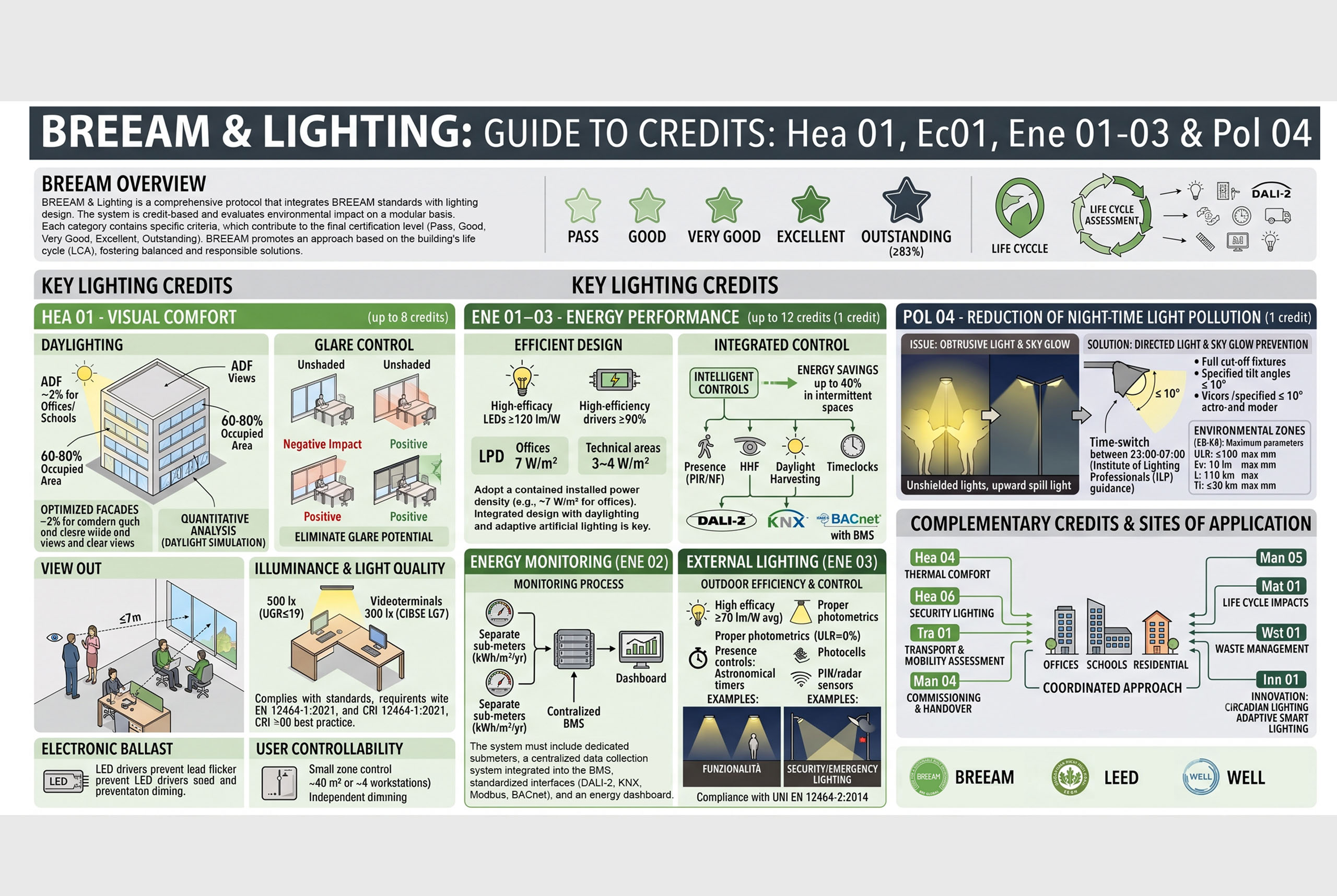
LENI is not a parameter directly required by the WELL, LEED or BREEAM protocols, but it is perfectly compatible with their performance logic. It can support daylight harvesting strategies, contribute to the documentation of consumption for LEED credits, or constitute an element of verification of the overall energy sustainability required by BREEAM. At the same time, its adoption integrates harmoniously with the principles promoted by WELL, in particular in the strategies of dynamic light regulation, chromatic tuning and customized lighting management.
Ultimately, LENI represents an indispensable tool for conscious lighting design, capable of simultaneously responding to regulatory requirements, environmental objectives and design requirements. Its application, based on measurable data and standardized criteria, makes it possible to develop truly sustainable interventions, in which the balance between natural and artificial light, technology and visual comfort, efficiency and perceptive quality translates into a model consistent with the paradigms of European construction in the twenty-first century.

To complete the framework outlined by the LEED, WELL and BREEAM protocols – voluntary tools aimed at promoting well-being, sustainability and internal environmental quality – it is necessary to consider the evolution of the mandatory legislation on the energy efficiency of buildings, which directly affects the design of lighting systems.
The regulatory evolution on energy efficiency is in fact constantly changing. Following the international agreements signed with the Kyoto Protocol of 1997, the European Union adopted the Energy Performance of Buildings Directive (EPBD), which came into force in 2002 as a strategic framework for improving the energy performance of the European building stock. Subsequently updated with Directive 2010/31/EU and Directive 2018/844/EU, the EPBD laid the foundations for policies aimed at the decarbonisation of buildings and the promotion of passive and active technologies for efficiency. The most recent revision – Directive (EU) 2024/1275, which entered into force in 2024 – further strengthens these targets, imposing more stringent obligations on low-performing buildings and promoting the shift to nearly zero-emission buildings (NZEBs).
To support the implementation of these directives, CEN – European Committee for Standardization has defined a series of technical standards for the calculation of energy performance. Among these, EN 15193-1:2017, updated with Amendment A1 of 2021 (consolidated version EN 15193-1:2017+A1:2021), provides the official methodology for quantifying energy consumption due to artificial lighting. At the heart of this approach is the LENI parameter – Lighting Energy Numeric Indicator, expressed in kWh/m²/year, which represents the unique reference indicator for assessing the annual energy performance of lighting systems inside non-residential buildings.
The LENI applies to new, existing or renovated buildings, and is particularly relevant in the contexts of energy certification, performance audits and verification of compliance with the Construction CAM. Unlike voluntary protocols that introduce metrics related to perceptual or biological comfort (such as EML, CS, daylight factor or UGR), the LENI adopts a strict regulatory framework, aimed at ensuring an objective, transparent and comparable quantification of energy consumption due to artificial light.
The LENI calculation methodology takes into account numerous interconnected factors. The first element concerns the installed power of the lighting system, which must be considered in its entirety, including the technical specifications of the luminaires, the efficiency of the sources, the electronic drivers, the emission optics and any losses. The second aspect is the use profile of the building, which defines the annual hours of use of each illuminated space on the basis of its function (e.g., offices, classrooms, medical clinics), according to regulatory tables reported in the appendix to the standard.
The amount of natural light available is treated by means of the so-called daylight utilization factor, which makes it possible to estimate how much of the light requirement can be met without the use of artificial light. This contribution can be calculated both through simplified methods – which exploit indices such as the daylight factor or the depth index – and through dynamic simulations based on advanced lighting calculation software.
A further decisive parameter in the calculation of the LENI is represented by the lighting control systems, whose role is essential to minimize waste and adapt the operation of the system to the real needs of users. The standard provides for correction coefficients linked to the presence of motion sensors, automatic regulation of the flux according to daylight, efficient manual controls and integrated management systems. The more sophisticated the control system adopted, the lower the multiplication coefficient applied to the theoretical energy requirement will be.
The final result, expressed as LENI (kWh/m²/year), represents a synthetic but complex value, which returns the energy efficiency of the lighting system according to its technical characteristics, environmental conditions and usage behavior. According to indicative guide values reported in the standard, a well-designed building can achieve optimal LENI levels of between 6 and 10 kWh/m²/year for open-plan offices, 5 and 9 kWh/m²/year for classrooms, up to values above 12–16 kWh/m²/year in environments with continuous use such as warehouses or 24-hour sanitary areas.
It should be emphasized that the EN 15193-1 standard requires compliance with the functional lighting requirements, as defined in UNI EN 12464-1:2021, according to which energy efficiency can never compromise visual quality. The designer is therefore required to guarantee the minimum values of average illuminance, uniformity, glare control and color rendering, ensuring that energy savings are achieved not at the expense of comfort, but through optimized and integrated design.
LENI is not a parameter directly required by the WELL, LEED or BREEAM protocols, but it is perfectly compatible with their performance logic. It can support daylight harvesting strategies, contribute to the documentation of consumption for LEED credits, or constitute an element of verification of the overall energy sustainability required by BREEAM. At the same time, its adoption integrates harmoniously with the principles promoted by WELL, in particular in the strategies of dynamic light regulation, chromatic tuning and customized lighting management.
Ultimately, LENI represents an indispensable tool for conscious lighting design, capable of simultaneously responding to regulatory requirements, environmental objectives and design requirements. Its application, based on measurable data and standardized criteria, makes it possible to develop truly sustainable interventions, in which the balance between natural and artificial light, technology and visual comfort, efficiency and perceptive quality translates into a model consistent with the paradigms of European construction in the twenty-first century.
Other Lighting Post
Other Lighting Post
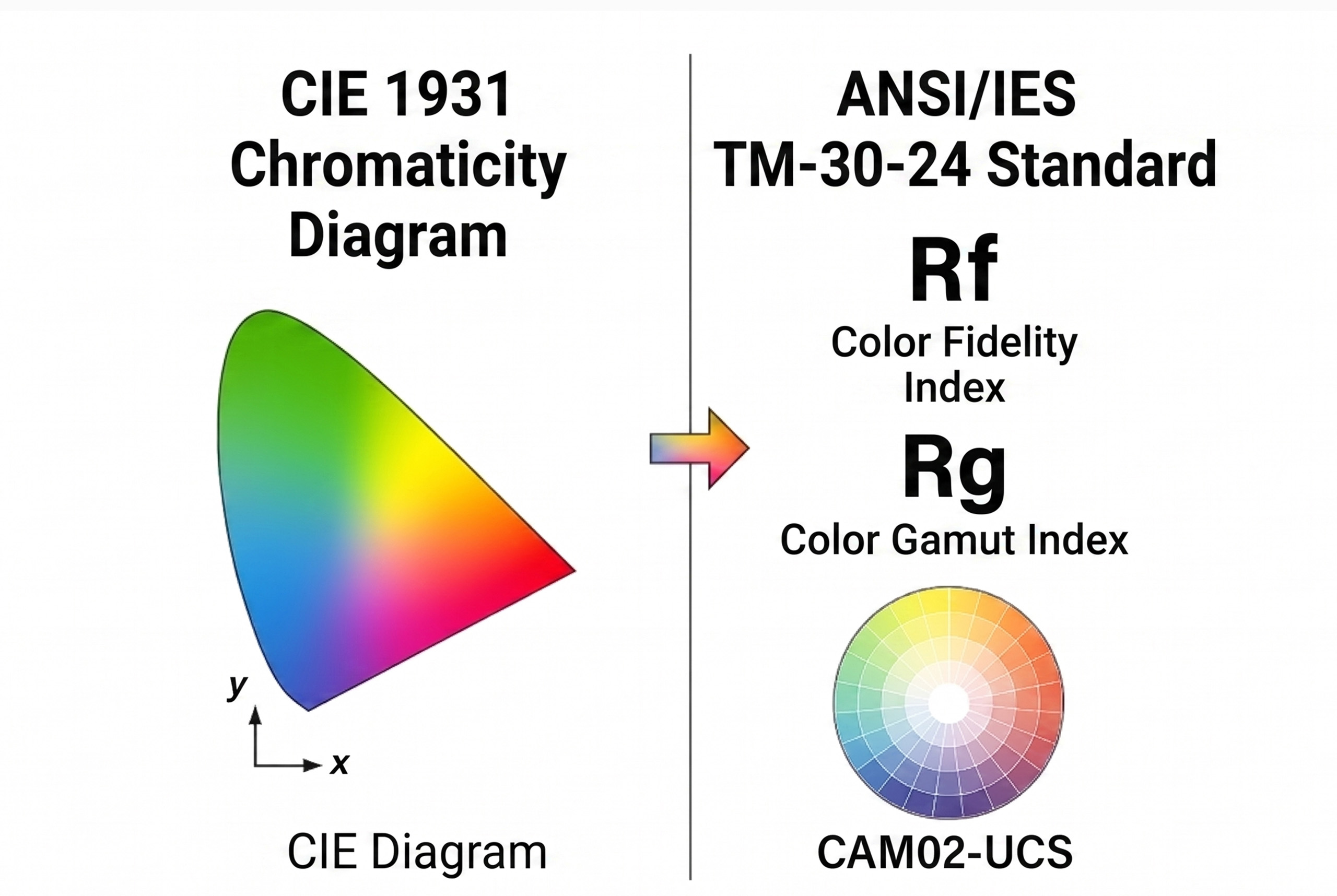
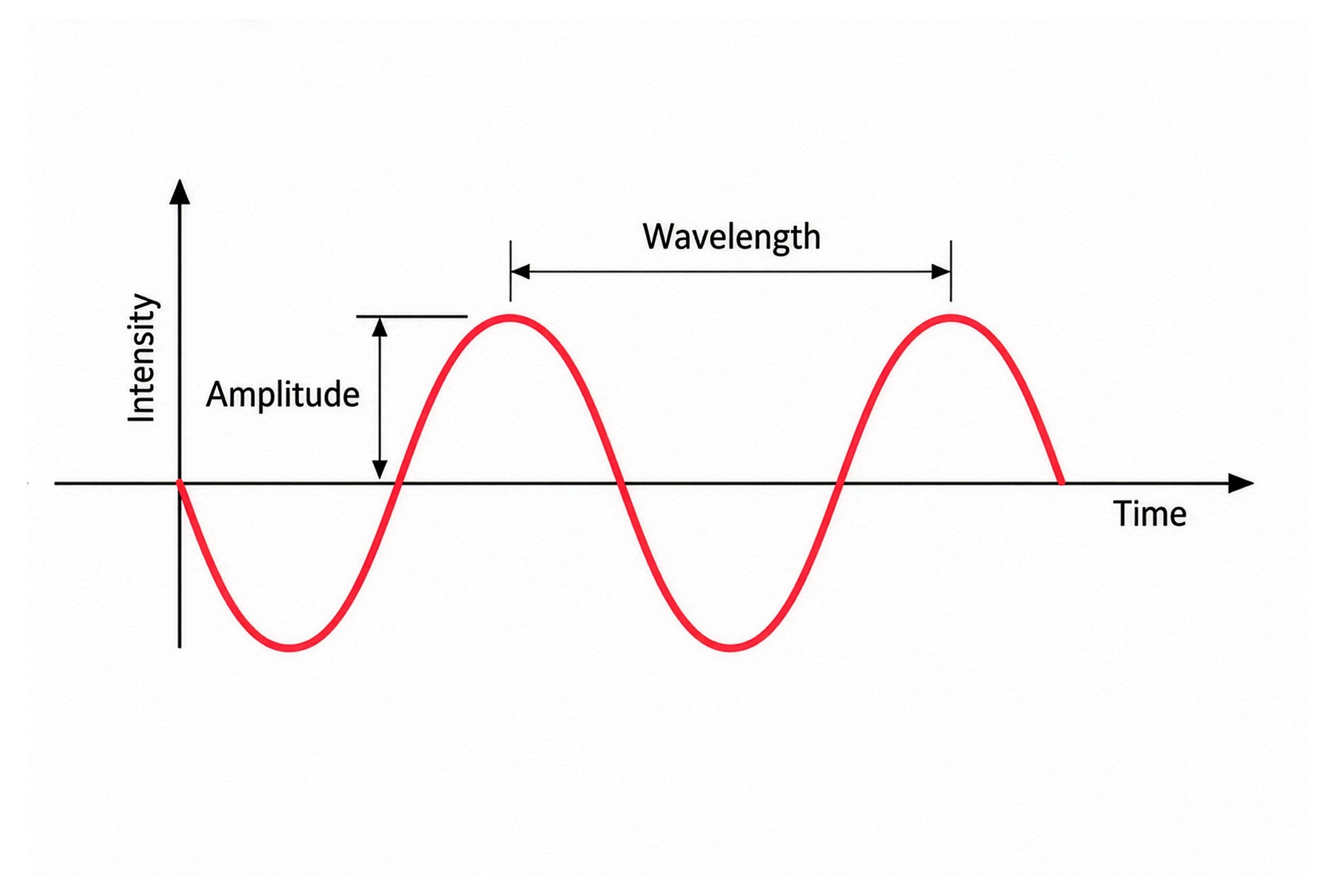
This section brings together a comprehensive body of theoretical, scientific, and design insights into the theory of light applied to lighting design, systematically addressing the complex relationship between light, visual perception, and spatial design. The content develops the physical foundations of light, an understanding of the mechanisms of human vision, the differences between photopic and melanopic illuminance, and the biological impact of artificial light, integrating advanced metrics and contemporary interpretation criteria.
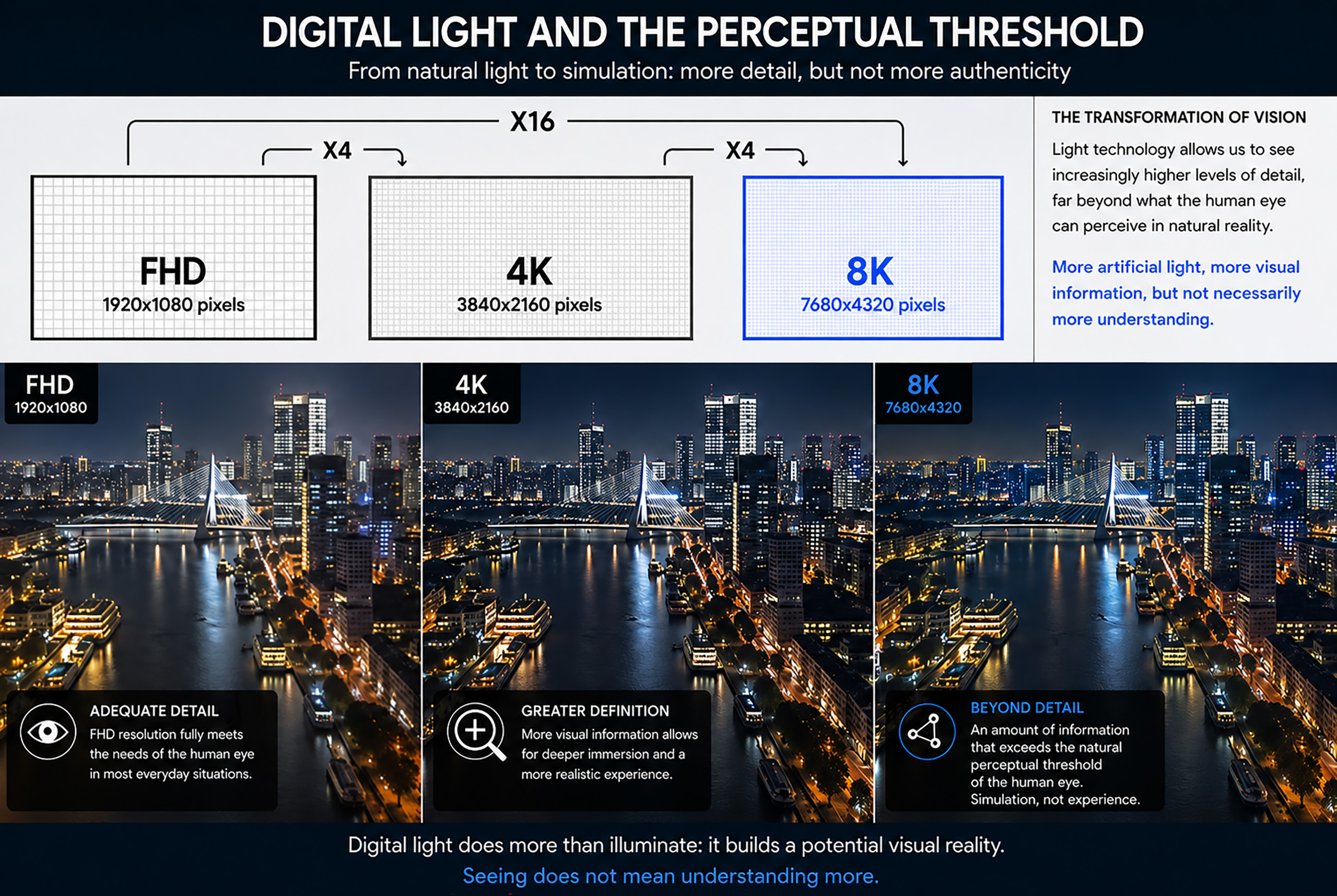
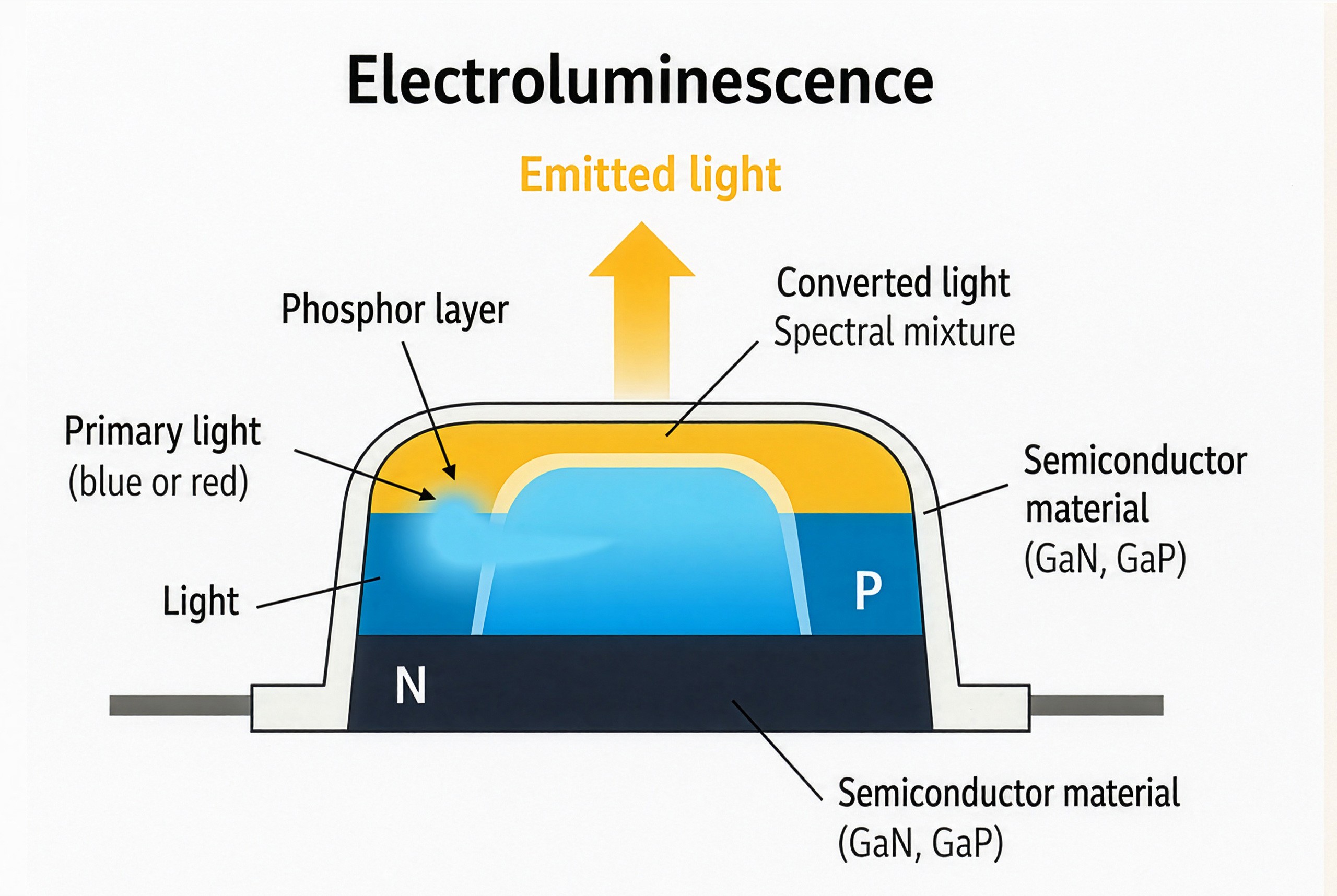
The page also explores the functioning of LED sources, the spectral and perceptual implications of solid-state light, the evolution of color rendering criteria, and the growing role of light as an informational and perceptual system, capable of influencing behavior, comfort, and the quality of spatial experience.
Ample space is dedicated to the relevant regulatory and technical framework, international standards, sustainability protocols, and control systems, understood as essential tools for rigorous, measurable, and consistent design.
Overall, the section provides a vision of the theory of light as the cultural and operational basis of lighting design, in which scientific knowledge, perceptual awareness, and design method converge to guide the lighting designer in the construction of balanced, legible, and qualitatively significant spaces.
This section brings together a comprehensive body of theoretical, scientific, and design insights into the theory of light applied to lighting design, systematically addressing the complex relationship between light, visual perception, and spatial design. The content develops the physical foundations of light, an understanding of the mechanisms of human vision, the differences between photopic and melanopic illuminance, and the biological impact of artificial light, integrating advanced metrics and contemporary interpretation criteria.
The page also explores the functioning of LED sources, the spectral and perceptual implications of solid-state light, the evolution of color rendering criteria, and the growing role of light as an informational and perceptual system, capable of influencing behavior, comfort, and the quality of spatial experience.
Ample space is dedicated to the relevant regulatory and technical framework, international standards, sustainability protocols, and control systems, understood as essential tools for rigorous, measurable, and consistent design.
Overall, the section provides a vision of the theory of light as the cultural and operational basis of lighting design, in which scientific knowledge, perceptual awareness, and design method converge to guide the lighting designer in the construction of balanced, legible, and qualitatively significant spaces.