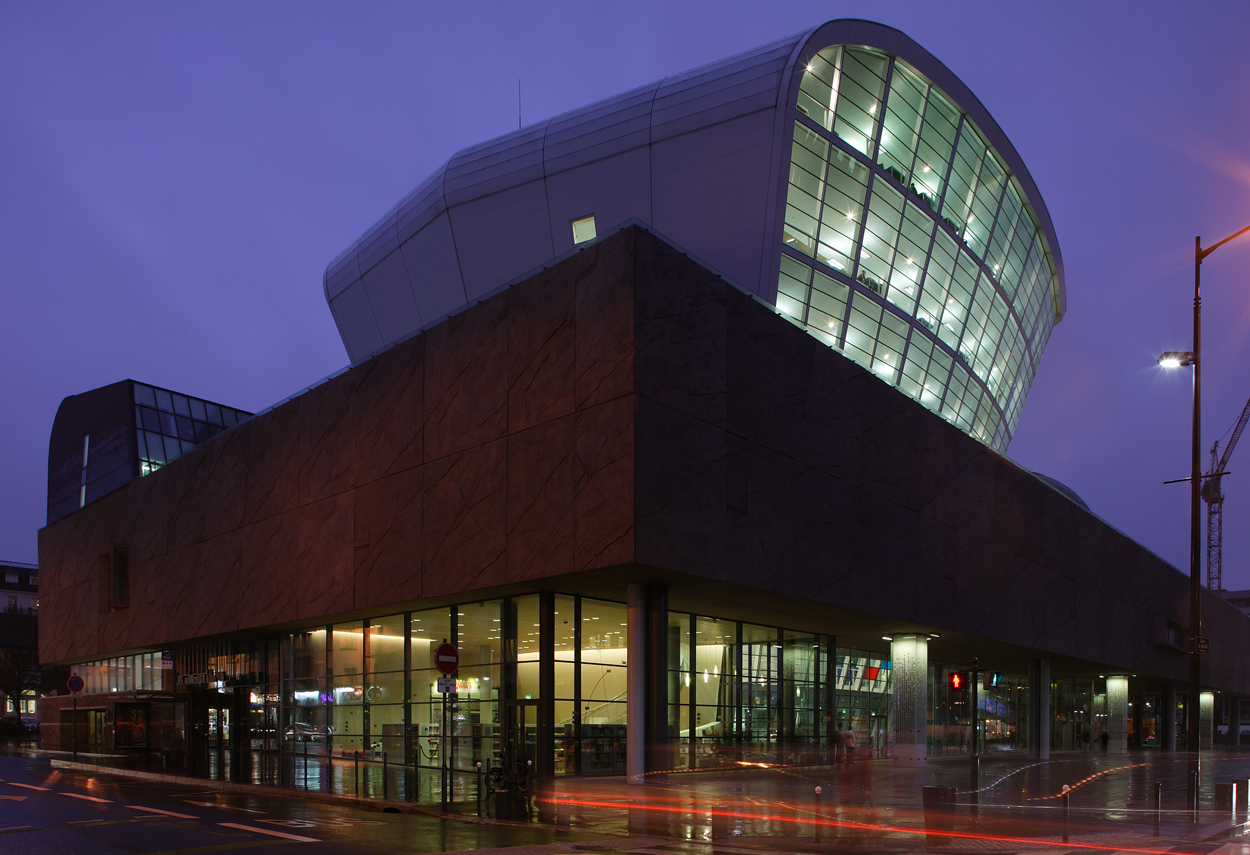
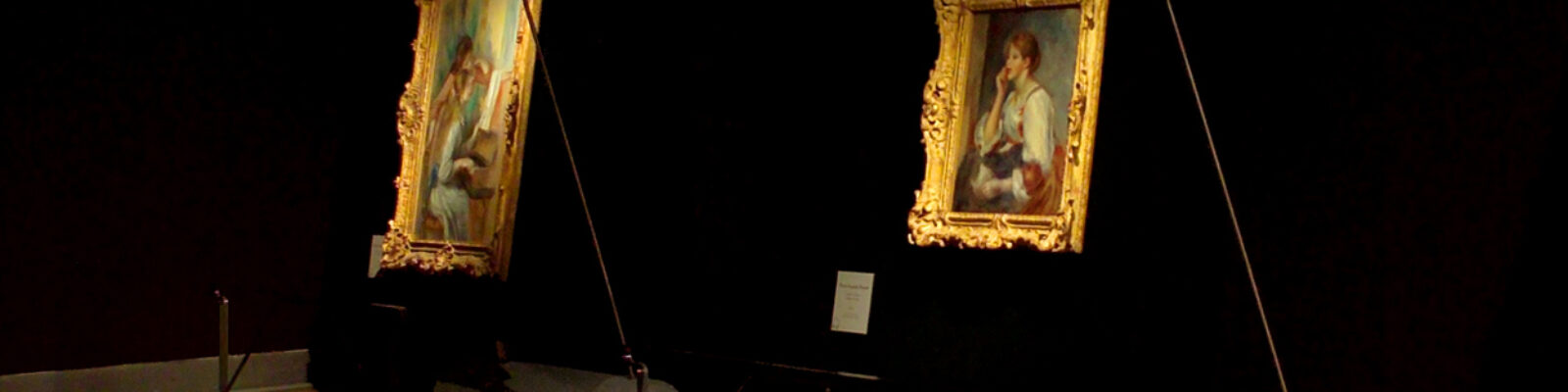
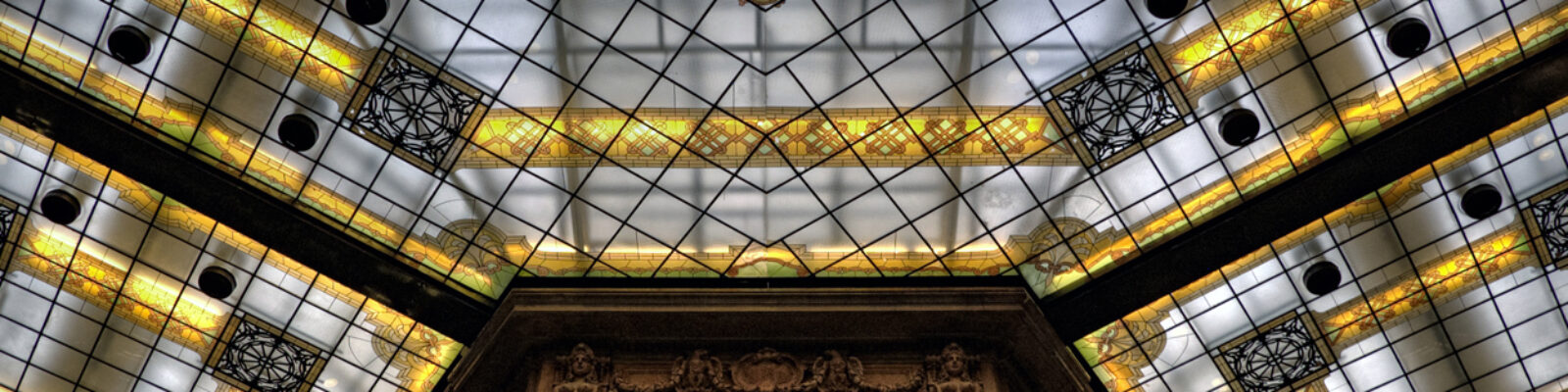
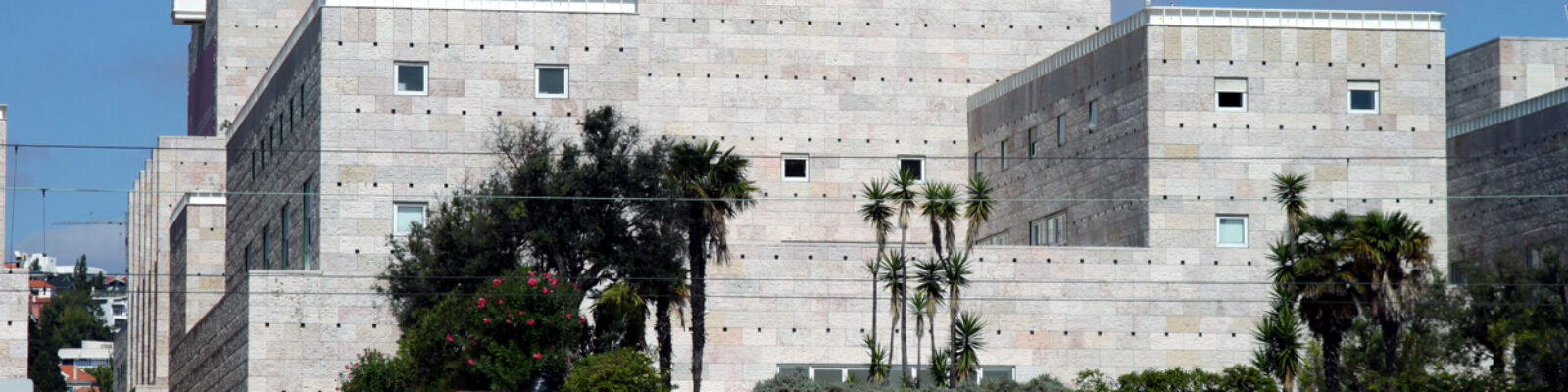
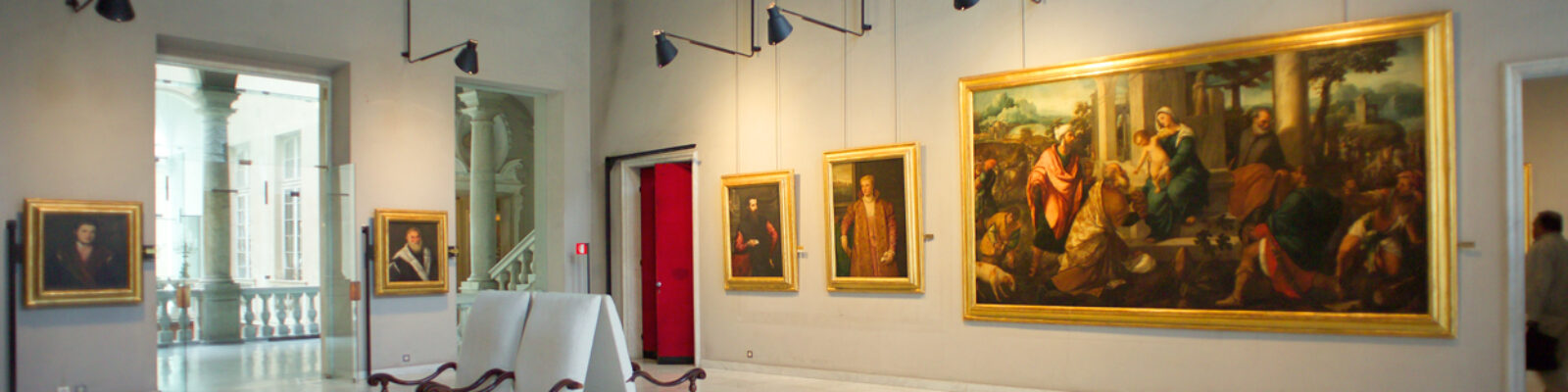
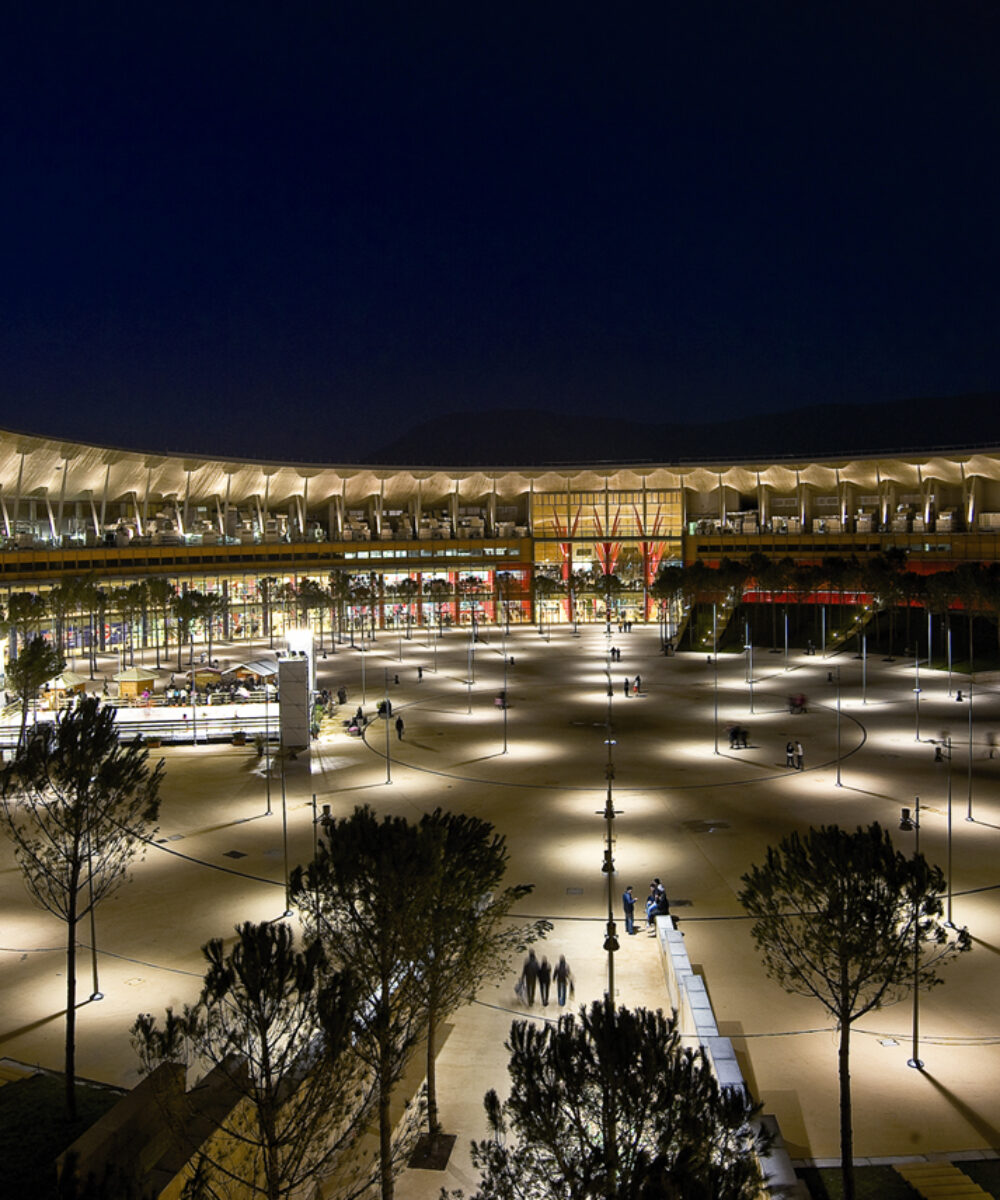
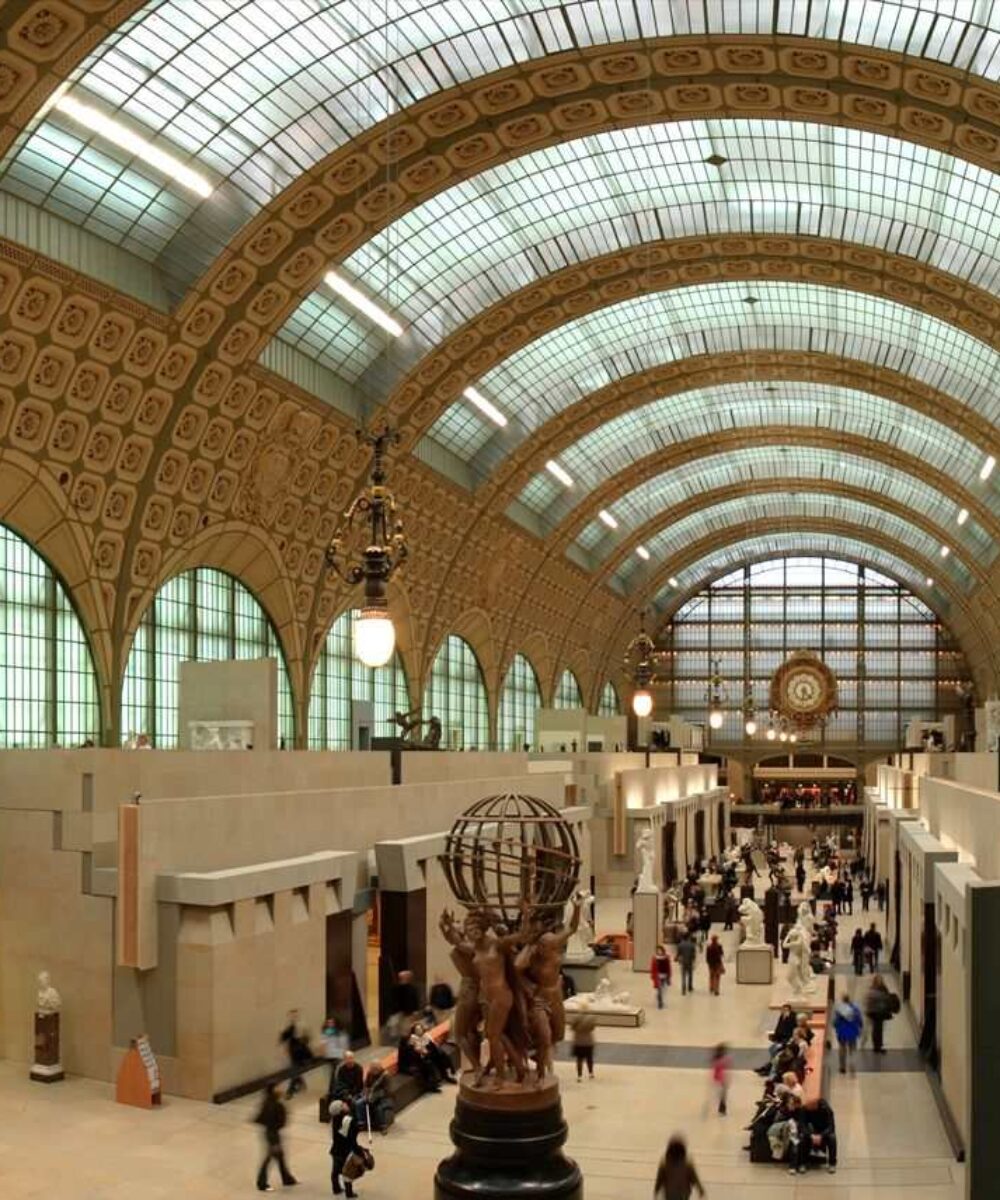
The Esplanade Charles de Gaulle was a car park before Edmond Hervé, mayor of Rennes, chose it as the site for a unique cultural centre dedicated to science, history and art. The building houses three major institutions: the Museum of Brittany, a cultural, scientific and technical centre, and a municipal library. The project by architect Christian de Portzamparc, winner of the competition, unites the city's three cultural venues in a single building with large volumes. The routes are reminiscent of those in the city, connections are made by overhead walkways, large interior windows make it easier to recognise the places, and transparent portions of the outer perimeter walls indicate the building's location in the city. This formed the basis of the three-in-one concept: each institution has its own specific form as part of a larger whole. The museum, a large flattened parallelepiped, is crossed from floor to ceiling by the cone of the library and the pyramid of the science centre. The exhibition rooms of the science centre are located below, with the spherical planetarium above; the library, an inverted prism, has its reading rooms lit from the top. The open and slender reception area connects all three spaces so that visitors discover all the possibilities offered by the building. Lines of recessed luminaires in the ceiling or on the ground accompany the paths. The spaces are illuminated in a manner appropriate to the type of use. The library has a discreet, diffuse and homogeneous general lighting system with emphasis on the reading stations. The museum rooms have a system of adjustable, direct light luminaires to ensure maximum display flexibility. Particular attention has been given to the display cases characterised by small "theatrical" settings. Recessed "down light" ceiling luminaires are used in the auditorium while the Planetarium dome is lit by direct light projectors. Small rest areas punctuate the visit. In France, architect Piero Castiglioni has carried out many lighting design projects, including the Centre Georges Pompidou (1985) and the Musée d'Orsay (1986) with Gae Aulenti, and the Pays d'Aix performance hall (2006) with Vittorio Gregotti.
Project:
Lighting Design Piero Castiglioni
Collaborations:
Architect Christian de Portzamparc
Photo Courtesy:
Piero Castiglioni
iGuzzini
Year:
2005
The Esplanade Charles de Gaulle was a car park before Edmond Hervé, mayor of Rennes, chose it as the site for a unique cultural centre dedicated to science, history and art. The building houses three major institutions: the Museum of Brittany, a cultural, scientific and technical centre, and a municipal library. The project by architect Christian de Portzamparc, winner of the competition, unites the city's three cultural venues in a single building with large volumes. The routes are reminiscent of those in the city, connections are made by overhead walkways, large interior windows make it easier to recognise the places, and transparent portions of the outer perimeter walls indicate the building's location in the city. This formed the basis of the three-in-one concept: each institution has its own specific form as part of a larger whole. The museum, a large flattened parallelepiped, is crossed from floor to ceiling by the cone of the library and the pyramid of the science centre. The exhibition rooms of the science centre are located below, with the spherical planetarium above; the library, an inverted prism, has its reading rooms lit from the top. The open and slender reception area connects all three spaces so that visitors discover all the possibilities offered by the building. Lines of recessed luminaires in the ceiling or on the ground accompany the paths. The spaces are illuminated in a manner appropriate to the type of use. The library has a discreet, diffuse and homogeneous general lighting system with emphasis on the reading stations. The museum rooms have a system of adjustable, direct light luminaires to ensure maximum display flexibility. Particular attention has been given to the display cases characterised by small "theatrical" settings. Recessed "down light" ceiling luminaires are used in the auditorium while the Planetarium dome is lit by direct light projectors. Small rest areas punctuate the visit. In France, architect Piero Castiglioni has carried out many lighting design projects, including the Centre Georges Pompidou (1985) and the Musée d'Orsay (1986) with Gae Aulenti, and the Pays d'Aix performance hall (2006) with Vittorio Gregotti.
Project:
Lighting Design Piero Castiglioni
Collaborations:
Architect Christian de Portzamparc
Photo Courtesy:
Piero Castiglioni
iGuzzini
Year:
2005
Other Projects
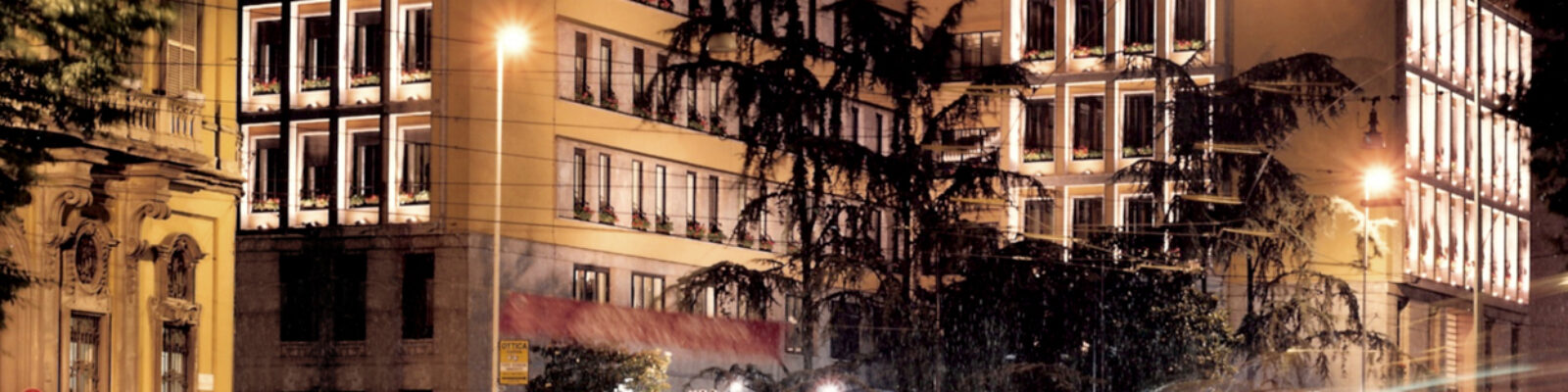
This section presents a representative selection of lighting design projects by Piero Castiglioni, developed across architectural, museum, urban, cultural, retail, hospitality, and infrastructural contexts, both in Italy and internationally. The gallery documents a range of interventions differing in scale, function, and context, united by an approach to light as a tool for interpreting space—capable of engaging with architecture, artworks, landscape, and contemporary use.
The featured projects span museums, foundations, and temporary exhibitions, as well as historic buildings, places of worship, public spaces, and urban complexes, extending to corporate headquarters, private residences, yachts, and lighting masterplans. In each project, light is conceived as a design material—carefully controlled and calibrated in relation to the specific characteristics of the site, functional requirements, and the perceptual quality of the experience.
Taken together, these works outline a vision of lighting design as an integrated process, where technical rigor, cultural sensitivity, and contextual awareness contribute to shaping identity, orientation, and spatial value. The gallery thus becomes a design map, illustrating how light can assume different roles—subtle or expressive—while consistently maintaining coherence, precision, and design awareness.
Other Projects
This section presents a representative selection of lighting design projects by Piero Castiglioni, developed across architectural, museum, urban, cultural, retail, hospitality, and infrastructural contexts, both in Italy and internationally. The gallery documents a range of interventions differing in scale, function, and context, united by an approach to light as a tool for interpreting space—capable of engaging with architecture, artworks, landscape, and contemporary use.
The featured projects span museums, foundations, and temporary exhibitions, as well as historic buildings, places of worship, public spaces, and urban complexes, extending to corporate headquarters, private residences, yachts, and lighting masterplans. In each project, light is conceived as a design material—carefully controlled and calibrated in relation to the specific characteristics of the site, functional requirements, and the perceptual quality of the experience.
Taken together, these works outline a vision of lighting design as an integrated process, where technical rigor, cultural sensitivity, and contextual awareness contribute to shaping identity, orientation, and spatial value. The gallery thus becomes a design map, illustrating how light can assume different roles—subtle or expressive—while consistently maintaining coherence, precision, and design awareness.