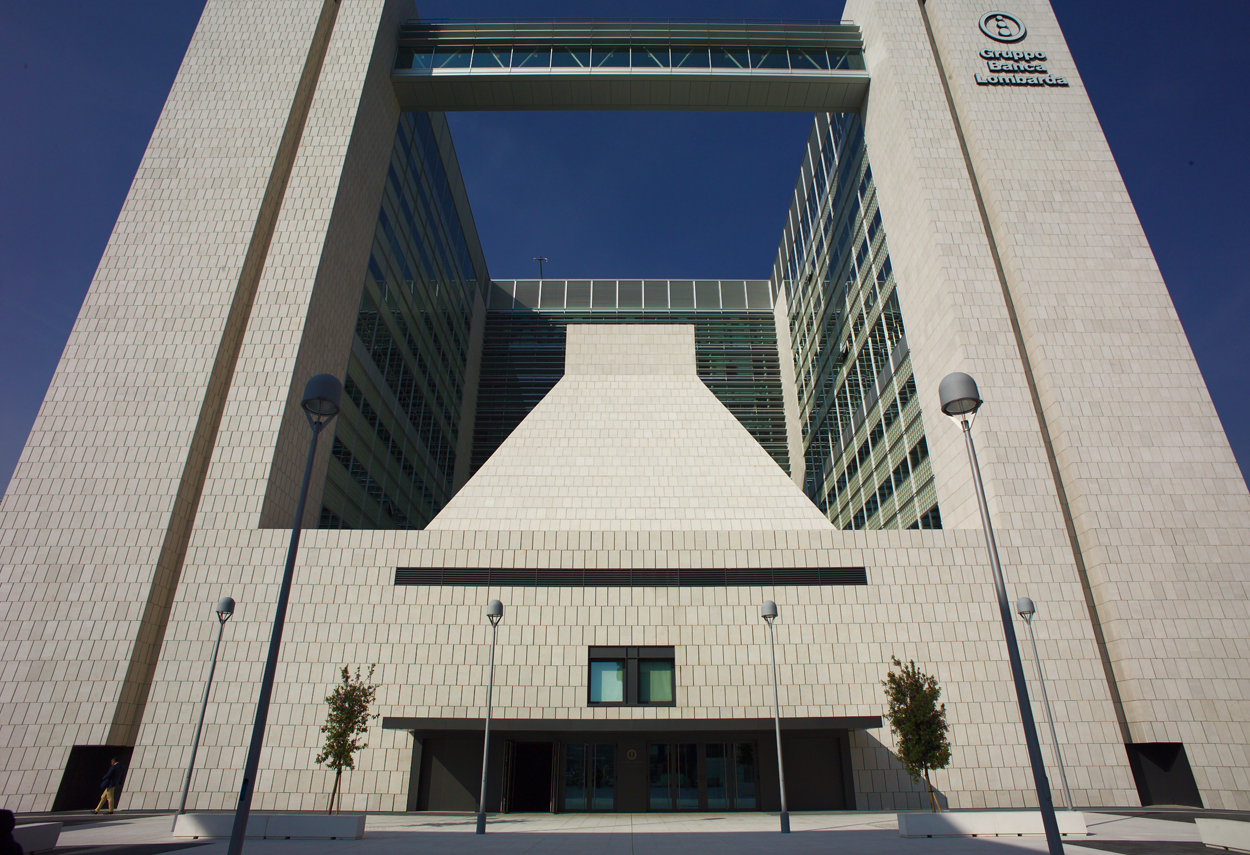
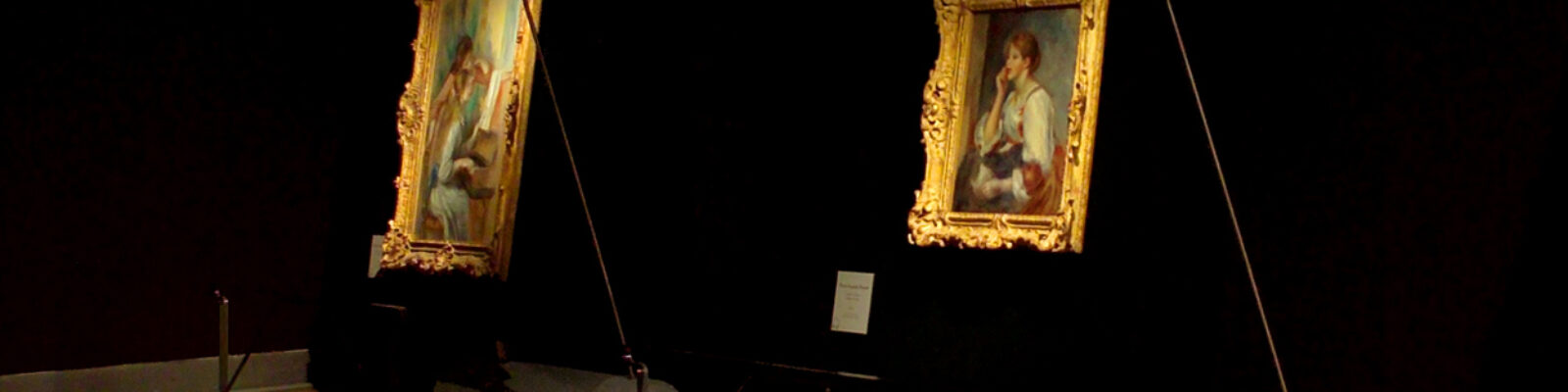
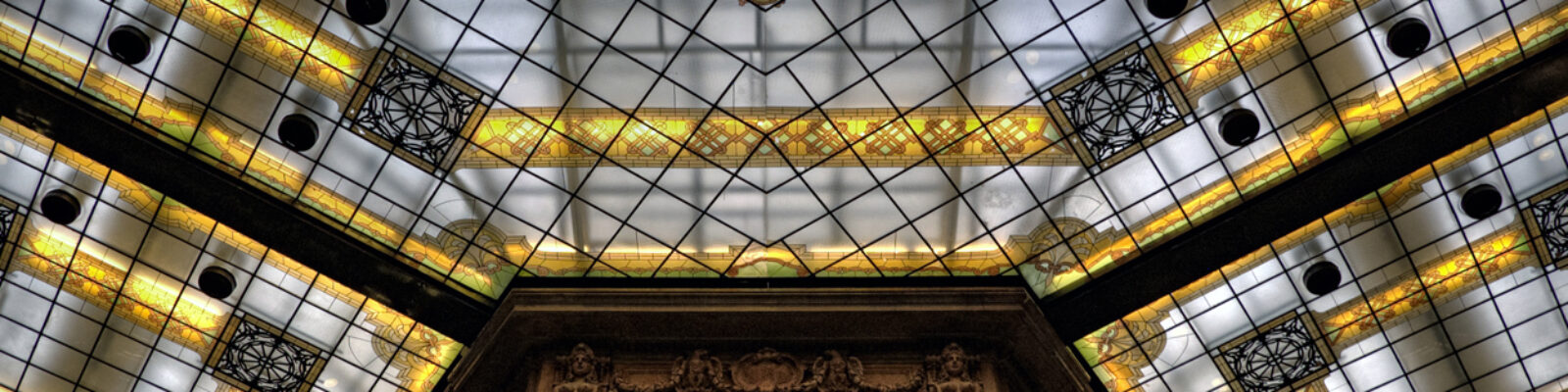
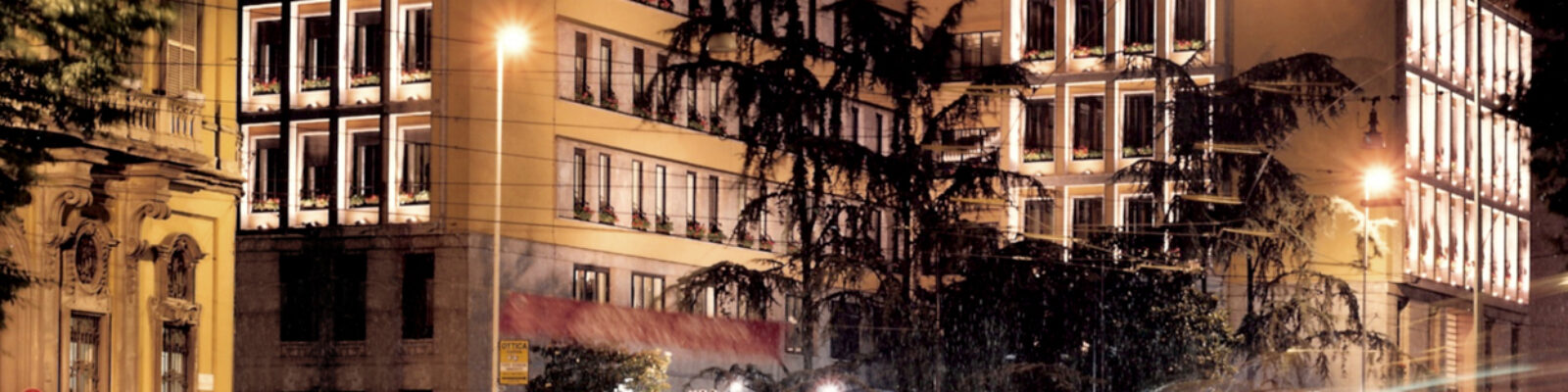
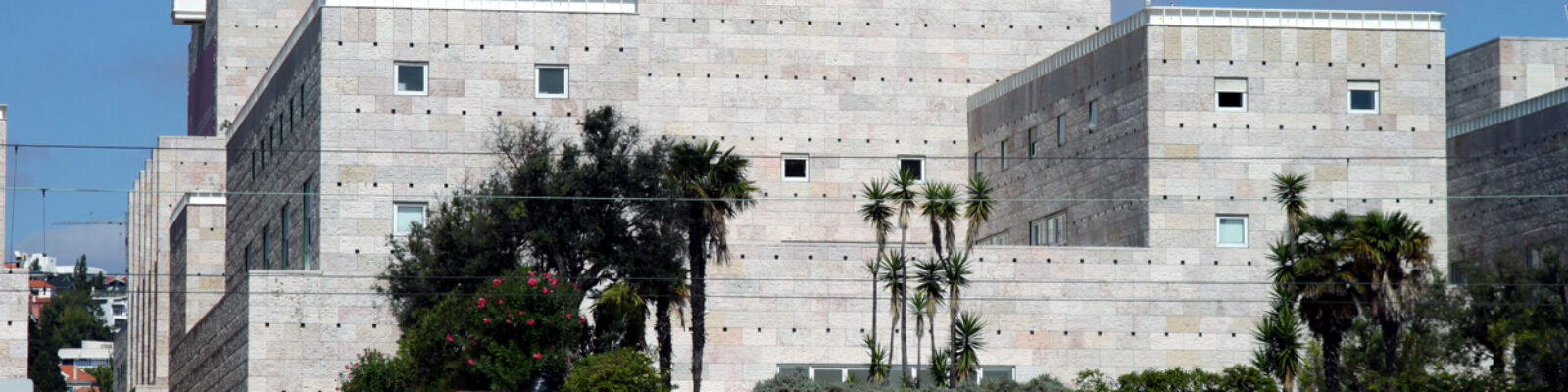
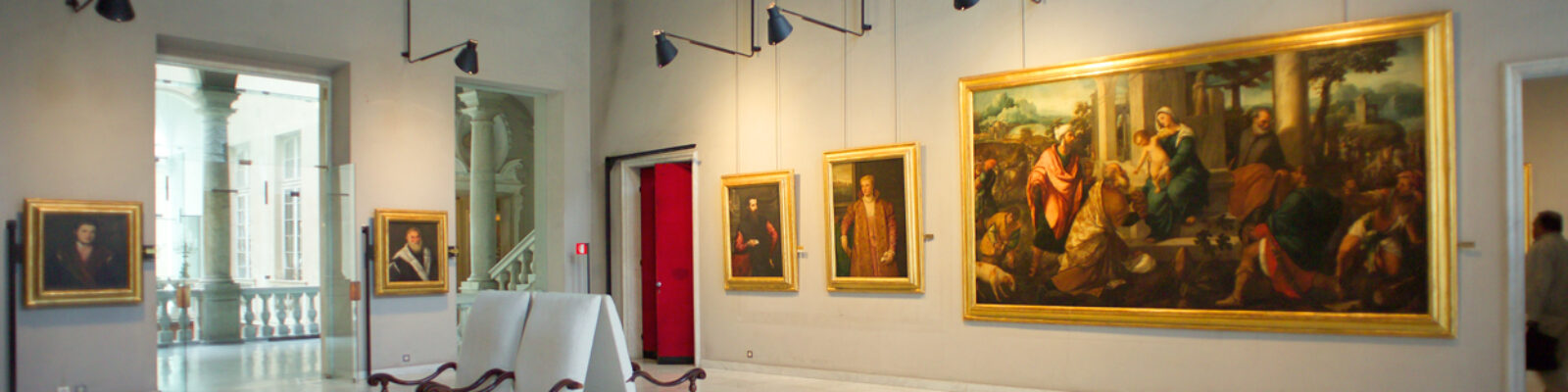
The project for Banca Lombarda's new business centre is by architect Vittorio Gregotti, commissioned by SBIM (Società Bresciana Immobiliare Mobiliare) of the Banca Lombarda Group. As Gregotti himself explains, it will be a "borderline reality between public and private", in which residential areas and public offices will coexist. The building looks like a cube, 12 storeys high, hollowed out inside. The volume is closed by three façades and encloses a large courtyard open to the street and another conical pyramid-shaped volume housing two conference rooms, independent of the rest of the complex. The two side wings of the cubic volume are occupied by the operational offices, while the perpendicular wall forms the backdrop to the large courtyard. The lighting design for the corridor on the executive floor is based on a distribution scheme that follows the operating levels. The presence of numerous valuable paintings makes it necessary to give priority to the lighting of the exhibition walls in order to improve the perception of the works on display and the overall image of the space. The use of luminaires with multiple optics makes it possible to vary the directionality of the light emission by simply changing the internal arrangement of the optics. Three scenarios are envisaged for the architectural lighting works of the auditorium, which convey the elegance of the solutions implemented and the consistency of the values measured with respect to the project's lighting objectives. The first scenario designed for the general lighting is characterised by a custom-made suspension luminaire, with great visual impact, made up of 440 halogen lamps, which is located in the centre of the auditorium. The second is characterised by specific lighting for the speakers' desks, provided by side projectors installed in special concealed niches. The third is a partial lighting of the hall through the side corridor with recessed luminaires.
Project:
Lighting Design Piero Castiglioni
Collaborations:
Gregotti Associated Architects
Photo Courtesy:
Piero Castiglioni
Year:
2005
The project for Banca Lombarda's new business centre is by architect Vittorio Gregotti, commissioned by SBIM (Società Bresciana Immobiliare Mobiliare) of the Banca Lombarda Group. As Gregotti himself explains, it will be a "borderline reality between public and private", in which residential areas and public offices will coexist. The building looks like a cube, 12 storeys high, hollowed out inside. The volume is closed by three façades and encloses a large courtyard open to the street and another conical pyramid-shaped volume housing two conference rooms, independent of the rest of the complex. The two side wings of the cubic volume are occupied by the operational offices, while the perpendicular wall forms the backdrop to the large courtyard. The lighting design for the corridor on the executive floor is based on a distribution scheme that follows the operating levels. The presence of numerous valuable paintings makes it necessary to give priority to the lighting of the exhibition walls in order to improve the perception of the works on display and the overall image of the space. The use of luminaires with multiple optics makes it possible to vary the directionality of the light emission by simply changing the internal arrangement of the optics. Three scenarios are envisaged for the architectural lighting works of the auditorium, which convey the elegance of the solutions implemented and the consistency of the values measured with respect to the project's lighting objectives. The first scenario designed for the general lighting is characterised by a custom-made suspension luminaire, with great visual impact, made up of 440 halogen lamps, which is located in the centre of the auditorium. The second is characterised by specific lighting for the speakers' desks, provided by side projectors installed in special concealed niches. The third is a partial lighting of the hall through the side corridor with recessed luminaires.
Project:
Lighting Design Piero Castiglioni
Collaborations:
Gregotti Associated Architects
Photo Courtesy:
Piero Castiglioni
Year:
2005
Other Projects
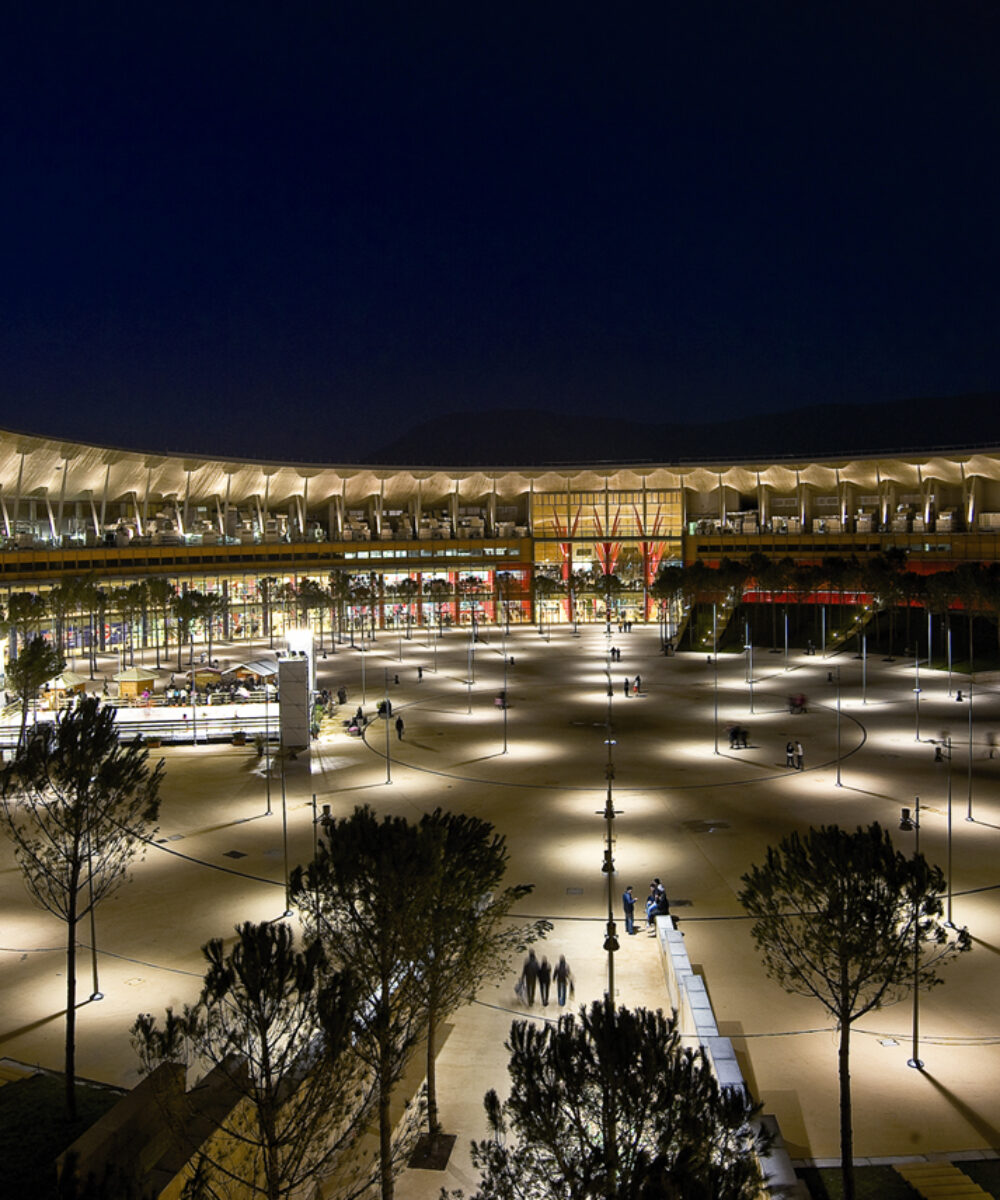
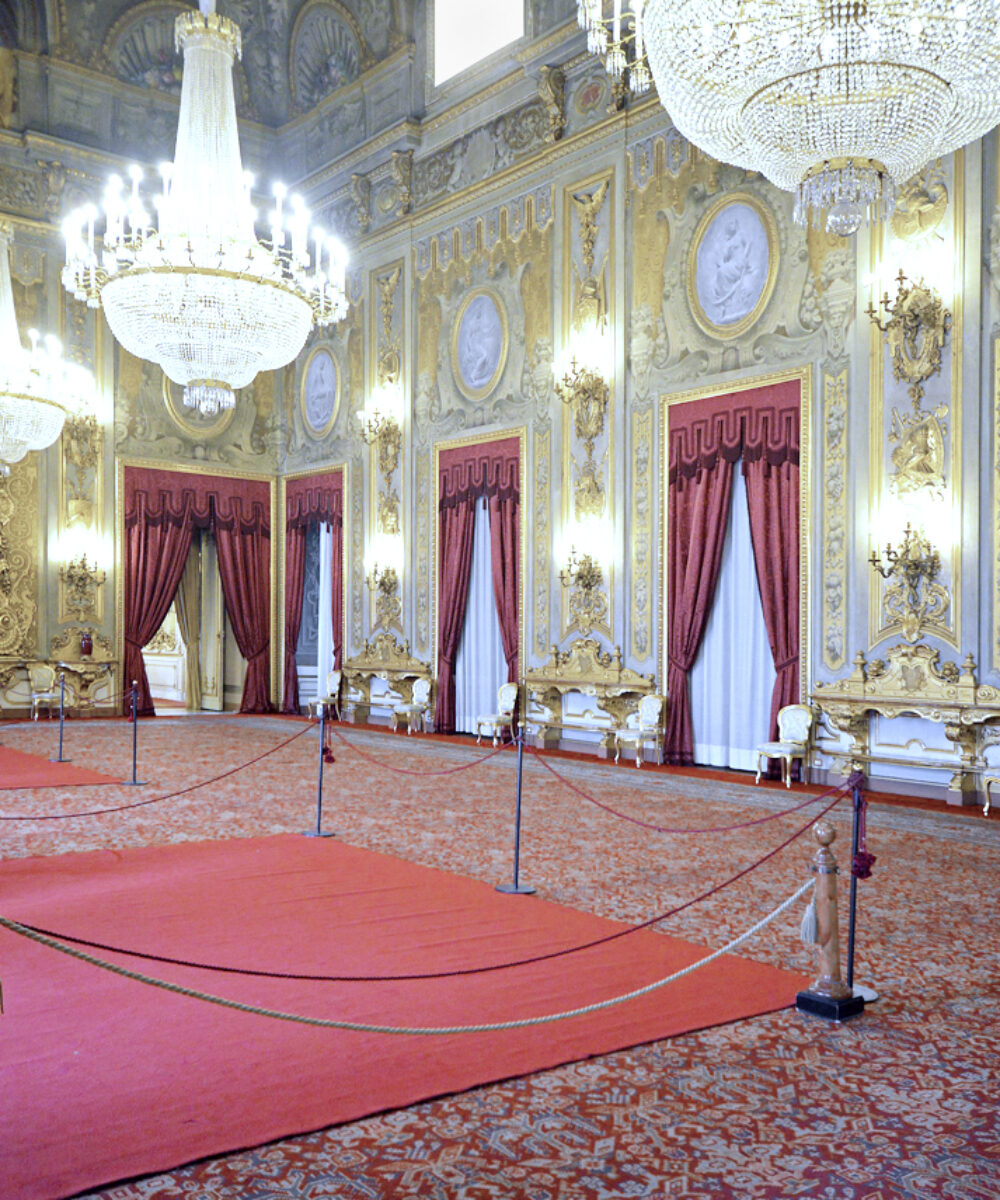
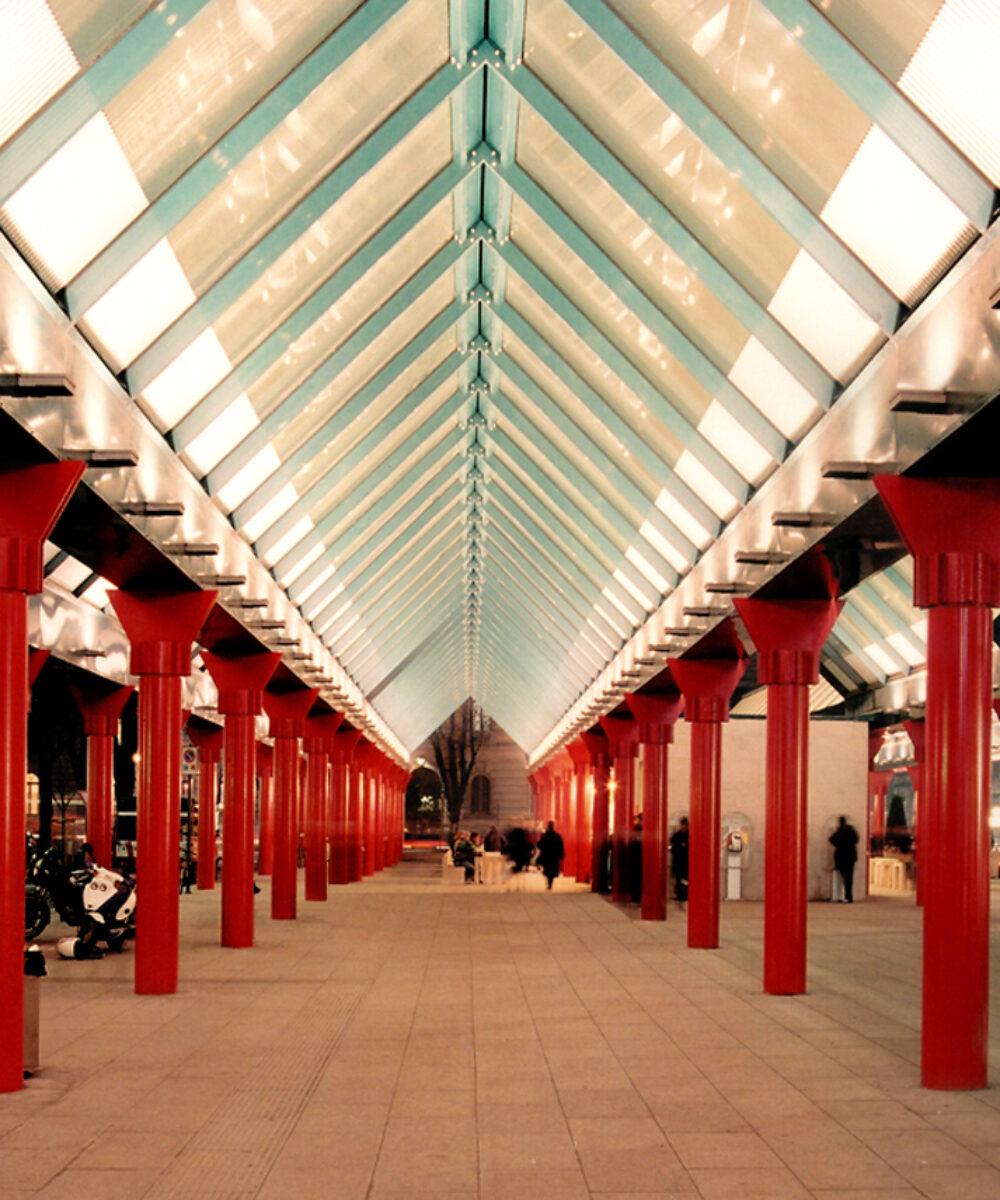
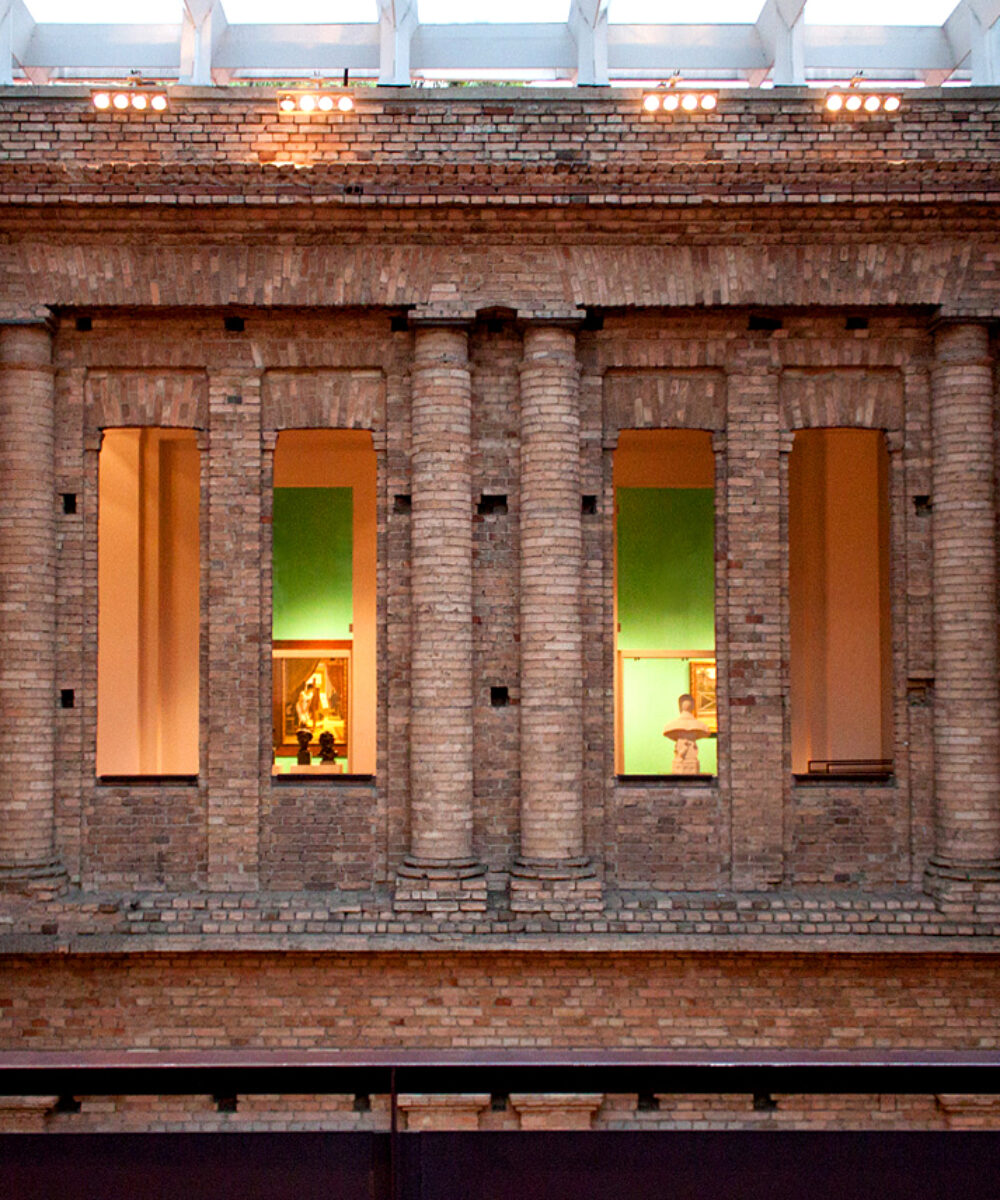
This section presents a representative selection of lighting design projects by Piero Castiglioni, developed across architectural, museum, urban, cultural, retail, hospitality, and infrastructural contexts, both in Italy and internationally. The gallery documents a range of interventions differing in scale, function, and context, united by an approach to light as a tool for interpreting space—capable of engaging with architecture, artworks, landscape, and contemporary use.
The featured projects span museums, foundations, and temporary exhibitions, as well as historic buildings, places of worship, public spaces, and urban complexes, extending to corporate headquarters, private residences, yachts, and lighting masterplans. In each project, light is conceived as a design material—carefully controlled and calibrated in relation to the specific characteristics of the site, functional requirements, and the perceptual quality of the experience.
Taken together, these works outline a vision of lighting design as an integrated process, where technical rigor, cultural sensitivity, and contextual awareness contribute to shaping identity, orientation, and spatial value. The gallery thus becomes a design map, illustrating how light can assume different roles—subtle or expressive—while consistently maintaining coherence, precision, and design awareness.
Other Projects
This section presents a representative selection of lighting design projects by Piero Castiglioni, developed across architectural, museum, urban, cultural, retail, hospitality, and infrastructural contexts, both in Italy and internationally. The gallery documents a range of interventions differing in scale, function, and context, united by an approach to light as a tool for interpreting space—capable of engaging with architecture, artworks, landscape, and contemporary use.
The featured projects span museums, foundations, and temporary exhibitions, as well as historic buildings, places of worship, public spaces, and urban complexes, extending to corporate headquarters, private residences, yachts, and lighting masterplans. In each project, light is conceived as a design material—carefully controlled and calibrated in relation to the specific characteristics of the site, functional requirements, and the perceptual quality of the experience.
Taken together, these works outline a vision of lighting design as an integrated process, where technical rigor, cultural sensitivity, and contextual awareness contribute to shaping identity, orientation, and spatial value. The gallery thus becomes a design map, illustrating how light can assume different roles—subtle or expressive—while consistently maintaining coherence, precision, and design awareness.